6,000 BTU Air Conditioner: The Complete Guide for Small Spaces
A 6,000 BTU air conditioner is the ideal cooling solution for bedrooms, home offices, dorms, and studio apartments up to roughly 250 square feet. This guide explains how this capacity works, which room sizes fit, which unit types are available, and how to pick the right one for your space.
Explore Recommended UnitsWhat Does 6,000 BTU Mean in Practice?
BTU, or British Thermal Unit, measures how much heat an air conditioner can remove from a room in one hour. A 6,000 BTU unit removes 6,000 BTUs of heat per hour, which translates to effective cooling for a small, enclosed room. This capacity sits at the entry point of the residential cooling range, making it the most common choice for single-room comfort.
Because the capacity is modest, a 6,000 BTU air conditioner works best when the space is well defined and not overly exposed to direct sun or constant heat gain. Getting the sizing right matters: an undersized unit runs continuously without reaching the set temperature, while an oversized unit cycles on and off too quickly and leaves the room feeling clammy.
Quick rule of thumb: 6,000 BTU is typically suited to rooms between 150 and 250 square feet. Adjust downward for shaded rooms and upward for sunny kitchens or rooms with many windows.
Which Room Sizes Fit a 6,000 BTU Unit?
The table below gives a practical sizing reference. These ranges assume standard ceiling height (around 8 feet), average insulation, and one or two occupants. Rooms with heavy sun exposure, poor insulation, or heat-producing appliances may need a step up in capacity.
| Room Type | Typical Area | 6,000 BTU Fit | Notes |
|---|---|---|---|
| Bedroom | 100 – 200 sq ft | Excellent | Quiet operation matters most here |
| Home office | 120 – 220 sq ft | Excellent | Look for fan-speed flexibility |
| Studio apartment | 200 – 250 sq ft | Good | Keep doors closed to concentrate cooling |
| Dorm room | 100 – 180 sq ft | Excellent | Window models are the usual choice |
| Small living room | 200 – 250 sq ft | Good | Add a fan to improve air circulation |
| Kitchen (sunny) | 150 – 200 sq ft | Marginal | Heat gain from cooking may require more capacity |
If your room is larger than 250 square feet, or if it has an open floor plan, step up to an 8,000 BTU class unit for better temperature stability. For whole-home needs, a different approach such as split systems or a central air conditioning setup makes more sense.
Types of 6,000 BTU Air Conditioners
Capacity is only half the decision. The form factor determines installation effort, portability, and how the unit fits into your room. Here are the main options at this capacity level.
Window Air Conditioners
Window units at 6,000 BTU are the most established category. They install in a double-hung window, pull outside air across the condenser, and vent heat directly outdoors. Installation is straightforward for a single person with basic tools, and the unit stays in place season after season. Many models include remote controls, programmable timers, and energy-saving modes.
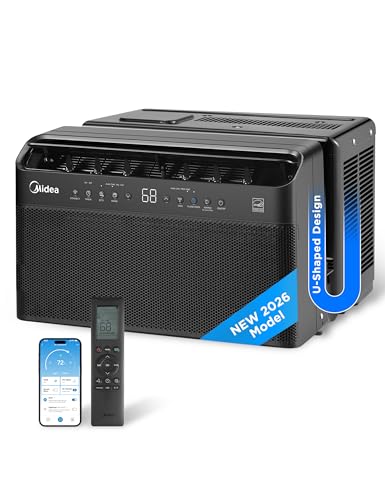
If your window opening is narrow or you prefer a sleeker profile, a U-shaped smart inverter window air conditioner offers a modern alternative with a lower-profile design. For rooms where a window is not available, consider a small room air conditioner without a window solution.
Portable Air Conditioners
Portable 6,000 BTU units sit on the floor and roll between rooms. They exhaust hot air through a hose kit that vents through a window or sliding door. The tradeoff is that portable units are generally less efficient than window models because part of the cooling is lost to the venting process. They shine in rentals, rooms with unusual window shapes, or spaces where a permanent installation is not permitted.
For camping or off-grid use, a mini portable air conditioner for camping is a different class of product but worth knowing about. If you need a portable unit that does not require venting, explore portable AC units that do not need venting, though expectations for cooling power should be adjusted accordingly.
Mini-Split Systems
A 6,000 BTU split ductless air conditioning system is the premium option at this capacity. An indoor wall-mounted head connects to an outdoor compressor, delivering quiet, efficient cooling without blocking a window. Installation requires a licensed technician and a dedicated electrical circuit, so this is a long-term investment rather than a plug-and-play purchase. For a full breakdown of what installation involves, see the installation guide.
Window vs. Portable vs. Mini-Split: Which Is Right for You?
| Factor | Window Unit | Portable Unit | Mini-Split |
|---|---|---|---|
| Installation effort | Moderate, DIY-friendly | Minimal, vent kit required | Professional installation |
| Cooling efficiency | High | Moderate | Very high |
| Noise level | Moderate | Moderate to high | Very quiet indoors |
| Portability | Fixed | Rolls between rooms | Fixed |
| Window requirement | Yes | Vent opening only | No |
| Best for | Permanent single-room cooling | Renters and flexible spaces | Long-term comfort and quiet |
For most households cooling a single bedroom or office, a window unit remains the most practical balance of performance and simplicity. Portable units suit people who move frequently or cannot install a window bracket. Mini-splits are the top-tier choice when quiet operation and long-term efficiency are the priority.
Efficiency Ratings to Look For
Efficiency determines how much electricity the unit consumes to deliver its rated cooling. At the 6,000 BTU level, efficiency varies noticeably between models, and a more efficient unit can make a meaningful difference over several cooling seasons.
- CEER / EER: The energy efficiency ratio for room air conditioners. Higher is better. Look for units that carry an ENERGY STAR designation for verified efficiency.
- SEER2: The updated seasonal efficiency standard used for central and split systems. If you are considering a mini-split, check its SEER2 rating.
- Inverter compressors: Inverter-driven units modulate compressor speed instead of cycling on and off, which improves comfort and reduces energy use. See our guide to inverter AC technology for the full picture.
For a broader explanation of how efficiency ratings work, read top-rated energy efficient air conditioners and the overview of ENERGY STAR certified small units.
Features That Matter at This Capacity
Small rooms amplify the importance of certain features. A unit that is too loud will be noticeable in a bedroom. A unit without a programmable timer will waste energy when nobody is home. Prioritize these:
- Quiet operation: Check the decibel rating. Bedroom units should stay in the low-to-mid 50s on high and lower on low fan speed.
- Programmable thermostat or timer: Schedule cooling around your routine. Learn more in our guide to using a programmable thermostat.
- Remote control and smart features: Wi-Fi control lets you adjust settings from your phone. See smart window air conditioner options.
- Washable filter: Easy filter access keeps maintenance simple. Follow our steps to clean an AC filter.
- Dehumidification mode: Useful in humid climates where cooling alone does not address stickiness.
Understanding Market Tiers at 6,000 BTU
Products in this capacity range fall into recognizable tiers. Use these descriptions to set expectations rather than to compare specific figures.
Entry-Level Tier
Basic mechanical controls, straightforward cooling, and durable construction. A solid choice for occasional use in a guest room or dorm. Expect fewer smart features and simpler fan settings.
Mid-Range Tier
Remote control, programmable timers, multiple fan speeds, and better insulation of the cabinet for quieter operation. This tier is well-specified for the category and suits daily use in bedrooms and offices.
High-End Tier
Inverter compressors, Wi-Fi connectivity, advanced dehumidification, and premium materials. These units are feature-rich for their class and deliver the most consistent comfort and the quietest operation.
Across all tiers, the physical build quality matters: reinforced cabinets, weather-resistant coatings on outdoor-facing parts, and rust-proof finishes extend service life. A mid-range unit with good construction often outlasts an entry-level unit with more features but thinner materials.
Installation and Placement Tips
Correct installation is the difference between a unit that cools well and one that struggles. For window units, the unit should sit level or tilt slightly outward so condensation drains away from the room. Seal the gap around the unit with foam or a side panel kit to prevent outside air from leaking in.
For portable units, keep the exhaust hose as short and straight as possible, and avoid placing the unit in direct sunlight. For mini-splits, the indoor head should be mounted high on a wall away from direct sun, and the outdoor unit needs clear airflow. If you are installing a unit in an older home, review installing air conditioning in an old house for structural and electrical considerations.
If you are mounting a window unit through a wall instead of a window frame, see mounting a window AC unit in the wall. Electrical requirements are modest at this capacity, but check the circuit before installation using our guide to 110V vs 240V air conditioners.
Maintenance for Long-Term Performance
A 6,000 BTU unit is simple to maintain, and a little routine care goes a long way. Clean or replace the filter every two to four weeks during heavy use. Inspect the outdoor side of a window unit for debris and rinse the coils at the start of the season. For mini-splits, schedule a professional tune-up annually.
If cooling performance drops, the filter is the first suspect, followed by a dirty condenser coil. Our guides on cleaning condenser coils and diagnosing an AC that is not blowing cold air walk through the common causes. For a seasonal checklist, see HVAC tune-up guidance.
Common Mistakes When Choosing a 6,000 BTU Unit
- Buying for a larger room than the unit can handle. A 6,000 BTU unit cannot cool an open 400-square-foot living area effectively, no matter how efficient it is.
- Ignoring heat gain. South-facing windows, kitchen appliances, and electronics add load. A room that measures 200 square feet but receives full afternoon sun may need more capacity.
- Overlooking noise. In a bedroom, a loud unit defeats the purpose. Check decibel ratings and read user feedback on low fan speed.
- Skipping the seal kit. Air leaks around a window unit waste energy and let humidity in.
- Neglecting maintenance. A clogged filter can cut cooling capacity noticeably within weeks.
Frequently Asked Questions
What size room does a 6,000 BTU air conditioner cool?
Typically 150 to 250 square feet, depending on ceiling height, insulation, sun exposure, and occupancy. A shaded bedroom at the lower end of that range is a comfortable fit. A sunny room with many windows should be closer to 150 square feet for reliable cooling.
Is 6,000 BTU enough for a bedroom?
Yes, for most standard bedrooms up to about 200 square feet. If the bedroom is larger, has high ceilings, or receives strong afternoon sun, consider a step up to an 8,000 BTU class unit.
How many amps does a 6,000 BTU air conditioner use?
Most 6,000 BTU window and portable units run on a standard 115V household circuit and draw roughly 5 to 6 amps during normal cooling. Always check the nameplate rating and confirm the circuit can handle the load before installation.
Can a 6,000 BTU unit cool two rooms?
Not effectively. Cooling is most efficient when the space is enclosed. For two rooms, either use two smaller units or choose a multi-zone system. A single 6,000 BTU unit spreading across two doorways will underperform in both rooms.
What is the difference between 5,000 and 6,000 BTU?
6,000 BTU delivers about 20 percent more cooling capacity than 5,000 BTU. The difference matters in rooms near the top of the small-room range or in spaces with moderate heat gain. For a very small, shaded bedroom, a 5,000 BTU ENERGY STAR unit may be sufficient.
Should I choose a window, portable, or mini-split unit?
Choose a window unit for permanent single-room cooling with a suitable window. Choose a portable unit if you rent or need to move the unit between rooms. Choose a mini-split if quiet operation and long-term efficiency are the priority and professional installation is acceptable.