
AC Air Conditioning: The Complete Guide to Systems and Selection
Everything you need to understand AC air conditioning — system types, how each format works, sizing by room, efficiency ratings, installation requirements, and how to choose the right cooling system for your home before you buy.
START WITH SYSTEM TYPESWho this guide is for: If you are researching AC air conditioning and want a clear, complete picture before committing to a system, this guide is for you. It covers the major system types, the trade-offs between them, sizing fundamentals, efficiency ratings, and maintenance. By the end, you will know which format fits your home and how to compare listings with confidence.
What Does AC Air Conditioning Mean?
AC stands for air conditioning — any system that cools, dehumidifies, and circulates indoor air. The term "AC air conditioning" is a common redundancy for the same thing: the process of moving heat from inside a building to outside, using a refrigerant cycle and a compressor. Every residential AC system, from a small window unit to a full central system, relies on the same core physics.
Air conditioning does more than lower temperature. As air passes over the indoor coil, moisture condenses out, so a correctly sized system also controls humidity. That is why sizing and airflow matter as much as raw cooling capacity — a system that cools too quickly leaves the room cold but clammy. For background on indoor humidity targets, see what humidity level is good for a house.
The main differences between systems are about scope, installation, and efficiency — not the fundamental technology. A window unit, a ductless mini split, and a central system all cool air the same way; they differ in how many rooms they serve and how the cooled air is delivered.
The Main Types of AC Air Conditioning Systems
The right system depends on the scope of cooling you need and the structure of your home. The table below summarizes the major formats and where each one fits best.
| System Type | Scope | Best For | Tier Context |
|---|---|---|---|
| Window AC | One room | Bedrooms, offices, rentals | entry-level |
| Portable AC | One room, movable | Rentals, temporary setups | essential tier |
| Ductless Mini Split | One or several rooms | Additions, homes without ducts | mid-tier |
| Central AC | Whole home | Homes with existing ductwork | high-end tier |
| Multi-Zone Ductless | Several rooms, independent control | Larger homes without ducts | top-tier |
Each format has a distinct set of trade-offs:
- Window AC: The simplest and most direct format. Installs in a window frame, cools one room, and requires no ductwork. It blocks part of the window and is noisier than other options. For a full breakdown, see the window mounted air conditioning unit guide.
- Portable AC: Sits on the floor and vents through a window hose. Movable between rooms, but less efficient than window units and takes up floor space. See the portable options comparison in most efficient portable air conditioner.
- Ductless mini split: A wall-mounted indoor head connected to an outdoor unit. Quiet, efficient, and does not block a window, but requires professional installation and a wall penetration. The guide to mini split air conditioning units covers sizing and layout.
- Central AC: Distributes cooled air through ductwork from a single indoor air handler and outdoor condenser. The standard for whole-home cooling where ducts already exist, but retrofitting ducts is invasive. For how systems are rated, see ratings of central air conditioning systems.
- Multi-zone ductless: One outdoor unit connected to several indoor heads, each with its own thermostat. Ideal when several rooms need independent control without ductwork — see multi-zone ductless AC.
There are also specialized formats, such as through-the-wall units and packaged systems, which suit specific building layouts. Through-the-wall units are permanently installed in a wall sleeve and are more secure than window units. Packaged systems combine all components in a single outdoor cabinet, which is common in some commercial and light residential applications.
How AC Air Conditioning Works
Every system follows the same refrigerant cycle, whether it is a window unit or a central system. Understanding the cycle helps explain why maintenance and sizing matter.
- Compression: The compressor raises the pressure and temperature of the refrigerant gas.
- Condensation: The hot, high-pressure gas passes through the outdoor condenser coil, releases heat to the outside air, and turns into a liquid.
- Expansion: The liquid passes through an expansion device, which drops its pressure and temperature sharply.
- Evaporation: The cold refrigerant flows through the indoor evaporator coil. Air from the room passes over the coil, heat is absorbed, and the refrigerant turns back into a gas.
The cycle then repeats. The indoor blower pushes cooled air into the room, and the outdoor fan exhausts the heat removed from the space. For a deeper explanation, see the AC refrigerant cycle guide. If the system stops cooling despite clean filters, the troubleshooting steps in things to check when AC is not cooling cover the common causes.
How to Size an AC System
Correct sizing is the most important decision in any AC purchase. An undersized system runs continuously and never reaches the setpoint. An oversized system cools the air too quickly, cycles off before it removes humidity, and leaves the room feeling cold and clammy. Both outcomes waste energy and shorten compressor life.
The table below gives a practical baseline for typical residential rooms with standard 8-foot ceilings.
| Room Area | Recommended Capacity | Typical Room | Tier Context |
|---|---|---|---|
| Up to 150 sq ft | 5,000 – 6,000 BTU | Small bedroom, studio nook | entry-level |
| 150 – 250 sq ft | 8,000 – 10,000 BTU | Standard bedroom, home office | essential tier |
| 250 – 400 sq ft | 12,000 – 14,000 BTU | Living room, large master bedroom | mid-tier |
| 400 – 600 sq ft | 18,000 – 24,000 BTU | Open-plan living area, large studio | high-end tier |
| 600+ sq ft | 24,000 BTU+ or multiple units | Whole-floor cooling | top-tier |
After the baseline, adjust for these real-world factors:
- Sun exposure: West- and south-facing rooms with large unshaded windows can need 10–20% more capacity.
- Ceiling height: Rooms above 8 feet hold more air volume; add roughly 10% capacity per additional foot of height.
- Insulation and window quality: Single-pane windows and poor insulation increase the load. Older homes often step up one tier.
- Occupancy and appliances: Rooms regularly used by a family, or adjacent to a kitchen, need more capacity than a solo office.
- Whole-home sizing: For central systems, a professional Manual J load calculation is the standard method, because whole-home loads depend on duct design, envelope performance, and internal gains.
If your room is on the boundary between two tiers, choose the larger capacity only if the room has strong sun exposure or heavy occupancy; otherwise, the smaller unit will dehumidify more effectively.
Understanding Efficiency Ratings
AC systems are rated on efficiency metrics that vary by system type. The most common is SEER2, which measures cooling efficiency over a season. Higher SEER2 means more cooling per unit of electricity. Window units use CEER, a related metric adapted for that format.
Inverter compressors are standard on quality mini splits and central systems. Instead of cycling on and off at full power, an inverter varies compressor speed continuously to hold a steady temperature. That produces quieter operation, better humidity control, and lower energy use at part load. Inverter models sit in the upper efficiency tiers.
Efficiency Tiers at a Glance
Essential tier: baseline efficiency, suitable for occasional use in mild climates. Balanced tier: mid-range efficiency, a strong fit for regular seasonal use in moderate climates. High-efficiency tier: high SEER2, ENERGY STAR certified, best for hot climates and daily operation. Top-tier: the highest efficiency available, often with variable-speed everything and advanced controls.
Efficiency interacts with sizing. A correctly sized, higher-efficiency unit will use less energy than an oversized unit with a lower rating, because the oversized unit short-cycles and wastes capacity. For more on how ratings compare, see window air conditioner energy efficiency rating and, for whole-home systems, the most efficient whole-house air conditioner.
Installation Requirements by System Type
Installation complexity increases with the scope of the system. Understanding what each format requires helps you plan the project and set realistic expectations.
- Window and portable units: Minimal installation. Window units need a bracket and a window frame that fits; portable units need a window venting kit. Both require a suitable electrical outlet.
- Ductless mini splits: Professional installation is strongly recommended. The line set must be run, the refrigerant circuit evacuated and charged, and the electrical connection made. Most manufacturers require professional installation to keep the warranty valid — see ductless mini split air conditioner installation for what the process involves.
- Central AC: The most involved installation. It requires ductwork, an indoor air handler, an outdoor condenser, refrigerant lines, and electrical work. Retrofitting ducts into a home without them is invasive and costly, so central systems are usually installed during construction or a major renovation.
- Multi-zone ductless: Similar to single-zone mini splits but with multiple indoor heads and a larger outdoor unit. Requires careful planning of line routing and load distribution.
For any system that involves refrigerant handling, a licensed HVAC contractor is the appropriate choice. Attempting refrigerant work without the right tools and training risks equipment damage and personal injury, and it may void the warranty.
Maintenance That Extends System Life
All AC systems benefit from the same basic maintenance routine. The specifics vary by format, but the principles are consistent.
- Clean or replace filters every two to four weeks during peak season. A clogged filter restricts airflow, reduces cooling, and forces the compressor to work harder.
- Clean the condenser coils annually. Outdoor coils collect debris and reduce heat rejection. A soft brush and coil cleaner restore performance.
- Check the condensate drain. The drain can clog with algae or debris, causing water to back up into the room. Flush it at the start of each season.
- Inspect the seal and bracket for window units, or the line set insulation and wall penetration for mini splits.
- Schedule a professional tune-up every year or two for mini splits and central systems to check refrigerant charge, electrical connections, and overall system health. See air conditioning unit tune-up for what a service visit covers.
For a season-by-season checklist, see the AC maintenance guide. For ongoing service plans, see AC maintenance plan.
Common Problems and What They Mean
Most AC problems fall into a small number of categories. Recognizing the symptom helps you decide whether to troubleshoot or call a technician.
- Not cooling: Often a clogged filter, low refrigerant, or a dirty condenser coil. See air conditioning unit not blowing cold air for the step-by-step diagnosis.
- Leaking water: Usually a clogged condensate drain or a frozen evaporator coil. See AC leaking water solution.
- Frozen coils: Caused by restricted airflow or low refrigerant. See AC frozen coils solution.
- Compressor running but not cooling: Suggests a refrigerant or airflow problem. See AC compressor running but not cooling.
- Blowing air but not cooling: Often a compressor or refrigerant issue rather than a fan issue. See AC is blowing air but not cooling the house.
For problems that involve refrigerant, electrical components, or the compressor, a licensed technician is the right call. The guide to air conditioning repair places explains how to choose a reputable service provider.
How to Choose the Right AC System
With system types and sizing settled, the remaining decision comes down to fit, efficiency, and installation logistics. Use this sequence to narrow the field:
- Define the scope. One room, several rooms, or the whole house. This single decision eliminates most system types immediately.
- Check for ductwork. If ducts exist and are in good condition, central AC is often the most economical whole-home option. If not, ductless formats avoid the cost and disruption of retrofitting ducts.
- Confirm the electrical capacity. Larger systems require dedicated circuits, and some require 230V service. Check the panel before committing to a format.
- Set an efficiency target. In hot climates, target the high-efficiency tier. In mild climates, the balanced tier is a reasonable target.
- Plan the installation. Confirm placement, line routing, and permits before ordering. Installation quality has a large effect on performance and lifespan.
- Read the noise and reliability notes. Owner reviews and professional reviews reveal real-world noise and durability that specifications alone do not.
If you are comparing specific product categories, the recommendations below are organized by tier so you can see how each option positions itself in the market relative to the others, rather than by any single attribute.
Recommended AC Air Conditioning Systems
⚠️ AFFILIATE DISCLOSURE: This website contains affiliate links. As an Amazon Associate, we earn from qualifying purchases. If you make a purchase through these links, we may receive a small commission at no additional cost to you. Read our full affiliate policy.

Midea 8,000 BTU Smart Inverter Air Conditioner Window Unit with Heat and Dehumidifier – Cools up to 350 Sq. Ft., Energy Star Rated, Quiet Operation, Electronic Controls, Remote Control, White
Check price on Amazon
GE Window Air Conditioner 5,000 BTU AC Unit for Small Spaces up to 150 sq ft with Manual Controls & 2 Cooling Modes, Easy Install Kit, White
Check price on Amazon
Modern Refrigeration and Air Conditioning
Check price on Amazon
Frigidaire 5,000 BTU Window-Mounted Air Conditioner, Cools Up to 150 Sq. Ft., Quiet Operation, Effortless Temperature Control, 2 Fan Speeds, Auto Restart, White
Check price on Amazon
Refrigerant Charging and Service Procedures for Air Conditioning 2nd Edition
Check price on Amazon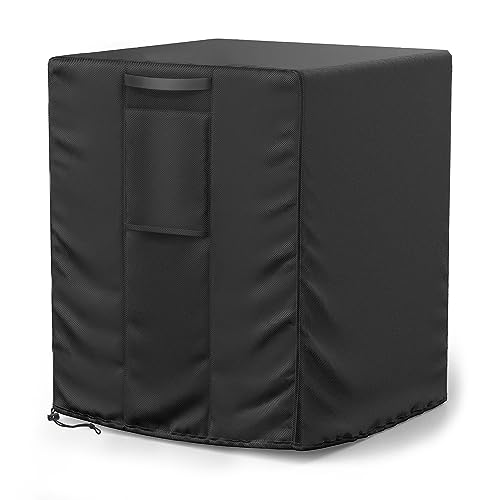
Mrrihand Central Air Conditioner Cover for Outside Units Waterproof Heavy Duty AC Unit for Outdoor Large AC Cover for Winter (30"X30"X32")-Balck
Check price on Amazon
Cool Your House Without AC: Free Air Conditioning for Life with Geothermal Cooling Earth Tubes (Earth-Air Heat Exchangers) (Resilient Homestead Villages)
Check price on Amazon
Central Air Conditioner Covers for Outside Units 36'' x 36'', AC Mesh Covers for Outside Unit, AC Unit Cover Outdoor Air Conditioner Condenser Hvac Heat Pump Cover Breathable Top Universal Defender
Check price on AmazonFrequently Asked Questions
What does AC air conditioning actually mean?
AC stands for air conditioning, which describes any system that cools, dehumidifies, and circulates indoor air. The term covers window units, portable units, ductless mini splits, and central systems, all of which move heat from indoors to outdoors using a refrigerant cycle.
How do I choose the right AC system for my home?
Start with the scope: one room, several rooms, or the whole house. Then consider whether ductwork exists, the electrical capacity available, and the climate. Single-room cooling suits window or portable units, multi-room cooling suits ductless mini splits, and whole-home cooling suits central systems or a multi-zone ductless layout.
What size air conditioner do I need?
Match capacity to room area, then adjust for sun exposure, ceiling height, insulation, and occupancy. As a baseline, 5,000–6,000 BTU suits up to 150 sq ft, 8,000–10,000 BTU suits 150–250 sq ft, 12,000–14,000 BTU suits 250–400 sq ft, and 18,000–24,000 BTU suits 400–600 sq ft.
What SEER rating should I look for?
SEER2 ratings vary by system type and climate. In hot climates, look for the high-efficiency tier, which is generally ENERGY STAR certified. In milder climates, a mid-range unit can be a reasonable balance between efficiency and equipment complexity.
How often does an AC system need maintenance?
Clean or replace filters every two to four weeks during peak season, clean outdoor coils annually, and schedule a professional tune-up every year or two. Routine maintenance keeps efficiency high and extends the compressor's service life.
Can one system cool an entire house?
A central system or a multi-zone ductless layout can cool an entire home. A single window unit or a single-zone mini split is designed for one room. For whole-home coverage, a professional load calculation is essential to size the system correctly. See the most efficient whole-house air conditioner for how the approaches compare.
Ready to Compare AC Systems?
Review the recommended models above by tier, then confirm your scope, sizing, electrical capacity, and installation plan before you order.
VIEW RECOMMENDED SYSTEMS