
AC Is Blowing Air But Not Cooling: Complete Troubleshooting Guide
Your air conditioner runs, the fan blows, but the air isn't cold. Discover the most common causes, step-by-step fixes, and when to call a professional.
You set the thermostat to a comfortable temperature, hear the system turn on, and feel air coming from the vents. But instead of crisp, cool air, your AC is blowing air but not cooling the way it should. This is one of the most common HVAC complaints — and fortunately, many causes are simple to diagnose and fix on your own.
In this guide, we walk you through the most likely reasons your AC is blowing air but not cooling, how to troubleshoot each one safely, and when it's time to call a licensed technician. Whether you have a window unit, a ductless mini-split, or a central system, the principles are largely the same.
Quick Answer: The most common causes of an AC blowing warm air are a dirty air filter, low refrigerant, a dirty condenser coil, a faulty thermostat, or a compressor problem. Start with the filter and thermostat — these are the easiest and safest fixes.
How an Air Conditioner Cools Your Home
Before troubleshooting, it helps to understand the basic cooling cycle. An air conditioner doesn't "create" cold air — it removes heat from your indoor air and releases it outside. The process works like this:
- Warm indoor air is pulled into the return duct and passes over the evaporator coil.
- Refrigerant inside the coil absorbs heat from the air, turning from liquid to gas.
- The cooled air is blown back into your rooms through the supply vents.
- The refrigerant gas travels to the outdoor unit, where the compressor pressurizes it and the condenser coil releases the heat outdoors.
- The refrigerant returns to liquid form and cycles back indoors to repeat the process.
If any step in this cycle breaks down — restricted airflow, low refrigerant, a failing compressor, or dirty coils — your AC will blow air that isn't cold. That's why troubleshooting focuses on the components involved in this loop.
Most Common Causes of an AC Blowing Air But Not Cooling
Below are the leading culprits, ordered from simplest to most complex. Work through them one by one before calling a professional.
1. Dirty or Clogged Air Filter
A clogged filter is the single most common reason an AC stops cooling effectively. When the filter is blocked with dust, pet hair, and debris, airflow drops dramatically. The evaporator coil can't absorb enough heat, and in severe cases, it freezes over — leaving you with warm air and a frosty indoor unit.
What to do: Remove the filter and inspect it. If it's visibly gray or clogged, replace it (or clean it if it's reusable). During peak cooling season, check it every month. For a full walkthrough, see our guide on AC maintenance.
2. Thermostat Set Incorrectly or Malfunctioning
It sounds obvious, but a thermostat set to "fan only," "heat," or a temperature higher than the room will make the system blow air without cooling. A faulty thermostat — or one with dead batteries — can also send the wrong signals to the AC.
What to do: Confirm the mode is set to "cool" and the setpoint is below the current room temperature. Replace the batteries if applicable. If you have a smart or programmable model, check our thermostat control guide. Persistent issues may require thermostat replacement or reinstallation.
3. Low Refrigerant or a Refrigerant Leak
Refrigerant is the lifeblood of the cooling cycle. If the charge is low — usually due to a leak — the system can't absorb enough heat, and you'll feel air that's room temperature or slightly warm. Signs include ice on the refrigerant lines, hissing or bubbling sounds, and a frozen evaporator coil.
What to do: Refrigerant handling requires certification and specialized tools. Do not attempt to add refrigerant yourself. Call a licensed technician to locate the leak, repair it, and recharge the system properly. Our AC repair guide explains what to expect.
4. Dirty or Blocked Condenser Coils
The outdoor condenser coil releases heat absorbed from your home. When it's covered in dirt, leaves, or grass clippings, it can't dissipate heat efficiently. The system runs longer, cools poorly, and may overheat. This is especially common if the outdoor unit sits under trees or near a dryer vent.
What to do: Turn off power to the unit, then gently clean the coils with a garden hose and coil cleaner. Clear debris from around the unit and maintain at least two feet of clearance. For proper indoor and outdoor placement, see our placement guide.
5. Frozen Evaporator Coil
If airflow is restricted (dirty filter, closed vents, blocked ducts) or refrigerant is low, the evaporator coil can drop below freezing and ice over. Once frozen, the coil can't absorb heat, and you'll get warm air. You may also notice water leaking as the ice melts.
What to do: Turn off the AC at the thermostat and let the coil thaw (this can take several hours). Replace the filter, check that all vents are open, and inspect the ductwork for blockages. If the coil freezes again after thawing, call a technician to check refrigerant levels.
6. Compressor or Capacitor Failure
The compressor is the heart of the outdoor unit — it pressurizes refrigerant so heat can be released. If it fails, the indoor fan may still blow air, but it won't be cooled. A failing start capacitor can also prevent the compressor from kicking on. You may hear the outdoor unit humming without the compressor engaging, or it may not run at all.
What to do: If the outside unit is not running while the indoor fan blows, this points to a compressor or electrical issue. These repairs are dangerous and require a professional. See our notes on AC electrical problems for context.
7. Blocked or Leaking Ductwork
In central systems, cooled air travels through ducts to each room. Leaky, disconnected, or blocked ducts can dump cold air into the attic or crawlspace instead of your living space — leaving you with weak, warm airflow at the vents.
What to do: Check visible duct runs for disconnections or crushed sections. A professional can perform a duct leakage test and seal problem areas. Our AC ductwork guide covers common duct issues.
8. Outdoor Unit Fan Not Spinning
The outdoor fan pulls air across the condenser coil to release heat. If the fan motor fails or the capacitor is bad, the unit can't reject heat and cooling stops. A failing fan may spin slowly or not at all.
What to do: Check for debris blocking the fan blade. If the fan doesn't spin when the system is on, suspect a motor or capacitor issue. Our AC fan repair guide explains diagnosis. For related symptoms, see outside fan not running.
9. Undersized or Oversized AC Unit
An undersized unit runs continuously but never keeps up with the heat load. An oversized unit cools too quickly, short-cycles, and leaves the room clammy without proper dehumidification. Both can make it seem like the AC is blowing air but not cooling well.
What to do: Verify the system was sized correctly for your home. If you suspect a sizing problem, a technician can perform a load calculation. Our guide on thermostat not going down covers related scenarios.
10. Dirty or Blocked Return Vents
Your system needs adequate return airflow to function. Furniture, rugs, or filters blocking return vents starve the system of air, reducing cooling capacity and causing pressure imbalances.
What to do: Ensure all return vents are unobstructed. Keep furniture at least a few inches away and clean vent grilles regularly.
Symptom-to-Cause Quick Reference
Use this table to match what you're experiencing with the most likely cause and the appropriate action.
| Symptom | Likely Cause | Recommended Action |
|---|---|---|
| Weak airflow, warm air | Dirty filter, blocked vents | Replace filter, open vents |
| Ice on indoor unit or lines | Low refrigerant, restricted airflow | Thaw unit, replace filter, call technician |
| Outdoor unit not running | Compressor, capacitor, or power issue | Check breaker, call technician |
| Air is room temperature | Thermostat mode or low refrigerant | Check thermostat, then call technician |
| System runs constantly | Undersized unit, dirty coils, leak | Clean coils, verify sizing, call technician |
| Hissing or bubbling sound | Refrigerant leak | Call technician immediately |
Step-by-Step Troubleshooting (DIY Safe Checks)
Follow these steps in order. They're safe for most homeowners and cover the majority of easy fixes.
- Check the thermostat. Confirm mode is "cool," the setpoint is below room temperature, and batteries are fresh.
- Replace the air filter. A clean filter is the foundation of proper airflow and cooling.
- Inspect the outdoor unit. Clear debris, check that the fan spins, and confirm the unit is receiving power (check the breaker).
- Look for ice. If the indoor coil or refrigerant lines are frozen, turn off the system and let it thaw before restarting.
- Open all supply and return vents. Make sure furniture or rugs aren't blocking airflow.
- Clean the condenser coils. With power off, rinse the outdoor coils and remove debris.
- Check for duct issues. Look for disconnected or crushed ducts in accessible areas like the attic or basement.
If you complete these steps and the AC still blows warm air, the issue likely involves refrigerant, the compressor, or electrical components — call a licensed AC technician.
⚠️ Safety Note: Never open the outdoor unit's electrical panel or attempt to handle refrigerant without proper training and certification. Capacitors can hold a dangerous charge even after power is off. When in doubt, call a professional.
When to Call a Professional
Some problems are beyond safe DIY territory. Call a licensed technician if you notice any of the following:
- Refrigerant leaks (hissing sounds, ice buildup that returns after thawing)
- The outdoor unit won't start, or the compressor hums but doesn't engage
- Burning smells or tripped breakers
- Repeated freezing of the evaporator coil
- Water leaks that persist after clearing the drain line
- The system short-cycles or runs constantly without cooling
Our guide on AC troubleshooting covers more advanced diagnostics. If you need help finding service, see AC repair near me and AC service technician resources.
How to Prevent Future Cooling Problems
Regular maintenance keeps your system running efficiently and avoids most of the issues above:
- Replace or clean the air filter every 1–3 months during cooling season.
- Schedule annual professional maintenance — a tune-up catches small issues before they become failures.
- Keep the outdoor unit clear of leaves, grass, and debris, with at least two feet of clearance.
- Clean condenser coils annually or as needed.
- Seal and insulate ducts to prevent cooled-air loss.
- Use a programmable or smart thermostat to run the system efficiently.
For a full seasonal checklist, see our AC maintenance guide and consider an AC maintenance plan for ongoing care.
Related Cooling Problems You May Be Experiencing
If your symptoms are slightly different, these guides may help:
- AC not cooling the house — whole-home cooling issues
- AC blowing hot air — when air is actively warm
- AC unit comes on but doesn't cool — system runs without cooling
- AC not blowing cold air in house — indoor airflow issues
- AC turning on but not blowing cold air — startup problems
- AC unit fan blowing but no cold air — fan vs. cooling
- AC stops blowing cold air — intermittent cooling
- AC not cooling properly — partial cooling
For units that are clearly on but failing to cool the house, see AC is on but house is not cooling.
Frequently Asked Questions
Why is my AC blowing air but not cooling?
The most common reasons are a dirty air filter, low refrigerant, a dirty condenser coil, a faulty thermostat, or a compressor problem. Start with the filter and thermostat, then inspect the outdoor unit.
Can a dirty filter cause my AC to stop cooling?
Yes. A clogged filter restricts airflow, which can freeze the evaporator coil and prevent cooling. Replace the filter every one to three months depending on usage and environment.
How do I know if my AC is low on refrigerant?
Signs include warm air from the vents, ice on the evaporator coil or refrigerant lines, and hissing or bubbling sounds. Only a licensed technician should check the charge and repair leaks.
Can I fix an AC that's not cooling myself?
You can safely handle filter replacement, thermostat checks, clearing debris around the outdoor unit, and thawing a frozen coil. Refrigerant, compressor, and electrical work should be left to a professional.
When should I call a technician for an AC that is not cooling?
Call a technician if you've replaced the filter, checked the thermostat, cleaned the outdoor unit, and the AC still blows warm air. Refrigerant issues, compressor problems, and electrical faults require professional diagnosis.
Why does my AC blow air but the outside unit isn't running?
This usually points to a compressor, capacitor, or power issue. Check the breaker first. If power is on and the outdoor unit still doesn't run, call a technician. See outside unit not running.
Can an oversized AC cause poor cooling?
Yes. An oversized unit cools too quickly and short-cycles, which reduces dehumidification and can leave rooms feeling clammy. Verify sizing with a load calculation if you suspect this issue.
Final Thoughts
An AC that's blowing air but not cooling is frustrating, but the cause is often simple. Start with the filter, thermostat, and outdoor unit — these fixes resolve a large share of cases. If the problem persists, don't delay: refrigerant leaks and compressor issues only worsen with time and can lead to more extensive repairs. A quick professional diagnosis protects both your comfort and your system's lifespan.
Explore more diagnostic guides in our AC troubleshooting hub and keep your system in top shape with our maintenance guide.
Recommended Air Conditioners & Cooling Solutions
⚠️ AFFILIATE DISCLOSURE: This website contains affiliate links. As an Amazon Associate, we earn from qualifying purchases. If you make a purchase through these links, we may receive a small commission at no additional cost to you. Read our full affiliate policy.

Arctic Air Pure Chill 2.0 Evaporative Air Cooler by Ontel - Powerful, Quiet, Lightweight and Portable Space Cooler with Hydro-Chill Technology For Bedroom, Office, Living Room & More,Blue
Check price on Amazon
Evapolar Evaporative Air Cooler - Portable AC Unit EvaChill, Grey | Small Personal Air Conditioner for Desk, Office, Camping and Tent, Mini Cooling Fan, 3 Speeds and Led Light
Check price on Amazon
DREO Evaporative Air Swamp Cooler, 43" Cooling Fans that Blow Cold Air | 2026 Upgraded 80° Oscillating Floor Fan for Bedroom, Easy Cleaning, APP Control, Ice Pack, 4 Speeds 4 Modes, 12H Timer, White
Check price on Amazon
Portable Air Conditioners, Swamp Cooler Portable AC Unit for Room, Windowless Cooling Fan That Blow Cold Air w/Remote 5L Tank 12 Speeds 9H Timer, Evaporative Air Cooler for Bedroom Garage (White)
Check price on Amazon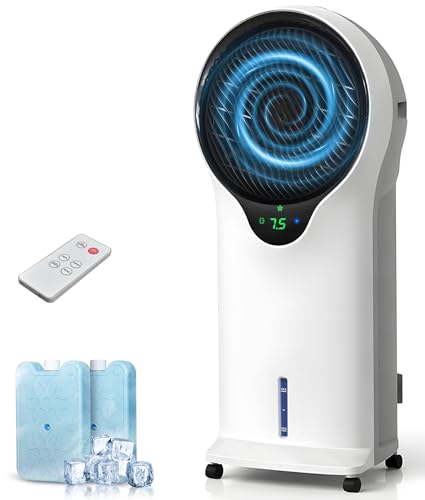
EXNOS 2000CFM Portable Evaporative Air Cooler for Indoor Use | 3-in-1 Function Swamp Cooler, 3 Speeds, 29ft/s Wind Speed, Cooling Fan that Blows Cold Air, 5.5L Water Tank, 2 Ice Packs
Check price on Amazon
Evapolar Evaporative Air Cooler - Portable AC Unit Evasmart, White | Small Personal Air Conditioner for Desk, Office, Camping and Tent, Mini Cooling Fan, Alexa and Smart Home Support
Check price on Amazon
NTMY Personal Air Cooler, Portable Air Conditioner Fan, Mini Evaporative Cooler with 7 Colors LED Light, 1/2/3 H Timer, 3 Wind Speeds and 3 Spray Modes for Your Desk, Nightstand, or Coffee Table
Check price on Amazon
Arctic Air Turbo Chill Evaporative Air Cooler, Swamp Cooler, 4 Speed | Hydro-Chill Technology, Up to 8 Hrs per Fill | 7-Color LED | Whisper Quiet Room Cooler for Bedroom or Office
Check price on AmazonDisclaimer
Some of the content on this site uses AI assistance. Information is provided for educational purposes only. We are not responsible for any losses resulting from the use of this information. By using this site, you waive any right to bring legal claims against us arising from your use of the information provided. If you do not agree, please do not use this site. Read the full disclaimer.