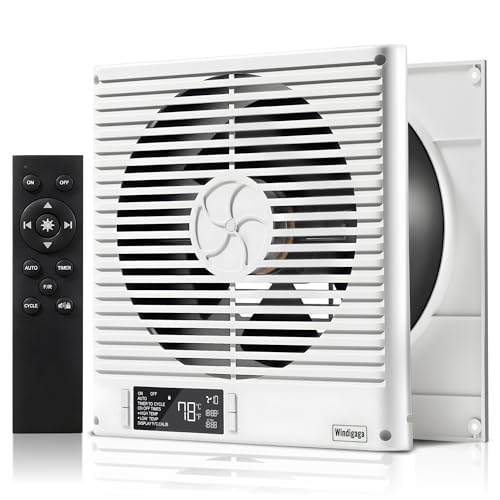
Air Ventilation Fan: The Complete Guide to Better Indoor Airflow
Discover how the right ventilation fan transforms indoor air quality, controls humidity, and supports your air conditioning system for a healthier, more comfortable home.
START LEARNINGWhy Ventilation Matters: Modern homes are built tighter than ever, trapping moisture, pollutants, and stale air. A well-chosen air ventilation fan is the simplest, most effective way to restore healthy airflow without compromising energy efficiency.
What Is an Air Ventilation Fan?
An air ventilation fan is a mechanical device that moves air into, out of, or within a building to maintain healthy indoor air quality. Unlike an air conditioner, which primarily cools and dehumidifies, a ventilation fan focuses on air exchange—replacing stale, moisture-laden, or pollutant-rich indoor air with fresher outdoor air.
Ventilation fans come in several configurations. Exhaust fans push air out of a room, commonly used in bathrooms and kitchens. Supply fans draw fresh air in. Balanced systems combine both, and whole-house fans pull air through the entire home. Each type serves a distinct purpose, and many homes benefit from a combination.
Understanding how ventilation interacts with your HVAC system is essential. For a deeper look at whole-home airflow strategies, explore our guide on air ventilation principles and how they complement cooling equipment.
Types of Air Ventilation Fans
Choosing the right fan starts with understanding the main categories. Each is designed for a specific application, and matching the fan to the space is the key to effectiveness.
1. Bathroom Exhaust Fans
The most common residential ventilation fan. Bathroom exhaust fans remove moisture from showers and baths, preventing mold, mildew, and peeling paint. They are rated in CFM (cubic feet per minute) and should be sized to exchange the room's air at least eight times per hour. Modern units often include humidity sensors and quiet operation below one sone.
2. Kitchen Ventilation Fans
Kitchen range hoods and ceiling-mounted exhaust fans remove cooking odors, grease, and combustion byproducts. Proper kitchen ventilation is critical for indoor air quality, especially in homes with gas ranges. Look for fans rated for the cooking style—higher CFM for high-heat cooking.
3. Whole-House Ventilation Fans
These larger systems ventilate the entire home. They include central exhaust fans, supply-only systems, and balanced energy-recovery ventilators (ERVs) or heat-recovery ventilators (HRVs). Whole-house fans are ideal for improving air quality across multiple rooms and are often integrated with HVAC ductwork. Learn more about related airflow equipment in our air ventilation overview.
4. Ceiling and Wall Fans for Air Circulation
While not technically exhaust fans, ceiling fans and wall-mounted circulation fans improve air movement within a room. They don't exchange indoor and outdoor air, but they reduce stratification and can make a room feel cooler. Pairing circulation fans with exhaust ventilation creates a comprehensive airflow strategy.
5. Attic and Crawlspace Ventilation Fans
Attic fans and crawlspace ventilators control heat and moisture in unconditioned spaces. An attic whole house fan can dramatically reduce attic temperatures, extending the life of your roofing and HVAC equipment. These fans are especially valuable in hot climates.
6. Air Register Booster Fans
For homes with uneven heating or cooling, an air register booster fan boosts airflow from existing vents. These small inline fans fit over or inside floor and wall registers, pushing conditioned air into rooms that are typically too warm or too cool.
How to Size an Air Ventilation Fan
An undersized fan won't move enough air; an oversized fan wastes energy and can create uncomfortable drafts. Sizing depends on the application, but the core metric is CFM (cubic feet per minute).
Bathroom Fan Sizing
Calculate the room volume (length × width × height) and divide by 7.5 for a fan that provides 8 air changes per hour. For a 10×8 ft bathroom with 8 ft ceilings (640 cubic feet), a 85–100 CFM fan is appropriate. Add 50 CFM for each toilet and 50 CFM for a shower if the fan serves multiple fixtures.
Kitchen Fan Sizing
Kitchen exhaust fans are typically rated by the range's width and burner output. A general guideline is 100 CFM per 10,000 BTU of burner output, with a minimum of 100 CFM for electric ranges and 150 CFM for gas. Ducted range hoods are more effective than recirculating models.
Whole-House Fan Sizing
Whole-house fans are sized based on total conditioned square footage. A common rule is 2–3 CFM per square foot of living space. A 2,000 sq ft home might use a 4,000–6,000 CFM whole-house fan. Always consult a professional for balanced ventilation systems.
Benefits of Proper Air Ventilation
Investing in a well-designed ventilation strategy delivers measurable returns in comfort, health, and equipment longevity.
- Improved indoor air quality: Removes allergens, volatile organic compounds (VOCs), and cooking pollutants.
- Moisture control: Prevents mold, mildew, and structural damage from excess humidity.
- Reduced cooling load: Removing hot, humid air lessens the burden on your air conditioner, improving efficiency.
- Odor removal: Keeps kitchens, bathrooms, and living areas smelling fresh.
- Extended HVAC lifespan: Cleaner air and reduced humidity protect ductwork and equipment.
- Healthier living environment: Proper ventilation is linked to better respiratory health and sleep quality.
Ventilation also complements air purification. While a fan moves air, a dedicated air purification system can capture fine particles. Together, they create a comprehensive indoor air quality solution.
Installation and Maintenance Tips
Proper installation ensures your ventilation fan performs as intended. Here are practical guidelines:
Installation Best Practices
- Duct routing: Keep duct runs short, straight, and insulated to maximize airflow and minimize noise.
- Exterior termination: Always vent exhaust fans to the outdoors—never into an attic or crawlspace.
- Sealing: Seal gaps around the fan housing and duct connections to prevent air leaks.
- Electrical safety: Follow local codes and use a qualified electrician for hardwired installations.
- Consider smart controls: Humidity sensors, timers, and smart home integration improve convenience and energy efficiency.
Maintenance Schedule
- Monthly: Wipe down fan grilles and check for dust buildup.
- Quarterly: Vacuum fan blades and motor housing; check duct connections for leaks.
- Annually: Inspect the exterior vent hood for obstructions (birds, nests, debris); lubricate motor if applicable.
- Every 5–10 years: Replace older fans with modern, energy-efficient models.
Keeping your ventilation system clean also protects your air unit filter and maintains overall HVAC efficiency. For homes with ductwork, consider professional air vent cleaners in my area to remove accumulated dust and debris.
How to Choose the Right Air Ventilation Fan
With so many options available, focus on these key factors to narrow your selection:
1. Application and Location
Match the fan type to the room. Bathrooms need moisture-rated exhaust fans; kitchens need grease-rated hoods; whole-house systems need balanced airflow design. For specialized spaces, explore options like air vents for sheds or basement ventilation systems.
2. Airflow (CFM) and Sone Rating
Choose a fan that meets the CFM requirement for the space. Quieter fans (below 1.5 sones) are preferable for bedrooms and living areas. Bathroom fans should be as quiet as possible—under 1 sone is ideal for master bathrooms.
3. Energy Efficiency
Look for ENERGY STAR certified fans, which use less electricity and often run quieter. Modern DC motor fans are significantly more efficient than older AC motor designs.
4. Features and Controls
Consider humidity sensors, motion sensors, timers, and variable-speed controls. These features improve convenience and ensure the fan runs only when needed, maximizing efficiency.
5. Build Quality
Durable construction, rust-proof finishes, and quality motor bearings extend fan life. For high-humidity environments, choose fans with corrosion-resistant housings.
For a comprehensive look at airflow equipment that works alongside ventilation fans, browse our air handlers and air ventilation resources.
Common Ventilation Fan Problems and Fixes
Even well-installed fans can develop issues over time. Here's how to diagnose and address the most common problems:
Fan Is Noisy
Noise often comes from loose mounting screws, debris on blades, or worn motor bearings. Tighten hardware, clean blades, and if noise persists, replace the motor or the entire unit.
Fan Runs But Doesn't Move Air
Check for blocked ducts, a stuck damper, or a failing motor. Also verify the fan is sized correctly—an undersized fan may run but fail to exchange air effectively.
Fan Doesn't Turn On
Check the circuit breaker, wall switch, and wiring connections. If the fan has a humidity sensor, confirm it's set correctly. A multimeter can help diagnose motor or capacitor failure.
Condensation or Moisture Issues Persist
If moisture remains after running the fan, the fan may be undersized, the duct may be leaking, or the run time may be too short. Increase run time, seal ducts, or upgrade to a higher-CFM model.
For related troubleshooting, see our guides on air is not blowing through vents in house and air is blowing but not cold in house.
How Ventilation Works With Your Air Conditioner
Ventilation and air conditioning are complementary strategies. An air conditioner cools and dehumidifies recirculated indoor air, while ventilation brings in fresh outdoor air and expels stale air. Used together, they create a healthier, more efficient indoor environment.
In homes with ducted HVAC systems, whole-house ventilation can be integrated into the return air ductwork. This approach distributes fresh air evenly and filters it before circulation. Learn how air-to-air heat pump systems incorporate ventilation for year-round comfort.
During mild weather, a whole-house fan can replace air conditioning entirely, pulling cool evening air through the home. This strategy reduces cooling demand and extends the life of your AC equipment.
Frequently Asked Questions
What size ventilation fan do I need for my bathroom?
Calculate the room volume in cubic feet and divide by 7.5 for a fan that exchanges air 8 times per hour. For a typical 8×10 foot bathroom with 8-foot ceilings, a 100 CFM fan is usually sufficient.
How often should an air ventilation fan run?
Bathroom exhaust fans should run during showering and for 15–20 minutes afterward to remove moisture. Whole-house ventilation fans typically run intermittently throughout the day or continuously at low speed for optimal air quality.
Can an air ventilation fan reduce AC energy use?
Yes. Proper ventilation reduces heat buildup and humidity, lessening the load on your air conditioner. A well-designed ventilation strategy can improve comfort while reducing cooling demand.
What is the difference between an exhaust fan and a ventilation fan?
An exhaust fan removes stale air from a specific area like a bathroom or kitchen. A ventilation fan is a broader term covering fans that either exhaust air, supply fresh air, or balance both to improve whole-home airflow.
Do I need a professional to install a ventilation fan?
For simple bathroom exhaust fans replacing an existing unit, a handy homeowner can often manage the swap. New installations involving ductwork, electrical wiring, or whole-house systems should be handled by a licensed HVAC professional or electrician.
Take Control of Your Indoor Air Quality
A well-chosen air ventilation fan is one of the most effective, low-maintenance investments you can make for your home. From quiet bathroom exhaust fans to powerful whole-house systems, the right ventilation strategy reduces moisture, improves air quality, and supports your air conditioning system—keeping your home comfortable and healthy year-round.
Start by assessing your home's ventilation needs room by room. Whether you're upgrading a single bathroom fan or designing a whole-home ventilation plan, the information in this guide gives you the foundation to choose with confidence.