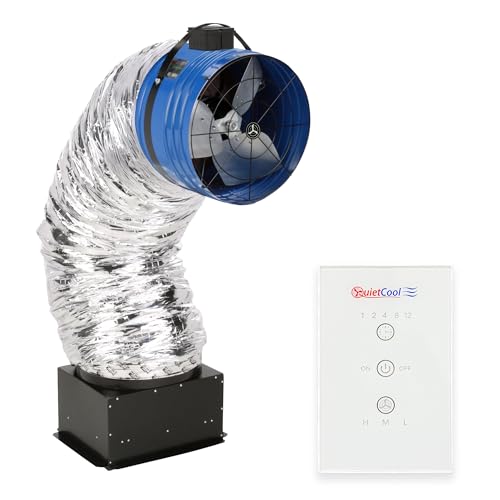
Attic Whole House Fan: Complete Guide to Cooling Your Home
Learn how an attic whole house fan can cool your home efficiently, reduce reliance on air conditioning, and improve indoor air quality — all with a single ventilation system.
START LEARNINGAC Units Guide Philosophy: Understand how a whole house fan works before you buy. This guide explains sizing, installation, benefits, and limitations so you can make an informed decision that fits your home and climate.
What Is an Attic Whole House Fan?
An attic whole house fan is a large ventilation system typically installed in the ceiling of a central hallway or attic floor. When activated, it pulls cool outdoor air through open windows and exhausts hot, stale indoor air out through attic vents. Unlike an air conditioner, a whole house fan does not use refrigerant or a compressor — it moves air, and that simple mechanical action can cool an entire home surprisingly well during mild to moderate weather.
Homeowners often confuse whole house fans with attic ventilation fans. An attic fan alone only ventilates the attic space, while a whole house fan actively exchanges air between the living space and the outdoors. If you want to understand the broader category, see our guide on air ventilation and air ventilation fan types.
How Does a Whole House Fan Work?
The principle is straightforward and effective:
- You open windows on the cooler, shaded side of your home.
- The fan creates negative pressure in the living space, pulling fresh outdoor air through the open windows.
- Hot, stale indoor air is pushed up into the attic and expelled through attic vents or gable vents.
- The result is a full air exchange that lowers indoor temperature and removes odors, humidity, and pollutants.
Because the fan uses only a motor and belt or direct-drive mechanism, it consumes far less electricity than a central air conditioner. This makes it an attractive companion to your existing cooling setup, especially in climates with cool evenings and moderate daytime temperatures.
For a deeper look at how air circulation supports indoor comfort, explore our resources on air handlers and attic air handler unit systems.
Key Benefits of an Attic Whole House Fan
Energy-Efficient Cooling
Uses a fraction of the electricity of a central AC system and reduces compressor runtime during mild weather.
Whole-Home Air Exchange
Replaces stale indoor air with fresh outdoor air in minutes, improving indoor air quality.
Lower Attic Temperature
Expels trapped heat from the attic, reducing heat gain into living spaces below.
Simple Maintenance
Few moving parts and no refrigerant lines mean low upkeep compared to compressor-based systems.
Quiet Operation
Modern premium models run quietly, especially when installed with insulated ducting and vibration mounts.
Complements AC
Reduces the load on your air conditioner, potentially extending its lifespan and lowering energy use.
How to Size a Whole House Fan
Whole house fans are rated in CFM (cubic feet per minute), which measures airflow. Sizing is critical: too small and the fan will not cool effectively; too large and it may create excessive noise or negative pressure issues. Use the rule of thumb below as a starting point, then consult a professional for precise sizing.
| Home Size (sq ft) | Recommended CFM Range | Typical Fan Tier |
|---|---|---|
| Up to 1,500 | 3,000 – 4,500 CFM | Essential tier |
| 1,500 – 2,500 | 4,500 – 7,500 CFM | Mid-tier |
| 2,500 – 3,500 | 7,500 – 10,500 CFM | High-end tier |
| 3,500+ | 10,500 – 15,000+ CFM | Professional-grade |
The common formula is square footage × 2 to 3 = CFM. For example, a 2,000 sq ft home typically needs 4,000–6,000 CFM. For a more detailed calculation based on room dimensions, refer to our BTU calculator by room size as a complementary sizing reference, though note that BTU measures heat removal while CFM measures airflow.
Types of Whole House Fans
1. Central Hallway Fan
Installed in the ceiling of a central hallway, this is the most common residential configuration. It draws air from the whole house and exhausts it into the attic.
2. Ducted Whole House Fan
Uses ductwork to connect the fan to multiple rooms or to route exhaust air to specific attic vents. Ducted models are more complex to install but offer greater flexibility and quieter operation.
3. Smart and Variable-Speed Fans
Modern top-tier models include variable-speed motors, Wi-Fi controls, and humidity sensors. These features allow automatic operation and finer control of airflow. If you are interested in smart climate technology, our Bluetooth AC thermostat guide covers related control options.
For related ventilation products, see our air register booster fan and air register booster pages.
Installation Considerations
Whole house fan installation involves cutting a ceiling opening, framing, electrical wiring, and ensuring adequate attic venting. Key considerations include:
- Attic ventilation area: The attic must have enough exhaust vent area (typically 1 square foot of net free vent area per 750 CFM) to allow air to escape.
- Electrical requirements: Most whole house fans run on standard 120V household current, but larger models may need a dedicated circuit. Check our amps and breaker size guide for electrical planning.
- Insulation and sealing: An insulated cover or damper prevents air leaks when the fan is off, preserving your home's thermal envelope.
- Professional installation: Because the fan penetrates the ceiling and involves structural and electrical work, hiring a qualified HVAC or ventilation contractor is recommended. Our guide on HVAC contractor selection can help you evaluate installers.
Proper attic airflow is essential. Learn more about air ventilation principles and air vents for sheds if you are assessing auxiliary structures.
Whole House Fan vs. Air Conditioning
| Feature | Whole House Fan | Central Air Conditioner |
|---|---|---|
| Cooling method | Air exchange with outdoor air | Refrigerant-based heat removal |
| Best climate | Mild to moderate, cool evenings | Hot, humid climates |
| Energy use | Low (motor only) | Higher (compressor and fans) |
| Humidity control | Limited | Excellent |
| Installation complexity | Moderate (ceiling and attic work) | High (ductwork, refrigerant lines) |
| Maintenance | Low | Moderate to high |
Many homeowners use a whole house fan as a first-stage cooling solution and rely on air conditioning only during peak heat. If your AC is struggling, see our troubleshooting guide on air is blowing but not cold in house and air is not blowing through vents in house.
Maintenance Tips for Whole House Fans
- Clean or replace filters (if equipped) every 1–3 months, similar to an air unit filter.
- Inspect belts and bearings annually; lubricate if the manufacturer recommends it.
- Check the damper seal to ensure it closes tightly when the fan is off.
- Clear attic vents of debris and ensure insulation does not block airflow.
- Schedule professional inspection every 2–3 years for high-end and professional-grade models.
For broader air quality maintenance, see our air purification system and air purifier guides.
Ready to Explore Whole House Fan Options?
Browse our curated selection of attic whole house fans below and compare features, sizing, and tier classifications to find the right fit for your home.
VIEW RECOMMENDED MODELSFrequently Asked Questions
What is the difference between an attic fan and a whole house fan?
An attic fan only ventilates the attic space, while a whole house fan pulls air through the living space and exhausts it through the attic, cooling the entire home.
Can a whole house fan replace air conditioning?
In mild climates with cool evenings, a whole house fan can significantly reduce reliance on AC. In hot, humid climates, it works best as a supplement rather than a replacement.
How many windows should I open when using a whole house fan?
Open windows on the cooler side of the home, ideally 2–4 windows, totaling about 2–3 square feet of open area per 1,000 CFM of fan capacity. Avoid opening windows on the hot, sunny side.
Do whole house fans work in humid climates?
They are less effective in high-humidity climates because they bring in outdoor humidity. In such regions, air conditioning or a dehumidifier may be necessary for comfort.
How long does installation take?
Professional installation typically takes 3–6 hours for a standard central hallway fan, longer if ductwork or electrical upgrades are needed.