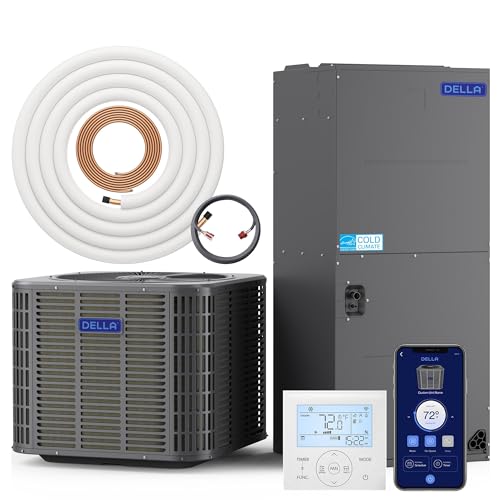
Central Air Unit for 2000 Sq Ft House: The Complete Sizing and Selection Guide
Choosing the right central air unit for a 2000 sq ft house is one of the most consequential decisions a homeowner can make. This page size sits right in the sweet spot between compact single-story homes and larger multi-zone properties, which means the correct system could fall anywhere between 3 and 4 tons depending on how your home is built and where it is located. Get the sizing right and you enjoy consistent comfort, reasonable energy consumption, and a system that lasts for many years. Get it wrong and you face uneven cooling, high humidity, short cycling, and premature equipment failure. This guide walks you through every variable that matters so you can approach a contractor conversation with confidence and clarity.
Why Correct Sizing Matters More Than Any Other Specification
Many homeowners assume that a larger central air unit will cool the house faster and more thoroughly. The opposite is true. An oversized system cools the air quickly but does not run long enough to remove humidity, leaving the house feeling clammy and cold. It also cycles on and off frequently, which strains the compressor and shortens the equipment lifespan. An undersized system, on the other hand, runs continuously during peak summer hours, struggles to reach the thermostat setpoint, and drives up energy consumption while wearing out components prematurely.
For a 2000 sq ft house, the margin between comfortable and uncomfortable is narrow. A properly sized unit runs in long, steady cycles that dehumidify effectively, maintain even temperatures across rooms, and operate within the manufacturer's efficiency envelope. This is why a professional load calculation is not a formality — it is the single most important step in the entire process. If you are still exploring general sizing principles, our guide on how to size an air conditioner provides the foundational framework.
Understanding BTU and Tonnage for a 2000 Sq Ft House
Central air capacity is expressed in British Thermal Units (BTU) per hour or in tons of cooling. One ton of cooling equals 12,000 BTU per hour. For a 2000 sq ft house, the baseline calculation using the common 20 BTU per square foot rule yields 40,000 BTU, which sits between 3 and 3.5 tons. However, this rule is a starting point, not a final answer. The table below shows how different home profiles shift the recommended tonnage.
| Home Profile | Recommended Capacity | Tier | Best For |
|---|---|---|---|
| Well-insulated newer home, mild climate, standard ceilings | 3 tons (36,000 BTU) | essential tier | Moderate summers, efficient construction |
| Average construction, mixed climate, some shade | 3.5 tons (42,000 BTU) | balanced tier | Most suburban homes in temperate zones |
| Older home, hot climate, large windows, poor insulation | 4 tons (48,000 BTU) | high-end tier | Hot climates, older construction, high sun exposure |
| Very efficient home, deep shade, mild summers | 2.5 tons (30,000 BTU) | starter tier | Mild regions, passive cooling design, low occupancy |
Notice that the range spans from 2.5 to 4 tons for the same square footage. This is why quoting square footage alone to a contractor is insufficient. Climate zone, ceiling height, window orientation, insulation R-value, air sealing quality, and the number of occupants all influence the final number. If your home is closer to 1500 sq ft, our guide on a central air unit for a 1500 sq ft home offers a more targeted breakdown.
Climate and Load Factors That Change the Equation
Climate Zone
A 2000 sq ft house in Phoenix, Arizona faces a far greater cooling load than an identical house in Portland, Oregon. The U.S. Department of Energy divides the country into climate zones, and HVAC contractors use design-day temperatures to size equipment. In hot-humid zones, the emphasis is on both sensible and latent capacity; in hot-dry zones, sensible capacity dominates. Your contractor should reference local design conditions when running the load calculation.
Insulation and Air Sealing
A well-insulated home with modern air sealing may need a full ton less capacity than a drafty older home of the same size. Attic insulation, wall insulation, double-pane windows, and sealed ductwork all reduce the load. If your home has never been air-sealed, investing in that before selecting a unit can allow you to choose a smaller, more efficient system that runs longer and dehumidifies better.
Ceiling Height and Window Area
Standard 8-foot ceilings are assumed in the basic 20 BTU rule. Vaulted ceilings, two-story foyers, and open floor plans increase the cubic footage the system must condition. Similarly, large south- or west-facing windows without shading add significant solar gain. Skylights and glass doors compound the effect. Each of these factors pushes the recommended capacity upward.
Occupancy and Internal Gains
People, appliances, and lighting generate heat. A home with four or five occupants and a busy kitchen requires more cooling than a home with two occupants. Home offices with computers and monitors add internal gains. These factors are part of a proper load calculation and should not be overlooked.
SEER2 Ratings and Efficiency: What to Look For
SEER2 is the updated seasonal energy efficiency ratio used under current DOE standards. For split-system central air conditioners, the minimum SEER2 rating in most U.S. regions is 14.3, with higher requirements in the southern and southwestern states. A higher SEER2 rating means the unit converts more electricity into cooling and less into waste heat. For a 2000 sq ft house, moving from a minimum-efficiency unit to a high-efficiency model can meaningfully reduce summer energy consumption over the system's lifespan.
Efficiency tiers generally break down as follows:
- Entry-level tier: SEER2 around 14.3 to 15. These units meet code and are a solid choice for mild climates or homes where the system runs fewer hours.
- Mid-range tier: SEER2 around 16 to 18. These units offer a strong balance of efficiency, features, and durable construction for most households.
- High-end tier: SEER2 of 20 or more. These variable-speed or two-stage units deliver excellent humidity control, quiet operation, and the lowest energy consumption in their class.
For a deeper dive into how SEER2 compares to the older SEER metric and what the DOE standards require in your region, see our explainer on SEER vs SEER2 DOE standards.
Single-Stage, Two-Stage, and Variable-Speed: Matching Technology to Your Home
The compressor technology inside the outdoor unit affects comfort, humidity control, noise, and energy use. For a 2000 sq ft house, all three options are viable depending on your priorities.
| Compressor Type | Comfort & Humidity | Tier | Best For |
|---|---|---|---|
| Single-stage | Basic; runs at full capacity or off | entry-level | Mild climates, straightforward installations |
| Two-stage | Good; runs at low or high capacity | mid-range | Most homes; better humidity control and quieter operation |
| Variable-speed | Excellent; modulates continuously | premium | Hot-humid climates, homes prioritizing quiet and efficiency |
A variable-speed system is the top-tier choice for homeowners who want the best possible humidity control and the quietest operation. It modulates output in small increments, matching the load precisely and running for longer periods at low speed. A two-stage system is the balanced-tier option for most 2000 sq ft homes, offering meaningful comfort improvements over single-stage without the premium of variable-speed technology. Single-stage remains the essential-tier choice for mild climates and straightforward budgets.
Ductwork: The Hidden Half of Central Air Performance
Even the best central air unit cannot overcome poorly designed or leaky ductwork. For a 2000 sq ft house, the duct system must be sized to deliver the required airflow to every room. Undersized ducts cause high static pressure, reduced airflow, and uneven temperatures. Leaky ducts in unconditioned attics or crawlspaces waste a significant portion of the cooling you pay for.
Before installing a new unit, have a contractor inspect the existing ductwork. Look for disconnected joints, crushed flex duct, missing insulation, and inadequate return air paths. Sealing and balancing the ducts can allow you to select a smaller, more efficient unit and still achieve better comfort. If your home has no ductwork at all, a ductless mini-split system may be a better fit, though for a 2000 sq ft whole-home application, a conventional central system or a multi-zone ductless setup are the realistic options.
Installation Considerations for a 2000 Sq Ft House
Installation quality has as much impact on performance as equipment selection. A properly installed 3-ton unit will outperform a poorly installed 4-ton unit every time. Key considerations include:
- Outdoor unit placement: The condenser needs adequate clearance for airflow, shade during peak sun hours where possible, and a level pad. Avoid enclosing it in tight spaces or placing it near dryer vents.
- Indoor air handler location: In basements, attics, or closets, the air handler must have room for service access and condensate management. A secondary drain pan and float switch protect against water damage.
- Line set routing: Refrigerant lines should be as short and direct as practical. Long runs or excessive bends reduce efficiency and may require adjustments to the charge.
- Electrical requirements: Central air units typically require a dedicated 240V circuit. Confirm your electrical panel has capacity before installation begins. Our guide on checking your home electrical panel explains what to look for.
- Permits and inspections: Most jurisdictions require a permit for central AC replacement or new installation. A reputable contractor handles this as part of the project.
If you are also replacing the heating side of your system, a central air with furnace configuration may be the most practical approach, allowing a single installation visit and a matched system design. For homeowners comparing overall project scope, our page on central air unit installation covers the full range of what goes into a complete job.
Humidity Control: The Comfort Factor Homeowners Overlook
In humid climates, cooling capacity alone does not guarantee comfort. A system that is oversized for the sensible load will satisfy the thermostat before it has run long enough to remove moisture. The result is a house that feels cold and clammy even at a low thermostat setting. Correct sizing, paired with a two-stage or variable-speed compressor, allows longer run times at lower capacity, which pulls more humidity out of the air. If you live in a hot-humid region, prioritize latent capacity and consider a system with enhanced dehumidification features. Our article on the comfortable humidity level in a house explains the target range and why it matters.
Thermostats and Controls: Getting the Most From Your System
A modern programmable or smart thermostat is a worthwhile addition to any new central air installation. It allows you to schedule setbacks during work hours, monitor energy use, and receive maintenance reminders. For a 2000 sq ft house with a single zone, a central thermostat in a well-circulated hallway is the standard approach. If your home has uneven temperatures between floors or wings, a zoning system with multiple thermostats and motorized dampers can balance the load. Our guide on the central air thermostat covers wiring, compatibility, and smart options in detail.
If your existing thermostat is malfunctioning, it can mimic the symptoms of a failing AC unit. Before assuming the worst, review our troubleshooting page on a central air thermostat not working to rule out a simple control issue.
Maintenance That Protects Your Investment
A central air unit for a 2000 sq ft house is a long-term investment, and routine maintenance is what protects it. The most important tasks are simple and can be done by most homeowners:
- Replace or clean the air filter every one to three months, depending on household dust and pet hair.
- Keep the outdoor condenser clear of leaves, grass clippings, and debris. Gently rinse the coils at the start of the cooling season.
- Check the condensate drain line for clogs. A clogged line can cause water damage and shut down the system.
- Schedule a professional tune-up each spring to check refrigerant charge, electrical connections, and overall system performance.
For a step-by-step walkthrough, see our guides on cleaning coils on a central air conditioner and cleaning the air conditioner drain line. Staying ahead of maintenance prevents the most common failures and keeps efficiency high.
Common Problems and When to Call a Professional
Even well-maintained systems develop issues over time. If your central air unit is running but not cooling, the cause could range from a dirty filter to a refrigerant leak. Our troubleshooting pages on a central air unit running but not cooling and a central air unit that turns on but does not cool help you narrow down the possibilities. If the fan is spinning but the air is warm, see our guide on a central air unit fan spinning but not cooling.
Some problems are best left to a certified HVAC technician. Refrigerant handling requires EPA certification, and electrical diagnostics on a 240V circuit carry real risk. Knowing when to stop troubleshooting and call a professional protects both your safety and your equipment.
Putting It All Together: A Practical Buying Framework
When you are ready to select a central air unit for your 2000 sq ft house, work through this sequence:
- Step 1 — Get a load calculation. Ask your contractor to perform a Manual J calculation and share the results. This is the foundation of correct sizing.
- Step 2 — Confirm ductwork condition. Have the ducts inspected, sealed, and balanced before or as part of the installation.
- Step 3 — Choose a capacity. Use the load calculation results, not square footage alone, to select between 3 and 4 tons.
- Step 4 — Select an efficiency tier. Match SEER2 to your climate and expected usage. Higher tiers pay off in hot climates with long cooling seasons.
- Step 5 — Choose compressor technology. Two-stage is the balanced-tier choice for most homes; variable-speed is the premium option for humidity control and quiet operation.
- Step 6 — Vet the installer. A quality installation is worth more than a marginally higher-tier unit installed poorly. Ask about licensing, insurance, warranties, and references.
Homeowners comparing central systems with other configurations may also want to review our page on central air units for a broader overview, or explore central heating and cooling if a combined system is under consideration.
Ready to Compare Central Air Options?
Explore top-rated central air units matched to 2000 sq ft homes, with detailed feature breakdowns and efficiency comparisons to help you decide with confidence.
View Recommended Units