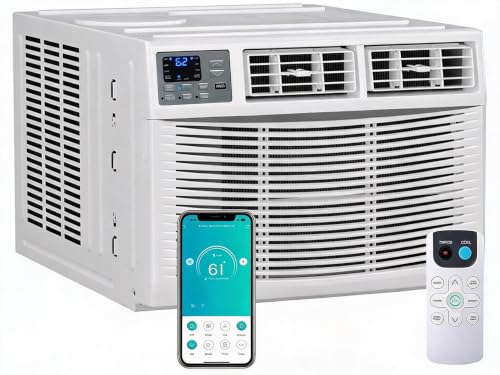
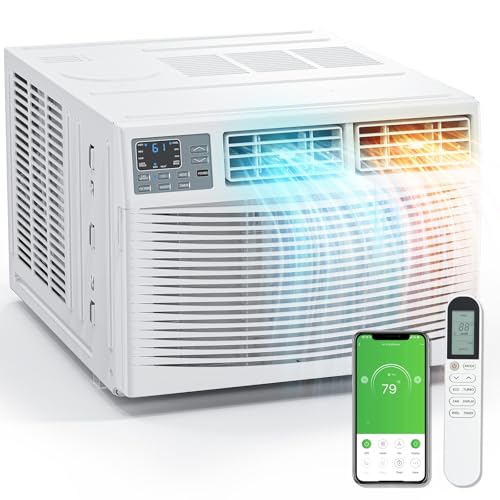
Combination Air Conditioner and Heater Window Unit: The Complete Guide
One window, two seasons. Learn how combination air conditioner and heater window units work, how to size them correctly, and how to choose the right model for year-round room comfort.
START YOUR RESEARCHWhy this guide matters: A combination air conditioner and heater window unit is one of the most space-efficient ways to keep a single room comfortable in both summer and winter. If you are comparing models before you buy, this guide explains the technology, sizing rules, efficiency ratings, and practical installation considerations so you can make a confident, well-informed decision.
What Is a Combination Air Conditioner and Heater Window Unit?
A combination air conditioner and heater window unit is a single appliance installed in a window opening that can both cool and heat the room. Instead of storing a window AC in summer and a space heater in winter, one unit handles both seasons. There are two main technologies behind the heating function: reverse-cycle heat pump models and electric heating element models.
Heat pump versions reverse the refrigerant cycle to move heat from the outside air into your room, which makes them very efficient in mild to moderate climates. Electric heater versions use resistance heating coils and are simpler in construction, often performing better when outdoor temperatures drop sharply. Understanding this difference is the first step toward choosing the right unit for your home.
These units are part of the broader through-the-wall AC and window-mounted category, and they share many installation principles with standard window air conditioners. If you are new to the category, our overview of what air conditioning is provides useful foundational context.
How Heat-and-Cool Window Units Work
In cooling mode, a combination unit operates exactly like a conventional window air conditioner: refrigerant absorbs heat from indoor air, the compressor moves it outdoors, and the indoor coil delivers cooled, dehumidified air. In heating mode, the process depends on the model type.
- Heat pump models: A reversing valve changes the direction of refrigerant flow, so the outdoor coil absorbs heat from outside air and the indoor coil releases it into the room. This is the same principle used in a mini-split heat pump, scaled down for a window frame.
- Electric heater models: A heating element warms air as it passes through the unit. These are straightforward, reliable, and effective in colder conditions, though they use more energy per unit of heat delivered than a heat pump.
Many modern units also include a thermostat that controls both heat and cool, fan-only modes, and remote control operation. If smart control matters to you, look for models with Wi-Fi and smart control features.
Cooling vs. Heating Capacity: What the Numbers Mean
Combination units publish two separate capacity figures. The cooling capacity is rated in BTU per hour, while the heating capacity is rated separately and is often lower than the cooling figure. This is one of the most overlooked details when shopping.
| Room Size | Typical Cooling Capacity | Heating Consideration | Best For |
|---|---|---|---|
| Up to 150 sq ft | 5,000 – 6,000 BTU | Supplemental warmth only | Bedrooms, home offices |
| 150 – 250 sq ft | 8,000 – 10,000 BTU | Mild-climate heating | Small living rooms, studios |
| 250 – 400 sq ft | 12,000 – 14,000 BTU | Moderate-climate heating | Large bedrooms, open-plan areas |
| 400 – 700 sq ft | 18,000 – 24,000 BTU | Strong heating for the zone | Living rooms, converted spaces |
For a deeper sizing walkthrough, see our guides on 8,000–10,000 BTU and 12,000–14,000 BTU capacity ranges. If you are specifically shopping for a larger heat-and-cool model, the 18,000 BTU window air conditioner with heat category is a good starting point.
Heat Pump vs. Electric Heater: Which Should You Choose?
This is the central decision for most buyers. The table below summarizes the practical trade-offs.
Heat Pump Models
Move heat rather than generate it, so they are typically more efficient in mild to moderate winters. Best for regions where temperatures rarely drop far below freezing.
Electric Heater Models
Simple, dependable resistance heating that performs consistently in colder conditions. Often the better choice for very cold climates or as a supplemental winter solution.
Dual-Function Convenience
Both types eliminate the need for a separate space heater, freeing floor space and simplifying seasonal changeover in a single room.
Efficiency Ratings
Check both the cooling efficiency (CEER or EER) and the heating efficiency where published. Our guide to SEER, EER, and HSPF explains what each metric means.
Efficiency Ratings You Should Check
Combination units are evaluated on cooling efficiency and, increasingly, on heating efficiency. The most common metrics are:
- CEER (Combined Energy Efficiency Ratio): The standard efficiency rating for window air conditioners in the United States, replacing the older EER for this product category.
- EER: Still shown on many spec sheets and useful for comparison when CEER is unavailable.
- HSPF: Applies to heat pump models and measures heating efficiency across a heating season.
ENERGY STAR certification is a reliable shortcut for identifying more efficient models. For context, see our pages on the ENERGY STAR window air conditioner with remote and the broader window air conditioner energy efficiency rating overview. Efficiency differences between entry-level and mid-range models are often larger than buyers expect, so comparing ratings carefully is worthwhile.
Installation and Electrical Requirements
Combination heat-and-cool window units are heavier and draw more current than cooling-only models, so installation deserves extra attention.
- Window and support: Verify the window frame can support the unit's weight and that the window type is compatible. Larger units may require a support bracket.
- Electrical circuit: Most small and medium units run on 115V, while larger 18,000–24,000 BTU models often require a dedicated 230V circuit. Confirm your outlet and breaker before ordering.
- Clearances: Follow the manufacturer's side and rear clearance requirements so the unit can exhaust heat properly in both modes.
- Sealing: Use the included insulation panels and weather stripping to prevent air leakage around the unit, which matters more in heating season.
If you are unsure about your electrical setup, our guide on power conversion and voltage basics can help clarify terminology. For installation help in your area, you can also review companies that install window air conditioners.
Buying Checklist: What to Look For
Use this checklist to compare models systematically before you commit.
- Cooling capacity: Matched to your room size and heat load.
- Heating capacity: Adequate for your climate and expectations.
- Heating technology: Heat pump or electric element, chosen for your winters.
- Efficiency: CEER and, for heat pumps, HSPF.
- Voltage: 115V or 230V, matched to your outlet.
- Controls: Thermostat, remote, programmable timer, smart features.
- Noise level: Check decibel ratings, especially for bedrooms.
- Filtration: Washable filters and any air-purifying features.
- Build quality: Solid construction and weather-resistant finish for outdoor-facing components.
For quiet operation, see our quiet air conditioner guide. For air quality features, our AC with air purifier overview is a useful companion.
Common Mistakes to Avoid
- Oversizing for cooling: A unit that is too large cools quickly but leaves the room clammy and cycles frequently.
- Ignoring heating output: Buying based on cooling BTU alone can leave you underwhelmed in winter.
- Underestimating weight: Larger combination units need proper support and sometimes professional installation.
- Skipping the electrical check: A 230V unit will not run on a standard 115V outlet.
- Neglecting maintenance: Clean filters and coils keep both cooling and heating performance stable over time.
Maintenance for Year-Round Performance
A combination unit runs in two modes, so a simple maintenance routine pays off in both seasons. Clean or replace the air filter monthly during heavy use, inspect the outdoor-facing coil for debris before heating season, and check the seal around the window frame each autumn. Scheduling a professional check before winter helps catch refrigerant or electrical issues early.
If you notice reduced cooling or unusual behavior, our troubleshooting guide for AC blowing cold air but not cooling covers common causes. For compressor-related concerns, see our compressor replacement overview.
Frequently Asked Questions
What is a combination air conditioner and heater window unit?
It is a single window-mounted appliance that both cools and heats a room. Depending on the model, heating is provided by a reverse-cycle heat pump or an electric heating element, giving you year-round comfort from one installation.
How do I size a combination window AC and heater?
Size for cooling first by matching BTU to room area and heat load, then confirm the heating capacity suits your climate. A unit in the 18,000 BTU heat-and-cool window class suits larger rooms, while 5,000–12,000 BTU models cover smaller spaces.
Is a heat pump window unit better than one with an electric heater?
Heat pump models are typically more efficient in mild to moderate climates because they move heat instead of generating it. Electric heater models are simpler and perform well in colder conditions. Choose based on your winter temperatures and efficiency priorities.
Can a combination window unit replace a central heating system?
Generally no. It is designed for single-room comfort and works best as a supplemental or localized solution. Whole-home comfort typically requires a central system or a multi-zone ductless setup, such as those covered in our dual-head mini-split and mini-split heat pump guides.
Ready to Compare Combination Units?
Use the checklist above, verify your room size and electrical setup, and then review the recommended models below to find the right fit for your space.
VIEW RECOMMENDED MODELS