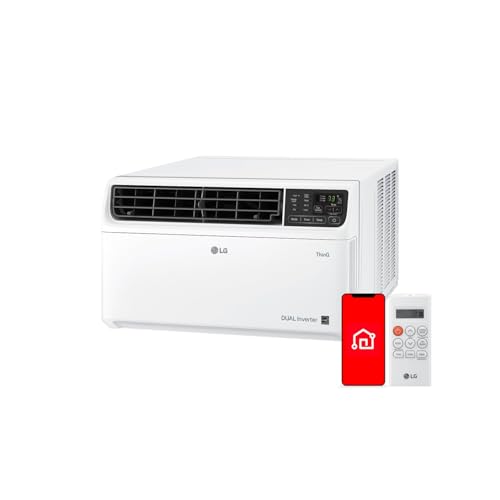
Dual Inverter Smart Window Air Conditioner: Complete Buyer's Guide
Window units have quietly become some of the most sophisticated cooling products on the market. This guide explains how dual inverter compressor technology works, what "smart" really means in a window air conditioner, how to size one correctly, and which tier of product fits your room and usage patterns — so you can decide with confidence before you shop.
Explore Recommended ModelsWhat This Guide Covers
- What is a dual inverter smart window air conditioner?
- How dual inverter technology works
- What "smart" adds to a window AC
- Key benefits and honest trade-offs
- Sizing and BTU selection
- Efficiency ratings explained
- Market tiers: entry to flagship
- Installation and window compatibility
- Maintenance and long-term care
- How to choose the right model
- Frequently asked questions
What Is a Dual Inverter Smart Window Air Conditioner?
A dual inverter smart window air conditioner is a window-mounted cooling unit that pairs two key modern technologies: a dual inverter compressor system and built-in smart connectivity. The compressor is the heart of any air conditioner, and "dual inverter" describes a compressor and control design that can modulate its speed across a wider, finer range than a conventional fixed-speed or basic single inverter compressor. The "smart" part refers to Wi-Fi connectivity, mobile app control, scheduling, and often voice assistant integration.
Traditionally, window air conditioners were simple on/off machines. The compressor ran at full power until the room reached the set temperature, then shut off completely, then restarted when the room warmed again. That cycle is effective but inefficient and produces noticeable temperature swings and noise. Dual inverter smart window units change that pattern entirely: they adjust compressor speed continuously, holding the room closer to the target temperature with less on/off cycling, while letting you control everything from your phone.
If you are still comparing broad categories, our overview of different types of window air conditioners is a useful starting point before diving into inverter specifics.
How Dual Inverter Technology Works
To understand dual inverter cooling, it helps to separate the two ideas: inverter control and dual compressor operation.
Inverter control, briefly
An inverter is an electronic circuit that converts incoming power and controls the compressor motor's speed. Instead of running the compressor at a single fixed speed, an inverter-driven compressor can slow down or speed up smoothly. When the room is far from the set temperature, it runs faster; as the room approaches the target, it slows to a gentle maintenance speed. This is the same principle behind the efficiency gains discussed in our comparison of inverter versus non-inverter split AC systems.
What "dual" adds
Dual inverter designs typically use a twin-rotary compressor or a dual-cylinder rotary compressor. In practical terms, this configuration allows the compressor to operate efficiently across an even broader capacity range. Two compression elements working together can deliver high cooling output when needed and then settle into very low, stable output for long stretches. The result is finer temperature control, reduced start-stop cycling, and often quieter low-speed operation. Some manufacturers also use "dual inverter" to describe dual inverter-driven fans plus compressor, but the most common meaning is a twin-rotary compressor with inverter control.
Quick takeaway: A dual inverter window AC does not simply cool harder — it cools more smoothly. The advantage shows up as steadier room temperature, less compressor wear from cycling, and lower energy use during long cooling sessions.
What "Smart" Adds to a Window Air Conditioner
Smart connectivity turns a window unit from a device you walk over to into a device you manage. Features vary by model and tier, but the most common smart capabilities include:
- Wi-Fi app control — adjust mode, fan speed, temperature, and schedules from a smartphone, even when away from home.
- Scheduling and timers — set cooling windows that match your daily routine, such as pre-cooling a bedroom before bedtime.
- Voice assistant support — hands-free control through popular voice assistants on compatible models.
- Geofencing — some apps can detect when you leave and automatically switch the unit to an efficiency mode.
- Energy monitoring — higher-tier models may report estimated energy usage and runtime statistics in the app.
- Firmware updates — connected units can receive software improvements over time.
Smart features are convenient, but they are not the core of cooling performance. A well-sized dual inverter unit with basic controls will outperform an oversized smart unit with poor sizing. Treat connectivity as a comfort and convenience layer on top of solid mechanical fundamentals. For a broader look at connected cooling, see our guide to the dual inverter smart Wi-Fi enabled window air conditioner.
Key Benefits and Honest Trade-Offs
Benefits
- Steadier comfort — finer compressor modulation means fewer temperature swings and less hot-cold cycling.
- Better part-load efficiency — long, gentle cooling runs are generally more efficient than repeated full-power starts.
- Quieter low-speed operation — when the room is near target, the compressor and fans can settle to low output.
- Remote management — smart control helps you avoid cooling an empty room and lets you pre-cool before arrival.
- Reduced compressor wear — fewer hard start-stop cycles can support longer service life.
Trade-offs to consider
- Higher position in the market — dual inverter smart units sit above basic fixed-speed window ACs in market tier.
- More complex electronics — smart boards and inverter modules add components that could need service over a long life.
- App dependency — smart features require a stable home network and a compatible app; setup quality varies by brand.
- Still a window unit — cooling is limited to the room or adjacent open space; it is not a whole-home solution.
If your priority is whole-home comfort rather than single-room cooling, compare this category with different types of air conditioning for homes before committing.
Sizing and BTU Selection
Correct sizing matters more than any single feature. An oversized unit cools quickly but cycles too often, leaving the room clammy and wasting energy. An undersized unit runs constantly and never quite catches up on hot days. Dual inverter technology softens the penalty of slight oversizing, but it does not replace proper sizing.
Use this general starting range, then adjust for sun exposure, ceiling height, occupants, and kitchen heat:
| Room Size | Typical BTU Range | Best For |
|---|---|---|
| Up to 150 sq ft | 5,000 – 6,000 BTU | Bedrooms, small offices, dorms |
| 150 – 250 sq ft | 8,000 – 10,000 BTU | Medium bedrooms, living areas |
| 250 – 400 sq ft | 12,000 – 14,000 BTU | Large rooms, open-plan spaces |
| 400 – 550 sq ft | 15,000 – 18,000 BTU | Studio apartments, large living rooms |
For a more precise calculation, our guide to how to size an air conditioner walks through room factors step by step. Also consider that dual inverter units often perform best when matched to the room rather than oversized "for safety."
Sizing tip: If your room sits at the top of a BTU band and gets strong afternoon sun, choose the upper end of that band. If it is shaded and well insulated, the lower end is usually sufficient.
Efficiency Ratings Explained
Window air conditioners are rated with efficiency metrics that let you compare models fairly. The most relevant are:
- CEER (Combined Energy Efficiency Ratio) — the standard efficiency metric for window units, blending full-load and part-load performance.
- EER (Energy Efficiency Ratio) — cooling output divided by power input at a specific test condition.
- ENERGY STAR certification — indicates the model meets a recognized efficiency threshold above the minimum standard.
Higher efficiency ratings generally mean lower electricity use for the same cooling output. Dual inverter models often post strong part-load numbers because their compressors modulate rather than cycle. For context on how efficiency standards evolve, see our overview of DOE AC efficiency standards and the explainer on what a SEER rating means (SEER applies mainly to central and split systems, but the concept of seasonal efficiency is useful background).
Market Tiers: Entry to Flagship
Dual inverter smart window ACs span several market tiers. Instead of focusing on numbers, think about what each tier typically delivers in build quality, features, and refinement. The classification below uses universal tier descriptors.
| Tier | Typical Characteristics | Best For |
|---|---|---|
| Entry-level | Core dual inverter cooling, basic app control, standard fan and mode options, simpler display | Buyers who want inverter efficiency and app convenience without extra features |
| Mid-range | Refined compressor modulation, quieter fans, fuller app suite with schedules and voice support, better filtration | Bedrooms and living rooms where comfort and quiet matter daily |
| Premium | Advanced smart features, energy monitoring, improved airflow design, premium materials, stronger warranty coverage | Primary rooms and buyers who value long-term refinement and support |
| Flagship | Top-of-line compressor control, best-in-class noise performance, comprehensive smart ecosystem, heavy-duty build | Users who want the most polished dual inverter smart window experience available |
As a rule, mid-range models usually offer the most balanced combination of refinement and feature depth, while premium and flagship tiers add quieter operation, smarter automation, and more durable construction. Entry-level models still deliver the core dual inverter benefit — they simply trim extras.
Installation and Window Compatibility
Window air conditioners are among the simplest cooling products to install, but dual inverter smart units still require care:
- Window type and opening — most units fit double-hung windows within a stated width and height range. Casement and crank-out windows need special solutions; see our guides to the crank-out casement window air conditioner and the crank-out window kit for portable units.
- Support and safety — larger units should use proper support brackets and follow the manufacturer's installation instructions.
- Electrical requirements — confirm the required voltage and circuit rating. If you are unsure about your home's wiring, review whether you need an electrician for AC installation.
- Wi-Fi coverage — smart features need a reliable signal at the window location; check connectivity before finalizing placement.
Also think about where the unit will sit. Direct sun on the outdoor portion reduces efficiency, and poor sealing around the window frame lets cooled air escape. Simple weather sealing around the installation makes a measurable difference.
Maintenance and Long-Term Care
A dual inverter smart window AC is a long-term investment, and basic maintenance protects both comfort and efficiency:
- Clean or replace the air filter every few weeks during heavy use. A clogged filter forces the unit to work harder. Our guide on how to clean an AC filter covers the process.
- Inspect and clean the coils seasonally; dusty condenser coils reduce heat rejection.
- Check the drain path for clogs that can cause water to back up or drip indoors.
- Keep the outdoor side clear of debris, leaves, and obstructions.
- Update the app and firmware when prompted to keep smart features and security current.
- Schedule a professional check if cooling performance drops or unusual noises appear. See when to call an HVAC technician.
If the unit ever stops cooling properly, our troubleshooting guide on AC not cooling covers common causes before you call for service.
How to Choose the Right Dual Inverter Smart Window AC
Work through these decisions in order, and the right model becomes much easier to identify:
- Confirm the room size and BTU range. Match the unit to the room rather than oversizing.
- Decide how much smart you need. Basic app control is enough for many buyers; energy monitoring and automation matter more for heavy users.
- Choose your tier. Entry-level for essential dual inverter cooling; mid-range for the best balance; premium or flagship for maximum refinement and quiet.
- Check window fit and electrical requirements. Verify dimensions, support needs, and circuit compatibility before ordering.
- Review noise expectations. Quieter operation usually correlates with higher tiers and better fan design.
- Confirm warranty and support. Smart units benefit from strong brand support for app and firmware issues.
If you are also considering other cooling formats, the comparison of dual inverter portable air conditioners and dual inverter through-the-wall units can help you weigh installation flexibility against window-mounted convenience.
Ready to Compare Real Models?
The recommendations below are selected dual inverter smart window air conditioners across market tiers. Use the tier descriptors and feature notes to shortlist the models that match your room, your window, and your smart-home preferences.
View Recommended ModelsFrequently Asked Questions
What is a dual inverter smart window air conditioner?
It is a window-mounted air conditioner that combines dual inverter compressor technology with smart connectivity features such as Wi-Fi control, app scheduling, and voice assistant support.
Is a dual inverter window AC more efficient than a single inverter unit?
Dual inverter models generally maintain temperature with finer compressor modulation, which can reduce cycling losses and improve comfort and efficiency compared with single inverter or fixed-speed units.
Do dual inverter smart window ACs need a special electrical outlet?
Most window models in this category run on standard household voltage, but larger capacities may require a dedicated circuit. Always check the manufacturer's electrical requirements and consult a licensed electrician if unsure.
Can a smart window AC be controlled when I am away from home?
Yes. Smart models typically connect to a home Wi-Fi network, allowing remote control through a mobile app so you can adjust settings, schedules, and modes from anywhere.
Will a dual inverter window unit fit my window?
Most units fit standard double-hung windows within a stated width and height range. Measure your window opening and compare it with the manufacturer's specifications. Casement or crank-out windows may require alternative solutions.