
Energy Star 15000 BTU Air Conditioner: The Complete Guide
Everything you need to know before choosing a high-capacity, energy-efficient cooling unit for large rooms, open-plan living areas, and master suites.
VIEW RECOMMENDED UNITSQuick Summary: A 15000 BTU air conditioner is a high-capacity cooling solution designed for large rooms between roughly 550 and 700 square feet. When paired with an Energy Star certification, it delivers strong cooling performance while consuming noticeably less electricity than standard-efficiency models in the same capacity class. This guide explains how to size it correctly, which efficiency ratings matter, and how to choose the right unit for your space.
What Exactly Is a 15000 BTU Energy Star Air Conditioner?
BTU, or British Thermal Unit, measures cooling capacity — specifically how much heat an air conditioner can remove from a room in one hour. A 15000 BTU air conditioner sits in the high-capacity range for residential cooling. It is significantly more powerful than the common 8000–10000 BTU units typically used in bedrooms, and it is designed for spaces that genuinely need consistent, deep cooling.
The Energy Star label is awarded by the U.S. Department of Energy to products that meet strict efficiency benchmarks. An Energy Star certified 15000 BTU unit uses less electricity to deliver the same cooling output compared to non-certified models. This matters because high-capacity units run longer and consume more power — so efficiency at this capacity level has a proportionally larger impact on your annual energy consumption.
In practical terms, an Energy Star 15000 BTU air conditioner is a strong fit for homeowners and renters who need serious cooling power for a large room, an open-plan living and dining area, a master bedroom suite, or a finished basement — and who want to keep electricity use in check while doing so.
Who Should Choose a 15000 BTU Unit?
Not every room needs this level of cooling capacity. Choosing too large a unit leads to short cycling — the compressor turns on and off too frequently, which reduces dehumidification and puts extra wear on the system. Choosing too small a unit means the system runs constantly without reaching the target temperature. The 15000 BTU sweet spot generally applies to the following scenarios:
- Large primary bedrooms or master suites with en-suite bathrooms and walk-in closets attached.
- Open-plan living and dining areas where conditioned air must travel across a continuous space without dividers.
- Finished basements or converted garages that have been properly insulated and sealed.
- Home offices or home studios with significant heat-generating equipment such as computers, monitors, and lighting.
- Rooms with high ceilings or large south-facing windows that gain more solar heat than a standard bedroom.
If your room is under roughly 500 square feet, a 12000 BTU unit is usually the better match. If it is consistently above 750 square feet, you may want to consider a broader look at Energy Star air conditioner options across higher capacities or a zoned approach with multiple units.
How to Confirm 15000 BTU Is the Right Size for Your Room
The commonly cited rule of thumb is that 15000 BTU suits rooms of roughly 550 to 700 square feet. However, square footage alone is not enough. Several factors shift the ideal capacity up or down:
- Ceiling height: Rooms with ceilings above 9 feet contain more air volume and may need slightly more capacity.
- Insulation quality: Poorly insulated rooms lose cool air faster and require more output.
- Window area and orientation: Large south- or west-facing windows increase heat gain significantly.
- Occupancy: Each additional person adds roughly 600 BTU of heat load.
- Climate zone: Homes in hotter, more humid climates often benefit from a capacity buffer.
- Heat-generating appliances: Kitchens and home offices with electronics add to the load.
For a more precise estimate, use a BTU calculator by room size that accounts for these variables. If your calculation lands close to 14000–16000 BTU, a 15000 BTU unit is a well-balanced choice.
Efficiency Ratings That Matter at 15000 BTU
When you shop for an Energy Star 15000 BTU air conditioner, you will encounter several efficiency metrics. Understanding them helps you compare units on equal footing.
SEER2 (Seasonal Energy Efficiency Ratio 2)
SEER2 is the updated efficiency standard introduced by the DOE. It measures cooling efficiency across an entire season. For a 15000 BTU unit, a SEER2 of 14.3 or higher is typically required for Energy Star certification in single-zone ductless systems. Premium inverter models frequently reach 18–22 SEER2, delivering substantially lower energy use over the year. If efficiency is your priority, read a deeper explanation of SEER ratings to understand how the metric is calculated.
EER2 (Energy Efficiency Ratio 2)
EER2 measures efficiency at a single peak-temperature condition. It is useful for comparing how a unit performs on the hottest days, when demand is highest. Higher EER2 means better performance under maximum load.
Energy Star Certification Thresholds
Energy Star certification for room air conditioners and ductless systems is updated periodically. For a 15000 BTU unit, certification signals that the model meets or exceeds the current DOE efficiency benchmark for its product class. You can explore Energy Star certified air conditioners to see how different models compare across categories.
Which Type of 15000 BTU Energy Star Unit Fits Your Space?
A 15000 BTU air conditioner is available in several form factors. Each has trade-offs in installation requirements, flexibility, and efficiency potential.
Ductless Mini-Split (High-End Tier)
Ductless mini-splits are the most efficient and quietest option at this capacity. A single-zone 15000 BTU mini-split consists of an outdoor condenser and an indoor wall-mounted air handler. They are ideal for rooms without ductwork, additions, and open-plan spaces. Many qualify for Energy Star with SEER2 ratings above 18. If you are considering this route, review Energy Star ductless mini-split options and how ductless mini-split AC installation works in practice.
Window Air Conditioner (Mid-Range Tier)
Window units at 15000 BTU are a practical choice for apartments and homes where a mini-split is not feasible. They are self-contained and install in a double-hung or sliding window. Energy Star certified window units at this capacity are available, though they are louder than mini-splits. Explore Energy Star certified window air conditioners for comparisons within this category.
Portable Air Conditioner (Entry-Level Tier)
Portable units offer flexibility but are generally less efficient than window or mini-split systems at the same capacity. They exhaust hot air through a window or wall vent. A 15000 BTU portable unit can cool a large room but may struggle in very hot climates due to the single-hose or dual-hose design limitations. See Energy Star certified portable air conditioner models if this format suits your space.
At-a-Glance Comparison: 15000 BTU AC Types
| Type | Tier | Best For | Efficiency Potential | Noise Level |
|---|---|---|---|---|
| Ductless Mini-Split | Flagship | Large rooms, additions, no ducts | Highest (SEER2 18+) | Very quiet |
| Window AC | Mid-Range | Apartments, single rooms | Moderate (SEER2 14–16) | Moderate |
| Portable AC | Entry-Level | Flexible placement, renters | Lower (EER 10–12) | Moderate to high |
| Through-the-Wall AC | Mid-Range | Permanent wall sleeve installations | Moderate (SEER2 14–15) | Moderate |
Key Features to Look for in a 15000 BTU Energy Star Unit
- Energy Star certification: The baseline signal of efficiency compliance — verify the certification on the DOE's official product list.
- Inverter compressor: Inverter-driven compressors modulate speed continuously rather than cycling on and off, improving comfort and efficiency. Learn more about energy-efficient mini-split technology.
- SEER2 rating of 16 or higher: At 15000 BTU, a higher SEER2 rating translates to meaningful annual energy savings.
- Adjustable fan speeds: Multiple fan settings allow you to balance cooling intensity and noise.
- Programmable or smart thermostat compatibility: Scheduling cooling around occupancy reduces waste. See how to use a programmable thermostat effectively.
- Washable or easily replaceable filters: Maintenance access matters at this capacity because the unit runs longer. Read about when to replace AC filters.
- Sound rating in decibels: For bedrooms and living rooms, quieter operation is a priority — look for units rated below 45 dB on low fan speed.
- Wi-Fi and app control: Smart controls add convenience and allow integration with home automation schedules.
Installation and Electrical Considerations
A 15000 BTU air conditioner draws more power than smaller units. Before purchasing, confirm the electrical requirements of your chosen model:
- Voltage: Most 15000 BTU window and portable units run on 115V, but some larger models require 230V. Ductless mini-splits almost always require 230V.
- Circuit amperage: Window units at this capacity typically require a dedicated 15A or 20A circuit. Check whether your existing outlet is on a dedicated circuit.
- Dedicated outlet: Avoid sharing a circuit with other high-draw appliances.
If you are installing a mini-split, professional installation is strongly recommended. The refrigerant lines must be properly vacuumed and charged, and local permits may be required. Review ductless mini-split air conditioner installation for the step-by-step process. For window and portable units, DIY installation is feasible with careful attention to window sealing and support brackets.
Maintenance Tips for Long-Term Efficiency
An Energy Star unit only delivers its rated efficiency when properly maintained. Schedule these tasks to keep performance consistent:
- Clean or replace the air filter every 1–3 months during peak cooling season. A clogged filter forces the system to work harder.
- Inspect the outdoor condenser coil (for mini-splits) and remove debris such as leaves and pollen.
- Check the window seal on window units to prevent cool air leakage.
- Schedule an annual professional check-up to verify refrigerant levels and electrical connections.
- Use a seasonal checklist to prepare the unit before summer. See a seasonal AC checklist for a step-by-step routine.
Following energy-saving tips for AC alongside regular maintenance helps you get the most from your unit's efficiency rating.
Common Mistakes to Avoid When Buying a 15000 BTU Unit
- Oversizing for the room: Buying 15000 BTU for a 300 sq ft bedroom leads to short cycling, poor humidity control, and unnecessary energy use.
- Ignoring the electrical panel: A 15000 BTU unit may require a dedicated circuit. Confirm your panel capacity before purchase.
- Choosing a non-Energy Star model to save on the unit itself: The long-term energy difference usually outweighs the initial difference in acquisition tier over the life of the appliance.
- Overlooking installation quality: A poorly sealed window installation or a mini-split with an improperly evacuated line set will underperform regardless of its efficiency rating.
- Neglecting the filter: The single most common cause of reduced cooling performance is a dirty filter.
Top Energy Star 15000 BTU Air Conditioners to Consider
⚠️ AFFILIATE DISCLOSURE: This website contains affiliate links. As an Amazon Associate, we earn from qualifying purchases. If you make a purchase through these links, we may receive a small commission at no additional cost to you. Read our full affiliate policy.

Friedrich Chill Premier Inverter 15,000 BTU 115v Cooling Only Window & Wall Unit
Check price on Amazon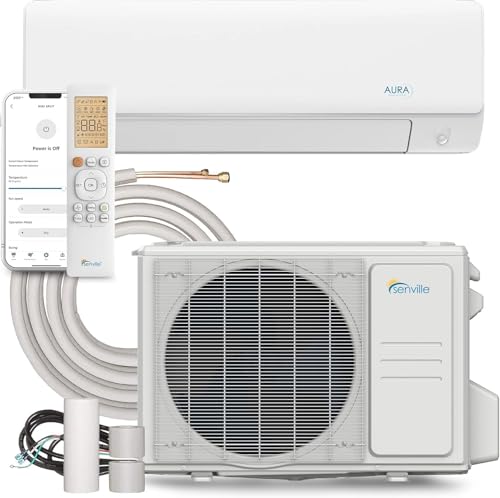
Senville AURA Mini Split Air Conditioner, Heat Pump, White, 15000 BTU
Check price on Amazon
Friedrich Chill Premier 15,000 BTU 115v Cooling Only Window & Wall Unit | 115V cool-only operation
Check price on Amazon
Whirlpool 15,000 BTU Window Air Conditioner with Dehumidifier, White | 115V, Remote Control, Auto-Restart, 24H-Timer, for Rooms up to 700 Sq. Ft., Living Room, Bedroom, or Kitchen
Check price on Amazon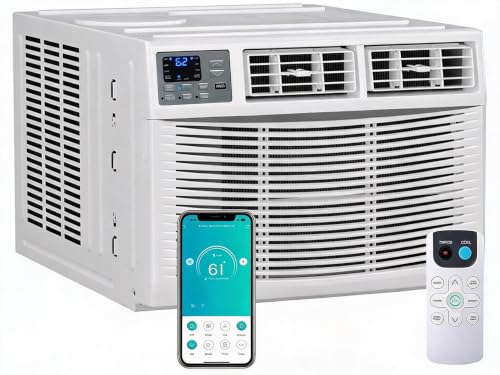
18000 BTU Window Air Conditioner & Heater Combo – APP & Remote Control | Dehumidifier, Fan Efficient Cooling & Heating for Rooms up to 1000 Sq Ft – Ideal for Apartment, Living Room, Bedroom
Check price on Amazon
Midea 12,000 BTU Window Air Conditioner with Heat, 550 Sq Ft | Smart Inverter Control, Energy Star Rated, Quiet Operation, Electronic Control, Remote, Heat and Dehumidifier Function
Check price on Amazon
LG 10,000 BTU Smart Window Air Conditioner, 115V, Cools 450 Sq. Ft. for Bedroom, Living Room, Apartment, Dual Inverter, Quiet Operation, Energy Star, works with LG ThinQ, Amazon Alexa and Hey Google
Check price on AmazonFrequently Asked Questions
What room size does a 15000 BTU air conditioner cool?
A 15000 BTU air conditioner is generally sized for rooms between 550 and 700 square feet, depending on ceiling height, insulation, window area, and local climate. Rooms with high ceilings or direct sun exposure may need a slightly higher capacity.
Is an Energy Star 15000 BTU air conditioner worth it?
Yes. Energy Star certified units meet strict efficiency guidelines set by the DOE, meaning they use less electricity than standard models. Over a full cooling season, a high-efficiency 15000 BTU unit can deliver meaningful energy savings, especially when used daily during peak summer months.
What SEER2 rating should I look for in a 15000 BTU AC?
For a 15000 BTU unit, look for a SEER2 rating of at least 14.3 for single-zone ductless systems, or 15+ for premium inverter models. Higher SEER2 ratings indicate greater efficiency and lower long-term energy use.
Can a 15000 BTU mini-split cool multiple rooms?
A single-zone 15000 BTU mini-split is designed for one large room or an open-plan area. To cool multiple rooms, you would need a multi-zone system with separate indoor units, each sized for its respective space. See ductless mini-split systems for multi-zone configurations.
How many amps does a 15000 BTU air conditioner use?
Most 115V 15000 BTU window units draw around 12–14 amps, requiring a dedicated 15A or 20A circuit. Ductless mini-splits at this capacity typically run on 230V and draw significantly fewer amps. Always verify the nameplate rating of the specific model.
Final Thoughts Before You Choose
An Energy Star 15000 BTU air conditioner is a serious cooling investment for large spaces. The right choice balances capacity, efficiency rating, unit type, and installation requirements. Start by confirming your room's actual BTU requirement, then narrow your options by form factor — mini-split for quiet efficiency, window for straightforward installation, or portable for flexibility.
If you want to compare across efficiency tiers more broadly, review our guide to Energy Star air conditioner models, or explore energy-efficient air conditioning systems for whole-home planning. For rooms that need less capacity, see the Energy Star 10000 BTU air conditioner guide as a reference point.
Whichever direction you choose, verify the Energy Star certification on the official DOE listing, confirm the electrical requirements, and plan for regular maintenance. These three steps will keep your 15000 BTU unit performing at its rated efficiency for years.