Energy Star Certified Air Conditioner: The Complete Buyer's Guide
Understand what Energy Star certification really means, how SEER2 and CEER thresholds work, which unit types qualify, and how to choose a certified air conditioner that delivers efficient, reliable cooling for years.
Editorial note: This guide is written for homeowners and renters who are researching air conditioners and want a clear, practical explanation of Energy Star certification before making a purchase decision.
What an Energy Star Certified Air Conditioner Actually Means
Energy Star is a voluntary labeling program run by the U.S. Environmental Protection Agency in partnership with the Department of Energy. When an air conditioner carries the Energy Star label, it means the model has been independently tested and verified to meet or exceed a specific efficiency threshold that is stricter than the federal minimum standard. In practical terms, an Energy Star certified air conditioner delivers the same cooling output as a comparable standard unit while consuming noticeably less electricity.
This distinction matters because the federal minimum efficiency standard is exactly that — a minimum. It represents the least efficient unit that may legally be sold. Energy Star certification sits above that floor and identifies products that are meaningfully more efficient within their category. For a homeowner comparing two window units or two central systems with similar capacity, the certified model is the one designed to run more efficiently across the cooling season.
It is important to understand what the label does not guarantee. Certification does not automatically mean a unit is the quietest, the most durable, or the best match for your specific room. It is an efficiency credential, not an overall quality score. The smart approach is to treat certification as a baseline filter, then evaluate capacity, build quality, noise level, and installation requirements separately.
If you are still mapping out the broader landscape of efficient cooling options, our overview of energy efficiency in HVAC systems provides useful context before narrowing down to a specific certified model.
How the Certification Process Works
Energy Star certification for air conditioners is not self-declared. Manufacturers submit models to accredited testing laboratories, where performance is measured under standardized conditions. The resulting efficiency metrics are compared against the current Energy Star specification for that product category. Only models that clear the threshold are eligible to carry the label.
The program also includes ongoing verification. The EPA periodically audits certified products and requires manufacturers to recertify when specifications are updated. This is why the efficiency numbers on an older certified unit may differ from the current requirement — the specification evolves over time, generally becoming stricter as technology improves.
Three practical takeaways follow from this process:
- The label reflects tested performance, not marketing claims. Efficiency figures come from laboratory measurement rather than manufacturer estimation.
- Specifications change. A model certified several years ago may no longer meet the current threshold, even though it still carries the label it earned at the time.
- Category matters. Window units, portable units, central systems, and ductless mini-splits are evaluated against different criteria, so a certification in one category does not imply anything about another.
Practical tip: Always check the certification against the exact model number, not just the product family name. Manufacturers sometimes sell near-identical-looking variants with different efficiency ratings, and only some variants are certified.
SEER2, CEER, and the Efficiency Thresholds That Matter
The efficiency metric used depends on the type of air conditioner. Understanding these metrics is essential because they are the language in which certification requirements are written.
SEER2 for central and split systems
SEER2 is the updated Seasonal Energy Efficiency Ratio, introduced to reflect more realistic duct and static-pressure conditions than the original SEER metric. For split-system central air conditioners, Energy Star certification generally requires a SEER2 rating of at least 14.3 in the northern region and 15.2 in the southern region. Because climate region affects the threshold, two identical units sold in different states may have different certification status.
CEER for window and portable units
Room air conditioners are evaluated using the Combined Energy Efficiency Ratio, which blends cooling efficiency with standby power consumption. Window units and portable units each have their own Energy Star specification with distinct CEER thresholds. This is why a certified window unit and a certified portable unit are not directly comparable on a single number.
HSPF2 for heat pumps
If you are considering a ductless system that also provides heating, the heating efficiency metric is HSPF2. A certified ductless mini-split typically must meet both a cooling and a heating threshold to qualify, since it operates year-round.
| Unit Category | Primary Efficiency Metric | Best For |
|---|---|---|
| Central split system | SEER2 | Whole-home cooling with existing ductwork |
| Window air conditioner | CEER | Single rooms, renters, simple installation |
| Portable air conditioner | CEER (portable specification) | Spaces without window mounting options |
| Ductless mini-split | SEER2 and HSPF2 | Zoned cooling and heating without ducts |
Which Air Conditioner Types Can Earn Energy Star Certification
Certification is available across most residential cooling categories, but the specifications differ substantially. Here is how the main categories compare in practice.
Energy Star certified window air conditioners
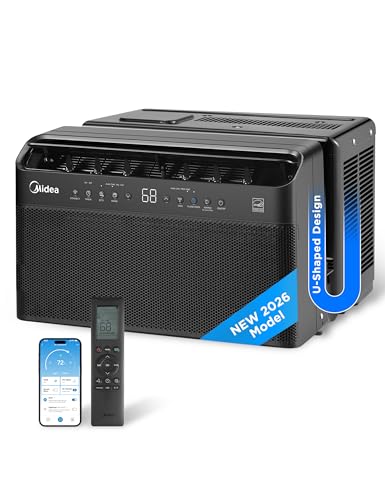
Window units are the most accessible entry point into certified cooling. They are self-contained, require no ductwork, and can be installed by a handy homeowner. Certified window models typically feature variable-speed compressors, better insulation around the chassis, and more precise thermostat control than standard units. If you are shopping specifically in this category, our guide to Energy Star certified window air conditioners breaks down what separates the stronger options from the weaker ones within the tier.
Energy Star certified portable air conditioners
Portable units are evaluated under a separate specification that accounts for their venting arrangement and standby power draw. Certification in this category is meaningful because portable units vary widely in real-world efficiency. A certified portable air conditioner is generally a more dependable choice for a bedroom or home office than a standard unit with similar claimed capacity.
Energy Star certified central air conditioners
Central systems carry the largest efficiency stakes because they cool an entire home and run for long stretches. Certification here reflects a SEER2 threshold that is meaningfully above the federal minimum. The trade-off is that central system efficiency depends heavily on ductwork quality — a certified condenser connected to leaky ducts will not deliver its rated performance. If you are evaluating whole-home options, our overview of energy efficient central air units explains how the components interact.
Energy Star certified ductless mini-splits
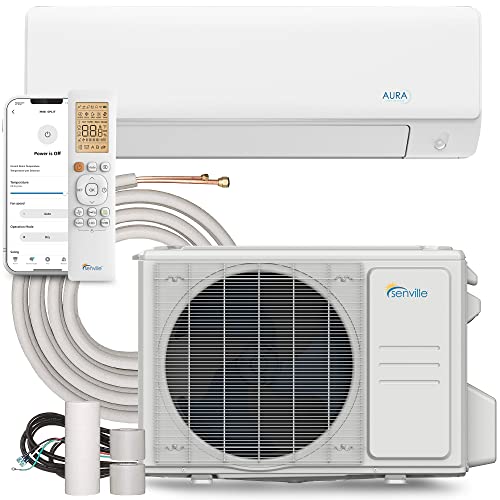
Ductless systems are often the most efficient option per unit of cooling delivered, because they avoid duct losses entirely. A certified energy efficient mini-split combines high SEER2 cooling with strong HSPF2 heating, making it a genuine year-round solution in many climates. For homes without existing ductwork, this category frequently offers the best combination of efficiency and installation flexibility. Our comparison of ductless versus ducted AC is a useful starting point if you are deciding between the two approaches.
Real Benefits of Choosing a Certified Unit
The benefits of certification extend beyond the efficiency number on the spec sheet. Understanding them helps you judge whether the certification premium is justified for your situation.
Lower electricity consumption over the cooling season
The core benefit is straightforward: a certified unit converts less electricity into waste heat and more into actual cooling. The difference is most pronounced in households that run cooling equipment for many hours per day. For occasional use in a spare room, the advantage is smaller but still real. Our guide to energy saving air conditioning units explains how to estimate the impact for your usage pattern.
Quieter operation as a byproduct of better engineering
Higher-efficiency units frequently use variable-speed compressors and improved fan designs. These components reduce abrupt cycling and lower operating noise. This is not a guaranteed feature of every certified unit, but it is a common pattern — the engineering required to hit a higher efficiency threshold tends to produce a smoother, quieter machine.
Better humidity control
Variable-speed systems can run at lower capacity for longer periods, which removes more moisture from the air than a unit that cycles on and off at full blast. In humid climates, this improved dehumidification is often the benefit homeowners notice most, even though it does not appear directly on the efficiency label.
Long-term durability and build quality
Certified models are typically positioned in the mid-range or premium tiers of a manufacturer's lineup. They tend to use higher-grade components, better coil materials, and more robust controls. This generally translates into a longer service life, though installation quality and maintenance still dominate long-term reliability.
Quick self-check: is certification worth it for you?
- You plan to run the unit for more than four hours per day during the cooling season.
- You intend to keep the unit for five years or longer.
- You live in a climate with a long or intense cooling season.
- You value quieter operation and more stable humidity control.
- You want eligibility for available efficiency incentives.
How to Choose the Right Certified Air Conditioner
Certification narrows the field, but it does not make the decision for you. The following framework helps you move from a shortlist of certified models to the right one for your space.
Step 1: Match capacity to the room, not to the label
An oversized certified unit will short-cycle, which reduces efficiency and dehumidification. An undersized unit will run continuously and fail to reach the set temperature. Calculate the required capacity from room size, ceiling height, sun exposure, and occupancy before comparing efficiency ratings. Our guide on how to size an air conditioner walks through the calculation in detail.
Step 2: Confirm the certification against the exact model number
Do not rely on the product title alone. Look up the model number in the official certified product database. This is the single most reliable way to avoid buying a unit that merely resembles a certified model.
Step 3: Compare within the tier, not across tiers
A certified mid-range window unit and a certified premium window unit will both carry the label, but they differ in noise, build quality, and control features. Compare units within the same tier to make a fair judgment, and use the tier descriptor as your shorthand for relative market position.
Step 4: Evaluate features that affect real-world comfort
Look for variable-speed operation, a precise thermostat, programmable scheduling, and — for window and portable units — a remote or app-based control option. These features matter more for day-to-day satisfaction than small differences in the efficiency number.
Step 5: Check the installation requirements before committing
Window units need a compatible window and adequate support. Portable units need a venting path. Central and ductless systems need professional installation and, in many cases, electrical work. Confirm these requirements early so you do not discover a barrier after purchase. Our overview of easy-to-install window air conditioners is helpful if installation simplicity is a priority.
| Tier | Typical Characteristics | Best For |
|---|---|---|
| Essential tier | Certified efficiency, basic controls, single-speed or simple variable operation | Occasional use in a secondary room |
| Balanced tier | Certified efficiency, variable-speed compressor, programmable thermostat | Daily use in a primary living space or bedroom |
| Top-tier | Certified efficiency, advanced controls, premium materials, quieter operation | Whole-home or long-duration use where comfort is a priority |
Why Installation Quality Decides Real-World Efficiency
A certified air conditioner is a promise about laboratory performance under standard conditions. The efficiency you actually experience depends on how the unit is installed and maintained. This gap between rated and delivered efficiency is one of the most important things a buyer can understand.
For central and ductless systems, the refrigerant charge, line-set length, and duct sealing all affect performance. An improperly charged system can lose a significant share of its rated efficiency. Leaky ducts in a central system can waste a substantial portion of the cooling energy before it ever reaches the living space. This is why the same certified condenser can perform very differently in two homes.
For window and portable units, the installation variables are simpler but still matter. A window unit that is not sealed around the frame will leak cooled air and draw in warm air. A portable unit with a poorly fitted vent kit will exhaust less heat than intended. Taking an extra hour to install the unit properly is one of the highest-return actions available to a homeowner.
If you are planning a central or ductless installation, our guide to energy audits for HVAC systems explains how to identify the duct and envelope issues that most affect delivered efficiency before you commit to equipment.
How to Verify a Certification Before Buying
Verification is a short, straightforward process that protects you from mislabeled or outdated products. Follow these steps in order:
- Locate the exact model number. It is printed on the unit's rating plate and usually listed in the product documentation.
- Search the official certified product database. Use the model number, not the product name.
- Confirm the category and efficiency metric. Make sure the certification matches the unit type you are buying.
- Check the certification date. If the model was certified several specification cycles ago, confirm it still meets the current threshold.
- Keep a record. Save a screenshot or printout of the certification listing in case you need it for an incentive claim or warranty matter.
If a seller cannot provide a model number that matches the database, treat that as a warning sign. A genuine certified product should be easy to verify in under a minute.
Incentives, Tax Credits, and the Long-Term Outlook
Federal, state, and utility incentive programs frequently reference Energy Star certification as an eligibility baseline. This is one of the practical reasons certification matters beyond the efficiency itself: it can open the door to rebates or tax credits that improve the overall economics of the purchase.
However, eligibility is rarely automatic. Programs typically require a specific efficiency tier, a specific unit type, and sometimes professional installation by a credentialed contractor. Incentive availability also changes from year to year. Before relying on any incentive, verify the current program terms and consult a qualified tax or program advisor. Our overview of Energy Star HVAC programs covers how these incentives are generally structured.
Looking further ahead, efficiency specifications tend to tighten over time. A unit that is certified today may fall below a future threshold, and refrigerant regulations are also shifting the market toward lower-global-warming-potential refrigerants. Choosing a certified unit now is a reasonable way to stay ahead of that curve without overcommitting to a specific technology.
Frequently Asked Questions
What does Energy Star certified mean for an air conditioner?
It means the unit has been independently tested and verified to meet a strict efficiency threshold set by the EPA, above the federal minimum standard. Certified models use less electricity for the same cooling output.
Is an Energy Star certified air conditioner worth it?
For households that run cooling equipment for many hours per day and plan to keep the unit for several years, the efficiency advantage typically justifies the certification premium. For occasional use in a secondary room, the benefit is smaller but still real.
What SEER2 rating qualifies an AC for Energy Star?
For most split-system central air conditioners, the threshold is at least 14.3 SEER2 in the northern region and 15.2 SEER2 in the southern region. Window and portable units use separate CEER-based criteria.
Do all Energy Star certified air conditioners qualify for tax credits?
No. Eligibility depends on the specific efficiency tier, unit type, and current program rules. Always verify the model number against the latest official incentive database and consult a qualified advisor.
How can I verify that an air conditioner is truly Energy Star certified?
Look up the exact model number in the official certified product database. This is the most reliable verification method and takes less than a minute for a genuine certified product.
Ready to Compare Certified Air Conditioners?
Browse certified models across window, portable, ductless, and central categories. Filter by capacity, efficiency tier, and features to find the right fit for your space.
Explore Certified Options