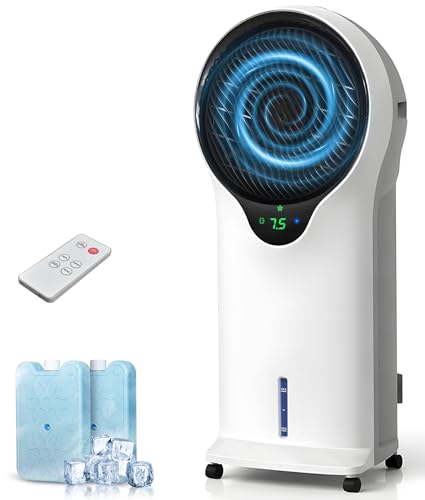
Evaporative Air Cooler and Fan: The Complete Guide
Understand how evaporative air coolers work, when they outperform traditional air conditioners, and how to select the right model for your climate and living space.
Start LearningWhy this guide matters: Many shoppers discover evaporative coolers while searching for energy-efficient alternatives to conventional air conditioning. This guide explains the technology, its strengths and limits, and helps you decide whether an evaporative air cooler and fan combination is the right fit for your home—before you buy.
What Is an Evaporative Air Cooler and Fan?
An evaporative air cooler—often called a swamp cooler—is a cooling appliance that uses the natural process of water evaporation to lower air temperature. A fan inside the unit pulls warm, dry outside air through water-saturated cooling pads. As the water evaporates, it absorbs heat from the air, and the fan then circulates the cooled, humidified air into the room. This is fundamentally different from a compressor-based air conditioner, which removes heat and humidity through a refrigerant cycle.
The "fan" component is integral to the design: without airflow, evaporation cannot occur efficiently. In many portable models, the fan can also operate independently as a standard circulating fan when cooling is not needed, making the device a dual-purpose appliance. This combination of evaporative cooling and direct fan circulation is what makes the evaporative air cooler and fan category so versatile for seasonal use.
How Evaporative Cooling Works Step by Step
- Warm, dry air is drawn into the unit by a fan.
- Air passes through cooling pads saturated with water.
- Water evaporates, absorbing heat from the air (latent heat of vaporization).
- The cooled, moisture-rich air is blown into the living space.
- Warm, humid air is exhausted through an open window or door, completing the cycle.
Evaporative Cooler vs Air Conditioner: Key Differences
Choosing between an evaporative cooler and a traditional air conditioner depends largely on your climate, your ventilation options, and your tolerance for humidity. The table below summarizes the most important distinctions.
| Feature | Evaporative Air Cooler | Refrigerated Air Conditioner |
|---|---|---|
| Cooling method | Water evaporation | Refrigerant compression cycle |
| Humidity effect | Adds moisture to the air | Removes moisture from the air |
| Best climate | Hot and dry (low humidity) | Any climate, including humid regions |
| Ventilation requirement | High—needs open window or door | Low—recirculates indoor air |
| Energy consumption | Significantly lower | Higher due to compressor |
| Installation | Portable or window-mounted, minimal setup | Professional installation typically required |
| Maintenance | Frequent water refills and pad cleaning | Periodic filter changes and professional service |
| Best for | Garages, workshops, patios, dry-climate homes | Whole-home cooling, bedrooms, humid climates |
Climate tip: Evaporative coolers are most effective when relative humidity is below 40%. In humid conditions, the air is already saturated with moisture, so evaporation slows dramatically and cooling performance drops. If you live in a humid region, a conventional air conditioner—or a hybrid approach using a fan alongside an air conditioner—will deliver more consistent comfort.
Types of Evaporative Air Coolers
Evaporative coolers come in several form factors, each suited to different spaces and installation constraints. Understanding these categories helps you narrow down the right option.
Portable Evaporative Cooler
Freestanding units on casters that can be moved between rooms or rolled onto a patio. Ideal for renters and temporary cooling. Many include a fan-only mode for year-round air circulation.
Window-Mounted Evaporative Cooler
Installed in a window frame, drawing outside air directly through the cooling pads. Provides stronger airflow than most portable units and suits single-room cooling in dry climates.
Whole-House (Rooftop) Cooler
A ducted system installed on the roof or side of a home, distributing cooled air through existing ductwork. Requires professional installation and is best suited to dry climates with central ducting.
Personal / Desktop Cooler
Compact units designed for desks, nightstands, or small personal spaces. Limited cooling capacity but very low energy draw; often used as a complementary fan-and-cooler device.
Advantages and Limitations
No cooling technology is universally superior. Weighing the strengths and drawbacks of evaporative coolers against your specific situation is the most reliable way to make a sound decision.
Advantages
- Substantially lower energy consumption than compressor-based air conditioning.
- Simple construction with few moving parts, contributing to durable operation.
- Adds moisture to dry indoor air, which can improve comfort in arid climates.
- Portable models require no permanent installation or window modification.
- Dual-purpose fan mode provides air circulation even when evaporative cooling is off.
- Straightforward maintenance for handy homeowners—pad replacement and tank cleaning are DIY-friendly.
Limitations
- Performance drops sharply in high-humidity climates.
- Requires continuous ventilation—closed rooms become uncomfortably humid.
- Frequent water refills are needed, especially in low-humidity, high-heat conditions.
- Cooling pads require periodic cleaning or replacement to prevent mineral buildup and odors.
- Not a direct substitute for whole-home air conditioning in humid regions.
- Portable units have limited cooling range and are best for spot cooling.
How to Choose the Right Evaporative Air Cooler
Selecting an evaporative cooler involves matching capacity, airflow, and features to your room size and climate. Consider these factors before narrowing down your options.
1. Match Airflow to Room Size
Evaporative cooler capacity is typically expressed in cubic feet per minute (CFM) of airflow. As a general guideline, aim for roughly 20–40 CFM per square foot of floor area for effective spot cooling in dry climates. A small bedroom may need around 500–1,000 CFM, while an open living area could require 2,000 CFM or more. Larger rooms benefit from units with adjustable fan speeds and oscillating louvers.
2. Assess Your Climate
Check your local summer relative humidity. If it consistently stays below 40–50%, an evaporative cooler can be a practical primary cooling solution. If humidity is higher, consider the cooler as a supplementary device for garages, workshops, or covered patios—or explore evaporative cooler alternatives that better suit humid conditions.
3. Evaluate Water Tank Capacity
Tank size determines how long the unit runs before a refill. Smaller personal coolers may need refilling every few hours, while larger portable units can last through a full day. Consider whether a continuous water connection is available if you plan extended operation.
4. Consider Cooling Pad Type
The quality of the evaporative cooler pads directly affects cooling efficiency and maintenance frequency. Rigid cellulose or honeycomb pads generally offer better airflow and longer service life than thin foam pads. In hard-water areas, pads may scale up faster and require more frequent replacement.
5. Check Fan and Airflow Features
Look for adjustable fan speeds, oscillation, and a dedicated fan-only mode. A unit that functions well as a standalone fan extends its usefulness into shoulder seasons when evaporative cooling is unnecessary.
Evaporative Cooler Market Tiers
Evaporative coolers span a wide range of build quality and feature sets. The following tier framework describes relative market positioning without reference to specific figures.
Essential Tier
Basic portable units with simple controls, smaller tanks, and standard foam or cellulose pads. Suitable for occasional spot cooling in small rooms or personal spaces.
Balanced Tier
Improved airflow, larger tanks, remote controls, and honeycomb pads. A solid choice for regular household use in dry climates, offering good value for the tier.
High-End Tier
Heavy-duty construction, multi-speed fans, oscillating louvers, larger cooling pads, and smart features. Well-specified for demanding spaces such as workshops or open living areas.
Commercial-Grade
Large-format units built for continuous operation in industrial or commercial settings. Reinforced housings and high-capacity pads deliver sustained airflow for demanding environments.
Maintenance Essentials
Regular maintenance keeps an evaporative cooler running efficiently and prevents odors, mineral buildup, and reduced cooling performance. A consistent routine extends the working life of the unit.
- Drain and refill the water tank regularly—never let water sit for extended periods.
- Clean or replace cooling pads at least once per season; more often in hard-water areas.
- Wipe down the interior to remove mineral deposits and biofilm.
- Inspect the fan blades and motor housing for dust buildup.
- Store the unit dry during off-season months to prevent mold and corrosion.
For a deeper walkthrough, see our guide to evaporative cooler maintenance.
Who Should Consider an Evaporative Cooler?
An evaporative air cooler and fan is a strong fit for:
- Homeowners in hot, dry climates seeking an energy-efficient cooling method.
- Renters or apartment dwellers who cannot install a traditional air conditioning system.
- Garage, workshop, and patio owners who need spot cooling without ductwork.
- Anyone wanting a dual-purpose appliance that circulates air as a fan when cooling is not required.
It is a weaker fit for humid climates, sealed rooms without ventilation, or users who need precise temperature and humidity control. In those cases, a conventional air conditioner—or a combination of a fan and AC—remains the more reliable option.
Ready to Explore Your Cooling Options?
Browse our curated selection of evaporative air coolers and fans, vetted for build quality, airflow performance, and maintenance-friendly design. Compare features and find the model that matches your climate and space.
View Recommended ModelsFrequently Asked Questions
Related Cooling Topics
Explore related guides to deepen your understanding of cooling and ventilation: