Fans and Air Conditioners: The Complete Cooling Guide
Understand how fans and air conditioners work together to keep your home comfortable. Compare fan types, AC systems, placement strategies, and maintenance routines before you decide what to install or upgrade.
START LEARNINGWhy this guide matters: Most homeowners research air conditioners and fans separately, yet the two systems interact constantly. Airflow determines how evenly cooled air distributes, how hard the compressor works, and how comfortable each room feels. This guide explains the relationship in plain language so you can make a confident, well-informed decision before ordering equipment online.
How Fans and Air Conditioners Complement Each Other
An air conditioner removes heat and humidity from indoor air through a refrigeration cycle, then pushes conditioned air through ductwork or directly into a room. A fan, by contrast, does not change air temperature. What a fan does is move air across your skin, which accelerates heat loss through convection and evaporation. When both systems run together, the fan distributes the cool air that the AC produces, preventing cold and warm pockets from forming.
This synergy is why HVAC professionals often recommend pairing a well-sized air conditioner with a properly positioned ceiling or circulation fan. The AC handles temperature and humidity; the fan handles distribution and perceived comfort. Understanding this division of labor is the first step toward a balanced cooling strategy for any home, apartment, or office.
Temperature & Humidity Control
Actively removes heat and moisture. Determines the actual air temperature in a space and is the primary cooling source during hot, humid weather.
Air Movement & Distribution
Circulates existing air. Improves perceived comfort and helps conditioned air reach occupants faster, but cannot lower the thermostat reading on its own.
Efficient Comfort
Running both together lets you set a slightly higher thermostat while maintaining the same comfort level, easing compressor workload in the long run.
Types of Fans and How They Pair With AC Systems
Not every fan is equally effective in a room cooled by an air conditioner. The right choice depends on ceiling height, room layout, and whether your AC is ducted or ductless. The table below summarizes how common fan types behave alongside different cooling systems.
| Fan Type | Best Paired With | Primary Strength | Category |
|---|---|---|---|
| Ceiling Fan | Central AC, ductless mini-split | Pushes stratified cool air back to occupant level | Essential tier |
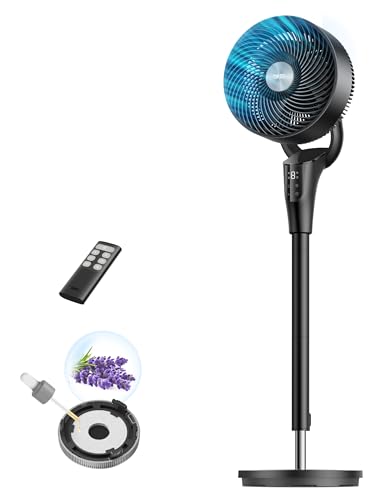
| Pedestal / Stand Fan | Window AC, portable AC | Directional spot cooling for one or two people | Balanced tier |
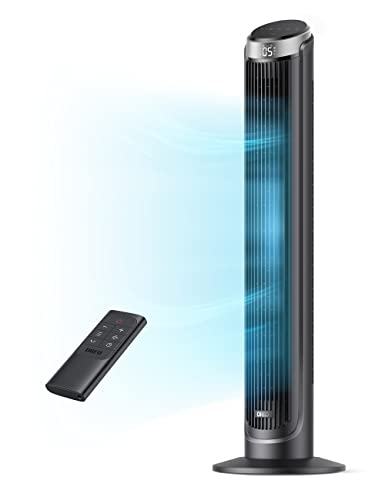
| Tower Fan | Mini-split, wall-mounted AC | Compact footprint with wide oscillation | Mid-tier |
| Box Fan | Window AC (exhaust assist) | High-volume air movement in a compact frame | Entry-level |
| Floor / Air Circulator | Any ducted system | Long-throw airflow that mixes room air thoroughly | High-end tier |
| Exhaust Fan | Kitchen and bathroom ventilation | Removes heat and humidity at the source | Professional-grade |
Ceiling fans remain the most versatile pairing for whole-home systems because they address the natural tendency of cool air to settle near the floor while warm air rises. A fan running in the correct direction gently mixes the two layers without creating a draft strong enough to feel uncomfortable. For rooms cooled by a single ENERGY STAR mini-split, a tower or air circulator positioned across the room from the indoor head often delivers the most even temperature distribution.
Choosing the Right Air Conditioner for Your Space
Air conditioners come in several formats, each suited to different building constraints. Before adding fans to the equation, confirm that the AC itself matches the square footage, insulation level, and window or duct availability of your space. Oversized units short-cycle and leave humidity behind; undersized units run continuously without reaching the setpoint.
- Central air conditioning — ideal for whole-home cooling with existing ductwork. Pairs naturally with ceiling fans in every room and benefits from a zoned thermostat strategy.
- Ductless mini-split — suited to additions, older homes without ducts, and room-by-room control. Works well with tower or circulator fans placed to spread output across open floor plans. Homeowners prioritizing efficiency often compare ENERGY STAR qualified air conditioners in this category.
- Window air conditioner — a practical solution for single rooms and apartments. A box fan or pedestal fan pointed along the room’s long axis helps the cooled air reach the far wall. For tighter efficiency targets, review ENERGY STAR rated window air conditioners.
- Portable air conditioner — flexible but dependent on proper exhaust venting. Keep the exhaust hose short and pair the unit with a small circulator to offset its localized cooling pattern. Buyers often weigh ENERGY STAR portable air conditioner options for lower standby draw.
- Through-the-wall and wall-mounted units — permanent installations for rooms where window space is limited. These pair well with ceiling fans and oscillating wall fans that keep air moving without obstructing the unit.
Placement and Airflow Strategy
Placement determines whether fans help or hinder your air conditioner. In summer, ceiling fans should spin counterclockwise (viewed from below) to push air straight down. This creates a gentle downdraft that mixes cool air pooled near the floor with warmer air near the ceiling. In winter, reversing the direction to clockwise at low speed pulls cool air upward and recirculates warm air trapped near the ceiling — a useful detail for homes that use the same fan year-round.
For floor-standing and tower fans, position them so the airflow path crosses the room rather than blowing directly at occupants for extended periods. Direct, high-velocity airflow can feel drafty and dry out eyes and skin. Air circulators are designed to bounce air off walls and ceilings, creating a subtle whole-room mixing effect that is often more comfortable than a focused beam of air.
When a window AC is the primary cooling source, a small fan placed near the ceiling on the opposite side of the room can help push warm upper-layer air toward the unit’s return. This simple arrangement reduces stratification and helps the unit sense room temperature more accurately.
Energy Efficiency: Using Fans to Support Your AC
Fans consume a fraction of the electricity drawn by a compressor, which makes them a valuable supplement during peak cooling hours. The U.S. Department of Energy recommends setting the thermostat a few degrees higher when ceiling fans are in use, provided the room is occupied. Because fans cool people rather than rooms, turning them off when a room is empty avoids unnecessary consumption without affecting comfort.
For households evaluating a system upgrade, high-efficiency equipment amplifies the benefit of good airflow strategy. Reviewing ENERGY STAR most efficient air conditioner models alongside a fan-placement plan often produces a better comfort outcome than upgrading the AC alone. Similarly, pairing a ENERGY STAR mini-split heat pump with reversible ceiling fans supports both summer cooling and winter heating from a single installation.
Airflow quality also depends on the building envelope. Sealing duct leaks and improving attic insulation reduces the load on the AC, which in turn makes fan-assisted distribution more effective. Homeowners pursuing broader upgrades sometimes explore environmentally friendly heating and cooling systems that combine efficient equipment with passive airflow design.
Maintenance Routines for Fans and Air Conditioners
Consistent maintenance protects both airflow and equipment lifespan. Dust on fan blades reduces balance and efficiency, while clogged AC filters restrict airflow and force the blower to work harder. A simple seasonal schedule keeps both systems performing at their designed capacity.
- Monthly during cooling season: Check the AC filter. Clean or replace it based on dust accumulation, pet hair, and local air quality.
- Every two to four weeks: Wipe fan blades with a damp cloth. Check that the fan does not wobble and that mounting hardware remains tight.
- Quarterly: Vacuum return grilles and supply registers. Confirm that furniture and curtains are not blocking airflow paths.
- Annually before summer: Schedule a professional AC inspection. Verify refrigerant charge, coil cleanliness, and condensate drainage.
- Annually before winter: Reverse ceiling fan direction, clean blades thoroughly, and check that outdoor condenser units are clear of debris.
For households with hard water or high humidity, condensate-related maintenance deserves extra attention. Slow drains or overflowing pans can indicate a clogged line, and a fan cannot compensate for a system that is struggling to remove moisture. Addressing drainage issues early prevents water damage and keeps the cooling cycle efficient.
A Practical Decision Framework
Before purchasing, walk through four questions in order. First, what is the square footage and ceiling height of the space you need to cool? Second, does the building already have ductwork, or will you rely on a ductless or window-based solution? Third, how many hours per day will the space be occupied, and by how many people? Fourth, what is your efficiency target — standard, high-efficiency, or top-tier?
Answering these questions clarifies whether you need a whole-home system, a room-level unit, or a supplementary airflow strategy. Fans then become a deliberate part of the plan rather than an afterthought. The most satisfying installations are those where the AC handles the load and the fans handle distribution — a combination that delivers consistent comfort without overworking either component.
Frequently Asked Questions
Can I use a ceiling fan and air conditioner at the same time?
Yes. Running a ceiling fan alongside your air conditioner improves air circulation, allowing you to raise the thermostat by a few degrees without losing comfort. This reduces compressor workload and supports more efficient operation throughout the cooling season.
Do fans actually cool a room?
Fans do not lower air temperature. They create airflow that accelerates evaporative cooling on your skin, making you feel cooler. In closed rooms with an AC running, fans distribute conditioned air more evenly and reduce warm pockets near ceilings and corners.
Which fan type pairs best with a mini-split or central AC?
Ceiling fans are the most effective pairing for central and ductless mini-split systems because they push stratified cool air back down to occupant level. Tower and pedestal fans work well for supplemental spot cooling in rooms with irregular layouts.
How often should fan blades and AC filters be cleaned?
Ceiling and pedestal fan blades should be wiped every two to four weeks. AC filters should be checked monthly during peak season and replaced or cleaned every one to three months depending on dust load, pet presence, and local air quality.
Should I run fans when the AC is off?
Running fans in unoccupied rooms provides no comfort benefit and consumes electricity unnecessarily. In occupied rooms on mild days, a fan alone can extend comfort without engaging the compressor, but in hot and humid conditions the AC remains necessary to control temperature and moisture.