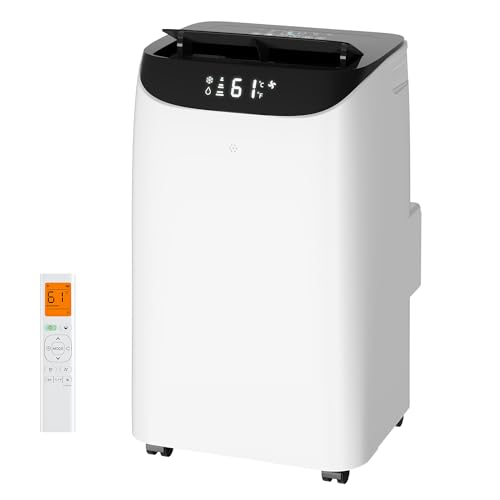
Free Standing Air Conditioning Units
Everything you need to know about freestanding air conditioners: how they work, how to size them, which features matter, and how to choose the right model for your space.
Explore the GuideWhy this guide matters: Free standing air conditioning units are one of the most flexible cooling solutions for renters, older homes without ductwork, and rooms that central systems cannot reach. This guide explains the technology, the trade-offs, and the selection criteria so you can make a confident, informed purchase decision.
What Is a Free Standing Air Conditioning Unit?
A free standing air conditioning unit is a self-contained cooling appliance that rests on the floor and can be relocated between rooms without professional installation. Unlike window units that must be mounted in a wall opening or central systems that rely on ductwork, freestanding models combine the compressor, evaporator, and controls in a single movable cabinet. Most designs use a flexible exhaust hose to direct warm air and moisture outdoors through a window or dedicated vent.
The category overlaps with several related product families. Portable air conditioners are the most common type of free standing unit, while floor standing mini-splits and floor-mounted air conditioning units represent more permanent, higher-tier alternatives. Understanding these distinctions helps you match the product to your room, lease terms, and long-term goals. For a broader look at floor-based options, see our guide to floor air conditioning units.
Main Types of Free Standing Cooling Units
Portable Air Conditioners
Single-cabinet units on casters with an exhaust hose. They can be rolled between rooms and stored seasonally. Entry-level and mid-range models dominate this category, with premium versions adding inverter compressors and smart controls.
Floor Standing Mini-Splits
A floor-mounted indoor head connected to an outdoor condenser. These deliver stronger, quieter cooling and better efficiency than portable units, but require professional installation. Often positioned in the mid-tier to high-end tier of the market.
Evaporative Coolers
Also called swamp coolers, these draw in hot dry air and cool it through water-saturated pads. They work best in arid climates and are an entry-level alternative when humidity is low. Learn more about evaporative cooler alternatives.
How Free Standing Units Work
Inside a portable freestanding unit, a compressor circulates refrigerant between an evaporator coil and a condenser coil. The evaporator absorbs heat and humidity from the room air, while the condenser releases that heat into the exhaust airstream. A fan pushes the conditioned air back into the room and a second fan or the same blower expels warm air through the hose. Because the compressor and the airstream share one cabinet, portable units must be vented properly to avoid pulling hot air back into the room.
Floor standing mini-splits separate the noisy components from the living space: the indoor head contains the evaporator and blower, while the compressor sits outdoors. That separation is why mini-splits are quieter and more efficient in the long run, and why they belong to a higher tier of the market than most portable models. If you are comparing venting approaches, our article on free standing air conditioning unit without exhaust hose explains when a hose-free design is viable.
How to Size a Free Standing Air Conditioner
Capacity is measured in British Thermal Units (BTU) per hour. A widely used baseline is 20 BTU per square foot of floor area, adjusted upward for high ceilings, direct sun, kitchens, and rooms with multiple occupants or heat-generating electronics. Undersizing leaves the room warm; oversizing causes short cycling, which wastes energy and removes humidity less effectively.
| Room Size | Typical Capacity | Best For |
|---|---|---|
| Up to 150 sq ft | 5,000 – 6,000 BTU | Bedrooms, home offices, small studios |
| 150 – 250 sq ft | 8,000 – 10,000 BTU | Medium bedrooms, living areas |
| 250 – 400 sq ft | 12,000 – 14,000 BTU | Large bedrooms, open-plan living rooms |
| 400 – 600 sq ft | 14,000 – 18,000 BTU | Studios, converted lofts, small apartments |
For tighter calculations, use our guide to sizing an air conditioner and cross-check with the BTU calculator by room size. If you are cooling a compact space, the free standing air conditioner for small room overview covers model selection in detail.
Features That Matter
- Inverter compressor: Varies speed to hold temperature steadily. Common in mid-range and premium free standing units and a major factor in long-term efficiency.
- CEER and SACC ratings: Look for higher combined energy efficiency ratios and seasonal adjusted cooling capacity figures when comparing models within the same tier.
- Exhaust system design: Single-hose units are simpler; dual-hose designs reduce negative pressure and improve cooling consistency in tightly sealed rooms.
- Noise level: Measured in decibels. Premium models and floor standing mini-splits typically run quieter than entry-level portables.
- Dehumidification mode: Useful in humid climates, where sensible cooling alone does not address moisture.
- Smart controls: Wi-Fi, scheduling, and voice assistant compatibility are increasingly common in mid-tier and high-end tier products.
- Drainage options: Self-evaporative designs reduce manual emptying; continuous drain kits suit long cooling sessions.
Installation and Placement Tips
Portable freestanding units need a window kit or a wall vent for the exhaust hose. Keep the hose as short and straight as possible, seal gaps around the window panel, and avoid placing the unit in direct sunlight. Maintain at least 12 to 18 inches of clearance around the air intake and outlet. Floor standing mini-splits require a licensed installer, a dedicated electrical circuit in many cases, and careful placement near an exterior wall for the refrigerant lines.
If your space lacks a suitable window, review our guide to a free standing air conditioner with no window needed for venting alternatives. For hose-based models, the exhaust vent for portable air conditioner article explains sealing and routing best practices.
Comparing Tiers: Entry-Level, Mid-Range, and Premium
| Tier | Typical Characteristics | Best For |
|---|---|---|
| Entry-level | Single-speed compressor, manual controls, basic hose kit, higher noise levels | Occasional use, small rooms, short cooling seasons |
| Mid-range | Inverter or two-speed compressor, digital thermostat, sleep mode, improved hose sealing | Daily use in bedrooms and living rooms, renters who want efficiency |
| Premium / high-end tier | Advanced inverter systems, dual-hose venting, smart controls, low noise, self-cleaning features | Primary living spaces, extended cooling seasons, households prioritizing comfort |
| Professional-grade | Floor standing mini-split systems with outdoor condenser, high CEER, multi-zone options | Permanent installations, large rooms, homes without ductwork |
For homes pursuing efficiency certifications, compare models against the ENERGY STAR portable air conditioner criteria and the broader ENERGY STAR qualified air conditioners list.
Maintenance for Long-Term Performance
- Clean or replace the air filter every two to four weeks during heavy use.
- Empty the condensate tank before it fills, or connect a continuous drain hose.
- Inspect and clean the exhaust hose and window seal for leaks each season.
- Vacuum the evaporator and condenser coils annually; follow the manufacturer's instructions.
- Store portable units upright in a dry space during the off-season to protect the compressor.
Refrigerant handling is regulated in many jurisdictions. Review our overview of EPA refrigerant handling rules before attempting any service that involves the sealed system.
Frequently Asked Questions
What is a free standing air conditioning unit?
It is a self-contained cooling appliance that stands on the floor and can be moved between rooms. Unlike central or wall-mounted systems, it requires no permanent installation and typically uses an exhaust hose to vent warm air outdoors.
Do free standing air conditioners need a window?
Most units require access to a window or another opening for the exhaust hose. However, some models are designed for windowless operation using evaporative cooling or specialized venting kits.
How many BTU do I need for a free standing air conditioner?
As a general rule, allow 20 BTU per square foot of floor area. A 300 sq ft room typically needs around 6,000 to 8,000 BTU, while a 500 sq ft space may need 10,000 to 12,000 BTU. High ceilings, sun exposure, and occupancy increase the requirement.
Are free standing air conditioners energy efficient?
Efficiency varies by model and tier. Mid-range and premium units often feature inverter compressors, higher CEER or SACC ratings, and smart scheduling, making them more efficient in the long run than entry-level single-speed models.
Can a free standing air conditioner cool multiple rooms?
A single free standing unit is most effective in one open space. Cooling multiple closed rooms usually requires moving the unit or choosing a ductless mini-split system with multiple indoor heads.
Ready to Choose Your Free Standing Unit?
Use the criteria above to shortlist models by capacity, tier, and venting style. Then explore our curated recommendations below to compare features side by side.
See Recommended ModelsRecommended Free Standing Air Conditioning Units
⚠️ AFFILIATE DISCLOSURE: This website contains affiliate links. As an Amazon Associate, we earn from qualifying purchases. If you make a purchase through these links, we may receive a small commission at no additional cost to you. Read our full affiliate policy.

Humhold 14000BTU Portable Air Conditioners, Floor Stand Portable AC Unit | 3 in 1 AC Unit w/t Dehumidifier & Fan, Free Stand up Portable AC for Room up to 700 sq.ft, Sleep,Timer & Remote Control
Check price on Amazon
SereneLife Portable Air Conditioner 8000 BTU | 3-in-1 Cooling, Fan and Dehumidifier | 24-H Timer with up to 350 sq ft Coverage | AC Unit for Bedroom, Home & Office | Includes Window Kit & Remote
Check price on Amazon
Humhold 14000BTU Portable Air Conditioners,Free Standing Portable AC Unit | 3-in-1 Cooling AC w/t Fan & Dehumidifier, Cools Room up to 700 sq.ft w/t Remote, Smart/Sleep Mode,3 Speed,Auto Swing,Timer
Check price on Amazon
14000 BTU Portable Air Conditioners, Cools Up to 700 Sq.Ft, Free standing AC Unit, Cooling, Dehumidifier, Fan, Sleep Mode, Remote Control & Installation Kit, White
Check price on Amazon
Shinco 12,000 BTU(7,500 BTU SACC) Portable Air Conditioner, Portable AC Unit with Built-in Cool, Dehumidifier&Fan Modes for Room up to 450 sq.ft, with Remote Control, 24 Hour Timer, Installation Kit
Check price on Amazon