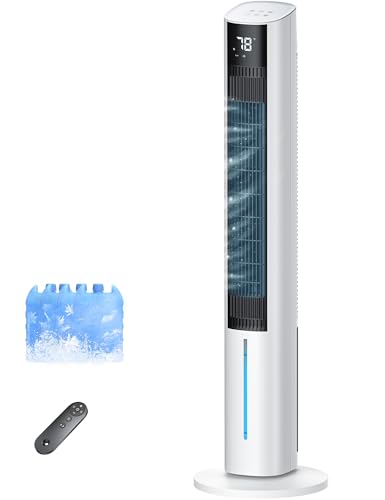
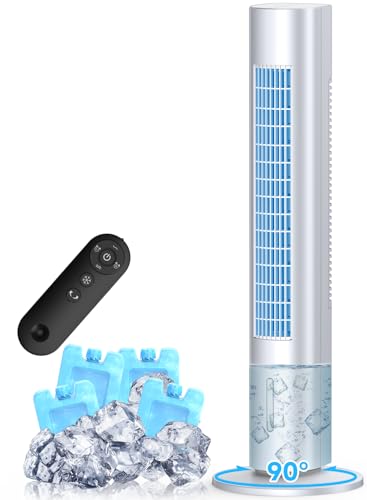
Free Standing Air Conditioner No Window Needed
Everything you need to know about freestanding and ventless cooling solutions for rooms without a usable window — how they work, what to expect, and how to choose the right unit for your space.
Explore Recommended UnitsQuick summary: A true "no window needed" free standing air conditioner relies on evaporative cooling or a low-profile window/through-wall venting method. Traditional portable AC units still require an exhaust hose routed to a window or wall opening. Understanding the difference before you buy is the single most important step — and this guide explains it clearly.
Why "No Window Needed" Matters
Many homes, apartments, basement rooms, and converted garages lack a standard vertical window suitable for a window air conditioner or for routing a portable AC exhaust hose. Others have sliding windows, casement windows, or sealed glass that makes hose venting impractical. For renters and owners alike, the search for a free standing air conditioner no window needed usually comes down to three real-world scenarios:
- No usable window at all — interior rooms, basements, server closets, and converted attics.
- Windows that cannot be modified — sealed architectural glass, HOA restrictions, or rental lease terms.
- Temporary or seasonal needs — a room that only needs cooling for part of the year and should not require permanent installation.
Before diving into product types, it helps to understand the broader landscape of cooling options. Our guide to free standing air conditioner units covers the category in general terms, while this page focuses specifically on the no-window constraint.
The Honest Truth About Ventless Cooling
Air conditioning works by moving heat from inside a room to outside it. Any system that claims to cool without exhausting heat somewhere must either use evaporation (adding moisture to the air) or store the heat temporarily in a medium. This physical reality shapes every option below.
Three approaches that work without a standard window
Evaporative Coolers
Use water evaporation to lower air temperature. Truly ventless and portable, but effective only in dry climates and they raise indoor humidity.
Essential TierLow-Profile Window / Through-Wall Units
Compact units designed for small openings or thin walls. Technically require an opening, but far less demanding than full window installations.
Balanced TierPortable AC with Alternative Venting
Standard portable units paired with a sliding-door kit or wall vent. The hose must still go somewhere — but not necessarily a standard window.
Mid-TierOption 1: Evaporative Coolers — The True Ventless Choice
Evaporative coolers, sometimes called swamp coolers, are the only mainstream cooling category that genuinely operates without any exhaust route. They pull warm dry air through water-saturated pads and blow out cooler, more humid air. If you are researching a free standing air conditioning unit without exhaust hose, this is the category to focus on.
How they perform
- Best in dry climates — relative humidity below roughly 40% produces the strongest cooling effect.
- Humidity trade-off — in humid regions, cooling output drops sharply and the added moisture can feel uncomfortable.
- Airflow-focused — these units cool the air moving through them rather than chilling an entire sealed room.
- Ventilation benefit — they continuously introduce fresh outdoor air, which many users prefer for indoor air quality.
For a deeper technical breakdown, see our full page on the evaporative air cooler category and the swamp cooler variant. If you want a unit that combines cooling, fan, and humidifying functions, the 3-in-1 windowless portable air conditioner format is worth reviewing.
Option 2: Freestanding Units Without a Vent Hose
The phrase freestanding air conditioner without vent hose is often used loosely in marketing. In practice, products fitting this description fall into two groups:
- Genuine evaporative units — no hose, no window, water-based cooling.
- Hybrid "windowless" coolers — often small evaporative or fan-assisted units that provide spot cooling rather than whole-room refrigeration.
These products are excellent for personal cooling — a desk, a bedside, a workshop bench — but they are not substitutes for a compressor-based air conditioner in a sealed, humid room. Setting realistic expectations is the key to satisfaction.
Option 3: Portable AC Units With Flexible Venting
If you need genuine refrigerant-based cooling, a portable air conditioner remains the most capable option — but it must exhaust hot air. The good news is that "no standard window" does not automatically disqualify portable AC. Several venting workarounds exist:
- Sliding window kits — seal plates designed for horizontal sliding windows.
- Casement window adapters — specialized panels for crank-out windows.
- Wall vent kits — a small permanent or semi-permanent wall opening for the hose.
- Drop-ceiling or crawlspace routing — used in some commercial and basement setups.
Understanding the hose itself helps: our guide to the flexible exhaust hose for portable air conditioner units explains diameter, length, and heat-dissipation considerations, while the exhaust vent for portable air conditioner page covers window and wall vent kits in detail.
Comparing the Main Options
The table below summarizes how each approach performs across the factors that matter most when no standard window is available. Tiers reflect relative market positioning, not numeric pricing.
| Approach | Best For | Venting Requirement | Humidity Impact | Market Tier |
|---|---|---|---|---|
| Evaporative cooler | Dry climates, open rooms, spot cooling | None | Increases humidity | Essential to mid-tier |
| Freestanding windowless cooler | Personal cooling, small spaces | None | Slight increase | Entry-level |
| Portable AC with wall vent kit | Sealed rooms needing real cooling | Wall opening or window | Reduces humidity | Mid-tier to premium |
| Low-profile through-wall unit | Permanent installs, basements | Small wall opening | Reduces humidity | Balanced tier |
| Mini-split (no duct) | Whole-room comfort, long-term use | Small wall penetration | Reduces humidity | Premium to luxury |
How to Choose the Right Unit
Work through these questions in order — they will narrow the field quickly.
1. What is your climate humidity?
If summers are dry, an evaporative cooler is a strong, efficient, ventless choice. If summers are humid, prioritize a compressor-based option with some form of venting, because evaporative cooling will underperform and add discomfort. For broader context on efficient compressor cooling, see ENERGY STAR qualified air conditioners.
2. How large is the space?
Evaporative coolers are rated by airflow (cubic feet per minute) rather than BTU. Compressor units are rated in BTU. As a rough guide: up to 150 sq ft suits 5,000–6,000 BTU; 150–250 sq ft suits 8,000–10,000 BTU; 250–400 sq ft suits 12,000–14,000 BTU. Our free standing air conditioner for small room page expands on sizing for compact spaces.
3. Is a small wall penetration acceptable?
If a permanent or semi-permanent wall opening is acceptable, a ENERGY STAR through the wall air conditioner or a wall-vented portable unit unlocks genuine compressor cooling. For rental-friendly options with minimal modification, portable AC with a sliding-window or casement kit is the practical middle ground.
4. Do you need heating too?
If the room is used year-round, a heat-pump variant adds value. See ENERGY STAR window heat pump and the broader ENERGY STAR mini split heat pump category for reversible options.
5. How important is efficiency and quiet operation?
For long daily runtimes, efficiency ratings matter. Our ENERGY STAR most efficient air conditioner overview explains how SEER and EER translate into real-world energy use. For bedroom use, prioritize low decibel ratings and a sleep mode.
Features Worth Prioritizing
- Self-evaporating technology — reduces manual draining in portable and freestanding units. See fully self evaporating portable air conditioners.
- Programmable timer and sleep mode — meaningful for bedroom and office use.
- Washable filters — lower long-term maintenance effort. Our filters for window air conditioners guide covers replacement schedules.
- Remote and Wi-Fi control — convenient for units placed high or in hard-to-reach spots.
- Eco or auto mode — cycles the compressor for better efficiency in steady-state conditions.
- Robust caster wheels and handles — important for true portability between rooms.
Installation and Placement Tips
- Place evaporative coolers near an open door or window for cross-ventilation — they work best with airflow, not in sealed rooms.
- Keep portable AC exhaust hoses as short and straight as possible; long, kinked hoses reduce cooling efficiency.
- Position units away from direct sunlight and heat-producing appliances.
- Seal window and wall vent kits thoroughly to prevent hot outdoor air from re-entering.
- Allow clearance around intake and exhaust grilles — at least 12 inches is a reasonable minimum.
For installation-adjacent guidance, our free standing air conditioner units overview includes room-preparation advice, and the evaporative cooling system page explains ducted and whole-house variants.
Maintenance Essentials
No-window cooling solutions are generally low-maintenance, but neglecting the basics shortens lifespan and reduces performance.
- Evaporative coolers: drain and refill water regularly, clean or replace pads each season, and descale the water tank. See evaporative cooler maintenance.
- Portable AC: empty the condensate tank or confirm self-evaporation is working, clean the filter every two to four weeks, and inspect the hose for cracks.
- Through-wall and window units: clean or replace filters monthly during heavy use, and check the exterior coil annually.
If you notice unusual noise or reduced cooling, our troubleshooting resources such as fixing an air conditioner can help diagnose common issues before calling a technician.
Common Mistakes to Avoid
- Buying a portable AC with no venting plan. It will not cool the room — confirm the vent route first.
- Using an evaporative cooler in humid climates. Cooling output collapses and humidity rises.
- Oversizing for the room. An oversized unit cycles too quickly, leaving the space clammy. Match capacity to square footage.
- Skipping the vent kit seal. Poorly sealed kits let hot air back in, negating much of the cooling.
- Ignoring filter maintenance. Clogged filters reduce airflow and strain the unit.
Frequently Asked Questions
Is there a free standing air conditioner that truly needs no window?
Yes — evaporative coolers operate without any exhaust route. They cool by evaporation and are genuinely ventless. Compressor-based units, including portable AC, must exhaust heat somewhere.
Can a portable air conditioner work without a window?
A portable AC needs to exhaust hot air. If no standard window is available, a wall vent kit, sliding-door kit, or casement adapter can substitute. Without any exhaust route, it will not cool effectively.
Are evaporative coolers as effective as air conditioners?
In dry climates they can be very effective and energy-efficient. In humid climates, their cooling output drops significantly. They are a different category of cooling rather than a direct replacement.
What size unit do I need for a small room?
For compressor units, roughly 5,000–6,000 BTU covers up to 150 sq ft. For evaporative coolers, match airflow rating to room volume and climate. See our small room guide for details.
Do freestanding units need draining?
Evaporative coolers need regular water refills and periodic draining. Portable AC units either collect condensate in a tank or use self-evaporation. Check the product specification for the exact behavior.
Can I use a freestanding unit in a basement?
Yes, but venting matters. A wall vent kit or a small penetration to the exterior is the cleanest solution for compressor units. Evaporative coolers work in basements but add humidity, so monitor moisture levels.
Final Buying Checklist
- Confirm your climate humidity before choosing evaporative vs. compressor cooling.
- Decide whether any wall penetration or window kit is acceptable.
- Measure the room and match capacity or airflow rating.
- Check filter type, drainage method, and noise rating.
- Verify the vent kit compatibility for your window or wall type.
- Review warranty terms and service network availability.
- Compare efficiency ratings for units you intend to run daily.
Bottom line: If you genuinely cannot vent anywhere, choose an evaporative cooler and understand its climate limitations. If a small wall or window kit is possible, a portable AC with the right vent adapter delivers true refrigerant cooling. Match the technology to your climate and your venting options — that is the decision that matters most.