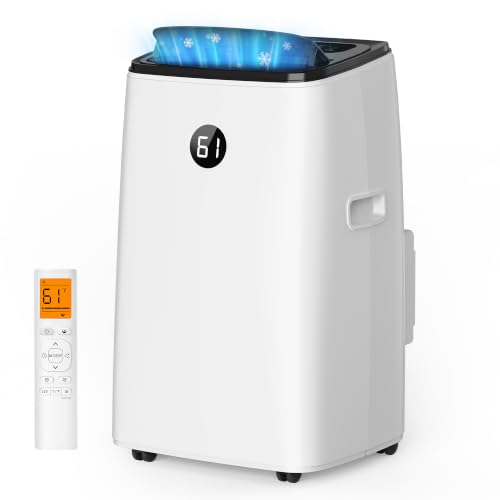
Free Standing Air Conditioner for Small Room
Your complete guide to selecting, sizing, and using a portable free standing air conditioner in compact spaces — so you can cool a bedroom, studio, or home office effectively without permanent installation.
START WITH SIZINGWhat Is a Free Standing Air Conditioner?
A free standing air conditioner — often called a portable air conditioner — is a self-contained cooling unit that sits on the floor and can be moved from room to room. Unlike a window unit, it does not need to be mounted in a window frame; instead, it uses a flexible exhaust hose to vent hot air outside, typically through a window or a wall opening.
For small rooms, free standing units are a practical choice when permanent installation is not possible. They are popular in rental apartments, dorm rooms, home offices, and bedrooms where a window unit may be restricted by building rules or window design. If you are exploring options for spaces without a standard window, the free standing air conditioner with no window needed guide covers alternatives in detail.
It is important to understand that a free standing unit cools one room at a time. It works best as a spot-cooling solution rather than whole-home cooling. If your goal is to cool several rooms, a ducted or multi-zone system may be more appropriate — see our comparison of free standing air conditioner units for broader context.
Quick summary: A free standing air conditioner is best for cooling a single small room up to roughly 250 square feet. Look for a unit rated between 5,000 and 10,000 BTU, confirm that you have a venting point for the exhaust hose, and prioritize models with quiet operation and a washable filter.
How to Size a Free Standing Unit for a Small Room
Sizing is the single most important decision. An undersized unit runs constantly and never reaches the set temperature; an oversized unit cools too quickly, cycles on and off, and leaves the room feeling clammy. For small rooms, the difference between the right and wrong size is often just one step in capacity.
Room Size to Capacity Reference
| Room Size (sq ft) | Recommended Capacity (BTU) | Typical Use Case |
|---|---|---|
| Up to 150 | 5,000 – 6,000 | Small bedroom, study, dorm room |
| 150 – 250 | 8,000 – 10,000 | Home office, small studio, guest room |
| 250 – 400 | 12,000 – 14,000 | Large bedroom, small living area |
Adjustments for Real-World Conditions
The table above assumes an average ceiling height of about eight feet and moderate sun exposure. Adjust upward in these situations:
- Sunny room: Add roughly 10 percent to the base capacity if the room faces south or west and receives direct sun for several hours.
- Kitchen or room with appliances: Add capacity for heat generated by cooking or electronics.
- High ceiling: Rooms with ceilings above nine feet need more cooling capacity because there is more air volume to condition.
- Many occupants: Each additional person adds a small heat load; account for this in shared spaces.
For a more precise calculation, use our BTU calculator by room size and review the broader guide on how to size an air conditioner.
Venting Options and Window Requirements
Every portable air conditioner must exhaust hot air outside. The exhaust hose is typically five to seven feet long, and the kit includes a window slider or sealing panel. Understanding your venting options before buying prevents frustration later.
Common Venting Methods
- Window slider kit: The most common option. A adjustable panel fits into a double-hung or sliding window, and the hose connects to a port in the panel.
- Casement window adapter: Required for crank-out windows, which cannot accept a standard slider panel.
- Wall vent: Some owners install a permanent wall vent for a cleaner look and better sealing.
- Door vent: A less common approach used when no window is available, though it is less efficient.
If your window configuration is unusual, review the free standing air conditioning unit without exhaust hose overview to understand the trade-offs of ventless alternatives, and check the flexible exhaust hose for portable air conditioner guide for hose compatibility details.
Sealing matters: A poorly sealed window panel lets hot outside air back in, forcing the unit to work harder. Use weatherstripping or foam insulation around the panel edges. For more on air sealing, see the guide on how to seal air ducts, which covers similar principles.
Key Features That Matter in Small Spaces
Small rooms amplify every trade-off. A feature that is a minor convenience in a large living room can become essential in a compact bedroom or studio. Focus on these attributes:
Noise Level
Portable units are generally louder than window or mini-split systems because the compressor sits inside the room. For a bedroom, look for a model with a sleep mode and a low-speed fan setting. Sound-dampening insulation is a hallmark of mid-range and premium models.
Footprint and Mobility
In a small room, floor space is precious. Check the unit's dimensions and whether it has caster wheels. A slim profile with smooth-rolling casters makes it easier to move the unit out of the way when not in use.
Dehumidification Mode
Many portable units include a dedicated dehumidify mode, which is useful in humid climates. In a small room, reducing humidity often makes the space feel cooler even at a slightly higher thermostat setting.
Programmable Timer and Remote Control
A timer lets you cool the room shortly before you arrive or turn the unit off after you fall asleep. A remote control is convenient when the unit is placed in a corner. Some models add Wi-Fi control, allowing scheduling from a phone.
Filter Accessibility
A washable, slide-out filter is much easier to maintain than a filter that requires disassembly. In a small room, the unit runs frequently, so filter cleaning happens more often.
Drainage Options
Portable units collect condensate. Some evaporate most of it automatically, while others require manual draining or a continuous drain hose. For a small room, self-evaporating designs reduce maintenance. See the guide on fully self-evaporating portable air conditioners for details.
Market Tiers and What They Offer
Free standing air conditioners fall into distinct market tiers. Understanding what each tier delivers helps you match a unit to your expectations without over- or under-specifying.
| Tier | Typical Characteristics | Best For |
|---|---|---|
| Entry-level | Basic mechanical controls, single fan speed, manual drain, higher noise levels, simple window kit | Occasional use in a guest room or home office |
| Mid-range | Digital controls, remote, programmable timer, two or three fan speeds, self-evaporating design, quieter operation | Daily use in a bedroom or studio |
| Premium | Inverter compressor, Wi-Fi control, sleep mode, advanced filtration, sound-dampening construction, precise temperature control | Primary cooling for a small apartment or a bedroom where quiet matters |
As a rule, mid-range models offer the most balanced combination of features and durability for small-room use. Entry-level units are suitable when cooling demand is occasional, while premium models justify their position when the unit will run for many hours a day and noise is a priority. For a deeper look at efficiency-focused options, see the ENERGY STAR portable air conditioner overview.
Placement and Setup Tips for Small Rooms
Placement strongly influences performance. A well-placed entry-level unit can outperform a poorly placed premium one. Follow these guidelines:
- Place the unit near the window or venting point so the exhaust hose runs as straight and short as possible.
- Keep at least 12 to 18 inches of clearance around the air intake and outlet.
- Avoid corners where hot exhaust air can recirculate back into the intake.
- Position the unit so the cool air blows across the room rather than directly at a seating or sleeping area.
- Keep the exhaust hose free of sharp bends, kinks, and sagging loops that trap heat.
- Insulate the exhaust hose if the room is very warm, to reduce heat radiating back into the room.
- Close curtains or blinds on sun-facing windows during the hottest hours.
- Use a dedicated outlet; portable units draw significant current and should not share a circuit with other high-load appliances.
For rooms without a suitable window, review the no-window venting options and the exhaust vent for portable air conditioner guide. If you are also considering a floor-mounted mini-split as a permanent alternative, see the floor standing mini-split air conditioner page.
Efficiency and Energy-Saving Practices
Portable air conditioners are less efficient than window units and mini-splits because part of the cooled air is used to cool the compressor before being exhausted. Still, sensible habits can reduce energy use significantly:
- Set the thermostat to the highest comfortable temperature; each degree of extra cooling increases energy use.
- Use the timer to avoid cooling an empty room.
- Close doors to uncooled rooms so the unit only works on the target space.
- Seal the window panel thoroughly and insulate the exhaust hose.
- Clean the filter regularly; a clogged filter reduces airflow and efficiency.
- Use ceiling fans to circulate air, allowing a higher thermostat setting. See the guide on using a ceiling fan with AC.
If efficiency is a top priority, compare portable models with the most efficient window alternatives in our ENERGY STAR most efficient air conditioner guide and the ENERGY STAR most efficient window air conditioner overview. For broader context on efficient cooling systems, see environmentally friendly heating and cooling systems.
Maintenance for Long-Term Performance
Free standing units are relatively easy to maintain, but neglect leads to reduced cooling and premature wear. A simple routine keeps the unit performing well:
Weekly
- Check and clean the air filter if the unit runs daily.
- Inspect the exhaust hose for kinks or disconnections.
Monthly
- Clean the filter thoroughly with warm water and let it dry completely before reinstalling.
- Check the drain pan or drain hose for clogs.
- Wipe down the exterior and clean the air intake grille.
Seasonal
- Clean the condenser coils if accessible; dust buildup reduces heat exchange.
- Inspect the window sealing kit and replace worn weatherstripping.
- Store the unit upright in a dry place during the off-season.
For a broader maintenance routine, see our AC maintenance guide and the seasonal AC checklist. If the unit stops cooling effectively, the troubleshooting steps in the AC not cooling solution guide cover the most common causes.
Free Standing vs Other AC Types for Small Rooms
Understanding the alternatives helps confirm whether a free standing unit is the right choice for your situation.
Advantages of Free Standing Units
- No permanent installation or structural modification.
- Can be moved between rooms.
- Works with most window types using an adapter.
- Simple setup and takedown for seasonal use.
- No window unit weight or mounting safety concerns.
Limitations to Consider
- Lower efficiency than window or mini-split systems.
- Occupies floor space.
- Generally louder than fixed systems.
- Requires a venting point for the exhaust hose.
- Manual draining needed on some models.
When a Window Unit May Be Better
If you have a suitable double-hung window and want better efficiency, a window unit is often the stronger choice. Explore the ENERGY STAR rated window air conditioners and the ENERGY STAR window air conditioner with Wi-Fi control options.
When a Mini-Split May Be Better
If you own the space and want quiet, efficient, permanent cooling, a ductless mini-split is the superior long-term solution. See the ENERGY STAR mini-split overview and the ductless vs ducted AC comparison. For rooms with no ductwork, the AC for older homes without ducts guide is also useful.
When an Evaporative Cooler May Be Better
In dry climates, an evaporative cooler can cool a small room with very low energy use. Learn more in the evaporative air cooler guide and the evaporative cooler alternative overview.
Frequently Asked Questions
Before You Buy: Quick Checklist
- Measure the room and confirm the required capacity in BTU.
- Identify the venting point and confirm that the included window kit fits.
- Check the noise rating if the room is a bedroom or office.
- Confirm the drainage method: self-evaporating or manual.
- Check the unit dimensions against your available floor space.
- Look for a washable, easily accessible filter.
- Consider a timer and remote control for daily convenience.
- Verify the electrical requirements and outlet compatibility.
For related buying guidance, see the free standing air conditioner units overview and the AC for bedroom guide.