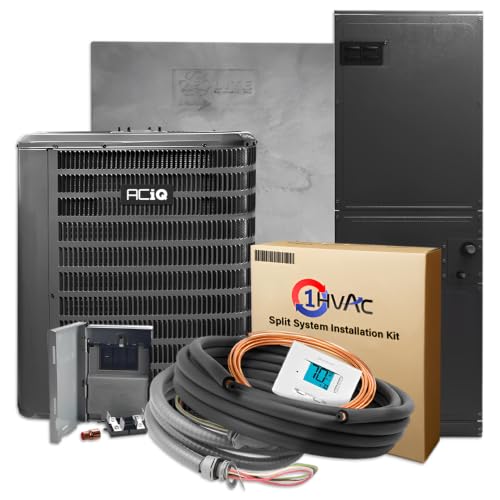
Heating and Cooling Systems for Homes: Complete Guide
Understand the main types of home comfort systems, how efficiency ratings work, what sizing factors matter, and how to match a system to your climate and home before you buy.
Explore System TypesWhy this guide matters: A heating and cooling system is a long-term investment that affects comfort, air quality, and energy use for many years. This guide focuses on the information you need to make a confident decision — system types, efficiency, sizing, installation considerations, and maintenance — without guesswork.
Types of Heating and Cooling Systems for Homes
There is no single best system for every home. The right choice depends on your climate, whether ductwork already exists, the size and layout of your house, and how you plan to use each room. Below are the most common system categories you will encounter when researching home comfort options.
Central Air + Furnace
A split system with an outdoor condenser and an indoor furnace or air handler connected to ductwork. It handles cooling and heating through the same ducts, making it a familiar choice for homes that already have ductwork.
Heat Pump System
One system that both heats and cools by moving heat instead of generating it. Air-source heat pumps are highly efficient in moderate climates and can be paired with a backup source for colder regions.
Ductless Mini-Split
An outdoor unit connected to one or more indoor wall, floor, or ceiling heads. No ductwork is required, and each zone can be controlled independently. Ideal for additions, older homes, and room-by-room comfort.
Ducted Mini-Split
Similar to a ductless system but with a concealed indoor unit that distributes air through small ducts. It offers a cleaner look while keeping the zoning benefits of a mini-split platform.
Window & Portable Units
Single-room solutions for cooling and, in some models, supplemental heating. They are straightforward to install and useful for renters or temporary needs, though they do not condition a whole house.
Geothermal Heat Pump
Uses stable ground temperatures to heat and cool efficiently. It involves ground loops and professional design, but delivers very high efficiency and long service life in suitable properties.
If your home has no existing ductwork, exploring ductless mini-split AC options is often the most practical starting point. If you already have ducts but are considering adding cooling, review adding air conditioning to a forced-air system and adding central air to an older home.
How Each System Delivers Comfort
Understanding the mechanics helps you compare systems fairly. Central systems and heat pumps rely on a refrigerant cycle and a distribution network, while room units condition air locally.
Central Split Systems
A central system pairs an outdoor condenser with an indoor coil, furnace, or air handler. Cooled or heated air travels through supply ducts and returns through return ducts. Efficiency depends on the equipment rating and on duct quality; sealed and insulated ducts preserve performance.
Heat Pumps
Heat pumps reverse the refrigerant cycle to move heat indoors in winter and outdoors in summer. Because they move heat rather than burn fuel, they can deliver more heating energy than they consume. Cold-climate models are designed to work in lower temperatures. For a deeper comparison, see heat pump vs air conditioner.
Ductless and Ducted Mini-Splits
Mini-splits use an outdoor unit linked by refrigerant lines to one or more indoor heads. Ductless heads mount on a wall, floor, or ceiling, while ducted versions hide the indoor unit and use short duct runs. Both support zoning, so unoccupied rooms are not conditioned unnecessarily. Review ductless mini-split air conditioners and heating for year-round use cases.
Room Units
Window and portable units cool a single room and are simple to operate. Some models include a heat function. They are best treated as targeted solutions rather than whole-home systems, and their efficiency varies widely across the category.
Efficiency Ratings Explained
Efficiency ratings let you compare equipment on a like-for-like basis. Higher ratings generally mean lower energy use for the same comfort output, but the best rating for your home also depends on climate and run time.
- SEER2: Seasonal cooling efficiency under updated DOE test standards. Higher is better for cooling performance. See what a SEER rating is for background.
- EER2: Efficiency at a specific peak condition. Useful for hot climates where the system runs hard on the hottest days.
- HSPF2: Heating seasonal efficiency for heat pumps. Higher values indicate more efficient heating across the season.
- ENERGY STAR: Certification that equipment meets efficiency thresholds set above baseline standards.
For a closer look at high-performance cooling equipment, see high-SEER air conditioners and ductless heat pump systems.
How to Size a Heating and Cooling System
Sizing is one of the most consequential decisions in a home comfort project. An oversized system short-cycles, which reduces dehumidification and adds wear. An undersized system struggles on peak days and runs continuously. Proper sizing uses a load calculation rather than a simple square-footage rule.
- Manual J load calculation: Estimates heating and cooling loads using insulation, window area, orientation, air sealing, climate data, and occupancy. This is the standard method for residential sizing.
- Duct evaluation: Duct size, layout, and leakage affect how much conditioned air reaches each room. A duct design review is part of a complete assessment.
- Climate zone: The same house can require different equipment in different regions. Heating design temperature and cooling design temperature both matter.
- Zoning: Multi-level homes and rooms with different exposure often benefit from zoning or multiple indoor heads.
If you are comparing system sizes, these references can help frame the discussion: AC installation in a 1,500 sq ft house, central air for 1,000 sq ft, and four-ton air conditioning units. Always confirm sizing with a load calculation performed by a qualified professional.
System Comparison at a Glance
Use this table to compare categories on the factors that matter most during research. It is a starting point, not a substitute for a professional assessment.
| System Type | Best For | Ductwork | Heating & Cooling | Efficiency Potential |
|---|---|---|---|---|
| Central AC + Furnace | Homes with existing ducts; cold climates | Required | Both (separate components) | Mid to high |
| Heat Pump (Ducted) | Moderate to cold climates; all-electric homes | Required | Both (one system) | High |
| Ductless Mini-Split | No ducts; additions; room-by-room zoning | Not required | Both (most models) | High |
| Ducted Mini-Split | Clean look with small duct runs; zoning | Small ducts | Both | High |
| Window / Portable | Single rooms; renters; temporary needs | Not required | Cooling; some with heat | Entry-level to mid |
| Geothermal Heat Pump | Suitable properties; long-term efficiency | Required (distribution) | Both | Very high |
Installation Factors That Affect Performance
Even well-rated equipment can underperform if installation is rushed. These are the factors worth discussing with any installer before work begins.
- Indoor and outdoor placement: Clearances, shade, and airflow around the outdoor unit affect performance. Indoor unit location affects noise and air distribution.
- Line set length: Refrigerant line length and routing must be within manufacturer limits. Proper brazing, pressure testing, and evacuation are essential.
- Duct sealing and insulation: Leaky ducts waste conditioned air. Sealing and insulating ducts is often one of the highest-return improvements in an existing home.
- Electrical capacity: Confirm panel capacity and circuit requirements, especially when replacing equipment with a different efficiency class or adding a new circuit.
- Permits and codes: Most jurisdictions require permits for HVAC replacement or new installations. Confirm code requirements and inspection steps.
- Commissioning: Airflow measurement, refrigerant charge verification, and thermostat configuration are part of a quality installation.
For installation-specific topics, review installing a complete HVAC system with ductwork and HVAC and ductwork installation. If you are weighing replacement against repair, see replacing an air conditioning unit.
Maintenance That Protects Performance
Regular maintenance keeps efficiency and comfort stable over the life of the system. Most tasks are simple, and professional service handles the rest.
- Filter changes: Follow manufacturer guidance and check monthly during peak use. A clogged filter reduces airflow and efficiency.
- Coil cleaning: Clean evaporator and condenser coils support heat transfer and reduce run time.
- Outdoor unit care: Keep the area clear of debris and vegetation. Gently rinse the coil as recommended.
- Duct inspection: Check for disconnected joints, tears, and excessive leakage. See heating and air conditioning duct cleaning for related guidance.
- Seasonal service: A professional tune-up before each heating and cooling season catches issues early and keeps the system within specification.
- Thermostat settings: Programmable and smart thermostats reduce unnecessary run time when schedules are consistent.
Related service references include furnace maintenance service and HVAC blower replacement when components reach end of life.
Matching a System to Your Home and Climate
The best system is the one that fits your house, your climate, and how you use each space. Consider these decision points during research.
- Existing ductwork: If ducts are present and in good condition, a central system or ducted heat pump is often the most direct path. If ducts are missing or failing, ductless options avoid costly duct work. See installing central air without existing ductwork.
- Climate: In mild climates, a heat pump or ductless mini-split can handle both seasons efficiently. In very cold climates, a furnace-plus-AC combination or a cold-climate heat pump with backup may be more appropriate.
- Home age and construction: Older homes often have small mechanical spaces and limited duct routes. Mini-splits and high-velocity systems can be practical alternatives. See central air in an old house.
- Zoning needs: Multi-story homes, additions, and rooms with large windows benefit from independent control. Ductless and ducted mini-splits support zone-by-zone comfort.
- Whole-home vs partial: Some households condition the whole house, while others prioritize main living areas. A staged approach with mini-splits can be expanded over time.
For a whole-house perspective, see installing whole-house air conditioning. For a single-room starting point, review ductless air conditioning for one room.
Common Questions About Home Comfort Systems
Should I choose a heat pump or a furnace with an air conditioner?
Choose a heat pump when winters are moderate and you want one efficient system for both seasons. Choose a furnace-plus-AC combination when winters are severe and you need strong, consistent heat output. In many regions, a cold-climate heat pump with a backup source is a strong middle path.
Can a ductless mini-split heat and cool an entire house?
Yes, multi-zone mini-split systems can condition a whole home with multiple indoor heads. The practical limit is the number of zones and the layout of the house. A professional design review determines whether a multi-zone mini-split or a ducted system is the better fit.
How important is duct sealing?
Duct sealing is often one of the most impactful improvements in an existing home. Leaky ducts can waste a significant portion of conditioned air and create pressure imbalances. Sealing and insulating ducts supports comfort and efficiency regardless of equipment rating.
What maintenance does a heat pump need?
Heat pumps benefit from regular filter changes, outdoor coil cleaning, and a professional seasonal check. Because they run year-round in many climates, maintenance frequency matters. A qualified technician should verify refrigerant charge and airflow during service visits.
How do I compare installation proposals?
Compare the load calculation, equipment ratings, duct work scope, commissioning steps, warranty terms, and permit handling. A detailed proposal that includes a load calculation and commissioning plan is a better basis for comparison than an equipment-only summary.
Ready to Compare Equipment Options?
Once you understand your home's needs, review recommended systems and feature comparisons to narrow your shortlist.
View Recommended Systems