Humidifier for Big House: The Complete Guide to Whole-Home Moisture Control
Large homes lose moisture fast in cold, dry months. Learn how whole-house humidifiers work, how to size one for thousands of square feet, and how to choose the right system for your big house.
Explore Humidifier TypesWhy this guide matters: A single portable humidifier cannot keep up with a big house. Multi-story homes, open floor plans, and large square footage demand a central solution tied to your HVAC system. This guide walks you through every decision you need to make before buying.
Why a Big House Needs a Whole-Home Humidifier
Dry indoor air is a common problem in large homes during heating season. When a furnace runs, it dries out the air even more. For a big house, the challenge is not just adding moisture but distributing it evenly across every room and floor.
Low indoor humidity can cause dry skin, irritated airways, static shocks, cracked wood floors, and gaps in furniture joints. It also makes a home feel colder than it actually is, which pushes homeowners to raise the thermostat unnecessarily. A properly sized whole-house humidifier solves these issues at the source by adding moisture directly into the ductwork.
Understanding how your HVAC system moves air is key. If you want a deeper background, read our guide on how an air conditioner works and our overview of house humidification to see how moisture and temperature control work together.
For big homes, humidity control is part of a broader comfort strategy. Pairing a humidifier with smart ventilation and proper house ventilation helps maintain a balanced indoor environment year-round.
Types of Humidifiers for a Big House
Not every humidifier is built for large square footage. Below are the main categories suited to a big house, ranked by how well they handle whole-home coverage.
Bypass Humidifier
Attaches to the supply and return ducts of a forced-air furnace. Warm air passes through a water-soaked pad and carries moisture through the home. Simple, reliable, and the most common choice for medium-to-large homes with existing ductwork.
Mid-tier · Ducted homesFan-Powered Humidifier
Uses a small fan to push air through the humidifier pad instead of relying on the furnace blower. Works better in tight duct systems and delivers more moisture than a bypass unit of similar size. A strong fit for larger homes with airflow restrictions.
Mid-tier · Better airflowSteam Humidifier
Boils water and injects steam directly into the ductwork. It does not depend on furnace heat, so it works with heat pumps and in very cold climates. Delivers precise humidity control and handles large square footage with ease.
High-end tier · Precision controlWhole-House Console Humidifier
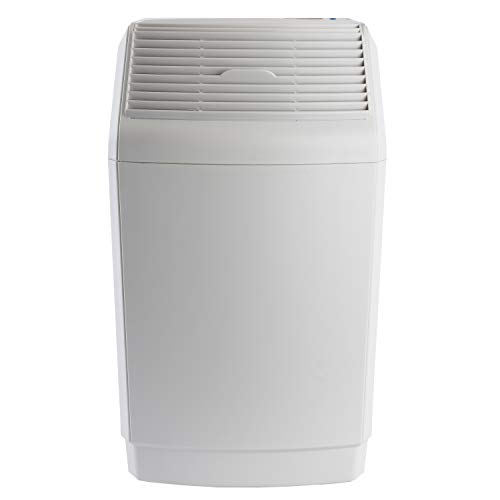
A standalone unit placed in a central location, designed for larger open spaces. No ductwork required, which makes it useful for homes without forced-air heating. Coverage is limited by floor plan and doorways.
Essential tier · No ducts neededIf your home uses a furnace as the primary heating source, a furnace-mounted unit is usually the most efficient path. Our guide on humidifiers for my furnace explains how these systems integrate with existing heating equipment. For attic-based furnace setups common in some regions, see humidifier for attic furnace.
How to Size a Humidifier for a Big House
Sizing is the single most important factor when choosing a humidifier for a big house. An undersized unit runs constantly and never reaches the target humidity. An oversized unit can cause condensation on windows and promote mold growth. The right size depends on three variables: square footage, ceiling height, and how tightly the house is sealed.
Step 1: Calculate Total Conditioned Volume
Multiply the total square footage of the home by the average ceiling height. For example, a 3,500 sq ft home with 9-foot ceilings has about 31,500 cubic feet of conditioned space. Multi-story homes should be calculated floor by floor, then summed. Large open areas with vaulted ceilings need extra capacity.
Step 2: Estimate Air Leakage
Older big houses with drafty windows and doors lose moisture faster than tightly sealed new builds. Homes built before modern air-sealing standards typically need a larger humidifier capacity than a similarly sized new home. If you notice drafts near windows, the house is likely leaking moisture and heat.
Step 3: Match Capacity to Square Footage
Most manufacturers rate whole-house humidifiers by gallons per day (GPD). For a big house, the following ranges provide a useful starting point. These are general guidelines; always confirm with a licensed HVAC contractor who can perform a proper load calculation.
| Home Size (sq ft) | Recommended Capacity | Typical Humidifier Type | Best For |
|---|---|---|---|
| Up to 2,000 | 10–12 GPD | Bypass or fan-powered | Starter tier homes |
| 2,000–3,000 | 12–14 GPD | Fan-powered | Mid-tier standard homes |
| 3,000–4,500 | 14–18 GPD | Fan-powered or steam | Large single-family homes |
| 4,500+ | 18+ GPD | Steam or commercial-grade | Top-tier and multi-story homes |
For very large properties, a single humidifier may not be enough. In those cases, HVAC contractors often recommend zoning the home and installing two smaller units, each serving a section of the house. This approach is especially effective in multi-story homes where moisture naturally rises. If you are also dealing with seasonal dryness, our article on humidity in home during winter explains how winter weather affects indoor moisture levels.
Installation Considerations for Large Homes
Installing a whole-house humidifier is not a do-it-yourself project for most homeowners. The unit must be connected to the water supply, the drain line, and the ductwork, and it must be wired into the HVAC control system. In a big house, the installation complexity increases because duct runs are longer and the system may already be zoned.
Key installation factors for a big house include:
- Water supply access: A dedicated cold-water line is required. Steam humidifiers also need a drain line for condensate.
- Duct location: The humidifier should be mounted on the supply plenum where warm air can absorb moisture before it travels through the home.
- Electrical power: Fan-powered and steam units need a nearby power source, often a dedicated circuit.
- Zoning compatibility: If the home has multiple HVAC zones, the humidifier must be wired to run only when the relevant zone is calling for heat.
- Humidistat placement: The control should be mounted in a representative area, not near a bathroom, kitchen, or exterior door.
Before hiring a contractor, always request a written quote that details the model, capacity, and installation scope. Our guide on how to get an installation quote walks you through the questions to ask and what a fair proposal should include. If you want to compare central systems more broadly, the house central air conditioning units page provides useful context on how whole-home HVAC components fit together.
Ideal Indoor Humidity Levels for a Big House
The target humidity for most homes is between 30% and 50% relative humidity. In a big house, the challenge is maintaining that range consistently across all floors. Upper floors tend to run drier in winter because warm air rises and carries moisture with it, while basements tend to run more humid.
In cold climates, indoor humidity should drop as outdoor temperatures fall to prevent condensation on windows. A common rule of thumb is:
- Above 20°F outdoors: 40–45% indoor humidity
- 10°F to 20°F outdoors: 35–40% indoor humidity
- 0°F to 10°F outdoors: 30–35% indoor humidity
- Below 0°F outdoors: 25–30% indoor humidity
For a detailed breakdown of healthy humidity ranges, read our guide on humidity level for home. If you are trying to diagnose why one part of the house feels dry, our articles on how to tell the humidity in your house and how to know the humidity in the room explain how to measure it accurately.
Signs Your Big House Is Too Dry
Watch for static shocks, dry skin, chapped lips, wood floor gaps, and frequent nosebleeds. These are common symptoms in large homes during winter. If you notice condensation on windows after installing a humidifier, the indoor humidity is too high and should be reduced.
Maintenance for Whole-House Humidifiers
Whole-house humidifiers require regular maintenance to stay effective and safe. Neglected units can grow mold, scale, and bacteria that are then distributed throughout the home. For a big house, where the humidifier runs longer and harder, maintenance is even more important.
- Replace the water panel or pad: Once per heating season, or more often in homes with hard water.
- Clean the water tray and drain line: Prevents scale buildup and standing water.
- Inspect the humidistat: Verify accuracy with a separate hygrometer once a year.
- Check the solenoid valve: A failing valve can cause leaks or stop water flow entirely.
- Schedule annual HVAC service: Have the technician inspect the humidifier at the same time as the furnace tune-up.
If your home also relies on central cooling, consistent maintenance habits carry over. Our guide on how long an AC lasts covers the value of annual service and the lifespan you can expect from well-maintained equipment.
Troubleshooting Common Humidifier Issues
Even a well-installed humidifier can develop problems. Below are the most common issues in large homes and what they usually indicate.
| Symptom | Likely Cause | Next Step |
|---|---|---|
| Humidity stays low despite unit running | Undersized unit, clogged pad, or low water flow | Check pad condition and water valve; verify sizing |
| Water leaking around unit | Clogged drain line or faulty solenoid valve | Clear drain; inspect valve for debris |
| Condensation on windows | Humidity set too high for outdoor temperature | Lower humidistat setting by 5–10% |
| Musty smell from vents | Mold or bacteria growth in humidifier or ducts | Clean unit, replace pad, inspect ductwork |
| Humidifier not turning on | Wiring issue, failed humidistat, or no call for heat | Check thermostat and humidistat wiring |
If you are unsure whether your comfort problem is humidity-related or airflow-related, it helps to rule out cooling issues first. Our guide on house AC turns on but no cold air covers the common causes of poor cooling, which can sometimes be mistaken for humidity problems.
How to Choose the Best Humidifier for Your Big House
Use the following decision framework to narrow down your options. The right choice depends on your heating system, climate, and how the house is constructed.
If You Have Forced-Air Heating
A bypass or fan-powered humidifier is the natural fit. It uses the existing ductwork and blower to distribute moisture. Fan-powered models are preferable in larger homes where duct pressure is lower.
Best match: ducted furnaceIf You Have a Heat Pump
Bypass humidifiers rely on warm supply air, which a heat pump may not provide consistently. A steam humidifier is the safer choice because it generates its own heat and works independently of the heating source.
Best match: steam humidifierIf You Have No Ductwork
A whole-house console humidifier or multiple room units are the practical option. Plan placement carefully so moisture reaches the main living areas rather than getting trapped in one room.
Best match: console humidifierIf You Live in a Very Cold Climate
Steam humidifiers offer the most control and do not depend on furnace run time. They cost more to operate but deliver consistent humidity even in extreme cold, when bypass units struggle.
Best match: steam humidifierFor homes that use a combined heating and cooling system, it is worth reviewing how the components interact. The humidifier and air conditioner relationship is often misunderstood, and our dedicated page clarifies how the two systems can share ductwork without conflict. Similarly, humidifier for AC unit explains what to check before pairing the two.
Whole-House vs Room Humidifiers for Large Spaces
Homeowners in big houses often ask whether several room humidifiers can replace a whole-house system. The answer is usually no. Room humidifiers are designed for a single enclosed space, and their output is measured in gallons per day that rarely exceed single digits. A big house with an open floor plan will not see meaningful humidity improvement from one or two room units.
A whole-house system, by contrast, treats the entire home as a single air volume. It adds moisture where the air is moving fastest, which is in the ductwork, and distributes it to every connected room. The result is consistent humidity from the basement to the second floor.
If you are exploring a whole-home approach, our overview of humidifier for entire house explains the integration points with your existing HVAC equipment. For homeowners who want a background on humidity science before deciding, the house air conditioner and house air conditioner condenser pages provide useful context on how air is conditioned and moved through the home.
Ready to Compare Humidifier Options?
Browse our curated selection of whole-house humidifiers suited to large homes, then review the specs side by side.
View Recommended ModelsFrequently Asked Questions
What size humidifier do I need for a 3,000-square-foot house?
A 3,000-square-foot home typically needs a humidifier rated for 12 to 14 gallons per day, depending on ceiling height and how tightly the house is sealed. Homes with high ceilings or significant air leakage should lean toward the upper end of that range or consider a steam unit.
Can one humidifier cover a two-story house?
Yes, if the home has a single forced-air system with ductwork serving both floors. The humidifier mounts on the supply plenum and distributes moisture through the ducts. In homes with separate systems per floor, two humidifiers or a zoned setup may be required.
How long does a whole-house humidifier last?
With regular maintenance, a quality whole-house humidifier can last 10 to 15 years. Steam units may have a shorter lifespan for the heating element, while bypass and fan-powered units tend to last longer because they have fewer powered components.
Is a steam humidifier better for a big house?
Steam humidifiers offer the most precise control and work independently of furnace heat, which makes them a strong choice for very cold climates and heat pump systems. They use more energy than bypass units, so the decision often comes down to climate and heating system type.
How often should I replace the humidifier pad?
Replace the water panel or pad at least once per heating season. Homes with hard water may need to replace it twice per season. A clogged pad reduces output and can cause the humidifier to run continuously without reaching the target humidity.
Will a humidifier help with dry air in winter?
Yes. Winter air holds very little moisture, and heating that air lowers relative humidity further. A whole-house humidifier restores moisture to a comfortable range, reducing dry skin, static, and wood floor gaps. Our guide on humidity in home during winter covers seasonal targets in more detail.
Final Thoughts
Choosing a humidifier for a big house comes down to three decisions: the type of system, the right capacity, and professional installation. Bypass and fan-powered units are the workhorses for ducted homes, while steam humidifiers handle extreme cold and heat pump setups. Console units fill the gap for homes without ductwork.
Take the time to calculate your home's volume, assess air leakage, and consult a licensed HVAC contractor before committing. A well-sized, properly installed whole-house humidifier will keep every floor comfortable through the dry season and protect your home's wood, furniture, and finishes for years to come.