HVAC Split Units: The Complete Guide to Ductless Split Systems
Everything you need to know about HVAC split units — how they work, how to size them, which efficiency ratings matter, and how to choose the right ductless split system for your home before you buy.
Start LearningWhat Are HVAC Split Units?
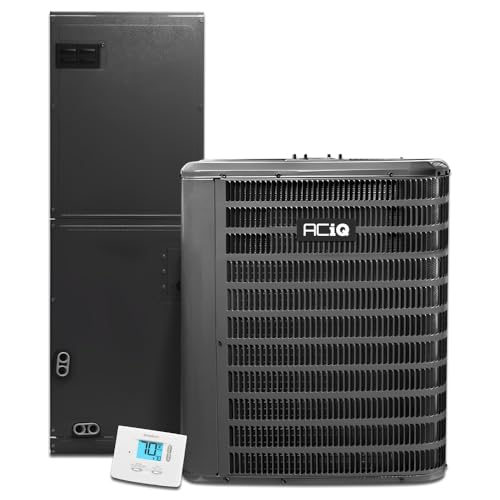
HVAC split units are two-part cooling and heating systems made up of an outdoor condenser unit and one or more indoor air handlers. The two components are connected by a refrigerant line set and electrical wiring that pass through a small wall opening — typically just three inches in diameter. Because there is no need for a network of air ducts, split units are the go-to solution for homes without existing ductwork, room additions, converted garages, and spaces where zoning individual rooms matters more than cooling an entire house at once.
The term "split" refers to the physical separation of the noisy compressor and condenser coil (kept outdoors) from the evaporator coil and blower (installed indoors). This separation is the core reason split systems run quieter than window units and portable air conditioners, where the compressor sits in the same room you are trying to cool. If you are comparing system architectures in detail, the dedicated HVAC split systems overview covers the family tree of split configurations, while this page focuses specifically on split units as a product category — how to evaluate them before you commit to a purchase.
A modern split unit is usually a heat pump, meaning it can reverse the refrigerant cycle to provide both cooling in summer and heating in winter. That dual capability is why split units have become the default recommendation for homeowners replacing both an aging air conditioner and a separate furnace. Compared with a traditional HVAC system that relies on ducts, split units deliver conditioned air directly into the room they serve, which eliminates the energy losses associated with leaky ductwork — losses that can reach 20% to 30% in older homes.
How a Split System Works
Understanding the refrigerant cycle helps you ask the right questions during a sales consultation. An HVAC split unit moves heat rather than generating it from scratch, which is the fundamental reason heat pump split systems can be two to three times more efficient than electric resistance heating.
- Indoor air handler draws in warm room air. A blower fan pulls air across the evaporator coil, which is chilled by refrigerant expanding inside it.
- Heat is absorbed and the air is cooled. As refrigerant evaporates, it absorbs heat from the air. The cooled air is returned to the room through supply vents in the air handler.
- Refrigerant travels to the outdoor unit. The now-gaseous refrigerant moves through the line set to the condenser coil outdoors.
- The compressor raises pressure and temperature. The compressor is the heart of the system — it pressurizes the refrigerant so heat can be released to the outside air.
- The condenser releases heat and the cycle repeats. A fan blows outdoor air across the condenser coil, the refrigerant condenses back to liquid, and an expansion valve prepares it to re-enter the indoor coil.
Types of HVAC Split Units
Not every split unit is the same. The category splits into several sub-types, each with a distinct use case. The table below summarizes the trade-offs at a glance; the notes that follow explain which type fits which situation.
| Type | Best For | Tier Positioning | Key Consideration |
|---|---|---|---|
| Single-zone ductless mini-split | One room, garage, home office, sunroom | Entry-level to premium | Simplest install, lowest complexity |
| Multi-zone ductless split system | Whole-home zoning without ducts, multi-story homes | Mid-range to flagship tier | One outdoor unit, independent room control |
| Ducted mini-split | Concealed installations, short duct runs, retrofits | Mid-range to high-end tier | Hidden air handler, slightly more installation work |
| Ceiling cassette split unit | Open-plan living areas, commercial spaces | Premium to professional-grade | Four-way airflow, flush ceiling mount |
| Floor-mounted split unit | Rooms with limited wall space, low windows | Mid-range to premium | Discreet placement near the floor |
| Hyper-heat / cold-climate split unit | Northern climates, primary heating in winter | High-end tier to flagship tier | Maintains capacity at very low outdoor temperatures |
Single-Zone vs Multi-Zone
A single-zone split unit pairs one outdoor condenser with one indoor air handler. It is the simplest, most reliable configuration and typically the most efficient per zone. A multi-zone system connects one outdoor unit to as many as five indoor heads, each with its own thermostat. Multi-zone systems are ideal when you want different temperatures in different rooms, but they introduce more variables — if one zone is undersized relative to the outdoor unit's minimum modulation, that zone may struggle to maintain stable temperatures. For a deeper comparison of ductless options, see the HVAC split systems breakdown.
Ducted vs Ductless
Ducted mini-splits conceal the air handler in an attic, closet, or soffit and distribute air through short duct runs. They are useful when an interior room has no suitable wall space for a wall-mounted head. Ductless mini-splits are easier to retrofit and avoid duct losses entirely. Both are legitimate choices; the deciding factor is usually the physical layout of the building rather than efficiency.
Heat Pump vs Cooling-Only
Most modern split units sold today are heat pumps, and for good reason — they cost only marginally more than cooling-only models and give you a heating option that can replace a furnace in mild-to-moderate climates. Cold-climate and hyper-heat versions extend that capability into regions where winters regularly drop below freezing. If you are replacing an older air conditioner as part of a broader upgrade, the HVAC system buying guide walks through how to sequence decisions about heating, cooling, and air quality.
Sizing an HVAC Split Unit: BTU and Load Calculation
Sizing is the single most consequential decision in a split unit purchase. An undersized unit runs continuously, fails to reach the setpoint on hot days, and wears out its compressor prematurely. An oversized unit short-cycles — it blasts cold air, shuts off before dehumidifying properly, and leaves rooms feeling clammy. Both errors are avoidable with a proper load calculation.
The Quick Square-Footage Rule of Thumb
As a starting point only, a rough rule is 20 BTU per square foot of conditioned floor area in a typical U.S. climate. That means a 300-square-foot room points toward roughly 6,000 BTU, and a 600-square-foot space points toward roughly 12,000 BTU. Treat this as a screening tool, not a final specification — it ignores ceiling height, insulation quality, window area, sun exposure, and occupancy.
Why a Manual J Load Calculation Matters
A professional Manual J load calculation accounts for orientation, window U-values, insulation R-values, air infiltration, duct losses (if ducted), and internal gains from appliances and people. The result is a room-by-room BTU target that determines the correct indoor head capacity and outdoor condenser capacity. When the load calculation and the equipment selection are mismatched, the consequences show up as comfort complaints within the first cooling season. The HVAC sizing resource explains how technicians perform these calculations and what data they collect.
Capacity Ranges You Will Encounter
- Entry-level single-zone units: commonly 9,000 to 12,000 BTU, suited to bedrooms and small offices.
- Mid-range single-zone and small multi-zone units: commonly 18,000 to 24,000 BTU, suited to large living rooms and open-plan spaces.
- High-capacity multi-zone systems: 30,000 to 48,000 BTU and above, suited to whole-home zoning or light commercial spaces.
Efficiency Ratings for Split Units: SEER2, EER2, and HSPF2
Efficiency ratings let you compare split units on a like-for-like basis, but the labels changed with the 2023 DOE standards. The older SEER and HSPF metrics were replaced by SEER2 and HSPF2, which use updated test conditions that better reflect real-world operation. When you read a spec sheet, confirm which standard the number follows — a SEER2 rating is not directly interchangeable with a legacy SEER rating.
| Rating | What It Measures | What to Look For |
|---|---|---|
| SEER2 | Seasonal cooling efficiency over a simulated cooling season | Aim for 15+ in most climates; 20+ is worth evaluating in hot regions |
| EER2 | Efficiency at peak design conditions (hot afternoon) | Higher EER2 means less strain during heat waves |
| HSPF2 | Seasonal heating efficiency in heat pump mode | Relevant if the unit will be your primary heat source in winter |
Inverter-driven compressors are standard on mid-range and higher split units, and they are the main reason modern split units achieve SEER2 ratings that were impossible a decade ago. An inverter compressor modulates its speed continuously rather than cycling on and off, which stabilizes room temperature, reduces humidity swings, and lowers energy use in part-load conditions — which is where most systems spend most of their operating hours. Entry-level fixed-speed units still exist and are acceptable for lightly used spaces, but their efficiency and comfort characteristics are noticeably behind inverter models.
If you are weighing equipment tiers, the general pattern is: entry-level units meet minimum standards and are suited to occasional-use rooms; mid-range units add inverter compressors and better filtration; premium and flagship-tier units add cold-climate performance, higher SEER2, quieter operation, and smarter controls. The HVAC smart thermostat you pair with a split unit can materially affect how much of that efficiency you actually capture, because programmable setbacks and occupancy sensing reduce runtime during unoccupied hours.
Installation Considerations for Split Units
Split units are less invasive to install than a full ducted system, but they are not plug-and-play appliances. The quality of installation determines whether the unit reaches its rated efficiency, how quiet it runs, and how long it lasts. Before hiring anyone, understand the major decision points.
Indoor and Outdoor Placement
- Indoor head placement: Mount high on a wall with clear airflow path to the room. Avoid locations directly above heat sources, near doorways that cause drafts, or where furniture will block the supply louvers.
- Outdoor unit placement: Needs clear airflow on all sides, a level pad, and clearance from walls, shrubs, and property lines. Avoid enclosed spaces where hot exhaust air recirculates.
- Line set routing: Keep the refrigerant line set as short and direct as practical. Long runs require additional refrigerant charge and can reduce capacity if not accounted for during commissioning.
Electrical Requirements
Small single-zone split units can run on 110V circuits, but most units above 12,000 BTU and virtually all multi-zone systems require 240V service. A licensed electrician must confirm your panel has adequate capacity and install a dedicated circuit with the correct breaker size. Skipping this step is a common cause of warranty denial and is a safety hazard. The HVAC service technicians directory can help you find installers who work with licensed electricians as part of the project.
Permits and Code Compliance
Most jurisdictions require a mechanical permit for split unit installation, and some also require an electrical permit. Permits protect you: they trigger an inspection that verifies the install meets code, which matters if you ever sell the home or file a warranty claim. Ask your contractor who pulls the permit and who is responsible for the inspection sign-off.
Maintenance and Longevity of Split Units
A split unit is a long-term investment, and its lifespan depends heavily on routine care. Well-maintained systems routinely reach 15 to 20 years; neglected systems often develop refrigerant leaks, frozen coils, and compressor failures well before that. The maintenance tasks below are the ones that matter most.
Homeowner Tasks
- Clean or replace indoor filters every 1–3 months. A clogged filter reduces airflow, strains the blower, and can ice the evaporator coil. This is the single highest-value maintenance action you can take.
- Keep the outdoor unit clear. Remove leaves, pollen, and debris from around the condenser. Trim vegetation back at least two feet on all sides.
- Check the condensate drain. A blocked drain line causes water backups and can trigger a shutdown. Flush it seasonally.
- Inspect the indoor coil periodically. Dust buildup on the evaporator reduces capacity and can harbor odors.
Professional Tasks
An annual or bi-annual professional tune-up covers refrigerant pressure verification, electrical connection inspection, coil cleaning, condensate pump testing, and a check of the compressor's starting and running amperage. This is also when small refrigerant leaks are caught before they become compressor-killing failures. The HVAC unit maintenance guide explains what a thorough service visit should include, and the HVAC service page helps you understand what different service tiers typically cover.
Filter quality and replacement frequency are the two factors that most directly affect long-term reliability. Budget for a supply of replacement filters at the time of purchase so you are never tempted to stretch replacement intervals. The HVAC system cleaning services page covers deep-cleaning options for coils and blowers that go beyond routine maintenance.
Split Units vs Other HVAC Options
Split units are not the right answer for every home. The comparison below frames the trade-offs honestly so you can decide whether a split system or a different architecture fits your situation.
| System | Strengths | Limitations |
|---|---|---|
| Ductless split units | No ductwork needed, room-by-room zoning, quiet indoors, efficient part-load operation | Higher upfront equipment and install complexity than window units; visible indoor head |
| Central ducted system | Whole-home comfort, hidden equipment, good for new construction with existing ducts | Duct losses, less zoning flexibility, invasive to retrofit |
| Window units | Simple, self-contained, easy to replace | Noisy indoors, blocks window, limited capacity, less efficient |
| Portable units | Movable, no permanent installation | Lower efficiency, condensate handling, venting requirements |
Split units occupy a middle ground that increasingly wins on total cost of ownership: they avoid duct losses, install with minimal structural disruption, and provide zoning that central systems can only approximate. For homes that already have ducts in good condition, a central system remains a reasonable choice; for homes without ducts, a ductless split system is usually the more practical path. If you are also considering indoor air quality improvements, a HVAC with air purifier configuration can be paired with split units through the indoor air handler.
Buying Checklist for HVAC Split Units
Before you commit, verify each of the following. This checklist is designed to be used in conversation with your contractor — not as a substitute for professional advice.
- Load calculation completed: Room-by-room Manual J or equivalent, not just a square-footage estimate.
- Zone count and capacity matched: Each indoor head sized to its room; outdoor unit sized with a diversity factor for multi-zone.
- Efficiency targets set: SEER2 rating appropriate for your climate, and HSPF2 rating reviewed if you plan to use heat pump mode in winter.
- Electrical plan confirmed: Panel capacity verified, correct circuit voltage, dedicated breaker installed by a licensed electrician.
- Placement reviewed: Indoor head airflow path clear; outdoor unit clearances met; line set route minimized.
- Permits identified: Mechanical and electrical permits confirmed with the local authority before work starts.
- Warranty registration understood: Know the registration deadline and what voids coverage.
- Service plan in place: Annual maintenance scheduled, filter replacement routine established.
If you need help finding a qualified installer or comparing service options in your area, the HVAC service companies page and the HVAC service in my area tool can narrow the field. For larger residential projects, HVAC residential resources cover how residential contracts are structured.
Frequently Asked Questions
What is an HVAC split unit?
An HVAC split unit is a system with two main components: an outdoor condenser unit and one or more indoor air handlers. Unlike central systems, split units do not require ductwork, making them ideal for homes without existing ducts, room additions, and zoned cooling.
How long do HVAC split units last?
A well-maintained split system typically lasts 12 to 20 years. Premium and top-tier models with inverter compressors often reach the upper end of that range when serviced annually by a qualified technician.
Do split units need a dedicated electrical circuit?
Most single-zone split systems require a dedicated 110V or 240V circuit depending on capacity. Multi-zone and larger-capacity systems almost always need 240V service. A licensed electrician should verify your panel capacity before installation.
Can one outdoor unit serve multiple rooms?
Yes. Multi-zone split systems connect one outdoor condenser to two to five indoor air handlers, each controlled independently. This makes them a strong choice for whole-home zoning without ductwork.
What SEER2 rating should I look for?
For most U.S. climates, aim for a SEER2 rating of 15 or higher. Premium and high-end tier units reach 20 to 25 SEER2, which is worthwhile for long-term energy efficiency in hot climates.
Are split units good for cold climates?
Standard heat pump split units operate efficiently down to about 25°F. Cold-climate and hyper-heat models maintain capacity down to 5°F or lower, making them viable primary heating systems in northern states.
Ready to Explore Split Unit Options?
Our recommended products below are selected to cover entry-level through premium tiers across single-zone and multi-zone configurations. Compare features, efficiency ratings, and placement suitability before you decide.
View Recommended Units