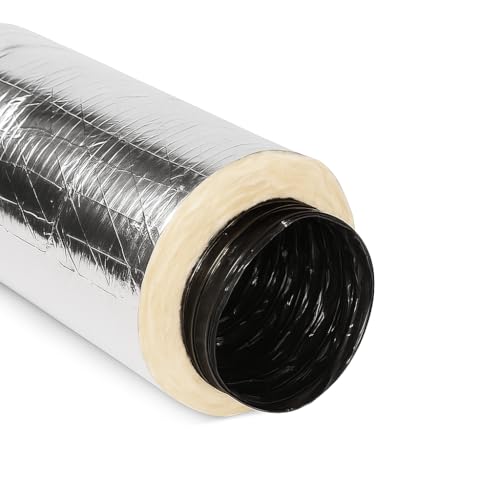
What Is Insulated Ductwork?
Insulated ductwork refers to air distribution channels wrapped or lined with thermal insulation material. The insulation creates a barrier that slows heat transfer between the air inside the duct and the surrounding environment. In cooling applications, this prevents warm ambient air from heating the conditioned air as it travels through attics, crawlspaces, garages, or unconditioned zones.
Most residential and light commercial HVAC systems use either insulated flexible air duct or rigid metal air duct with an external insulation wrap. The choice depends on the installation environment, layout complexity, and local building codes. Properly installed insulation is a critical component of any insulated air duct system.
Why Insulate Your Ductwork?
Energy Efficiency
Insulation minimizes thermal loss, allowing your AC to deliver cooled air at the intended temperature and reducing compressor workload.
Condensation Control
A vapor barrier combined with insulation prevents moisture buildup on cold duct surfaces, protecting against mold and corrosion.
Noise Reduction
Insulated duct liner absorbs airborne sound and reduces vibration, resulting in quieter operation throughout the home.
System Longevity
By reducing strain on the compressor and air handler, insulated ductwork supports a longer service life for the entire HVAC system.
In many climates, uninsulated ducts running through unconditioned spaces can lose a substantial share of cooling capacity. This is especially true in attics where summer temperatures can soar well above outdoor ambient levels. Homeowners researching installing central air in a house with ducts should always verify duct insulation condition before commissioning a new system.
Types of Duct Insulation
There are several insulation approaches, each suited to different duct materials and installation conditions. Understanding these options helps you specify the right solution for your project.
1. Fiberglass Blanket Wrap
Fiberglass blanket insulation is the most common external wrap for rigid metal ducts. It is available in rolls with a foil-facing vapor retarder. The foil facing must be sealed with approved tape to create a continuous vapor barrier. This type is widely used in attic and crawlspace installations.
2. Flexible Duct with Factory Insulation
Factory-insulated flexible duct consists of a wire-reinforced inner core, a fiberglass insulation layer, and an outer vapor barrier jacket. It is popular for its ease of routing around obstacles. However, it must be installed with minimal sag and supported at recommended intervals to maintain airflow. See our guide on insulated flexible air duct for installation details.
3. Duct Liner (Internal Insulation)
Duct liner is applied to the inside of rigid rectangular ducts. It provides both thermal and acoustic benefits, making it a strong choice for lined ductwork in spaces where noise is a concern, such as home theaters or bedrooms adjacent to mechanical rooms. Internal liner must be sealed and protected from moisture.
4. Spray Foam and Rigid Board
In some retrofit scenarios, closed-cell spray foam or rigid insulation board is applied to duct exteriors. These methods can achieve high R-values and excellent air sealing, though they typically require professional application and may not suit every duct configuration.
Understanding R-Value for Duct Insulation
R-value measures thermal resistance. The higher the R-value, the better the insulation performs. Building energy codes and ENERGY STAR guidance specify minimum R-values based on climate zone and duct location. The following table summarizes typical recommendations by application tier.
| Tier | Typical R-Value Range | Best For |
|---|---|---|
| Essential tier | R-4 to R-6 | Mild climates; ducts in conditioned or semi-conditioned spaces |
| Mid-tier | R-6 to R-8 | Most residential applications; ducts in attics and crawlspaces in moderate climates |
| High-end tier | R-8 to R-12 | Hot or cold climates; exposed attic runs; energy-conscious builds |
| Top-tier | R-12 and above | Extreme climates; commercial-grade specifications; maximum efficiency targets |
Always check local building codes and consult a qualified HVAC professional to confirm the required R-value for your specific climate zone and duct location. Upgrading insulation is often recommended alongside other efficiency improvements outlined in insulated air duct best practices.
Installation Best Practices
Even high-R-value insulation underperforms if installed incorrectly. The following practices are essential for reliable performance:
- Seal all joints and seams with mastic or approved foil tape before applying insulation. Air leaks undermine the insulation's effectiveness.
- Maintain a continuous vapor barrier on the warm side of the insulation to prevent condensation inside the insulation layer.
- Support flexible duct properly at manufacturer-recommended intervals and avoid sharp bends or sagging that restrict airflow.
- Leave adequate clearance around equipment and access panels for service and safety.
- Do not compress insulation excessively, as compression reduces R-value.
For comprehensive installation guidance across different system types, refer to our resources on installing central AC and installing an air handler. If your home lacks existing ductwork, explore installing air conditioning in a house without ducts for alternative approaches.
Common Problems Caused by Poor Duct Insulation
Neglecting duct insulation can lead to several issues that affect comfort and system reliability:
- Reduced cooling capacity — conditioned air warms up before reaching registers, causing rooms to feel insufficiently cool.
- Condensation and moisture damage — uninsulated cold ducts in humid spaces sweat, potentially damaging building materials.
- Higher energy consumption — the system runs longer to compensate for losses, increasing electricity usage.
- Noise transmission — unlined metal ducts can amplify blower and airflow noise.
If you notice weak airflow or uneven cooling, the issue may extend beyond insulation. Review our troubleshooting resources for AC not cooling to diagnose other potential causes.
Insulated Ductwork in Crawlspaces and Attics
Crawlspace and attic installations are especially demanding. In these unconditioned zones, temperature extremes and humidity require robust vapor barriers and adequate R-values. Our dedicated guide on insulating ductwork in crawlspace covers moisture management and protective jacketing in detail. Similarly, attic runs should be inspected for sun exposure, rodent damage, and disconnected sections that compromise performance.
Maintenance Tips for Insulated Ducts
Routine inspection preserves performance and extends the life of your duct system:
- Inspect insulation annually for tears, compression, or detached vapor barriers.
- Seal any new leaks with mastic and repair damaged jacketing promptly.
- Ensure condensate drain lines are clear and insulation is not waterlogged.
- Schedule professional duct inspection every few years, especially after renovations.
Consistent maintenance pairs well with overall maintenance for HVAC systems to keep the entire system operating efficiently.
Frequently Asked Questions
How do I know if my ductwork is already insulated?
Visually inspect accessible ducts. Factory-insulated flex duct has an outer vapor barrier jacket. Rigid metal ducts may have a foil-faced blanket wrap. If you see bare metal or damaged jacketing, insulation is missing or compromised.
Can I add insulation to existing ductwork?
Yes. External blanket wrap can be added to accessible rigid ducts, and damaged flex duct sections can be replaced. However, proper sealing and vapor barrier continuity are essential. Consult a qualified professional for attic or crawlspace retrofits.
What R-value should I choose?
Recommendations vary by climate zone and duct location. In general, ducts in unconditioned attics benefit from R-8 or higher. Check local energy codes and professional guidance for your specific situation.
Does insulated ductwork reduce noise?
Yes. Internal duct liner and external insulation both help dampen airborne noise and vibration. Acoustic performance is a common reason to choose lined ductwork in noise-sensitive installations.
Is insulated ductwork required by code?
Many jurisdictions require minimum insulation levels for ducts in unconditioned spaces. Requirements vary widely. Always verify with your local building department before installation.