Insulated Flexible Air Duct: The Complete Guide
Discover how insulated flexible air ducts improve HVAC efficiency, reduce energy loss, and keep your home comfortable. Learn about R-values, materials, installation best practices, and how to choose the right duct for your system.
START LEARNINGWhy This Guide Matters: Up to 30% of a home's heating and cooling energy can be lost through poorly insulated or leaky ductwork. Understanding insulated flexible air ducts helps you make informed decisions that improve comfort, reduce energy waste, and extend the life of your HVAC system.
What Is an Insulated Flexible Air Duct?
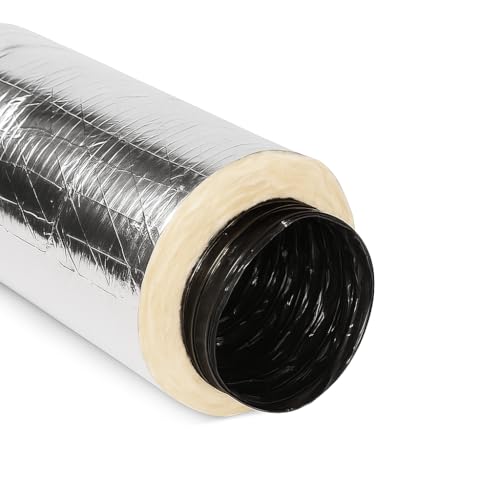
An insulated flexible air duct is a type of HVAC ductwork made from a flexible inner core wrapped in insulation and protected by an outer jacket. Unlike rigid metal ducts, flexible ducts can bend around obstacles, making them ideal for tight spaces such as attics, crawlspaces, and joist bays. The insulation layer is critical because it prevents conditioned air from losing its temperature as it travels from the air handler to the rooms it serves.
These ducts are commonly used in residential HVAC systems, particularly in homes without existing ductwork, and they are a staple in mini-split installations and retrofits. Understanding how they are constructed helps you evaluate quality and performance.
Core Components of an Insulated Flexible Duct
- Inner core: Usually made from a reinforced polyester film or aluminum foil laminate that carries the air. It may be smooth or corrugated; smoother cores reduce airflow resistance.
- Insulation layer: Fiberglass blanket insulation surrounds the inner core. The thickness and density determine the R-value, which measures thermal resistance.
- Outer jacket: A protective vapor barrier, often made from polyethylene or aluminum foil, that prevents moisture intrusion and protects the insulation from damage.
- Reinforcement: A wire helix (spiral wire) supports the duct's shape and prevents collapse under negative pressure.
Each component contributes to performance. A duct with a high-grade outer jacket and dense insulation will outperform an entry-level product in both durability and thermal efficiency.
Types of Insulated Flexible Air Ducts
Insulated flexible ducts come in several configurations, each suited to different applications. The most common classification is by R-value, which indicates thermal resistance. Higher R-values mean better insulation performance.
R-Value Classification
| Tier | Typical R-Value | Best For | Notes |
|---|---|---|---|
| Entry-Level | R-4.2 to R-6 | Interior runs in conditioned spaces, short duct runs | Basic thermal protection; suitable where temperature differentials are modest |
| Mid-Range | R-8 | Attics, crawlspaces, garages, and most residential retrofits | The most common choice for residential HVAC; balances performance and flexibility |
| Premium | R-11 to R-12 | Harsh unconditioned spaces, extreme climates, long duct runs | Superior thermal resistance; recommended where energy efficiency is a priority |
| High-End Tier | R-16 and above | Commercial-grade applications, specialized high-performance systems | Thick insulation; requires careful support and larger clearance |
For most homeowners, R-8 insulated flexible duct offers the best balance of performance and practicality. However, in regions with extreme temperatures, upgrading to R-11 or higher can be a worthwhile long-term investment. You can learn more about duct insulation in the context of insulated ductwork and insulated air duct guides.
Construction Variations
- Standard flexible duct: The most common type, with a wire helix and fiberglass insulation.
- Insulated exhaust hose: Used for portable air conditioners to exhaust hot air; typically smaller diameter and more flexible. See insulated exhaust hose for portable AC.
- Ducted mini-split ducting: Short, insulated flexible runs used in ducted mini-split systems.
- Acoustic flexible duct: Features additional sound-absorbing layers for noise-sensitive installations.
Why Insulation Matters for Flexible Ducts
Insulation is not a luxury—it is a functional necessity. When conditioned air travels through a duct in an unconditioned space (such as an attic that can reach 140°F in summer), heat transfer occurs. Without adequate insulation, the air loses its cooling effect before reaching the room, forcing the HVAC system to work harder and longer.
Key Benefits of Properly Insulated Flexible Ducts
- Energy efficiency: Reduces thermal loss, lowering energy consumption and improving overall system efficiency.
- Condensation control: A proper vapor barrier prevents moisture from condensing on cold duct surfaces, which can lead to mold growth and water damage.
- Consistent comfort: Rooms receive air at the intended temperature, eliminating hot and cold spots.
- System longevity: Less strain on the compressor and air handler extends equipment lifespan.
- Noise reduction: Insulation dampens sound transmission from the air handler and airflow turbulence.
The importance of insulation is especially pronounced in crawlspace ductwork, where humidity and temperature extremes are common. Proper insulation and vapor barriers are essential in these environments.
How to Choose the Right Insulated Flexible Air Duct
Selecting the right duct involves more than picking an R-value. Consider the following factors to ensure optimal performance and durability.
1. Determine the Required R-Value
Match the R-value to the environment where the duct will run. Ducts in conditioned spaces can use lower R-values, while ducts in attics, crawlspaces, or garages should use R-8 or higher. In extreme climates, R-11 or R-12 is recommended. Local building codes may also specify minimum R-values for duct insulation.
2. Choose the Right Diameter
Duct diameter must match the airflow requirements of your system. Undersized ducts increase static pressure and reduce airflow, while oversized ducts can lead to insufficient velocity and poor air distribution. A qualified HVAC contractor can perform a Manual J load calculation and duct sizing analysis.
3. Evaluate the Inner Core Material
The inner core affects airflow and durability. Smooth inner cores reduce friction and turbulence, improving efficiency. Reinforced laminate cores resist tearing during installation. For high-performance systems, consider ducts with a smooth, non-porous inner liner.
4. Check the Outer Jacket
The outer jacket should be puncture-resistant and have a low vapor transmission rate. A reinforced, fire-retardant jacket is preferable for safety and durability. Look for jackets that meet UL 181 safety standards.
5. Consider the Application Environment
For houses without ducts, flexible ductwork is often the most practical solution. For homes with existing ducts, flexible ducts can be used for branch runs or retrofits. In tight spaces like joist bays, the flexibility of the duct is a major advantage.
6. Tier-Based Selection Framework
| Tier | Best For | Key Characteristics |
|---|---|---|
| Essential Tier | Short interior runs, temporary setups, basic retrofits | Standard R-4.2 to R-6, basic jacket, entry-level durability |
| Balanced Tier | Most residential HVAC systems, attic and crawlspace runs | R-8 insulation, reinforced jacket, good flexibility and durability |
| High-End Tier | Extreme climates, long runs, energy-conscious installations | R-11 to R-12, premium jacket, superior thermal performance |
| Commercial-Grade | Commercial buildings, specialized high-performance systems | R-16+, heavy-duty construction, professional-grade materials |
For most residential applications, the balanced tier (R-8) offers the best overall value and performance. It is well-specified for the category and provides reliable thermal protection in typical unconditioned spaces.
Installation Best Practices for Insulated Flexible Ducts
Proper installation is critical for performance. Even a premium-grade duct underperforms if installed incorrectly. Follow these guidelines to ensure your insulated flexible duct system operates efficiently.
1. Keep Runs Short and Direct
Flexible ducts should be as short and straight as possible. Avoid unnecessary bends and loops, which increase airflow resistance. The general rule is to minimize the number of turns and keep the total length of each run within the design parameters of your system.
2. Avoid Compression and Kinks
Compressing or kinking the duct reduces its internal diameter and restricts airflow. Support the duct at regular intervals (typically every 4 to 6 feet) using appropriate hangers or straps. Do not over-tighten straps, as this can compress the insulation and reduce its R-value.
3. Seal All Connections
Leaky duct connections are a major source of energy loss. Use mastic sealant or approved duct tape (not standard cloth duct tape) to seal joints between duct sections and at connections to registers, plenums, and air handlers. Proper sealing is especially important when installing central air in a house without ducts.
4. Maintain the Vapor Barrier
The outer jacket is a vapor barrier. Any tears or punctures should be repaired immediately with approved tape or mastic. A compromised vapor barrier allows moisture to enter the insulation, reducing its effectiveness and creating a risk of mold growth.
5. Support Properly
Use wide straps or saddles that support the duct without compressing it. Hangers should be spaced according to manufacturer recommendations, typically every 4 to 6 feet for horizontal runs and more frequently for vertical runs.
6. Avoid Sharp Bends
When a bend is necessary, make it as gradual as possible. Sharp 90-degree bends increase resistance and reduce airflow. If a sharp bend is unavoidable, use a metal elbow fitting rather than bending the flexible duct sharply.
7. Protect from Physical Damage
In attics and crawlspaces, ducts can be damaged by foot traffic, pests, or construction activity. Route ducts away from high-traffic areas and consider protective covers or sleeves in vulnerable locations.
8. Insulate Connections and Fittings
Take-off fittings, plenum connections, and register boots are common points of thermal loss. Insulate these connections with duct wrap or approved insulation to maintain a continuous thermal barrier.
For a broader overview of duct installation, see the insulated air duct and lined ductwork resources. If you are installing a mini-split AC system, the ducting requirements may differ from conventional central systems.
Insulated Flexible Duct vs. Other Duct Types
Flexible duct is not the only option. Understanding how it compares to rigid metal duct and other alternatives helps you make an informed decision.
| Duct Type | Best For | Advantages | Considerations |
|---|---|---|---|
| Insulated Flexible Duct | Retrofits, tight spaces, branch runs, attics and crawlspaces | Easy to install, bends around obstacles, integrated insulation | Higher airflow resistance than rigid duct; requires careful support |
| Rigid Metal Duct | Main trunk lines, high-airflow systems, commercial applications | Low airflow resistance, durable, long lifespan | Requires external insulation; difficult to route in tight spaces |
| Fiberglass Duct Board | Rectangular trunk lines, conditioned spaces | Integrated insulation, quiet operation | Bulky; less flexible; requires careful sealing |
| Metal Air Duct | Main runs, exposed installations, industrial settings | Highly durable, smooth interior | Needs insulation; can be noisy without acoustic treatment |
For a deeper comparison, see the metal air duct guide. In many residential systems, a hybrid approach works best: rigid metal for main trunks and insulated flexible duct for branch runs.
Maintenance Tips for Insulated Flexible Ducts
Regular maintenance keeps your duct system efficient and extends its lifespan. Include these checks in your seasonal HVAC maintenance routine.
- Inspect for tears and punctures: Check the outer jacket for damage, especially in attics and crawlspaces. Repair any breaches with approved tape or mastic.
- Check for compression: Ensure that ducts are not compressed by stored items, insulation, or equipment. Compressed ducts lose efficiency and airflow.
- Verify support: Check that hangers and straps are intact and properly spaced. Sagging ducts can kink and restrict airflow.
- Look for condensation: Moisture on the outer jacket indicates a vapor barrier breach or excessive humidity. Address the root cause promptly.
- Clean registers and grilles: Dust and debris on registers can restrict airflow. Clean them regularly and ensure they are not blocked by furniture.
- Schedule professional duct inspection: A qualified technician can use a camera to inspect the interior of the ductwork for buildup, pests, or damage.
For a comprehensive maintenance checklist, see the HVAC maintenance guide and AC unit maintenance resources.
Common Mistakes to Avoid
- Using the wrong R-value: Installing R-4.2 duct in a hot attic is a false economy. Match the R-value to the environment.
- Over-compressing the duct: Tight straps and sharp bends reduce airflow and efficiency. Support the duct properly and keep bends gradual.
- Poor sealing: Leaky connections waste energy and reduce comfort. Seal all joints with mastic or approved tape.
- Ignoring the vapor barrier: A torn outer jacket allows moisture to enter the insulation, reducing performance and creating mold risk.
- Undersizing the duct: A duct that is too small for the airflow requirement will cause high static pressure and poor performance.
- Skipping professional design: Duct sizing and layout should be based on a proper load calculation, not guesswork. See Manual J for more information.
Related Guides
Expand your knowledge with these related resources:
Frequently Asked Questions
What R-value should I choose for an insulated flexible air duct?
How long does an insulated flexible air duct last?
Can I install insulated flexible duct myself?
How do I seal leaks in insulated flexible duct?
Is flexible duct suitable for all HVAC systems?
Can insulated flexible duct be used outdoors?
How does duct insulation affect indoor air quality?
Final Thoughts
Insulated flexible air duct is a versatile, practical solution for many HVAC applications. Its ability to bend around obstacles makes it invaluable in retrofits and tight spaces, while proper insulation ensures that conditioned air reaches its destination efficiently. By choosing the right R-value for your climate and installation environment, paying attention to construction quality, and following best installation practices, you can create a duct system that delivers comfort, efficiency, and durability for years to come.
Whether you are installing a window air conditioner, upgrading to a mini-split system, or optimizing a central HVAC system, understanding the role of insulated flexible duct helps you make better decisions. Always consult with a qualified HVAC professional for system design and installation to ensure optimal performance and compliance with local codes.