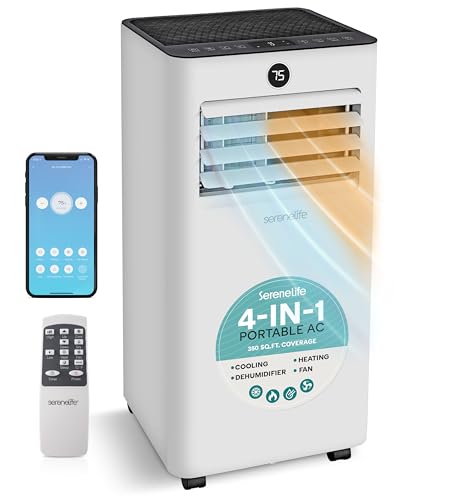
Portable Air Conditioner and Heater in One
One compact unit that cools in summer and warms in winter. Learn how dual-function portable climate control works, what to check before you buy, and how to match a combo unit to your room and lifestyle.
EXPLORE BUYING CRITERIAWhy a combo unit makes sense: Instead of storing a window AC in summer and a space heater in winter, a single portable air conditioner and heater in one handles both seasons. It is a practical solution for renters, home offices, converted garages, and rooms where ductwork or permanent installations are not an option. This guide explains how these units work, how to size them, and which features actually matter.
How a Portable AC and Heater Combo Works
A portable air conditioner and heater in one is a self-contained unit on casters that combines cooling, heating, and often dehumidification. Understanding the internal differences between models helps you choose the right technology for your climate and room.
Cooling Mode
In cooling mode, the unit pulls warm indoor air across an evaporator coil, removes heat and moisture, and blows cooled air back into the room. The absorbed heat is expelled through an exhaust hose that vents out a window or wall opening. Most units also collect condensate, which is either drained through a hose or evaporated by the unit’s self-evaporating system.
Heating Mode: Heat Pump vs. Electric Heater
Combo units heat in one of two ways, and the difference matters for efficiency and performance:
- Heat pump heating: The refrigeration cycle is reversed so the unit extracts heat from outside air and moves it indoors. This is more energy-efficient and works well in mild to moderate climates. It behaves similarly to a portable air conditioner with inverter technology that can modulate output smoothly.
- Electric resistance heating: A heating element warms air as it passes through the unit. This delivers immediate warmth but uses more electricity. It is common in entry-level and mid-range combo models and performs reliably even in very cold rooms.
Some premium models combine both approaches, using a heat pump as the primary heat source with an electric backup for colder days. If you plan to use heating frequently, a heat pump design is generally the better long-term investment.
Common Configurations of Dual-Function Portable Units
Not every combo unit is built the same way. The configuration affects venting, installation effort, and how the unit fits into your room.
Single-Hose Combo Units
One exhaust hose handles both cooling and heating exhaust. Simple to set up and widely available. Best for smaller rooms where a compact footprint and straightforward window kit matter. See how a single-hose portable air conditioner behaves in real rooms.
Dual-Hose Combo Units
Separate intake and exhaust hoses improve pressure balance and cooling efficiency. These units tend to be more effective in larger rooms and are a solid mid-range or premium choice for consistent performance.
Heat Pump Combo Units
Use a reversible refrigerant cycle for both cooling and heating. The most efficient option for year-round use in mild climates. Ideal for home offices, studios, and guest rooms where comfort is needed across seasons.
Combo Units with Dehumidifier Mode
Add a dedicated dehumidification function that removes moisture without heavily cooling the room. Useful in humid climates and basements. Explore portable air conditioner with heater and dehumidifier options for damp spaces.
Sizing a Combo Unit for Your Room
Cooling capacity is measured in BTU, and heating output is often listed separately. Matching capacity to room size prevents short-cycling, weak airflow, and unnecessary strain on the unit.
| Room Size | Suggested Cooling Capacity | Typical Use Case | Positioning Note |
|---|---|---|---|
| Up to 150 sq ft | 5,000 – 6,000 BTU | Small bedroom, studio nook, tiny office | Essential tier units are usually sufficient |
| 150 – 250 sq ft | 8,000 – 10,000 BTU | Standard bedroom, home office, small living area | Mid-tier combo units fit well here |
| 250 – 400 sq ft | 12,000 – 14,000 BTU | Large bedroom, open studio, converted garage | Dual-hose or heat pump models perform better |
| 400 – 600 sq ft | 14,000 – 18,000 BTU | Open-plan living area, basement room | High-end tier with strong airflow recommended |
Adjust upward if the room has large windows, direct sun exposure, poor insulation, or an attached kitchen. Adjust downward if the space is heavily shaded or used only intermittently. For a broader room-by-room breakdown, see the guide to portable air conditioner for small bedroom use cases.
Pros and Cons of a Portable AC and Heater in One
A combo unit is not a replacement for central HVAC, but it offers a specific set of advantages and trade-offs that suit certain living situations very well.
Advantages
- One device for both cooling and heating seasons
- No permanent installation or ductwork required
- Moves easily between rooms on casters
- Ideal for renters and temporary living arrangements
- Heat pump models offer efficient year-round operation
- Often includes dehumidification and fan-only modes
Trade-offs
- Requires a venting kit and window access for cooling
- Can be noisier than split or central systems
- Floor space is needed for the unit and hose clearance
- Heating output may be limited in very cold climates
- Condensate management is required in humid conditions
What to Check Before Buying
Because combo units serve two functions, the checklist is broader than for a cooling-only portable AC. Focus on these factors in order:
1. Venting and Window Compatibility
Confirm that the included window kit fits your window type. Sliding windows, casement windows, and crank-out windows often need specific adapters. If your window situation is unusual, review options for a portable air conditioner for casement windows or a portable air conditioner window kit for crank window before committing to a model.
2. Heating Technology
Decide between a heat pump design and an electric heater. Heat pump models are more efficient for long heating seasons. Electric heater models are simpler and often found in essential tier and mid-tier units. If heating is a secondary concern, an electric heater combo may be sufficient.
3. Drainage and Condensate Handling
Some units self-evaporate condensate in cooling mode but require manual draining in dehumidifier mode. Others need continuous drainage in humid conditions. If you prefer minimal maintenance, look for a portable air conditioner that doesn’t need draining or a model with a self-evaporating system.
4. Noise Level and Placement
Combo units generate compressor and fan noise. Check decibel ratings and plan placement away from beds, desks, and TV viewing areas. A quiet air conditioner design makes a meaningful difference in bedrooms and home offices.
5. Smart Controls and Scheduling
Wi-Fi control and programmable schedules are increasingly common in mid-range and premium combo units. They let you pre-cool or pre-heat a room before you arrive. See what a portable air conditioner with Wi-Fi control adds to daily usability.
6. Portability and Footprint
Casters and side handles matter if you plan to move the unit between rooms. Measure doorways and floor space before choosing a larger high-capacity model. A portable air conditioner on wheels is easier to reposition seasonally.
Where a Combo Unit Fits Best
These units shine in specific situations. Matching the product to the scenario prevents disappointment and helps you get the most from the investment.
- Renters and temporary housing: No permanent modifications, and the unit moves with you.
- Home offices and studios: Zone comfort for the room you use most during the day.
- Converted garages and basements: Supplemental comfort where ductwork is impractical. See portable air conditioner for basement window setups.
- Guest rooms and additions: Seasonal comfort without extending the central system.
- Cabins and camper trailers: A portable air conditioner for camper trailer use case benefits from dual-function operation.
- Rooms without standard windows: Some spaces require creative venting; review portable air conditioner for room with no window options carefully.
Maintenance for Year-Round Reliability
A combo unit runs in more modes than a cooling-only portable AC, so maintenance should cover both seasons.
- Clean or replace the air filter every two to four weeks during heavy use.
- Inspect and clean the exhaust hose and window kit seals before each season.
- Drain and clean the condensate tank regularly; check for buildup in humid months.
- Store the unit upright and covered during long off-seasons.
- Test heating mode before cold weather arrives so any issue surfaces early.
If the unit stops cooling or heating unexpectedly, troubleshooting guides for portable AC unit repair and portable air conditioner not cooling enough can help you isolate simple issues before contacting a technician.
Frequently Asked Questions
How does a portable air conditioner and heater in one work?
A combo unit uses a reversible refrigeration cycle or an integrated electric heating element. In cooling mode it removes heat and moisture from the room and exhausts warm air through a hose. In heating mode it either reverses the refrigerant cycle like a heat pump or engages a supplemental heater, delivering warm air into the room.
Do portable AC heater combos need to be vented?
Yes, most combo units require venting through a window or wall opening during cooling mode. Some models can operate in heater-only mode without venting, but you should always check the manufacturer instructions for the specific model.
Can a portable AC and heater combo replace a central HVAC system?
No. Combo units are designed for single-room or zone comfort. They are best suited for rooms where extending ductwork is impractical, for renters, or as supplemental comfort in specific spaces rather than whole-home climate control.
What should I check before buying a portable air conditioner with heater?
Check the BTU cooling capacity, heating output, room size compatibility, venting requirements, drainage options, noise level, and whether the unit uses a heat pump or electric heater. Also confirm window kit compatibility with your window type.
Ready to Choose the Right Combo Unit?
Use the criteria above to narrow your options by room size, heating technology, and venting setup. Then compare the recommended dual-function models below to find the best fit for your space.
COMPARE RECOMMENDED MODELS