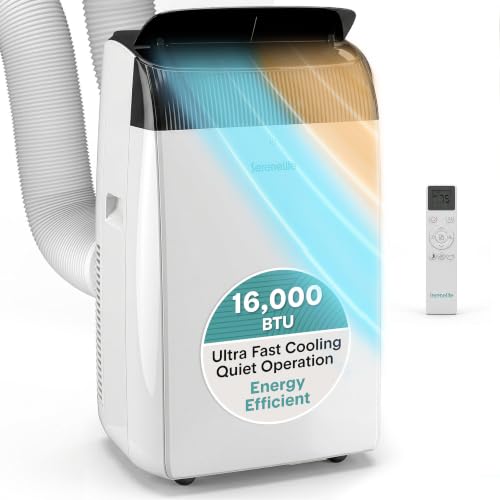
Portable AC with Heater and Dehumidifier: The Complete Buyer's Guide
A portable air conditioner with heater and dehumidifier solves three seasonal problems with one appliance: cooling in summer, heating in cooler months, and moisture control in humid conditions. This guide explains how 3-in-1 units work, how to size them correctly, what efficiency to expect in each mode, and how to choose a model that fits your room and climate.
How a Portable AC with Heater and Dehumidifier Works
A 3-in-1 portable unit combines a refrigeration circuit, a fan system, and a control board that switches between cooling, heating, and dehumidification. In cooling mode, the unit absorbs heat from room air and rejects it outdoors through an exhaust hose. In dehumidifier mode, the fan slows and the evaporator coil runs cold so that moisture condenses out of the air, with the treated air returned to the room slightly warmer. In heating mode, the unit either reverses the refrigerant cycle (heat pump) or activates an electric heating element.
The key advantage of the combination design is space efficiency: one appliance replaces a portable AC, a space heater, and a standalone dehumidifier. The key limitation is that each mode is optimized for moderate use rather than extreme conditions, which is why matching the unit to your climate and room size matters more than in single-purpose products.
For readers who want to compare this configuration against simpler alternatives, the overview of portable air conditioner and heater units and the broader combination heating and air conditioning units category provide useful context.
The Three Operating Modes in Brief
- Cooling: absorbs heat from room air and exhausts it outdoors; condensate is either evaporated or collected.
- Heating: a heat pump moves heat from outdoor air into the room, or an electric element generates heat directly.
- Dehumidification: runs the evaporator coil to condense moisture while the fan moves air slowly across it.
Heat Pump vs Electric Heating Element
The heating side of a 3-in-1 unit is where models differ most. Two approaches dominate the market, and each has distinct strengths.
| Characteristic | Heat Pump | Electric Heating Element |
|---|---|---|
| Efficiency in mild climates | High; moves heat rather than generating it | Moderate; converts electricity directly to heat |
| Efficiency in cold weather | Declines as outdoor temperature drops | Consistent regardless of outdoor temperature |
| Response speed | Slightly slower to reach set point | Fast warm-up |
| Typical tier positioning | Common in mid-range and premium models | Common in entry-level and mid-range models |
| Best suited to | Mild winters and transitional seasons | Cold rooms where fast heat is the priority |
For readers in regions with mild winters, a heat pump model is generally the more efficient long-term choice. For readers in colder climates who mainly need supplemental warmth in a single room, an element-based unit delivers heat reliably but draws more electricity per unit of warmth delivered.
The dedicated article on portable heat pumps explains the refrigeration cycle used in heating mode in more detail and helps readers decide whether a heat pump configuration fits their climate.
Cooling, Heating, and Dehumidifier Modes Explained
Cooling mode
Cooling performance is governed by the BTU rating, room size, insulation quality, and how well the room is sealed. A 3-in-1 unit cools a single room well when sized correctly, but it is not a substitute for central air or a multi-zone system in a large home.
Heating mode
Heating output is rated separately from cooling output and should be checked on the specification sheet. Heat pump models in mild climates often match the cooling capacity closely. In colder weather, output drops, and the unit may rely on a backup element or cycle more frequently.
Dehumidifier mode
Dehumidification is most effective when the room is closed and the fan runs at low speed so air contacts the cold coil for longer. In very humid climates, the tank may fill quickly, and a gravity drain hose is the more practical setup. The guides to portable AC for high humidity and portable AC for humid climates explain how moisture load changes the operating routine.
Readers who want a cooling-only unit without the dehumidifier function can compare against the portable air conditioner without dehumidifier category.
Pros and Cons of 3-in-1 Portable AC Units
Advantages
- Year-round usefulness: one unit covers cooling, heating, and moisture control across seasons.
- Space efficiency: replaces up to three separate appliances in a small apartment or home office.
- Simplified setup: a single exhaust hose and window kit serve all modes.
- Renter-friendly: no permanent installation and no ductwork modification.
- Mobility: casters allow the unit to move between rooms as needs change.
Limitations
- Compromise performance: each mode may be slightly less capable than a dedicated appliance.
- Heating output limits: heat pump models lose capacity in very cold weather, and element models draw more electricity.
- Single-room focus: not designed to condition multiple rooms at once.
- Exhaust requirement: all modes that involve heat rejection need a venting path.
- Condensate management: dehumidifier mode may require more frequent draining than cooling mode.
BTU Sizing for Cooling and Heating
Cooling capacity uses the familiar 20 BTU per square foot guideline, adjusted for sun exposure, ceiling height, occupancy, and heat-producing appliances. Heating capacity should be checked separately on the unit's specification sheet, because it may not match the cooling rating.
| Room Area | Typical Cooling BTU | Common Use |
|---|---|---|
| Up to 150 sq ft | 5,000 - 6,000 BTU | Bedroom, dorm room, small office |
| 150 - 250 sq ft | 8,000 - 10,000 BTU | Studio apartment, home office |
| 250 - 400 sq ft | 12,000 - 14,000 BTU | Living room, open-plan studio |
| 400 - 600 sq ft | 14,000 - 18,000 BTU | Large living area, converted garage |
For cooling-focused guidance on compact rooms, see portable AC for a very small room and portable air conditioners for small rooms. For larger spaces, the 500 sq ft room guide explains why a single portable unit has practical limits.
When heating is the primary concern, check that the unit's heating capacity covers the room's heat loss. A unit that cools a room well in summer may still struggle to warm it in winter if the heating rating is modest.
Efficiency and Realistic Expectations
Efficiency in a 3-in-1 unit depends on the mode. In cooling, the negative pressure effect of a single hose design can pull in warm outdoor air if the room is not sealed. In heating, a heat pump is generally more efficient than an electric element until outdoor temperatures drop significantly. In dehumidification, low fan speed and a closed room improve moisture removal per hour of operation.
Steps that improve performance across all modes
- Seal gaps around doors and windows with weatherstripping.
- Keep the exhaust hose short, straight, and insulated.
- Close interior doors to define the conditioned zone.
- Shade windows during hot hours and keep curtains closed during heating.
- Use timers and programmable schedules instead of continuous operation.
- Clean the filter regularly to maintain airflow in every mode.
The article on the most energy efficient room air conditioner provides useful comparisons against window and mini-split systems. Readers interested in compressor modulation should review portable AC with inverter technology, which can smooth operation across cooling and heating cycles.
For readers comparing venting approaches, the explanation of portable AC intake and exhaust clarifies why some designs perform better in hot climates.
Installation and Venting
Installation follows the same pattern as a cooling-only portable AC: place the unit near a window, assemble the window panel, connect the exhaust hose, and seal any gaps. Because heating mode also requires exhaust, the same venting setup applies year-round.
Standard installation steps
- Place the unit on a level surface with clearance behind it for airflow.
- Assemble the window panel and insert it into the opening.
- Connect the hose to the rear of the unit and to the panel.
- Close the window against the panel and seal remaining gaps.
- Plug in, select the mode, and allow the unit to stabilize.
Window style determines which kit is needed. Casement windows are covered in the portable AC for casement windows guide and the casement window kit overview. Sliding windows are addressed in the sliding window kit article.
Readers who want to reduce heat gain from the hose in summer and heat loss in winter should consider an exhaust hose insulation sleeve.
Drainage Across All Three Modes
Condensate handling varies by mode. In cooling mode, a self-evaporating system may dispose of moisture through the exhaust stream in moderate humidity. In dehumidifier mode, the moisture load is higher and the tank may fill faster, making a gravity drain hose the more practical setup for extended use. In heating mode, condensate is typically minimal because the unit is not cooling indoor air.
Readers comparing configurations should review the guidance on portable AC with no drain required, units that do not need draining, and the self-evaporating system design. The article on portable AC without a drain hose explains the trade-offs of manual emptying.
In very humid climates, a dedicated dehumidifier may still outperform a 3-in-1 unit's dehumidifier mode. The guides to portable AC for high humidity and humid climate operation help readers judge which configuration suits their conditions best.
Best Use Cases for Portable AC with Heater and Dehumidifier
Where a 3-in-1 unit shines
- Apartments and rentals: year-round comfort without permanent installation. See the guide to portable air conditioning units for rent.
- Bedrooms: cooling in summer, supplemental warmth in winter, and moisture control in humid months.
- Home offices: a single appliance that adapts to seasonal changes without occupying extra floor space.
- Basements and converted rooms: spaces prone to dampness benefit from the dehumidifier function.
- Transitional climates: regions with mild winters and humid summers get the most value from a combination unit.
Where a dedicated system makes more sense
- Severe winters: a heat pump's heating output may be insufficient, and a dedicated heater should be considered for primary warmth.
- Whole-home comfort: a single portable unit cannot distribute air across multiple rooms. Central air or a multi-zone mini-split is the appropriate class of solution.
- Rooms without any exhaust path: see portable AC for a room with no window for the limited options.
- Off-grid use: compressor-based units need reliable power; see off-grid cooling for the alternative approaches.
For commercial spaces, the portable AC for commercial use overview explains how duty cycle and operating hours affect the choice of configuration. The bedroom-specific guide on portable air conditioning unit for bedroom helps with placement and noise planning.
Buying Checklist for 3-in-1 Portable Units
Use this checklist to compare models on the factors that matter most across all three modes.
| Factor | What to Look For | Why It Matters |
|---|---|---|
| Cooling capacity | BTU rating matched to room area | Prevents short cycling and continuous running |
| Heating capacity | Separate rating for heating output | Determines winter comfort in the same room |
| Heating type | Heat pump or electric element | Affects efficiency and cold-weather performance |
| Dehumidification rate | Moisture removal rating in pints per day | Determines suitability for humid climates |
| Window kit | Panel compatible with your window style | Keeps installation straightforward |
| Drainage | Self-evaporating system or gravity drain option | Reduces manual maintenance in humid conditions |
| Noise | Decibel rating across modes | Critical for bedrooms and shared spaces |
| Controls | Timer, remote, and optional Wi-Fi | Improves scheduling and convenience |
| Build tier | Entry-level, mid-range, or premium construction | Signals expected durability and feature depth |
Readers who want remote scheduling should review the options for portable AC with Wi-Fi control. Mobility is addressed in the portable AC on wheels guide, and cordless or battery-based options are discussed in the article on a portable AC that uses batteries.
For a broader comparison across form factors, the portable air conditioner dehumidifier heater category and the portable heater and air conditioner in one unit overview provide additional perspective.
Maintenance and Common Troubleshooting
Routine maintenance
- Clean or replace the air filter every two to four weeks during heavy use.
- Empty the condensate tank before it reaches the shutoff level, especially in dehumidifier mode.
- Inspect the exhaust hose for kinks, cracks, or detached connectors.
- Vacuum the rear intake grille to remove dust buildup.
- Store the unit upright and covered during the off-season.
Common problems and where to read more
- Not cooling enough: check filter condition, hose sealing, and room size against capacity. See portable AC not cooling enough.
- Compressor not running: the troubleshooting steps in my AC compressor is not running apply to portable units as well.
- Unit runs but air is not cold: the diagnostics in my AC is off but still blowing air and my AC is turning on but not blowing air help isolate fan versus compressor issues.
- General cooling failure: the broader checklist in my AC isn't blowing cold air covers refrigerant, airflow, and thermostat causes.
- Outdoor unit problems: not applicable to portable units, but readers comparing systems may find outside AC unit not running useful context.
If a unit repeatedly trips a breaker, shows an error code that persists after a filter clean and a full drainage, or produces no heat in heating mode, service by a qualified technician is the appropriate next step rather than continued operation.
Ready to Choose a 3-in-1 Portable AC?
You now understand how portable AC units with heater and dehumidifier work, how to size them for cooling and heating, and which features matter across all three modes. Compare the recommended models below, check window kit compatibility for your space, and select a unit that matches your room area and climate.
Compare Recommended ModelsFrequently Asked Questions
What is a portable air conditioner with heater and dehumidifier?
A portable AC with heater and dehumidifier is a floor-standing unit that combines three functions: cooling in warm months, heating in cool weather, and moisture removal in humid conditions. Most models use a heat pump or electric heating element for the heating mode and share the same fan and exhaust system for all three functions.
How does the heating mode work on a portable AC with heater?
Heat pump models reverse the refrigeration cycle to move heat from outdoor air into the room, which is efficient in mild to moderate climates. Models with an electric heating element generate heat directly, which is simpler but uses more electricity. Both styles exhaust through the same hose used for cooling.
How many BTU do I need for a portable AC with heater and dehumidifier?
A common guideline is 20 BTU per square foot for cooling. A 150 square foot room typically needs around 5,000 to 6,000 BTU, a 250 square foot room around 8,000 to 10,000 BTU, and a 400 square foot room around 12,000 to 14,000 BTU. For heating, check the unit's heating capacity rating separately, since it may differ from the cooling rating.
Is a 3-in-1 portable AC worth it compared to separate units?
A 3-in-1 unit saves floor space and simplifies seasonal transitions because one appliance handles cooling, heating, and dehumidification. The trade-off is that each function may be slightly less capable than a dedicated appliance. For rooms with moderate needs across seasons, a combination unit is a practical and space-efficient choice.
Do portable AC units with heater and dehumidifier need draining?
In dehumidifier mode, most units collect condensate in an internal tank or offer a continuous gravity drain hose. Self-evaporating systems can dispose of some moisture through the exhaust stream, but in very humid conditions the tank may fill and require manual emptying or a drain connection.
Can a portable heater and air conditioner combination be used year-round?
Yes, in mild to moderate climates a combination unit can serve as a year-round solution for a single room. In regions with severe winters, the heating output of a portable heat pump may be insufficient, and a dedicated heating appliance should be considered for primary heating.