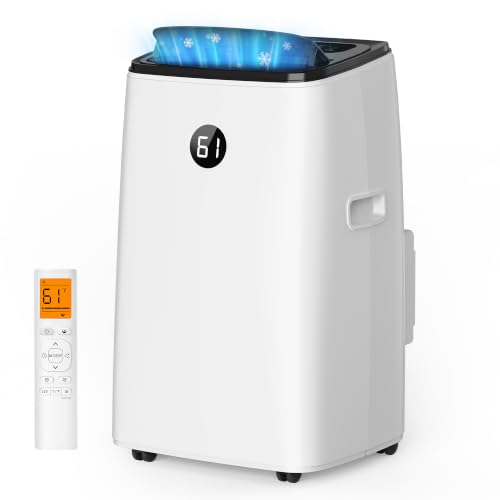
Portable Air Conditioner for Roll-Out Window
Roll-out (awning) windows open outward and tilt away from the frame, which makes them one of the trickiest openings for a portable AC exhaust hose. This guide explains exactly how to vent, seal, size, and operate a portable air conditioner for a roll-out window without losing cooling performance.
See the Setup GuideQuick summary: A portable air conditioner can work with a roll-out window, but it needs a dedicated awning window vent kit — a rigid panel plus a sealed hose collar. Standard sliding-window kits will not fit. Focus on a short, straight exhaust run, a tight seal, and a BTU rating matched to the room, and the setup will cool reliably all season.
Why Roll-Out Windows Need a Special Setup
A roll-out window — also called an awning window — is hinged at the top and cranks outward from the bottom. That design has real benefits for ventilation and rain shedding, but it creates three practical problems for a portable AC:
- No vertical or horizontal track. Sliding-window vent kits rely on a sash that moves sideways or up and down, then locks the panel in place. A roll-out sash pivots outward, so there is nothing to clamp a standard panel against.
- Angled opening. The gap between the sash and the frame is a wedge, not a rectangle. The vent panel must bridge that wedge and still close tightly against the sash.
- Rain exposure. Because the sash tilts outward, the top of the opening faces the sky. Any unsealed gap lets water and hot outdoor air in, especially during summer storms.
The solution is an awning-specific vent kit: a rigid plate that sits in the frame opening with a collar for the exhaust hose, plus foam or weatherstripping that compresses against the sash and frame. If you are still comparing window styles, our guide to portable AC setups for crank-out windows covers the closely related mechanics, and the broader portable AC buying checklist helps you avoid models that lack the right kit support.
How to Set Up a Portable AC on a Roll-Out Window
Work through these steps in order. Each one matters: a single leaky gap can undo much of the cooling the unit produces.
- Measure the opening at the widest point. Record the frame width and the maximum gap height when the sash is cranked open. You need a panel that covers the full width and reaches from the sill to the sash edge.
- Choose an awning window vent kit. The kit should include a rigid panel (usually plastic or aluminum), a hose collar, and weatherstripping. Kits designed for casement or awning windows are the correct starting point — see our notes on window kits for crank windows for what to check on the box.
- Fit the panel into the frame. Trim the panel so it seats on the sill and against both side jambs. It should not flex when you press it.
- Crank the sash down onto the panel. Close the awning sash so it presses the panel against the frame. The sash itself becomes part of the seal, so the panel thickness must allow the window to latch or lock.
- Seal every edge. Run foam weatherstripping along the sill, the side jambs, and the top edge where the sash meets the panel. Fill small gaps with removable weather tape. The goal is a continuous gasket, not a decorative strip.
- Attach the exhaust hose to the collar. Push the hose connector fully onto the collar and twist or lock it. A loose connector is one of the most common causes of portable AC not cooling enough.
- Keep the hose short and straight. Route it with the fewest bends possible and avoid kinks. Do not let the hose sag into a U-shape, because condensate and hot air collect there. An insulated exhaust hose further reduces heat radiating back into the room.
- Position the unit for airflow. Leave clearance at the front and back of the unit as specified by the manufacturer. Do not push it into a corner or behind furniture.
- Test the seal before a heat wave. Run the unit on high, then stand outside and feel around the panel edges for escaping air. Fix any leak before you rely on the setup.
Sizing the Unit for a Roll-Out Window Room
Capacity is where many buyers go wrong. A unit that is too small never catches up on a hot afternoon; a unit that is oversized short-cycles, runs inefficiently, and leaves the room clammy. Match BTU to floor area first, then adjust for the window exposure.
| Room Size | Suggested Capacity | Best For |
|---|---|---|
| Up to 150 sq ft | 5,000 – 6,000 BTU | Small bedroom, home office |
| 150 – 250 sq ft | 8,000 – 10,000 BTU | Standard bedroom, studio |
| 250 – 400 sq ft | 12,000 – 14,000 BTU | Living room, large bedroom |
| 400 – 550 sq ft | 14,000 – 18,000 BTU | Open-plan living area |
Roll-out windows often face strong afternoon sun because of how they are oriented on many homes. Add roughly 10 percent capacity for a large sun-facing window, and a little more if the room has poor insulation or an adjacent kitchen. For tighter spaces, the same sizing logic applies in our guide to portable AC for a small bedroom, and for very compact rooms the recommendations in portable AC for a very small room are a useful cross-check.
Single-Hose vs Dual-Hose on a Roll-Out Window
The hose configuration matters more than most buyers expect, especially with an awning window where the seal is already harder to perfect.
| Configuration | How It Works | Best For |
|---|---|---|
| Entry-Level Single hose | Draws room air, cools it, and exhausts hot air through one hose. Creates slight negative pressure. | Occasional use, smaller rooms, simpler awning kits |
| Mid-Range Dual hose | Separates outdoor intake air from exhaust air, so room pressure stays balanced. | Sun-facing rooms, longer cooling sessions, humid climates |
Dual-hose models are generally the stronger choice for awning windows because the balanced airflow reduces the chance that hot outdoor air is pulled back through the panel gaps. If you want to understand the trade-offs in detail, see our comparison of single-hose portable AC units versus dual-hose designs.
Common Mistakes to Avoid
- Forcing a sliding-window kit into an awning frame. The panel will not seal, and the sash cannot close against it. Use an awning or crank-window kit instead.
- Leaving the sash partly open. A gap above the panel lets hot air pour in. The sash should press firmly onto the panel and latch if possible.
- Over-tightening the hose connector. Hand-tighten only. Cross-threading or forcing the collar cracks the plastic and creates a permanent leak.
- Extending the hose with extra ducting. Longer runs reduce airflow and efficiency. If the hose cannot reach, reposition the unit rather than adding length.
- Ignoring condensate. Many units self-evaporate in moderate humidity, but in muggy weather you may need to drain the tank. Models with a condensate pump handle this automatically.
- Placing the unit where the exhaust recirculates. If the hot exhaust blows back toward the intake, the unit fights itself. Check outdoor clearance as well as indoor placement.
If the unit runs but the room never gets cold, the troubleshooting flow in portable AC running but not blowing cold air walks through the likely causes in order of probability.
Maintenance for a Window-Vented Portable AC
A sealed awning setup keeps outdoor dust and pollen out, which actually reduces some maintenance load — but the unit still needs routine care to stay efficient.
- Clean or replace the filter every two to four weeks during heavy use. A clogged filter is the most common reason a portable AC loses cooling power.
- Inspect the hose and collar monthly. Look for cracks, loose tape, or a sagging hose. Replace damaged sections rather than patching repeatedly.
- Check the panel seal at the start of each season. Weatherstripping compresses over time and sunlight degrades foam. Refresh it before summer.
- Drain or flush the condensate system according to the manual. Standing water invites odor and mold, which then blows into the room.
- Store the unit upright in the off-season. If it was tipped during storage, let it stand upright for several hours before running it again.
When a Roll-Out Window Setup Is Not the Right Fit
An awning window vent kit works well for most rooms, but a few situations call for a different approach:
- Very small window openings. If the frame is too narrow for a rigid panel plus hose collar, a portable AC for a small window opening may still work with a compact kit, or a windowless solution may be better.
- Windows that cannot be closed against a panel. Some older awning sashes have worn hinges and will not seat evenly. In that case, consider a windowless portable AC option or a different room configuration.
- Multiple rooms to cool. One portable unit is designed for one zone. For broader coverage, see portable AC for multiple rooms.
- Supplementing central air. If the roll-out window room is simply warmer than the rest of the house, a portable unit can bridge the gap — see using a portable AC to supplement central air.
What to Look For in a Portable AC for Roll-Out Windows
When you compare models, weigh these factors in this order:
- Vent kit compatibility. Confirm the manufacturer sells or supports an awning/crank window kit. A great unit with no compatible kit is a poor match for this window type.
- Hose configuration. Dual-hose models are the mid-range and premium standard for sun-exposed rooms; single-hose models sit in the entry-level tier and suit lighter use.
- Capacity match. Use the sizing table above. Do not buy extra capacity "just in case" — short-cycling is a real problem.
- Noise level. Bedroom use calls for a quieter unit. Look for a published decibel figure and a sleep mode.
- Drain management. Self-evaporating systems reduce manual draining; a condensate pump adds convenience in humid climates.
- Filter access. A filter you can remove and rinse in under a minute gets cleaned more often.
- Build quality. Solid build, reinforced hose collars, and a rust-proof finish on the panel all matter in a window-exposed installation.
For a broader feature comparison across categories, the portable AC feature checklist pairs well with this page.
Frequently Asked Questions
Can a portable air conditioner work with a roll-out window?
Yes. A roll-out (awning) window opens outward, so the main challenge is securing the exhaust hose. Using a specialized awning window vent kit with a rigid panel and sealed hose collar allows a portable AC to vent properly through a roll-out window.
How do I seal a roll-out window for a portable AC?
Use a rigid vent panel cut to fit the window opening, foam weatherstripping along the frame edges, and a hose collar locked into the panel. Seal gaps with removable weather tape and close the awning sash against the panel to prevent outdoor air from re-entering.
Does the exhaust hose length affect cooling performance?
Yes. Keep the exhaust hose as short and straight as possible. A longer or kinked hose traps hot air, reduces airflow, and forces the compressor to work harder, which lowers overall cooling efficiency.
What BTU size do I need for a room with a roll-out window?
Match BTU to room size and heat load. As a general rule, add 10-20 percent capacity for rooms with large sun-facing windows. Use the sizing table in this guide to align capacity with square footage and window exposure.
Can I use a single-hose portable AC on an awning window?
Yes, but dual-hose models are generally more efficient for awning windows because they separate intake and exhaust air. Single-hose units can create negative pressure that pulls warm outdoor air back into the room.
Ready to Choose a Unit?
Review the recommended portable air conditioners below, then cross-check the vent kit compatibility with your awning window before ordering.
View Recommended Units