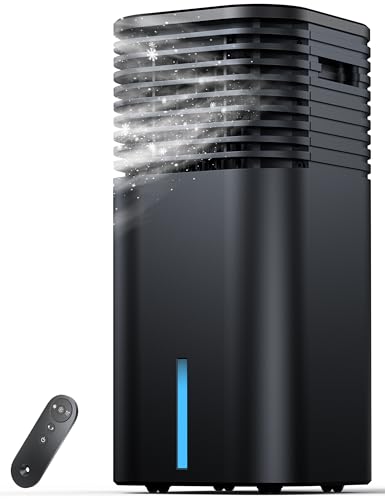
Portable Air Conditioner Without Window Access
Learn how to cool basements, interior rooms, and windowless spaces with the right portable AC approach, exhaust strategy, and realistic expectations.
START READINGQuick answer: A room without window access can still be cooled, but the method matters. True ventless units use evaporative or thermoelectric cooling and need no exhaust path. Compressor-based portable ACs still need to expel hot air, which can sometimes be routed through a wall, ceiling, or other opening. Ductless mini-splits are another strong option when a small wall penetration is possible.
Why Window Access Matters for Portable AC
Most portable air conditioners are not magic cooling boxes. They move heat from inside the room to outside the room. A compressor-based unit collects heat in the exhaust air stream and must push it somewhere. In a typical setup, that "somewhere" is a window through a window kit and hose. When there is no window, that path disappears.
That does not mean cooling is impossible. It means you need a different strategy. The four common approaches are:
- Ventless cooling: Evaporative or thermoelectric units that do not need an exhaust path. Best for small spaces and dry climates.
- Alternative exhaust routing: A compressor-based portable AC vented through a wall, drop ceiling, or other opening instead of a window.
- Through-wall or ducted solutions: A dedicated wall sleeve or short duct run to the outside.
- Ductless mini-split: A small wall penetration handles refrigerant lines, and the indoor unit cools the room quietly.
Each approach has trade-offs. Our guide to a portable air conditioner for a room with no window walks through the practical options, and the related portable AC unit for a room without windows page covers specific product categories.
Comparing the Main Options
The table below compares the four approaches so you can match the method to your room, climate, and installation constraints.
| Approach | Exhaust Path Needed | Best For | Key Limitation |
|---|---|---|---|
| Ventless evaporative or thermoelectric unit | None | Small rooms, dry climates, spot cooling | Modest cooling output; humidity concerns |
| Compressor portable AC with wall or ceiling vent | Yes, through a wall, ceiling, or other opening | Basements, interior offices, converted spaces | Requires installation work |
| Through-wall or ducted solution | Yes, dedicated sleeve or short duct | Rooms with an exterior wall | Permanent modification |
| Ductless mini-split | Small refrigerant line penetration | Long-term cooling for windowless rooms | Professional installation recommended |
Who This Guide Is For
This guide is written for people who need cooling in spaces where a traditional window kit will not work. You are likely in the right place if your situation matches one or more of the following:
- You have a basement with small or high windows that cannot accept a standard kit.
- You have an interior office or converted storage room with no exterior wall opening.
- You rent and cannot modify the building envelope.
- You have casement, crank-out, or sliding windows that standard kits do not fit. See our guides to a portable air conditioner for casement windows and a portable air conditioner window kit for a crank window.
- You want to cool a room that has a window but the window is too small or awkward for a hose kit.
If your room does have a usable window, a standard vented portable AC is usually the strongest option. Our guide to a portable air conditioner covers the general buying framework.
How to Choose the Right Approach
Work through these steps in order to narrow down the best solution for your room.
1. Confirm What "No Window Access" Means
Some rooms have no window at all. Others have a window that simply cannot accept a standard hose kit, or a window that opens in a way that makes a kit impractical. The distinction matters. A room with a small window may still support a vented unit with an adapter. A room with no opening at all requires a ventless or alternative-exhaust approach.
2. Check for Alternative Exhaust Paths
Look for a wall, ceiling, or floor opening that could route a short exhaust run. A drop ceiling, a soffit, or an unused dryer vent can sometimes serve as an exhaust path with the right adapter. If an alternative path exists, a compressor-based portable air conditioner without a window vent may still be an option. For spaces with limited window options, review the portable air conditioner without window venting guide.
3. Consider Humidity and Climate
Evaporative cooling adds moisture to the air. In a dry climate that is a benefit, but in a humid basement it can make the room feel worse. If humidity is a concern, look for a unit with a dehumidify mode or review the options for a portable air conditioner for humid climates.
4. Size the Unit to the Room
Ventless units are typically rated for smaller spaces than vented compressor models. Match the unit's stated coverage to your room, then size down if the room is heavily shaded or size up if it receives direct sun. For very small spaces, see our guide to a portable air conditioner for a very small room.
5. Plan Drainage and Maintenance
Evaporative units need water refills and often a drain. Thermoelectric units produce condensate. Look for a portable air conditioner with a self-evaporating system if you want to minimize manual draining, or review a portable air conditioner with no drain required for low-maintenance options.
6. Consider a Ductless Mini-Split for Long-Term Use
If the room will be cooled regularly and a small wall penetration is acceptable, a portable ductless mini-split air conditioner delivers stronger, quieter cooling than most portable options. It is a long-term investment but often the better fit for a converted room or basement office.
Tier Guide: Matching Features to Your Needs
Windowless cooling products fall into broad market tiers. Use this framework to set expectations rather than relying on a single specification.
- Entry-level tier: Basic evaporative or thermoelectric ventless units. Best for occasional spot cooling in a small, dry room.
- Mid-range tier: Improved airflow, larger water tanks, and better controls. A solid choice for a basement office or interior bedroom.
- High-end tier: Quieter operation, smart controls, and self-evaporating condensate management. Suited to daily use in a primary living space.
- Top-tier / professional-grade: Ductless mini-split systems and dedicated through-wall solutions. A worthwhile investment for long-term windowless cooling.
For a broader view of compact cooling options, browse our full section on portable AC units.
Common Mistakes to Avoid
- Buying a compressor unit with no exhaust plan: A compressor-based AC without an exhaust path will underperform and may overheat.
- Ignoring humidity: Evaporative cooling in a damp basement can feel worse than no cooling. Match the technology to the climate.
- Oversizing a ventless unit: Expecting whole-room cooling from a spot cooler leads to disappointment. Set realistic expectations.
- Skipping maintenance: Water pads, tanks, and filters need regular cleaning. A neglected unit loses efficiency and can develop odors.
- Overlooking noise: Fan noise varies widely. If the unit sits near a bed or desk, prioritize a low-noise model.
Frequently Asked Questions
Can a portable air conditioner work without window access?
Yes, but the approach depends on the unit. Ventless models use evaporative or thermoelectric cooling and do not need a window. Compressor-based portable ACs still need an exhaust path, which can sometimes be routed through a wall, drop ceiling, or another opening. Ductless mini-splits are another option for rooms without windows.
What is the best portable AC for a room with no window?
For a truly windowless room, an evaporative or thermoelectric ventless portable AC is the simplest choice. If the room has a wall, ceiling, or other venting opportunity, a ducted or through-wall solution can deliver stronger cooling. The best choice depends on room size, humidity, and available exhaust paths.
Do ventless portable air conditioners cool as well as vented models?
Generally no. Evaporative and thermoelectric ventless units provide modest cooling compared to compressor-based vented models. They work best in small spaces, dry climates, and spot-cooling scenarios. Vented units deliver stronger, more consistent cooling when an exhaust path is available. See our guide to a portable air conditioner not cooling enough if performance is a concern.
Can I vent a portable AC through a wall instead of a window?
Yes, in many cases. A wall vent, a dedicated sleeve, or a short duct run to the outside can serve as an exhaust path. The installation must be done correctly to avoid moisture and structural issues. If you are not comfortable with the work, consult a professional. Our guide to a portable air conditioner for a basement window covers related basement scenarios.
What about a portable AC for a room with no windows and high humidity?
High humidity makes evaporative cooling a poor fit. In a damp room, look for a compressor-based unit with an alternative exhaust path, or a ductless mini-split with a dehumidify mode. Our guide to a portable air conditioner for high humidity covers the trade-offs in more detail.
Ready to Explore Windowless Cooling Options?
Review our curated selection of portable air conditioners suited to rooms without window access and compare features side by side.
VIEW PRODUCTS