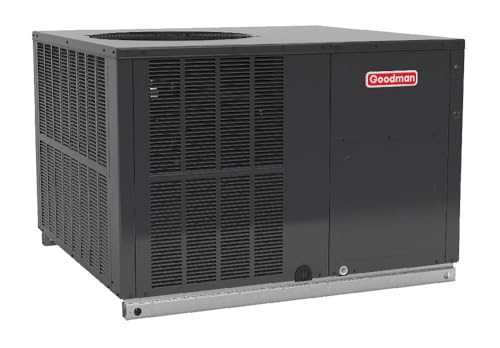
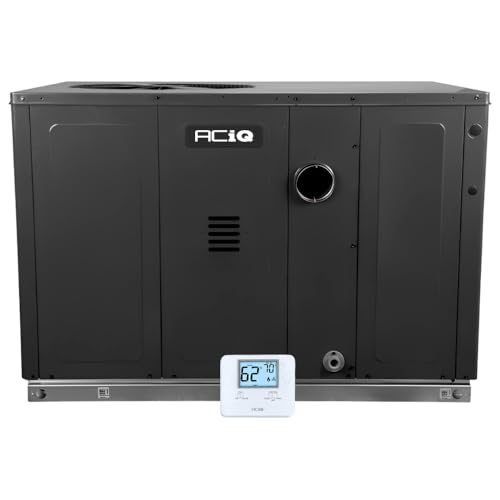
Rooftop Package Units: The Complete Guide to Commercial Rooftop Cooling
Everything building owners, facility managers, and HVAC decision-makers need to know about rooftop package units — how they work, how to size them, installation essentials, maintenance schedules, and how to pick the right tier for your commercial space.
Explore the GuideWhy this guide matters: Rooftop package units are the workhorses of commercial cooling. They serve retail stores, offices, restaurants, warehouses, and multi-tenant buildings across the country. Getting the specification right — from capacity and efficiency to cabinet construction and controls — directly affects comfort, uptime, and long-term operating performance. This guide walks you through every decision point so you can specify with confidence.
What Are Rooftop Package Units?
A rooftop package unit — often called an RTU, packaged rooftop unit, or rooftop air conditioning unit — is a self-contained HVAC system installed on the roof of a commercial building. Unlike split systems that separate the indoor and outdoor components, a rooftop package unit houses the compressor, condenser coil, evaporator coil, blower, and controls inside a single weather-resistant cabinet. Conditioned air travels through ductwork that drops down into the building below.
This all-in-one design makes rooftop package units exceptionally practical for commercial spaces. There is no need for indoor mechanical rooms, refrigerant line runs between separate components are eliminated, and service access is centralized in one location. For building owners dealing with limited interior square footage, this footprint advantage is a major reason rooftop units dominate low-rise commercial construction.
If you are comparing rooftop configurations more broadly, our guide to rooftop air conditioning units covers the wider category, while this page focuses specifically on the packaged format. For buildings that also need heating, a rooftop heating and air conditioning unit combines both functions in one cabinet, and a dedicated rooftop furnace section explains the gas-heating side in detail.
How a Rooftop Package Unit Works
Understanding the refrigeration cycle inside a package unit helps you ask the right questions during specification and service calls. The sequence is straightforward:
- Return air is drawn from the building through return ductwork into the unit's evaporator section.
- The evaporator coil absorbs heat and moisture from the return air, cooling it before it enters the supply ductwork.
- The compressor pressurizes refrigerant and circulates it between the evaporator and condenser coils.
- The condenser coil releases the absorbed heat to the outdoor air, assisted by the condenser fan.
- The supply fan pushes conditioned air back into the building through the supply ducts.
Modern high-end tier units add variable-speed compressors, electronically commutated (EC) motors, and economizers that bring in outside air when conditions allow free cooling. These features are what separate a mid-range packaged unit from a premium commercial-grade system. The broader mechanics are explained in our RTU unit HVAC reference if you want to go deeper into the component level.
Types of Rooftop Package Units
Not every rooftop package unit is built for the same job. The main configurations differ in how they handle cooling, heating, and air distribution:
Cooling-Only Package Units
The essential tier configuration. Delivers cooling and ventilation only — ideal for spaces with separate heating systems or in climates where heating demand is minimal.
Gas-Electric Package Units
Combines electric cooling with gas-fired heating in one cabinet. A balanced-tier workhorse for retail and office buildings in mixed climates.
Heat Pump Package Units
Provides both heating and cooling through the refrigeration cycle, with no gas line required. A solid choice for all-electric building designs.
Dual-Fuel Package Units
Pairs a heat pump with a gas furnace backup for cold snaps. High-end tier flexibility where winters can push beyond heat pump capacity.
Modular / Multi-Zone RTUs
Larger commercial-grade systems with multiple compressors and zoning dampers. Suited to multi-tenant buildings and spaces with varied occupancy schedules.
Make-Up Air Units
Specialized packaged units that condition and supply outdoor air to replace exhaust from kitchens, labs, or industrial processes. Often paired with standard RTUs.
Related configurations worth reviewing include roof-mounted central air conditioning units, which covers the ducted central approach, and self-contained heating and air conditioning units for buildings that prefer an all-in-one cabinet without exterior refrigerant lines.
Sizing a Rooftop Package Unit Correctly
Oversizing is the most common — and most consequential — specification mistake in commercial HVAC. A unit that is too large cools the space too quickly, cycles on and off frequently, fails to dehumidify properly, and wears out its compressor prematurely. Undersizing leaves the space uncomfortable on design days and forces the unit to run continuously.
Proper sizing starts with a load calculation that accounts for:
- Building square footage and ceiling height
- Wall, roof, and window insulation values
- Window area, orientation, and glazing type
- Occupancy count and activity level
- Internal heat gains from lighting, equipment, and appliances
- Infiltration and ventilation requirements
- Local design temperature and humidity conditions
Rooftop package units commonly range from small 2-ton units for a single retail bay up to 25-ton commercial-grade units, with larger buildings served by multiple units or a modular arrangement. Always have a qualified HVAC engineer run the numbers — rule-of-thumb sizing leads to comfort complaints and wasted energy. For residential-scale comparisons, our AC sizing guide explains the load calculation principles that also apply to light commercial work.
Efficiency Ratings That Matter for RTUs
Commercial rooftop units are rated differently from residential equipment, and understanding the metrics helps you compare tiers fairly:
- EER2 / IEER — Integrated Energy Efficiency Ratio reflects part-load performance across a range of conditions. This is the metric that matters most for commercial buildings, where units rarely run at full capacity.
- SEER2 — Seasonal efficiency for the cooling season. Relevant for light commercial applications and single-zone systems.
- IEER — Integrated Energy Efficiency Ratio, the commercial part-load metric required under DOE standards for units above 65,000 BTU/h.
- AFUE — For gas-electric package units, this measures heating efficiency.
High-end tier units typically include variable-speed compressors, EC supply fan motors, and factory-installed economizers — all of which improve part-load performance. Entry-level units may meet minimum code but lag significantly on IEER. Our SEER vs SEER2 DOE standards explain the regulatory side, and ENERGY STAR certified equipment is worth prioritizing when the building's operating profile supports the investment. If the building also relies on ducted distribution, sealing air ducts for efficiency is a complementary step that often delivers rapid payback.
Rooftop Package Unit Tiers Compared
To compare units without getting lost in specification sheets, it helps to group them by market tier. The table below uses universal quality descriptors rather than any numeric indicators:
| Tier | Typical Characteristics | Best For |
|---|---|---|
| Entry-level | Standard single-stage compressor, basic controls, minimum code efficiency, galvanized cabinet | Low-occupancy spaces with short operating hours and straightforward cooling needs |
| Mid-range | Two-stage compressor options, improved coil coatings, programmable thermostat compatibility, better IEER | Retail stores, offices, and restaurants with regular daytime schedules |
| Premium | Variable-speed compressor, EC fan motors, factory economizer, corrosion-resistant coatings, smart controls | High-occupancy buildings, extended operating hours, and spaces where comfort consistency matters |
| Commercial-grade / top-tier | Modular multi-compressor design, advanced building automation integration, heavy-duty cabinet, extended coil warranties | Multi-tenant buildings, critical facilities, and large commercial or institutional campuses |
Mid-range models generally offer the best balance of capability and simplicity for most small commercial buildings. Premium and commercial-grade tiers become worthwhile when part-load efficiency, redundancy, or building automation integration are priorities.
Installation Considerations for Rooftop Package Units
Rooftop installation is a structural, electrical, and mechanical project — not a one-person job. Key considerations include:
- Structural support — Roof curbs must be engineered for the unit's weight, including snow load and wind uplift. Verify the roof structure can carry the concentrated load at the curb location.
- Roof curb and flashing — A properly installed curb with correct flashing is the difference between a dry building and a persistent leak. This is not a detail to leave to chance.
- Duct transitions — Supply and return duct connections must be sealed and insulated at the curb penetration. Flexible connectors reduce vibration transmission.
- Electrical service — Confirm the building's electrical panel can support the unit's MCA and MOP values. Disconnects must be within sight of the unit.
- Clearances — Respect manufacturer clearances around the condenser for airflow and service access. Blocked airflow destroys efficiency.
- Lifting logistics — Crane access, rigging points, and roof protection during placement need to be planned before delivery day.
For buildings also evaluating interior-side changes, our residential air conditioning and residential central air conditioning systems references explain the ducted distribution side that connects to the rooftop unit. If the project involves a full system replacement, replacing an air conditioner and replacing heating and air conditioning systems walk through the transition planning.
Maintenance Schedule for Commercial Rooftop Units
Rooftop package units live in a harsh environment — sun, rain, debris, and temperature swings. A disciplined maintenance schedule protects the long-term investment and keeps the building comfortable:
Monthly
Check and replace filters, inspect the condensate drain, verify the unit is running and accessible, and clear debris from the condenser area.
Quarterly
Clean condenser coils, inspect electrical connections, check refrigerant pressures, and test economizer operation if equipped.
Annually
Full inspection of the blower assembly, belt replacement where applicable, coil cleaning on both sides, and combustion analysis for gas units.
Seasonally
Pre-summer cooling check and pre-winter heating check. Our seasonal AC checklist provides a step-by-step framework.
When repairs are needed, our guides on replacing a blower motor and replacing a coil in an AC unit explain the scope of common component replacements. For facilities with multiple units, a servicing HVAC system routine that batches quarterly inspections across the portfolio is more efficient than reacting unit by unit.
Repair or Replace? Decision Factors for Aging RTUs
Commercial rooftop units typically serve 15 to 20 years with diligent maintenance. But age alone is not the deciding factor. Consider replacement when:
- Repair frequency is climbing and parts availability is shrinking
- Refrigerant is no longer compliant with current EPA regulations
- The unit's IEER is far below current minimum standards
- Cabinet corrosion has compromised the structure or coil integrity
- The building's occupancy or layout has changed and the unit is now the wrong size
For a structured comparison of the trade-offs, replacing an air conditioner and residential HVAC replacement cost provide useful frameworks that translate to light commercial decisions. If the building is adding square footage, room additions explains how new load calculations interact with existing equipment.
Frequently Asked Questions
What is a rooftop package unit?
A rooftop package unit is a self-contained HVAC system that houses the compressor, condenser, evaporator, and blower in a single cabinet installed on a commercial building's roof. It delivers conditioned air through ductwork connected to the building below.
How long does a rooftop package unit last?
With proper installation and regular maintenance, a commercial-grade rooftop package unit typically lasts 15 to 20 years. Premium-tier units with reinforced cabinets and high-grade coils often reach the upper end of that range.
What size rooftop package unit do I need?
Sizing depends on building square footage, ceiling height, insulation, occupancy, and internal heat loads. A professional load calculation is essential. Rooftop units commonly range from 2 to 25 tons, with larger commercial spaces requiring multiple units or a modular configuration.
Are rooftop package units energy efficient?
Modern rooftop package units are available with high SEER2 and IEER ratings, variable-speed compressors, and economizers. High-end tier units often meet ENERGY STAR requirements and can significantly reduce long-term energy consumption in commercial buildings.
Can a rooftop package unit heat as well as cool?
Yes. Gas-electric and heat pump package units provide both heating and cooling in a single cabinet. The right configuration depends on the building's climate, fuel availability, and electrical capacity.
Ready to Specify Your Rooftop Package Unit?
Review our recommended commercial rooftop units below. Every listing includes the features that matter for real-world building performance — no guesswork, no filler specifications.
View Recommended Units