Room Air Conditioners That Don't Need Venting: The Complete Guide
Explore ventless room air conditioning options that require no exhaust hose or exterior venting. Understand how these systems work, where they fit best, and how to choose the right model for your space.
Research-backed guidance for informed buyersWhy this guide matters: Most portable and window air conditioners require a vent or exhaust path to remove heat. If your room has no window, a sealed façade, a historic exterior, or a rental restriction, ventless options become essential. This guide explains exactly which room air conditioners can operate without venting, their limitations, and how to match one to your room.
What Does "No Venting" Actually Mean for a Room AC?
In conventional cooling, an air conditioner absorbs heat from indoor air and rejects it outdoors through a condenser and exhaust path — typically a window kit, wall sleeve, or duct. A ventless room air conditioner eliminates that outdoor exhaust requirement, either by using an evaporative cooling process or by relying on a self-contained heat rejection method.
It is important to set realistic expectations: truly ventless cooling has trade-offs in capacity and humidity handling. The key is understanding which ventless category fits your room type, climate, and installation constraints. If your situation is different and you simply need a unit that avoids a window opening, you may also want to review options for a room air conditioner that doesn't need a window or a room AC unit that doesn't need a window.
Types of Room Air Conditioners That Don't Need Venting
The market offers several distinct approaches. Each has a different operating principle, ideal use case, and performance profile. Below is a breakdown of the main categories you will encounter.
Evaporative (Swamp) Coolers
These units pull warm, dry air through water-saturated pads. As water evaporates, the air cools and is blown into the room. No exhaust vent is required because the cooling is achieved through evaporation rather than refrigerant compression. They work best in hot, arid climates with low humidity and require a water supply and regular pad maintenance.
Self-Contained Portable Units (Non-Vented Mode)
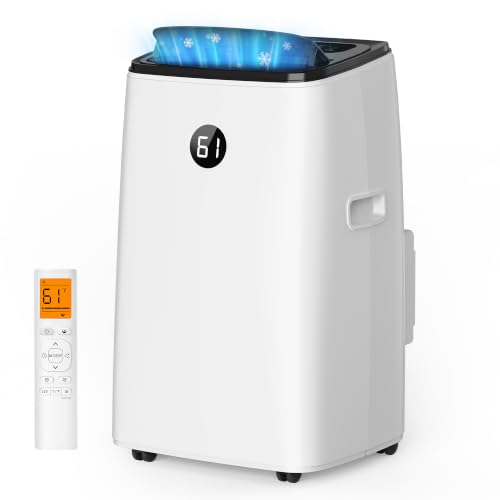
Some portable air conditioners can run in a "fan only" or "dehumidify" mode without the exhaust hose connected. However, in true cooling mode they still need to reject heat. If you are looking for a room air conditioner without exhaust hose, understand that cooling performance will be limited. These are best treated as supplemental comfort devices rather than primary cooling.
Ductless Mini-Split Systems (No Duct, Minimal Wall Penetration)
While technically requiring a small refrigerant line connection to an outdoor unit, mini-splits do not use indoor air ducts or exhaust hoses. Many buyers searching for room air conditioners that don't need venting find mini-splits acceptable because they avoid window kits and large ductwork. Review the broader category of room air conditioners and ductless mini-split AC systems for comparison.
High-Efficiency Single-Room Ductless Units
Premium single-zone mini-split systems offer quiet operation, inverter-driven compressors, and strong efficiency ratings. They are the closest practical match to "no venting" for whole-room cooling because they eliminate window exhaust kits entirely. Explore single room free-standing air conditioner options and single-zone mini-split systems for details.
How Ventless Room ACs Compare: Pros and Cons
Advantages
- No exhaust hose, window kit, or wall vent required for installation
- Ideal for rooms without operable windows or with sealed façades
- Simpler setup for renters and temporary living arrangements
- Evaporative models add moisture to dry air in arid climates
- Mini-split options avoid ductwork and window obstructions
- Cleaner exterior appearance with no visible venting hardware
Limitations
- Evaporative coolers perform poorly in humid climates
- True refrigerant-based cooling without exhaust is uncommon
- Cooling capacity is typically lower than vented systems
- Mini-splits still require a small outdoor unit and line set
- Regular maintenance of water pads or filters is essential
- Room humidity and air quality can be affected if oversized
Comparison Table: Ventless Room Cooling Options
| System Type | Tier | Venting Required | Best For | Climate Suitability |
|---|---|---|---|---|
| Evaporative Cooler | Essential tier | None | Small dry-climate rooms, workshops | Hot, arid, low-humidity regions |
| Portable AC (fan-only mode) | Balanced tier | None in fan mode | Supplemental air movement | Mild climates, transitional seasons |
| Ductless Mini-Split | Mid-tier | Small line set only | Whole-room primary cooling | All climates |
| Premium Single-Zone Ductless | High-end tier | Small line set only | Quiet, efficient room cooling | All climates, including humid |
| Through-the-Wall AC | Mid-tier | Wall sleeve | Permanent room installation | All climates |
How to Choose the Right Ventless Room AC
Selecting a unit comes down to matching the cooling method to your room's physical constraints and your climate. Use the following decision framework:
- Assess your climate first. In dry, arid conditions an evaporative cooler is a strong fit. In humid climates, prioritize refrigerant-based or mini-split systems.
- Confirm room size and heat load. Measure square footage and account for sun exposure, occupants, and electronics. Oversizing any AC reduces efficiency and comfort.
- Check installation restrictions. Renters and historic-building owners should confirm whether a small line-set wall penetration is permitted before choosing a mini-split.
- Evaluate humidity control. If dehumidification matters, refrigerant-based systems outperform evaporative models. Compare the room air conditioner and heater combination options if year-round comfort is needed.
- Plan maintenance access. Evaporative pads and filters need regular cleaning. Ensure you can reach the unit and service components easily.
Installation and Placement Tips
Even without a vent, placement strongly influences performance. Keep the unit away from direct sunlight and ensure free airflow around intake and exhaust grilles. For evaporative coolers, position the unit near an air path that allows humidified air to circulate outward. For ductless mini-splits, the indoor head should be mounted high on a wall with a clear path to the room's center. If you are comparing wall-based alternatives, review room air conditioner window exhaust panel solutions and room air conditioner for casement windows guides to understand what vented options would require.
For installations involving electrical work or refrigerant lines, always consult a licensed HVAC professional. Electrical safety and refrigerant handling are regulated, and improper installation voids most manufacturer warranties. Related reading on efficient operation is available in the seasonal AC checklist.
Maintenance for Ventless Room Cooling Systems
Ventless systems demand disciplined maintenance because they lack the outdoor airflow that helps vented units self-clean. Key routines include:
- Replace or clean evaporative cooling pads every few weeks during heavy use.
- Drain and clean water reservoirs to prevent scale buildup and odor.
- Wash reusable filters monthly and replace disposable filters per manufacturer guidance.
- Inspect mini-split indoor coils and condensate drains each season.
- Schedule professional servicing annually for refrigerant-based systems.
Well-maintained units last longer and maintain efficiency. If you are considering upgrading an older system rather than adding a ventless unit, see guidance on replacing an air conditioner and residential air conditioning.
Frequently Asked Questions
Are there room air conditioners that truly need no venting at all?
Yes, but with caveats. Evaporative coolers need no venting and no refrigerant circuit. Portable units can run in fan-only mode without a hose, but they cannot provide full refrigerant cooling without rejecting heat. Ductless mini-splits require only a small line-set connection, not an air vent.
Do ventless air conditioners cool as well as vented units?
Evaporative coolers cool effectively in dry climates but add humidity. Refrigerant-based units that claim to be ventless typically underperform vented models in cooling capacity. For comparable cooling, a ductless mini-split is the closest equivalent.
Can I use an evaporative cooler in a humid climate?
It is not recommended. Evaporative cooling relies on dry air to absorb moisture. In high-humidity environments, the cooling effect diminishes and indoor humidity rises, causing discomfort.
What is the difference between ventless and ductless?
Ventless refers to systems that do not exhaust air outdoors. Ductless refers to systems that distribute cooled air without ductwork. A ductless mini-split is ductless but still uses an outdoor unit connected by refrigerant lines.
Are ventless units suitable for bedrooms?
Yes, with the right model. Premium single-zone ductless systems are quiet and well-suited to bedrooms. Evaporative coolers can raise humidity and noise levels, so choose a model with low noise output and adjustable fan speeds.
Do I still need professional installation?
Evaporative coolers and portable units are plug-and-play. Ductless mini-splits require licensed installation for refrigerant lines and electrical connections. Always follow local codes and manufacturer instructions.
Final Buying Checklist
- Confirm your climate type and humidity levels before selecting a cooling method.
- Measure room dimensions and estimate heat load accurately.
- Verify installation permissions for any wall penetration.
- Choose a tier that matches your expected usage frequency and comfort standards.
- Plan a maintenance schedule before purchase.
- Compare warranty terms and service availability in your region.
For a broader overview of room cooling categories, explore room air conditioning and room cooling AC resources. If your room lacks a window entirely, the single room AC unit no window guide offers additional context.
Ready to Compare Ventless Room AC Options?
Review our curated selection of room air conditioners that operate with minimal or no venting requirements. Each listing includes feature highlights and suitability notes for different room types.
Explore Options Below