Small Window Air Conditioner for Vertical Window
Everything you need to know about cooling a room through a vertical slider or casement window — model types, sizing, installation, and the features that actually matter before you buy.
Jump to Buying GuideWho this guide is for: You already know you want a compact window air conditioner, but your window opens vertically — a slider, casement, or single-hung frame with a narrow vertical opening. This guide explains what fits, what does not, and how to choose a unit that cools effectively without compromising your window structure.
Why Vertical Windows Need Different AC Units
Standard window air conditioners are engineered for double-hung windows, where the lower sash slides up and the unit rests on the sill with the window closed down onto it. A vertical window — whether a slider that moves side-to-side or a casement that cranks outward — creates an opening that is taller than it is wide. A conventional horizontal unit simply will not sit securely in that frame, and forcing it is a safety risk.
The solution is a casement or vertical-window air conditioner: a narrow, tall unit designed to sit in the vertical opening. These are sometimes called "casement ACs" or "vertical slider ACs." They typically run from 5,000 to 10,000 BTU, making them genuinely small in footprint while still capable of cooling a bedroom, home office, or studio.
Vertical Slider vs. Casement
A vertical slider window moves the panel horizontally within a tall frame. A casement window cranks outward on a hinge. Casement-specific ACs are the most common fit; some vertical slider units use a similar narrow profile and rely on a mounting bracket that fills the frame opening.
Why Standard Units Fail
A standard unit's chassis is too wide and too shallow for a tall opening. Even if it physically enters the frame, the sash cannot close on top of it, leaving a large gap that lets hot air in and undermines cooling performance and security.
Types of Small AC Units That Fit Vertical Windows
There are three realistic paths for cooling a room through a vertical window. Each has a different installation profile and different trade-offs.
| Unit Type | Best For | Notes |
|---|---|---|
| Casement / Vertical Window AC | True casement and vertical slider frames | Narrow, tall chassis; includes bracket and sealing kit; the most direct fit for the opening |
| Compact Window AC + Adapter Kit | Some slider windows with a defined opening | Adapter panels seal the gap; verify the manufacturer explicitly supports vertical installation |
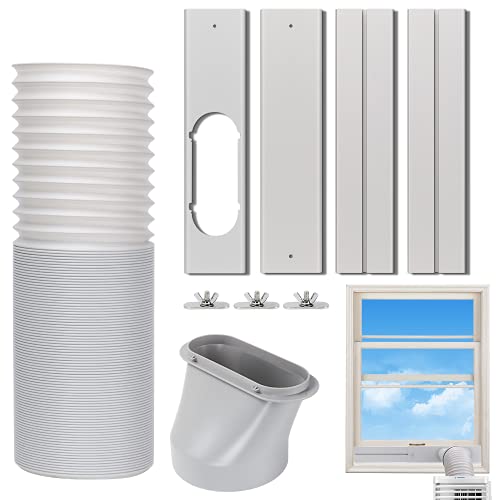
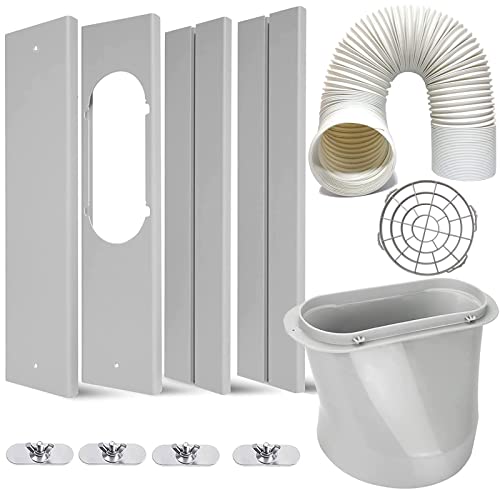
| Portable AC with Window Kit | Renters, irregular frames, no permanent mount | Uses a hose and slider kit; no heavy unit in the frame; less efficient than in-window cooling |
If your window is a true vertical slider, a purpose-built casement unit is the safest and most efficient choice. If you rent or cannot modify the frame, a portable unit with a sliding window portable air conditioner kit is a practical fallback. For rooms where you want a fixed in-window solution but the opening is narrow, look at small vertical air conditioner window units that are explicitly rated for the frame type.
How to Size a Small AC for a Vertical Window
Sizing is about the room, not the window. An undersized unit runs constantly and never dehumidifies properly; an oversized unit cycles on and off too quickly, leaving the room clammy. Use the room's square footage as the starting point, then adjust for sun exposure, ceiling height, and occupancy.
| Room Size | Typical Capacity | Best For |
|---|---|---|
| Up to 150 sq ft | 5,000–6,000 BTU | Bedrooms, small offices, dorm rooms |
| 150–250 sq ft | 8,000 BTU | Larger bedrooms, studio apartments |
| 250–350 sq ft | 10,000 BTU | Open-plan living areas, converted attics |
If your room is heavily sunlit or has poor insulation, lean toward the upper end of the range. If you are unsure, a step-by-step sizing guide walks through the BTU calculation in detail. For very small rooms, the room size guide for a 5,000 BTU unit is a useful reference.
Installation: What to Expect
Casement and vertical-window ACs are installed differently from standard units. Instead of resting the chassis on the sill, the unit is secured with a mounting bracket that transfers weight to the wall or frame, and the remaining opening is closed with an insulated panel. Here is the general sequence:
- Measure the opening: Record the height and width of the clear opening, plus the depth of the frame. Compare against the unit's published minimum and maximum dimensions.
- Mount the bracket: Follow the manufacturer's bracket diagram. The bracket carries the unit's weight — never rely on the window glass or sash for support.
- Seal the gap: Install the included insulation panel and weather stripping. A poorly sealed gap is the most common reason a small unit underperforms.
- Check the drain path: Confirm the unit tilts slightly outward so condensate drains away from the room.
- Test before finishing: Run the unit for 15–20 minutes and check for vibration, air leaks, and proper cooling before you fully secure the trim.
If the frame is damaged or you are uncomfortable with bracket installation, a professional can mount the unit safely. The guide to hiring someone to install a window AC explains what to ask and what to expect. For frames that cannot take a bracket at all, a vertical-window-specific unit or a portable alternative is the better route.
Features Worth Prioritizing
Mechanical vs. Digital Controls
Entry-level models often use dial controls; mid-range units add digital thermostats and timers. A digital thermostat holds the set temperature more precisely, which matters in small rooms where temperature swings are noticeable.
Remote and Smart Control
A remote is convenient for a unit mounted high in a tall frame. If you want scheduling and app control, look at models that support smart features — see the remote-control window AC guide.
Energy Efficiency
Higher CEER/SEER ratings reduce running energy over the season. A small ENERGY STAR window AC is a solid investment for a room you cool daily.
Noise Level
Compact units can be loud. Look for published decibel ratings and favor units with a "quiet" or "sleep" mode if the room is a bedroom.
Physical Dimensions
This is the single most important spec. Confirm the unit's width and height fit your opening with the bracket installed, and that the depth clears the exterior wall.
Heating Function
Some units add a heat pump or electric heat mode. If you want year-round use, a thermostat-equipped unit with heating is worth considering.
Comparing Tier Options
Instead of chasing a specific model, think in tiers. The descriptor reflects where a unit sits in the market, not a fixed figure.
| Tier | Typical Profile | Best For |
|---|---|---|
| Essential tier | Mechanical controls, basic bracket kit, standard efficiency | Occasional use, guest rooms, tight installations |
| Balanced tier | Digital thermostat, remote, quieter operation, better efficiency | Daily use in bedrooms and home offices |
| Top-tier | Smart controls, high efficiency, sleep mode, robust sealing kit | Primary living spaces, long cooling seasons |
Buying Checklist Before You Order
- Measure twice: Clear opening height, width, and frame depth. Compare with the unit's installation diagram, not just its outer dimensions.
- Confirm vertical compatibility: The listing must explicitly state casement or vertical slider compatibility. Do not assume a compact unit will work.
- Check the bracket kit: A complete kit includes the support bracket, insulation panel, and weather seal. Missing parts are a common source of returns.
- Match BTU to room: Use the sizing table above; oversizing is as problematic as undersizing.
- Plan for drainage: Confirm the unit can tilt outward and that condensate will not pool on your sill or wall.
- Review the warranty: Sealed-system and compressor coverage vary by brand; read the terms before purchase.
Quick reality check: If your window is a narrow casement with a crank, a purpose-built casement AC is almost always the right answer. If your window is a vertical slider with a defined rectangular opening, measure carefully — some compact units with adapter panels will fit. If neither works, a portable unit with a slider kit avoids modifying the frame entirely.
Keeping a Small Vertical-Window Unit Running Well
Compact units work harder in small spaces, so maintenance matters. Clean or replace the filter every two to four weeks during the cooling season — a clogged filter is the most common cause of weak airflow. Inspect the exterior coil annually and clear debris. Check the seal around the insulation panel each season; small gaps let hot air in and force the unit to run longer. If the unit begins to vibrate, re-check the bracket torque and the window frame before assuming a mechanical fault.
Frequently Asked Questions
Can a regular window air conditioner fit a vertical window?
No. Standard horizontal units are built for double-hung windows and will not sit securely in a vertical opening. You need a casement-style or vertical-window-specific unit, or a portable AC with a window kit.
What size air conditioner do I need for a vertical window?
Size by room area, not window type. Up to 150 sq ft typically needs 5,000–6,000 BTU; 150–250 sq ft needs about 8,000 BTU; 250–350 sq ft needs about 10,000 BTU. Adjust upward for strong sun or poor insulation.
How do I install a small AC in a vertical sliding window?
Use the manufacturer's mounting bracket to carry the unit's weight, then seal the remaining opening with the included insulation panel and weather stripping. Confirm a slight outward tilt for drainage and test the unit before finalizing the installation.
Is a portable AC a good alternative for a vertical window?
Yes, especially for renters or irregular frames. A portable unit with a sliding-window kit avoids mounting hardware in the frame, though it is generally less efficient than an in-window unit of the same capacity.
Will a casement AC work in a slider window?
Not always. Casement units are designed for crank-out frames. Some vertical slider frames accept them with an adapter, but you must confirm the manufacturer lists slider compatibility and that the bracket fits your opening dimensions.