Small Vertical Air Conditioner Window Unit: The Complete Guide
A small vertical window air conditioner fits narrow openings that standard horizontal units cannot. This guide explains how vertical chassis designs work, how to size one for your room, what windows they fit, and how to choose the right unit for tight spaces.
Explore Recommended UnitsWhat Is a Small Vertical Air Conditioner Window Unit?
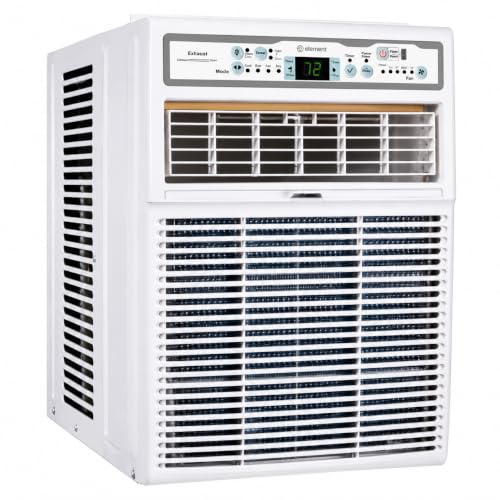
A small vertical window air conditioner is a compact window AC with a tall, narrow cabinet designed for vertical window openings. Unlike conventional horizontal window units that spread widthwise, vertical units sit upright in the frame. The indoor face directs air into the room, and the outdoor section rejects heat outside.
These units are the answer for narrow windows that cannot accept a wider chassis. They typically serve small to medium rooms and are common in bedrooms, home offices, apartments, and older homes with restricted window openings. Capacities usually range from about 5,000 to 10,000 BTU, and some high-output compact models push toward 10,000 BTU in a surprisingly small body.
If you are comparing formats for a small room, the general guidance on small air conditioners for small rooms applies here. For bedrooms specifically, the small air conditioners for bedrooms overview covers noise and placement considerations that matter for vertical units as well.
How Vertical Window AC Units Work
The cooling cycle is the same as any window air conditioner: a compressor circulates refrigerant through evaporator and condenser coils, indoor air gives up heat and humidity at the evaporator, and heat is rejected outdoors at the condenser. What differs is the physical layout.
A vertical chassis places the evaporator and blower at the indoor face, with the compressor and condenser stacked or aligned vertically toward the outdoor side. The tall cabinet shape matches narrow window openings, and the air discharge is often directed upward or outward through a grille near the top of the indoor face.
Because the unit sits upright in a narrow opening, correct leveling and support are important. A slight outdoor tilt helps condensate drain, and a support bracket prevents the taller cabinet from rocking or shifting. Installation quality has a real effect on noise and efficiency, especially in tight frames where sealing is more challenging.
Which Windows Fit a Vertical Window AC?
Vertical units are designed for narrow vertical openings. Measure the clear opening width and height before shopping, and confirm the window sash type.
Good fits
- Narrow single-hung or double-hung windows: The classic use case for vertical window ACs.
- Narrow fixed-frame windows with an operable sash: Possible if the sash opens enough for the unit's height range.
- Vertical casement windows: Some casement-specific units exist for these frames.
Poor fits or mismatches
- Wide horizontal windows: A vertical chassis wastes the opening. A horizontal unit or side-sliding unit is usually better.
- Horizontal sliders: The opening shape favors a side-to-side unit. See the side to side window air conditioner overview.
- Very short openings: Vertical units need height; if the opening is too short, a horizontal compact unit may fit better.
For very tight widths, the 12 inches wide and 14 inches wide references cover the narrow end of the market. The small window air conditioner for vertical window overview is a direct companion read, and the slim window air conditioning unit guide covers very slim chassis designs.
Sizing a Small Vertical Window AC
Sizing follows the same logic as other room air conditioners. Match capacity to the room's heat load, and choose the unit that fits the window. Oversizing leads to short cycling, weaker humidity removal, and less consistent comfort.
| Room Area (approx.) | Typical BTU Range | Best For |
|---|---|---|
| Up to 150 sq ft | 5,000 – 6,000 BTU | Bedrooms, home offices, small studios |
| 150 – 250 sq ft | 8,000 – 10,000 BTU | Living rooms, larger bedrooms, guest rooms |
| 250 – 400 sq ft | 10,000 – 12,000 BTU | Open living areas, lofts |
| 400 sq ft and above | 12,000 BTU and higher | Large spaces; consider a mini-split or central system |
Adjust upward for high ceilings, direct sun, poor insulation, or kitchens. Adjust downward for shaded, well-insulated rooms. For a deeper method, the how to size an air conditioner guide explains load factors in detail. If you want a quick benchmark, the room size for a 5,000 BTU air conditioner reference is useful.
Pay attention to the unit's dimensions alongside its capacity. A well-sized unit that does not fit the window is not a solution. If the opening is narrow but the room is large, the small window air conditioner with high BTU overview and the small but powerful window air conditioner guide cover higher-output compact designs.
Efficiency Ratings and Features
Efficiency in a vertical chassis is defined by the same metrics used across the category. Focus on the combination of correct sizing, good sealing, and sensible feature choices.
Efficiency indicators
- CEER: The current efficiency metric for room air conditioners. Higher is better within the same capacity class.
- ENERGY STAR listing: Indicates the model meets a recognized efficiency threshold. Our ENERGY STAR certified AC explainer covers the certification.
- Inverter or variable-speed operation: Less common in compact vertical units, but available in some models; it smooths output and improves humidity control.
Features worth prioritizing
- Programmable thermostat and timer: Aligns runtime with actual use. See the small air conditioner with thermostat overview for how these controls behave in compact units.
- Remote control: Useful when the unit is mounted high or low. The small window air conditioner with remote control guide covers what to look for.
- Eco or energy-saver mode: Reduces runtime and consumption once the room reaches setpoint.
- Washable filter: Keeps airflow strong and reduces strain on the compressor.
- Quiet operation: Important for bedrooms and home offices.
- ENERGY STAR models: The small window air conditioner ENERGY STAR overview covers the certification in the compact segment.
Installation and Support Essentials
A tall, narrow cabinet places different loads on a window than a horizontal unit. The goal is stable, level support with a proper seal and a safe outdoor tilt for drainage.
Before installation
- Confirm the clear opening width and height match the unit's published range.
- Check the unit's weight and confirm the window frame and support bracket can carry it.
- Verify the electrical outlet and circuit. Avoid extension cords.
- Review local rules for window-mounted units and any restrictions in rentals or historic buildings.
Support and sealing
- Use a support bracket or a level platform. Vertical units can be unstable without proper support.
- Level the unit side to side and set the recommended outdoor tilt for condensate drainage.
- Seal gaps with weatherstripping or insulation foam. Air leaks reduce cooling and add humidity.
- Secure the sash so it cannot be opened from outside.
If you prefer professional installation, the someone to install window air conditioner guide explains what to ask. For space-saving approaches, the space-saving window air conditioner overview covers compact mounting options, and the slim window air conditioning unit guide is a useful reference for very slim frames.
Installation Quick Checklist
- Measured clear opening width and height
- Confirmed weight and support bracket requirements
- Checked outlet and circuit
- Window kit and seal materials ready
- Unit level with slight outdoor tilt
- Sash secured and gap-free
- Test run complete with no vibration or leaks
Frequently Asked Questions
What is a small vertical air conditioner window unit?
A small vertical window air conditioner is a compact window AC with a tall, narrow cabinet designed for vertical window openings. It sits upright in the window frame, with the indoor section facing the room and the outdoor section facing out. Capacities typically range from about 5,000 to 10,000 BTU.
What window size do I need for a vertical window AC?
Vertical units are designed for narrow openings, often around 12 to 15 inches wide, with height ranges that vary by model. Measure the clear opening width and height and compare with the unit's published range. Narrow options are covered in guides on small window ACs around 12 inches and 14 inches wide.
Are vertical window air conditioners as efficient as horizontal units?
Efficiency depends on the model, not the orientation. Both use the same cooling cycle. Compare CEER ratings, look for an ENERGY STAR listing where applicable, and prioritize correct sizing. Vertical units sometimes have lower efficiency due to their compact cabinets, but many modern models perform well.
How many BTU do I need for a small vertical window AC?
As a starting point, rooms up to about 150 square feet often suit 5,000 to 6,000 BTU, rooms around 150 to 250 square feet often suit 8,000 to 10,000 BTU, and larger rooms around 250 to 400 square feet often suit 12,000 BTU or higher. Ceiling height, sun exposure, insulation, and occupancy all affect the final choice.
Can a small vertical window AC heat as well as cool?
Some small vertical window units include a heat function, often in the form of a heat pump or electric heat strip. These models can provide supplemental heating, but they are not a substitute for a primary heating system. Check the published heating capacity and operating range before relying on one for heat.
How do I maintain a vertical window AC?
Clean or replace the filter every few weeks during heavy use, keep the outdoor coil clear of debris, check the window seal seasonally, and inspect the support bracket for stability. A brief pre-season check of the cord and outlet is also worthwhile.