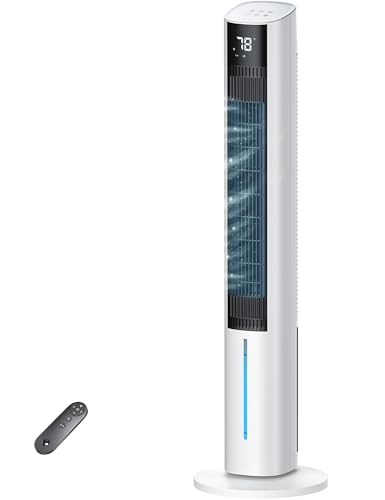
Swamp Cooler Air Conditioner: The Complete Guide to Evaporative Cooling
Everything you need to know about swamp coolers — how they work, where they perform best, how to size one, and how to maintain it for reliable, energy-conscious comfort in dry climates.
Start LearningWhat Is a Swamp Cooler Air Conditioner?
A swamp cooler air conditioner — more formally called an evaporative cooler — is a cooling appliance that lowers air temperature by passing warm, dry outdoor air across water-saturated pads. As the water evaporates, it absorbs heat from the air stream, and a fan then pushes the cooled, slightly humidified air into the living space. Unlike a refrigerated air conditioner, a swamp cooler does not use a compressor or chemical refrigerant; the entire cooling process depends on the physics of evaporation.
People often search for this technology under several informal names, including swamp fan, desert cooler, and evaporative air conditioner. All of these refer to the same fundamental mechanism. Because the cooling effect depends on how quickly water can evaporate, the performance of any swamp cooler is directly tied to the humidity level of the outside air.
Swamp coolers are especially common in the arid southwestern United States, parts of the Middle East, and other regions where summer air is hot but dry. In those areas, a well-maintained unit can cool an entire home while drawing a fraction of the electrical load required by a comparable refrigerated system. Understanding the technology before you choose is the single most important step — which is why we recommend reading our broader overview of swamp cooler air conditioner fundamentals alongside this deep-dive guide.
How Evaporative Cooling Works
The core principle is simple: evaporating water absorbs heat. When dry outside air moves across a wet cooling pad, some of the water turns into vapor. That phase change pulls sensible heat out of the air, lowering its dry-bulb temperature while raising its humidity. A blower then delivers this cooled air through ductwork or directly into the room.
The Main Components
- Cooling pads: Aspen-fiber or rigid cellulose media that hold water and provide surface area for evaporation.
- Water distribution system: A pump, tubing, and spreader that keep the pads consistently wet.
- Blower or fan: Moves air through the pads and into the living space.
- Reservoir and bleed-off: Holds the water supply and drains a small portion continuously to reduce mineral buildup.
- Housing and dampers: Direct air into the home or exhaust it outdoors, depending on the operating mode.
Because the system relies on airflow rather than refrigerant pressure, the cooling output is usually described in cubic feet per minute (CFM) rather than in tons or BTU of refrigeration. This distinction matters when you compare products: a swamp cooler rated at a given CFM is not directly interchangeable with a refrigerated unit rated in tons.
For readers who want to compare this airflow-based approach with compressor-based systems, our guide to stand-alone air conditioner units explains how refrigerated portables and window units differ in operation and installation.
Which Climates Suit a Swamp Cooler?
Evaporative cooling is climate-dependent. The drier the air, the greater the temperature drop a swamp cooler can achieve. In low-humidity regions, a well-designed system can deliver a comfortable indoor environment for most of the cooling season. In humid regions, the same unit may produce little perceptible cooling and can even make the air feel clammy.
Ideal Conditions
- Hot summers with consistently low relative humidity.
- Good outdoor air quality, since the cooler draws in outside air continuously.
- Homes that can accommodate ductwork or a central roof-mounted unit.
- Spaces where some cross-ventilation or exhaust is available to let air escape.
Poor Conditions
- Coastal or tropical climates with high summer humidity.
- Sealed, tightly built homes without adequate exhaust paths.
- Environments with heavy dust, pollen, or smoke, which the pads will capture and recirculate if not maintained.
Homeowners who need cooling in more humid conditions should review our comparison of thermoelectric air conditioner technology and conventional compressor-based systems to find a solution better matched to their climate.
Swamp Cooler vs Refrigerated Air Conditioner
The two technologies solve the same problem — hot indoor air — but in fundamentally different ways. A refrigerated air conditioner removes heat and moisture from indoor air and recirculates it. A swamp cooler replaces indoor air with cooled, humidified outdoor air. That difference drives nearly every practical trade-off between the two.
| Consideration | Swamp Cooler | Refrigerated AC |
|---|---|---|
| Best climate | Hot and dry | Any climate |
| Humidity effect | Adds moisture | Removes moisture |
| Electrical demand | Lower, fan and pump only | Higher, compressor-driven |
| Fresh air | Continuous outdoor air intake | Recirculated indoor air |
| Installation | Roof or wall unit with ductwork | Condenser, air handler, ductwork |
| Ongoing upkeep | Frequent pad and water care | Filter changes and periodic service |
| Market position | Entry-level for dry climates | Mid-range to premium depending on system |
For a deeper look at the broader category of compressor-based equipment, see our coverage of the air conditioning system and how its components fit together. Readers weighing a portable refrigerated option for a single room may also find our notes on stand-alone air conditioner without window vent useful for installation planning.
How to Size a Swamp Cooler
Correct sizing is the difference between a comfortable home and a cooler that runs constantly without keeping up. Swamp coolers are rated by airflow in CFM, and the right figure depends on the volume of the space, the climate, and how much air exchange the home allows.
A Practical Starting Point
- Calculate the square footage of the area to be cooled.
- Multiply by the ceiling height to estimate cubic footage.
- Apply a climate and air-exchange multiplier based on local conditions and how well the home is sealed.
- Confirm the result with a professional load calculation for whole-home systems.
Undersizing leaves rooms warm on peak days; oversizing can create excessive humidity, noisy operation, and short cycling. A professional assessment is strongly recommended for central, ducted installations, because the duct design must also match the airflow.
If you are also evaluating compact room cooling options, our guide to spot coolers explains how targeted airflow devices differ from whole-home evaporative systems.
Types of Swamp Coolers
Evaporative coolers come in several form factors, each suited to a different installation scenario. Choosing the right type depends on whether you are cooling a whole home, a single room, or a temporary workspace.
Central Ducted Units
Mounted on the roof or on an exterior wall and connected to the home's ductwork, these are the standard choice for whole-home evaporative cooling in dry regions. They deliver the highest airflow and are the most efficient way to cool an entire house with one system.
Window and Wall Units
Compact coolers that sit in a window frame or a wall opening. They cool a single room and are simpler to install than central systems, though they offer less capacity and are generally less efficient at whole-home scale.
Portable Evaporative Coolers
Freestanding units on casters that can be moved between rooms. They are convenient for renters and temporary spaces, but they typically require an open window or door for exhaust air. For related portable cooling concepts, see our overview of stand-alone portable air conditioning units.
Specialty and Outdoor Coolers
Patio and industrial evaporative coolers are built for open or semi-open spaces. They are not intended to cool sealed interiors and should be selected with their intended environment in mind.
Advantages and Limitations
A balanced view helps you decide whether evaporative cooling fits your home. The strengths and weaknesses below are inherent to the technology, not to any particular brand or tier of product.
Advantages
- Continuous fresh-air ventilation
- Lower electrical demand than compressor systems
- No chemical refrigerant in the cooling loop
- Simple mechanical design with fewer high-failure components
- Well suited to dry climates and open floor plans
- Solid choice for the tier when humidity is low
Limitations
- Ineffective in humid climates
- Adds moisture to the indoor air
- Requires frequent pad and reservoir maintenance
- Depends on adequate exhaust or ventilation
- Water consumption during operation
- Outdoor air quality directly affects indoor air
In terms of long-term ownership, an evaporative system is often described as a long-term investment in regions where it performs well, because the electrical draw is modest and the mechanical design is straightforward. The trade-off is a more hands-on maintenance routine than a sealed refrigerated system requires.
Maintenance Essentials
Routine care keeps a swamp cooler performing at its rated capacity and prevents the most common failure modes: clogged pads, mineral scale, water leaks, and blower noise. A consistent seasonal routine is more effective than occasional deep cleaning.
Monthly During Cooling Season
- Inspect cooling pads for mineral crust, algae, or physical damage; replace as needed.
- Check the water distribution tubing and spreader for blockages.
- Verify the pump is circulating water evenly across the pads.
- Listen for unusual blower or bearing noise.
Seasonal and Annual Tasks
- Drain and clean the reservoir to remove sediment and scale.
- Flush the bleed-off line and confirm it is unobstructed.
- Inspect the belt, bearings, and blower wheel for wear.
- Before the season begins, test the whole system on a dry run.
Water quality matters more than most owners expect. Hard water accelerates scale on pads and in the reservoir, so a bleed-off system and periodic descaling are worthwhile habits. For a broader look at cooling equipment upkeep, our troubleshooting air conditioning resource covers diagnostic patterns that apply across system types.
Common Problems and Fixes
Most swamp cooler complaints trace back to airflow, water flow, or pad condition. Working through these three areas in order resolves the majority of issues.
Not Cooling Enough
Check that pads are wet and not clogged, confirm the blower is moving air at full speed, and verify that the home has adequate exhaust openings. On humid days, reduced performance is expected.
Musty or Unpleasant Odor
Odor usually indicates algae or biofilm in the reservoir or pads. Drain, clean, and replace the pads, and consider whether the unit sat idle with standing water.
Water Leaks
Inspect the reservoir for cracks, confirm the drain fitting is seated, and check that the unit is level. Overflow can also result from a stuck float valve.
Loud Operation
Noise often comes from worn bearings, a loose belt, or debris in the blower wheel. Tightening or replacing these components usually resolves the issue.
If your problem involves a different cooling technology, the diagnostic logic in our thermostat not cooling guide may help you isolate control-side issues on refrigerated systems.
What to Look For Before You Choose
Shoppers at the research stage usually have a rough idea of the product they want but still need help confirming the details. The checklist below focuses on the factors that determine whether a swamp cooler will actually suit your home.
- Climate fit: Confirm that local summer humidity is consistently low enough for evaporative cooling to be effective.
- Airflow rating: Match CFM to the space with a professional load calculation for whole-home systems.
- Pad type: Rigid cellulose media generally lasts longer and holds its shape better than thin aspen pads.
- Bleed-off capability: A proper bleed-off system reduces mineral buildup and extends pad life.
- Blower and motor quality: Solid build quality and serviceable bearings reduce long-term maintenance.
- Installation path: Roof, wall, and window installations have different structural and ducting requirements.
- Exhaust planning: The home must allow air to escape for the system to work as designed.
For related buying considerations on other cooling formats, see our notes on standing air conditioners and the distinctions between stand-up air conditioners and central evaporative systems.
Frequently Asked Questions
What is a swamp cooler air conditioner?
A swamp cooler air conditioner, also known as an evaporative cooler, cools air by passing it over water-saturated pads. As water evaporates, it absorbs heat from the air, lowering the temperature of the air that is blown into your home. It does not use a compressor or chemical refrigerant.
Does a swamp cooler work in humid climates?
Swamp coolers perform best in hot, dry climates with low humidity. In humid climates, the air already contains a lot of moisture, so evaporation is slow and the cooling effect is minimal. In such conditions, a refrigerated air conditioner is the better choice.
How do I size a swamp cooler for my home?
Swamp coolers are sized by airflow in cubic feet per minute (CFM). A common starting approach uses the square footage of the space along with ceiling height, climate, and air-exchange factors. Professional load calculations are more accurate for whole-home systems and are strongly recommended.
How often does a swamp cooler need maintenance?
Swamp cooler pads should be inspected monthly during the cooling season and replaced when they become mineral-crusted or clogged. The water reservoir should be drained and cleaned regularly, and the water distribution tubes should be checked for blockages.
Can a swamp cooler replace a central air conditioner?
In dry climates, a properly sized swamp cooler can cool an entire home effectively and use far less electricity than a central air conditioner. In humid climates, however, it cannot replace a refrigerated system because evaporation is inefficient.
Is a swamp cooler the same as a swamp fan?
The terms are often used interchangeably. A swamp fan typically refers to a portable evaporative cooler, while a swamp cooler may refer to any evaporative cooling appliance, including whole-home ducted systems. The underlying cooling principle is the same.
Why does my swamp cooler make the house feel humid?
Evaporative cooling adds moisture to the air by design. If the home is not allowing enough air exchange, indoor humidity can rise and comfort can drop. Proper exhaust openings and correct sizing are essential.
How long do cooling pads last?
Pad life depends on water quality, bleed-off settings, and operating hours. Rigid cellulose media generally lasts longer than thin aspen pads. Inspect pads monthly and replace them when they lose stiffness, become clogged, or develop algae.
Ready to Compare Evaporative Cooling Options?
Explore current models, airflow ratings, and installation types to find a swamp cooler suited to your climate and home.
Check Availability