Window Air Conditioner for 1000 Square Feet: Complete Sizing and Buying Guide
Cooling a 1000 square foot space with window units is absolutely achievable — but it requires the right BTU total, the right number of units, and a realistic plan for electrical capacity. Here is everything you need to know before you buy.
Quick answer: Plan for roughly 20,000 to 24,000 BTU to cool 1000 square feet under normal residential conditions. Since most standard window units top out around 12,000 to 14,000 BTU, the practical solution is usually two or three well-placed window air conditioners rather than one oversized unit.
If you are still deciding between window units and other formats, our overview of space-saving air conditioner options can help you compare form factors before you commit to a window install.
How Many BTU Do You Need for 1000 Square Feet?
The standard starting point in residential cooling is 20 BTU per square foot of floor area. For a 1000 square foot space, that baseline lands at approximately 20,000 BTU. That number is a starting point, not a final answer — several real-world factors push it up or down.
Adjustments that change the BTU target
- Sun exposure: A room with south- or west-facing windows that receive direct afternoon sun needs more capacity. Add roughly 10 percent for heavily sun-exposed spaces.
- Ceiling height: Standard 8-foot ceilings are assumed. Vaulted or 10-foot ceilings increase the air volume significantly and call for additional capacity.
- Occupancy: Each additional person beyond two contributes a small but real heat load. A living area with frequent gatherings needs a buffer.
- Kitchen proximity: Cooking appliances add heat. An open-plan layout where the kitchen is part of the 1000 square feet should account for that.
- Insulation and shade: A well-insulated, shaded room can run comfortably at the lower end of the range. A poorly insulated room with older single-pane windows should sit at the upper end.
- Windows and doors: Large glass areas, frequently opened exterior doors, and unsealed gaps all raise the effective load.
| Space Condition | BTU Range | Typical Setup |
|---|---|---|
| Well-insulated, shaded, standard 8-ft ceiling | 18,000 – 20,000 BTU | Two mid-capacity window units |
| Average insulation, mixed sun exposure | 20,000 – 22,000 BTU | Two units or a two-plus-one split |
| Poor insulation, heavy sun, open-plan kitchen | 22,000 – 26,000 BTU | Three window units across zones |
| Commercial-grade single-unit approach | 24,000 BTU and above | One high-capacity unit on a 240V circuit |
For a deeper breakdown of how capacity maps to room dimensions, our guide to 10,000 BTU air conditioner room size explains how coverage scales as spaces grow, and the 12,000 BTU air conditioner room size reference is useful when you are planning the individual zones inside a 1000 square foot layout.
Single Unit vs Multiple Window Units
The single biggest decision for a 1000 square foot space is whether to pursue one very large unit or a coordinated set of smaller ones. Both approaches exist, but they suit different situations.
The single-unit approach
Standard residential window air conditioners generally max out between 12,000 and 14,000 BTU. Units in the 24,000 BTU class exist, but they are commercial-grade or specialized equipment that typically require a 240-volt circuit, a reinforced window frame or wall sleeve, and a professional installation. If your electrical panel already has a spare 240-volt circuit and your window opening can support the weight, this can work — but it is not the typical homeowner path.
If you are considering this route, review the electrical and installation realities in our guide to 12,000 BTU through-the-wall air conditioner configurations, which cover the mounting and power side of larger-capacity installs.
The multi-unit approach (recommended for most homes)
Two or three window units placed in the zones that actually need cooling is the practical, flexible solution for 1000 square feet. It offers several concrete advantages:
- Even temperature distribution: One unit in a corner cannot push conditioned air through a 1000 square foot floor plan. Multiple units eliminate the distant hot room problem.
- Zoned operation: You can run only the bedroom unit at night and only the living area unit during the day, which is more efficient than cooling everything at once.
- Electrical safety: Each unit runs on its own circuit, spreading the load instead of drawing maximum amperage from a single line.
- Redundancy: If one unit needs service, the rest of the space stays cool.
- Simpler installation: Standard 115-volt window units are far easier to install than a 240-volt commercial unit.
Sizing rule of thumb for multi-unit plans: For 1000 square feet, a common configuration is two 10,000 to 12,000 BTU units for the main living areas plus a smaller 5,000 to 8,000 BTU unit for a bedroom or office. Total capacity lands in the 22,000 to 28,000 BTU range, which gives headroom for hot days without excessive cycling.
If you are weighing window units against a ductless option for part of the space, the comparison in our mini air conditioner for room guide is a useful reference for smaller zones inside a larger floor plan.
Electrical Capacity: The Hidden Constraint
Before buying multiple window units, check your electrical panel. This is the step most buyers skip, and it is the one that causes the most frustration after installation.
Voltage and amperage basics
- 115-volt units: Most 5,000 to 12,000 BTU window air conditioners run on standard 115-volt household current. Smaller units in the 5,000 to 8,000 BTU range often work on a 15-amp circuit; larger 10,000 to 12,000 BTU units generally need a dedicated 20-amp circuit.
- 240-volt units: Higher-capacity units, typically 12,000 BTU and above in some product lines, require a 240-volt circuit. These are not plug-and-play on a standard wall outlet.
- Dedicated circuits: Each window unit should ideally run on its own circuit. Sharing a circuit with other appliances or with another AC unit invites tripped breakers during peak heat.
The general electrical landscape is covered in more detail in our 110V vs 240V air conditioner comparison. If your panel is tight, a licensed electrician can advise on adding circuits — the HVAC installation overview explains when professional involvement is the right call.
Practical check: Count the available breaker slots before you buy. A two-unit setup needs two dedicated circuits; a three-unit setup needs three. If your panel cannot support that, consider a single-zone ductless system for part of the space or a single-zone ductless mini-split air conditioning system as a complement.
Inverter vs Fixed-Speed Window Units for Large Spaces
Inverter technology has moved into the window AC category, and for a 1000 square foot multi-unit setup it is worth serious consideration. A fixed-speed compressor cycles fully on and off, which creates temperature swings and audible start-stop noise. An inverter compressor modulates its speed to hold a target temperature steadily.
In practice, that means quieter operation, fewer drafts from constant cycling, and more consistent comfort — especially relevant when you are running units for long stretches during summer. The trade-off is a higher position in the market compared with entry-level fixed-speed models. Our detailed inverter AC vs non-inverter comparison walks through the operational differences, and the inverter vs non-inverter breakdown covers the decision from a cost-of-operation perspective over time.
For a large space where the AC runs many hours per day, the steadier behavior of an inverter unit is generally the better long-term investment. For a bedroom used only at night, a well-sized fixed-speed unit is a perfectly reasonable entry-level choice.
Window AC Quality Tiers: What to Expect
Window air conditioners for this application fall into recognizable quality tiers. Understanding what each tier delivers helps you allocate your units intelligently — a premium unit in the main living zone and a balanced-tier unit in a secondary room is a common and sensible split.
The Essential Tier
Basic mechanical controls or a simple digital panel, fixed-speed compressor, straightforward installation. Covers the core cooling job with fewer refinements. Best for secondary rooms and short seasonal use.
The Balanced Tier
Digital thermostat, remote control, sleep mode, and often a washable filter with a reminder. Quieter than entry-level models and better at holding a set temperature. A solid choice for the primary living zone.
The High-End Tier
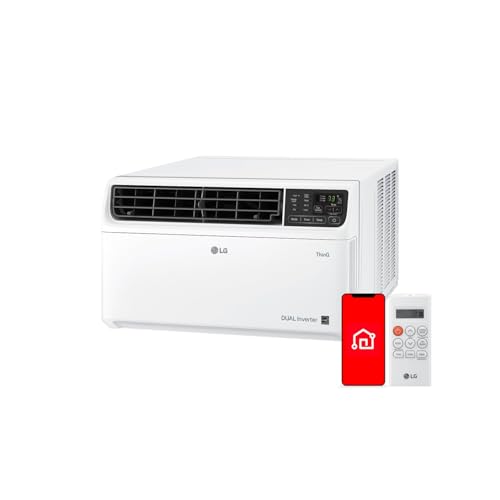
Inverter compressor, Wi-Fi or smart-home control, higher energy-efficiency ratings, and quieter fan designs. Delivers the steadiest comfort and the best long-run efficiency in the lineup.
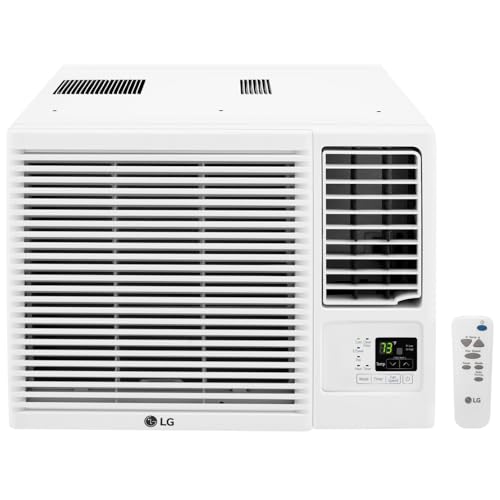
When matching tiers to a multi-unit plan, a useful pattern is: balanced-tier or premium in the main living area where comfort matters most and run hours are longest, and entry-level in bedrooms or utility spaces where the unit runs less. For rooms that need year-round flexibility, a window air conditioner for 1000 square feet setup can also be paired with dedicated heating options; if you want a single unit that handles both, our guide to a window AC for this space size covers the heat-pump variants as well.
Placement and Installation Strategy
How you place the units matters as much as how many you buy. A few principles make a multi-unit setup work well:
- Cool the rooms you use: Map the 1000 square feet into functional zones — living area, sleeping area, work area — and place a unit in each zone that needs active cooling.
- Central windows work best: A unit in the middle of a wall pushes air further into the room than one tucked into a far corner.
- Keep airflow unobstructed: Do not place furniture directly in front of the discharge vent. Blinds and curtains should not block the front grille.
- Respect the weight: Larger units are heavy. Confirm the window frame can bear the load, and use proper support brackets. A through-the-wall installation is an alternative where window mounting is not suitable.
- Seal the window opening: The accordion panels included with window units are not airtight. Adding weatherstripping or foam around the opening prevents hot outdoor air from sneaking in.
- Angle slightly outward: A small downward tilt toward the exterior lets condensate drain properly and prevents water pooling inside the unit.
If the window opening itself is a limiting factor, our guide to a 10,000 BTU air conditioner for small window setups covers how to match capacity to tighter frame dimensions, and the U-shaped window air conditioner format is worth reviewing if you want a design that lets the window close more completely.
Efficiency and Long-Term Running Considerations
With multiple units running through the summer, efficiency compounds. A few decisions have an outsized effect on how the setup behaves over a full season:
- Look at the energy-efficiency rating: Higher-rated units use less electricity for the same cooling output. For units that will run most of the day, the higher-efficiency option is the better long-term investment.
- Match capacity to the zone: An oversized unit in a small zone cools too quickly, shuts off, and leaves the room humid. Correct sizing is an efficiency measure in itself.
- Use the timer and sleep functions: Programming units to run only when the zone is occupied is the simplest meaningful reduction in run hours.
- Maintain the filters: A clogged filter restricts airflow and forces the compressor to work harder. Rinse washable filters monthly during peak season.
- Consider a smart thermostat approach: If your units support remote control, scheduling and geofencing can reduce wasted cooling. For broader context on control strategy, see our thermostat guide.
If you are comparing the long-term operating profile of window units against a central system for a whole property, the overview of a whole-house AC system puts the trade-offs in context, and the discussion of a variable-speed air conditioner explains why modulated operation is more efficient in extended-run scenarios.
Frequently Asked Questions
What size window air conditioner do I need for 1000 square feet?
Plan for roughly 20,000 to 24,000 BTU total. Because standard window units top out near 12,000 to 14,000 BTU, most households meet that total with two or three units rather than one. Adjust upward for heavy sun, high ceilings, or poor insulation, and downward slightly for a shaded, well-insulated room.
Can one window air conditioner cool 1000 square feet?
A single standard residential window unit cannot cool 1000 square feet effectively. Commercial-grade high-capacity units exist but require a 240-volt circuit, a reinforced mounting point, and professional installation. For typical homes, a multi-unit setup is the realistic and more comfortable approach.
Is it better to use two window AC units or one large unit?
For most homes, two or three strategically placed units deliver more even cooling, allow zoned operation, distribute the electrical load across separate circuits, and provide redundancy if one unit needs service. The single-unit approach only makes sense with the right electrical infrastructure and mounting support.
What electrical requirements should I plan for?
Most 5,000 to 8,000 BTU units run on a 115-volt, 15-amp circuit. Larger 10,000 to 12,000 BTU units typically need a dedicated 115-volt, 20-amp circuit. Some high-capacity models require 240 volts. Each unit in a multi-unit setup should have its own circuit to avoid tripped breakers during peak heat.
How many BTU do I need per square foot?
The common baseline is 20 BTU per square foot. For 1000 square feet that is about 20,000 BTU before adjustments. Add roughly 10 percent for sun-exposed rooms, kitchens, or high occupancy, and reduce slightly for shaded or heavily insulated spaces.
Should I choose an inverter window air conditioner for a large space?
Inverter units modulate compressor speed rather than cycling fully on and off, which produces steadier temperatures, quieter operation, and better long-run efficiency. For zones where the AC runs many hours per day, an inverter model is the stronger choice. For a bedroom used only at night, a well-sized fixed-speed unit is a reasonable entry-level option.
Ready to Compare Window AC Options?
You now have the sizing logic, the electrical checklist, and the tier framework. Browse the recommended window air conditioners below to match capacity and tier to your 1000 square foot plan.
Explore Recommended Units