Window Air Conditioner for Vertical Windows
If your home has side-to-side sliding windows, a standard window unit may not fit or seal correctly. This guide explains how to choose, size, install, and maintain a window air conditioner designed for vertical windows.
Explore Recommended UnitsQuick summary: A window air conditioner for vertical windows is a cooling unit that mounts into a side-to-side sliding window opening rather than a traditional double-hung window. The most reliable options use a dedicated vertical window kit, a correct-width chassis, and a secure bracket or support system.
This page covers the practical details most buyers need before purchasing: window measurement, unit orientation, BTU sizing, installation safety, drainage, maintenance, and how to compare entry-level, mid-range, and premium options.
What Counts as a Vertical Window for Air Conditioning?
In air conditioning terminology, a vertical window usually refers to a window that slides horizontally, side to side, such as a single-hung slider or a vertical sliding window with one sash that moves behind the other. This is different from a double-hung window that opens upward and downward.
The distinction matters because the window opening shape changes where the AC chassis sits and how the exhaust and intake airflow align with the outdoors. A standard window unit is typically built for a double-hung opening, while a unit for vertical windows needs to fit a taller, narrower opening or use a conversion kit that supports side-to-side mounting.
Types of Air Conditioners for Vertical Windows
1. Dedicated Vertical Window AC Units
Some manufacturers produce window air conditioners specifically designed for vertical sliding windows. These units often have a narrower chassis, a vertical window adapter panel, and instructions for securing the unit in a side-to-side opening. This is usually the cleanest installation because the unit is engineered for the orientation.
2. Standard Window AC with a Vertical Window Kit
Many standard window units can be installed in vertical windows when paired with a manufacturer-approved vertical window kit. The kit usually includes a filler panel, brackets, and seals that adapt the unit to the side-to-side opening. This approach can broaden your choices, but you must verify that the kit is compatible with the specific unit model.
3. Through-the-Wall or Portable Alternatives
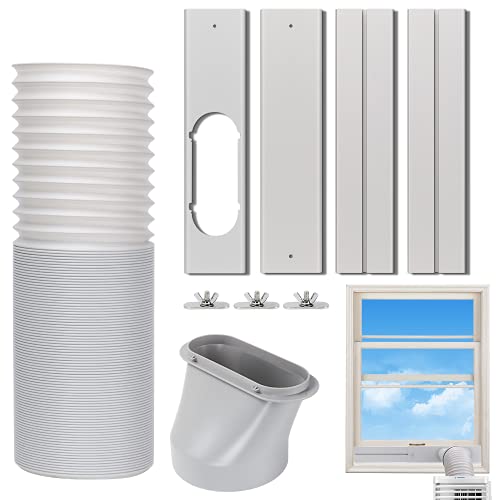
If the vertical window opening is too narrow, too shallow, or not suitable for a secure window mount, a through-the-wall unit or a portable air conditioner may be a better fit. Portable units require an exhaust hose and a window panel, while through-the-wall units require a dedicated wall opening. For more on these configurations, see the related guidance on window air conditioners without a standard window.
Vertical Window AC Options Compared
| Option | Best For | Typical Tier | Installation Complexity |
|---|---|---|---|
| Dedicated vertical window AC | Clean fit in a vertical sliding window | Mid-range to premium | Moderate; manufacturer kit included |
| Standard AC + vertical window kit | Using a preferred unit model in a vertical opening | Entry-level to mid-range | Moderate; kit compatibility is critical |
| Through-the-wall AC | Permanent installation and stable support | Mid-range to high-end tier | High; requires wall modification |
| Portable AC with window panel | Renters and temporary cooling | Entry-level to mid-range | Low; flexible placement |
How to Size a Window AC for a Vertical Window
Sizing is about cooling capacity, not the window opening. The window dimensions determine whether the unit fits; the BTU rating determines whether it cools the room properly. A unit that is too small struggles on hot days, while a unit that is too large can short-cycle, leaving the room feeling clammy.
Room measurement basics
- Measure the room length and width, then multiply to get square footage.
- Note ceiling height; rooms above the standard eight-foot ceiling may need more capacity.
- Account for sun exposure, window area, insulation quality, and the number of occupants.
- Consider heat-producing appliances such as computers, TVs, and kitchen equipment if the room is adjacent to a kitchen.
For a room-by-room capacity reference, use the BTU calculator by room size and the detailed air conditioner sizing guide. These resources help you avoid both undersizing and oversized short cycling.
Window measurement basics
- Measure the window opening width and height at the narrowest point.
- Measure the depth of the window frame to confirm the unit can sit securely.
- Check the window sash movement and whether the window can be locked or secured around the unit.
- Confirm the manufacturer's minimum and maximum window opening dimensions for the model you are considering.
Installation Steps for a Vertical Window AC
A safe installation depends on proper support and a good seal. The exact steps vary by model, but the general sequence is consistent. Always follow the manufacturer's instructions, and use a bracket or support system rated for the unit's weight.
Prepare the window
Clean the window track, remove obstructions, and confirm the sash moves freely. Check that the frame is solid and can support the unit and bracket.
Install the support bracket
Use a window AC bracket or support system designed for vertical windows. Secure it according to the instructions and confirm it is level and stable.
Place the unit and seal the opening
Set the unit in the opening, attach the vertical window kit panels, and seal gaps with weather stripping or foam. The seal prevents hot air from entering and improves efficiency.
Secure the sash and test drainage
Lock or secure the window sash so it cannot open further. Confirm the unit slopes slightly toward the outdoors for drainage, then test the unit before finalizing the seal.
If you prefer a no-drill approach, review the options for a window air conditioner bracket without drilling. For additional support and fit guidance, see window air conditioner supports and window AC bracket support.
Efficiency and Features to Prioritize
Vertical window installations are more sensitive to sealing quality than standard installations. A well-sealed unit with a higher efficiency rating will perform better in the long run, especially during peak summer months.
Efficiency rating
Look for a unit with a competitive efficiency rating for its class. Higher efficiency models are often mid-range or premium tier, but they can be a worthwhile investment in long-term energy use.
Inverter technology
Inverter-driven compressors modulate speed instead of cycling on and off. They tend to maintain temperature more steadily and can be more efficient in the long run. See window air conditioners with inverter technology.
Remote and smart control
A remote control or thermostat feature improves convenience. For smart-home integration, consider models that support app control or scheduling. Explore remote-control window AC units.
Drainage design
Vertical window installations can be more prone to water intrusion. Choose a unit with a reliable drain path, and inspect the seal and slope after installation. See window AC leaking water inside the house for troubleshooting.
Noise level
Compressor and fan noise matter in bedrooms and home offices. Mid-range and premium models often include improved fan designs and sound-dampening features.
Heating option
Some units include a heat function for mild shoulder seasons. If you need year-round flexibility, review window air conditioners with heat.
Maintenance for Vertical Window AC Units
Maintenance for a vertical window AC is similar to a standard unit, but the window seal deserves extra attention because the installation orientation can allow water or air leaks if the kit is not seated correctly.
- Clean or replace the air filter every few weeks during heavy use.
- Inspect the window kit and weather stripping seasonally; replace worn foam or seals.
- Check the drain path and confirm water flows outdoors, not into the room.
- Clean the condenser and evaporator coils according to the manufacturer's guidance.
- Before the cooling season, test the unit and secure the window sash.
For troubleshooting common issues, see window air conditioner not cooling properly and window air conditioner leaking water inside. If you are still comparing window styles, the guides on sliding window air conditioners and vertical sliding window units provide additional context.
How to Choose Between Entry-Level, Mid-Range, and Premium
The right tier depends on how often you use the unit, how sensitive you are to noise, and whether you value smart features. Entry-level units cover basic cooling needs. Mid-range models typically improve sealing components, fan design, and convenience features. Premium and high-end tier units often add better efficiency, quieter operation, and more advanced controls.
| Tier | Best For | Typical Strengths |
|---|---|---|
| Entry-level | Occasional use in a small bedroom or guest room | Basic cooling, straightforward mechanical controls, simple installation |
| Mid-range | Daily use in a primary bedroom or living area | Better fan and compressor components, remote control, improved window kit |
| Premium / high-end tier | Frequent use, noise-sensitive rooms, smart-home integration | Higher efficiency, quieter operation, inverter technology, app or thermostat control |
A mid-range model is often a solid choice for a vertical window installation because the window kit quality and sealing components tend to be more robust. If the unit will run for long hours, a premium or high-end tier model with inverter technology can be a worthwhile long-term investment.
Frequently Asked Questions
Can a regular window air conditioner fit a vertical window?
A standard window air conditioner is designed for double-hung windows that open upward. For a vertical sliding window that opens side to side, you typically need a specialized unit or a conversion kit that allows the AC to sit in the vertical opening properly.
What is the difference between a vertical window AC and a standard window AC?
The main difference is the mounting orientation and the included window kit. Vertical window AC units, or standard units paired with a vertical window kit, are designed so the exhaust and intake align with a side-to-side opening rather than an up-and-down opening.
How do I measure a vertical window for an air conditioner?
Measure the width and height of the window opening, the depth of the window frame, and the distance from the window to the nearest obstruction. You also need to confirm the window sash can be secured and that the unit will not block the window from closing properly.
Can I install a window AC in a vertical window without drilling?
Yes, many installations use a window bracket or support system that reduces or eliminates drilling. However, you should always secure the unit according to the manufacturer's instructions and local building requirements to prevent it from tipping or falling.
What BTU size do I need for a vertical window AC?
The BTU requirement depends on the room size, ceiling height, sun exposure, insulation, and occupant load. As a general rule, a small bedroom may need around 5,000 to 6,000 BTU, while a larger living area may need 12,000 BTU or more. Always verify with a sizing guide before choosing a unit.
Do vertical window AC units require special maintenance?
They require the same basic maintenance as standard window units: cleaning or replacing the filter, checking the drain path, inspecting the seal around the window kit, and cleaning the coils. Because vertical installations can be more prone to water intrusion, pay extra attention to sealing and drainage.
Ready to Compare Vertical Window AC Options?
The recommended products below are selected for window air conditioner installations, including models and accessories suitable for vertical window configurations. Review the fit and features against your measured window opening.
View Recommended Products