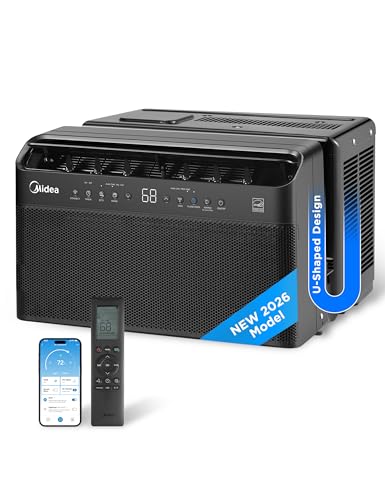
Window Air Conditioner with Inverter Technology: The Complete Guide
Learn how variable-speed inverter compressors are transforming window AC performance, delivering quieter operation, steadier temperatures, and better energy efficiency for modern homes.
Explore the TechnologyAC Units Guide Philosophy: Understanding the technology behind your cooling appliance is the first step toward making a confident purchase. This guide breaks down inverter window air conditioners so you can evaluate whether this technology aligns with your comfort priorities and room requirements.
How Inverter Technology Works in a Window AC
Traditional window air conditioners rely on a fixed-speed compressor that operates in two states: fully on or fully off. When the room temperature rises above the setpoint, the compressor kicks on at full power. Once the desired temperature is reached, the compressor shuts off completely. This cycle repeats continuously, causing temperature swings and noticeable startup noise.
An inverter window air conditioner takes a fundamentally different approach. Instead of cycling on and off, the inverter compressor adjusts its speed continuously. When the room is far from the target temperature, the compressor runs faster to provide maximum cooling. As the room approaches the setpoint, the compressor slows down and maintains a steady output that matches the exact cooling load.
This variable-speed operation is made possible by an inverter board that converts the incoming AC power into adjustable DC voltage, which then drives a brushless DC compressor motor. The result is a smoother, more precise cooling process that avoids the harsh on-off cycling of conventional units.
Key takeaway: The inverter compressor behaves more like a dimmer switch than a light switch. It modulates cooling output rather than simply turning it on and off, which is the foundation for its efficiency and comfort advantages.
Key Benefits of Inverter Window Air Conditioners
Inverter technology brings several tangible advantages to the window AC form factor. Below are the primary benefits that matter most to homeowners and renters alike.
1. Superior Energy Efficiency
Because the inverter compressor avoids the energy spike associated with frequent startup cycles, it consumes less electricity over time. This is especially noticeable during long cooling sessions. Homeowners who run their AC for several hours a day can expect more efficient operation compared to a fixed-speed unit of similar capacity. To understand how efficiency is measured, refer to our guide on SEER ratings.
2. Quieter Operation
The absence of repeated compressor startups and the ability to run at lower speeds make inverter window ACs significantly quieter than traditional models. This is a major benefit for bedrooms, home offices, and living spaces where noise is a concern. Many users find that the gentle, consistent hum of an inverter unit is far less disruptive than the intermittent roar of a standard window air conditioner.
3. Stable and Consistent Temperatures
Fixed-speed units allow the room temperature to drift upward before the compressor kicks in again, creating a noticeable sawtooth pattern. Inverter units maintain the target temperature within a much narrower band, resulting in a more comfortable and consistent environment. This is particularly valuable during sleep and for temperature-sensitive individuals.
4. Reduced Wear on the Compressor
Frequent on-off cycling places stress on compressor components over time. By running continuously at lower speeds, an inverter compressor experiences fewer start-stop transitions, which can contribute to a longer service life. This design principle is similar to how variable-speed compressors improve durability in inverter air conditioners across other form factors.
5. Better Humidity Control
Because the inverter compressor runs for longer periods at lower output, the evaporator coil stays cold more consistently. This allows the unit to remove moisture from the air more effectively than a fixed-speed unit that cycles on and off. Better dehumidification contributes to a more comfortable indoor environment, especially during humid summer months. For broader humidity management strategies, see our article on whole-house dehumidifiers.
Inverter vs. Standard Window AC: A Clear Comparison
The table below summarizes the practical differences between inverter and conventional fixed-speed window air conditioners. This comparison is intended to help you evaluate which technology best fits your usage patterns and comfort priorities.
| Feature / Aspect | Inverter Window AC | Standard Window AC |
|---|---|---|
| Compressor operation | Variable speed, continuous modulation | Fixed speed, on-off cycling |
| Temperature stability | Very stable, narrow fluctuation band | Noticeable temperature swings |
| Noise level | Quieter, especially at low demand | Louder due to frequent startups |
| Energy efficiency | Higher, particularly in long sessions | Lower, due to startup energy spikes |
| Humidity removal | Better, due to sustained coil operation | Less effective during short cycles |
| Compressor wear | Reduced, fewer start-stop transitions | Higher, repeated cycling stress |
| Market position | Mid-range to premium tiers | Entry-level to mid-range tiers |
| Best suited for | Bedrooms, home offices, long cooling sessions | Occasional use, secondary rooms |
Editorial note: Inverter units are typically positioned in the mid-range to premium tiers of the window AC market. While the initial investment is higher than entry-level fixed-speed models, the long-term comfort and efficiency benefits often justify the difference for daily users.
Sizing and Room Considerations
Choosing the correct cooling capacity is just as important for an inverter window AC as it is for any other type. An undersized unit will struggle to cool the room, while an oversized unit may short-cycle, undermining the efficiency benefits of the inverter compressor.
General BTU Guidelines by Room Size
- Up to 150 sq ft: 5,000 to 6,000 BTU — suitable for small bedrooms, nurseries, or studies.
- 150 to 250 sq ft: 8,000 to 10,000 BTU — a common range for standard bedrooms and small living areas.
- 250 to 400 sq ft: 12,000 to 14,000 BTU — appropriate for larger bedrooms, living rooms, or open-plan spaces.
- 400 to 600 sq ft: 15,000 to 18,000 BTU — for spacious rooms or combined living and dining areas.
These ranges are starting points. Factors such as ceiling height, window area, sun exposure, insulation quality, and occupancy can shift the requirement up or down. For a more detailed approach, use our air conditioner sizing guide.
Room-Specific Considerations
For bedrooms, prioritize quiet operation and stable temperature control — the strengths of inverter technology. Our guide on window AC units for bedrooms covers additional factors such as placement relative to the bed and nighttime noise expectations.
For small rooms, compact inverter models are available in lower BTU ranges. See our recommendations for window air conditioners for small rooms to explore form factors that fit limited wall space.
If your window opening is unusually narrow, you may need to consider specialized units. Our article on window air conditioners for small window openings discusses options and installation adapters.
Features to Look For in an Inverter Window Unit
Beyond the compressor technology itself, several features can enhance the usability and performance of an inverter window air conditioner. Consider the following when comparing models.
Remote Control and Programmability
A remote control is a standard convenience for most window ACs, but inverter models often include more advanced scheduling and eco modes. Look for units with a 24-hour timer and adjustable fan speeds. Some models offer remote thermostat functionality, allowing the AC to respond to the temperature at the remote's location rather than at the unit itself. For related reading, see our guide on window air conditioners with remote control.
Smart Connectivity
Some inverter window ACs include Wi-Fi connectivity, enabling control via a smartphone app and integration with smart home systems. This feature can be useful for pre-cooling a room before you arrive home. If smart control is a priority, explore our article on Wi-Fi air conditioners.
Fan-Only and Dehumidification Modes
These modes add versatility. Fan-only mode circulates air without cooling, while dehumidification mode removes moisture with minimal cooling. Inverter units often excel in dehumidification mode because the compressor can run at low speed for extended periods.
Noise Level Ratings
Manufacturers typically list decibel ratings for indoor and outdoor operation. Inverter units generally have lower minimum noise levels because the compressor can slow down significantly. Pay attention to the lowest declared noise figure, as this is the level you will experience during steady-state operation.
Installation Hardware and Window Compatibility
Check what mounting kit is included. Some units come with accordion-style side panels that fit a range of window widths. If you have a sliding window or a casement window, you may need a specialized installation kit. Our articles on window air conditioners for sliding windows and window AC in casement windows provide practical guidance.
Installation and Placement Tips
Proper installation maximizes the benefits of inverter technology. While the process is similar to installing any window AC, a few considerations are especially relevant for inverter units.
Choose a Suitable Window
Select a window that can support the unit's weight and is near a dedicated electrical outlet. The window should close securely behind the unit. For detailed guidance on window types, refer to our articles on vertical sliding windows and side-opening windows.
Ensure Proper Support
Window AC units are heavy, and inverter models may be slightly heavier due to additional components. Use a sturdy bracket or support system to secure the unit. Our article on window AC bracket support explains the options and installation principles.
Seal the Gaps
Air leaks around the installed unit reduce efficiency and can allow insects or hot air to enter. Use the included insulation panels and consider adding weatherstripping. Proper sealing is particularly important for inverter units, as it helps them maintain stable temperatures without overworking the compressor.
Electrical Considerations
Check the unit's amperage and voltage requirements. Most standard window ACs operate on 115V, but larger units may require 230V. If you are unsure about your circuit capacity, consult a qualified electrician. Our guide on amps and breaker size for AC units provides helpful context.
Safety note: Always follow the manufacturer's installation instructions. If you are not comfortable with the process, hire a qualified technician. Improper installation can void the warranty and create safety hazards.
Maintenance for Long-Term Performance
Inverter window air conditioners are designed for durability, but regular maintenance is essential to preserve efficiency and extend service life. The following routine tasks apply to most models.
Clean or Replace the Air Filter
A clogged filter restricts airflow and forces the compressor to work harder. Clean washable filters every two to four weeks during heavy use, or replace disposable filters according to the manufacturer's schedule. Our guide on how to clean an AC filter walks through the process.
Inspect and Clean the Coils
The evaporator and condenser coils accumulate dust and debris over time. Clean them at the start of each cooling season and periodically during use. Refer to our articles on cleaning evaporator coils and cleaning condenser coils for step-by-step instructions.
Check the Drain Path
Window AC units remove moisture from the air, which must drain properly. Ensure the drain holes and channels are clear. If you notice water leaking inside the house, consult our article on window air conditioner leaking water inside the house for troubleshooting steps.
Seasonal Preparation
Before the cooling season begins, perform a thorough inspection. Clean the unit, check the electrical cord and plug for damage, and test all modes. If the unit is not cooling properly, review our guide on window AC not cooling but fan is running to identify potential causes.
Ready to Explore Inverter Window AC Options?
Browse our curated selection of inverter window air conditioners below. Each listing includes key specifications to help you compare features and find the right fit for your space.
View Recommended ModelsFrequently Asked Questions
Continue Your Research
If you are comparing inverter technology across different AC form factors, our guide on inverter AC systems provides a broader overview. For installation-specific questions, you may find our articles on window AC installation kits and window AC supports helpful.
For those considering a whole-home approach, explore our resources on whole-house air conditioning systems and ductless mini-split AC to understand how inverter technology scales to larger cooling needs.