5000 BTU Air Conditioner: Complete Guide for Small Spaces
Everything you need to know about 5000 BTU cooling units — room sizing, efficiency, installation, and how to choose the right model for bedrooms, offices, and compact living areas.
VIEW TOP PICKSQuick Summary: A 5000 BTU air conditioner is the ideal cooling solution for rooms up to 150 square feet. It offers efficient, targeted cooling for bedrooms, home offices, and small apartments without the energy consumption of larger systems. This guide covers everything you need to make an informed decision.
What Does 5000 BTU Mean?
BTU stands for British Thermal Unit — a measurement of cooling capacity. A 5000 BTU air conditioner can remove 5,000 BTUs of heat from a room per hour. In practical terms, this is the smallest standard cooling capacity for residential air conditioners and is specifically engineered for compact spaces.
To put this in perspective, a 5000 BTU unit provides just the right amount of cooling for a typical bedroom or small home office. It is the entry point into the world of air conditioning and is widely used across apartments, dorms, and single-room setups. For context on how this compares to other capacities, see our broader guides on 5000-6000 BTU AC units and 8000-10000 BTU AC units.
Understanding BTU is the first step toward choosing the right unit. An undersized AC will struggle to cool a room, while an oversized one will cycle on and off too frequently, wasting energy and failing to dehumidify properly. That is why matching BTU to room size is critical.
Room Sizing: Is 5000 BTU Right for Your Space?
A 5000 BTU air conditioner is designed for rooms up to approximately 150 square feet. However, room size alone does not tell the full story. Several factors affect how effectively a 5000 BTU unit will cool your space:
- Ceiling height: Standard 8-foot ceilings are assumed. Higher ceilings increase the volume of air to cool.
- Insulation quality: Well-insulated rooms retain cool air better, allowing the unit to work more efficiently.
- Window exposure: South-facing windows with direct sunlight can increase heat gain significantly.
- Occupancy: More people in a room generate more body heat, reducing effective cooling.
- Appliances and electronics: Equipment like computers and TVs emit heat that the AC must counteract.
If your room has heavy sun exposure, poor insulation, or multiple occupants, consider stepping up to a 6000 BTU unit for better performance.
| Room Type | Typical Size | 5000 BTU Suitability |
|---|---|---|
| Small bedroom | 100–150 sq ft | Excellent fit |
| Home office | 100–150 sq ft | Excellent fit |
| Studio apartment | Up to 150 sq ft (single room) | Good for main living area |
| Dorm room | 100–130 sq ft | Excellent fit |
| Medium bedroom | 150–250 sq ft | Marginal — consider 6000–8000 BTU |
| Living room | 200+ sq ft | Not suitable — use larger unit |
Types of 5000 BTU Air Conditioners
5000 BTU units are available in three main form factors, each with distinct advantages depending on your installation constraints and lifestyle.
Window Air Conditioners
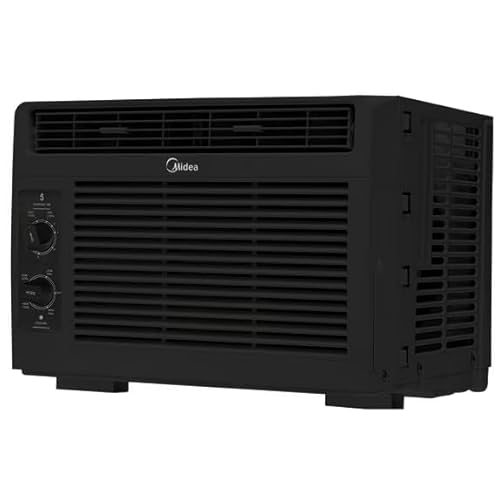
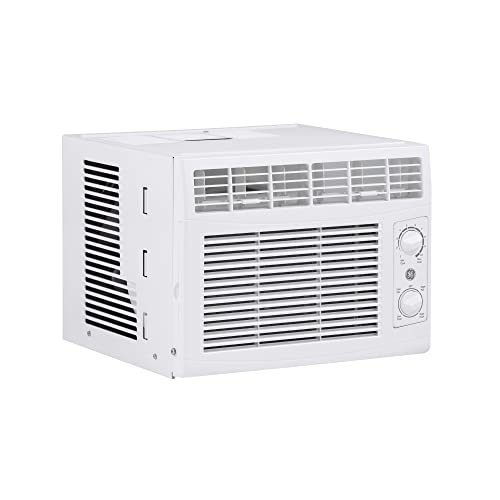
Window units are the most common form of 5000 BTU AC. They are installed directly in a window frame, with the compressor and condenser sitting outside. This design provides excellent cooling efficiency because heat is expelled outdoors. Window units are typically the most energy-efficient option in this capacity range and are available in models with remote controls, programmable thermostats, and ENERGY STAR certification. For specific product insights, explore our ENERGY STAR 5000 BTU window AC guide.
Portable Air Conditioners
Portable 5000 BTU units are freestanding and can be moved between rooms. They require a window or opening for venting hot exhaust air. While more flexible than window units, portable models are generally less efficient and slightly noisier. They are a good choice for renters or situations where window installation is not feasible. See our guide to 5000 BTU portable air conditioners for more details.
Through-the-Wall Units
Through-the-wall 5000 BTU units are permanently installed through an exterior wall. They are common in hotels, dorms, and some apartment buildings. These units offer a clean, built-in look and do not obstruct windows. However, installation is more involved and may require professional assistance. If you are considering this option, our through-the-wall AC guide covers the key considerations.
Pros and Cons of 5000 BTU Air Conditioners
✓ Advantages
- Highly energy-efficient for targeted room cooling
- Lower power draw — compatible with standard household circuits
- Compact and lightweight, easy to install and remove
- Quiet operation compared to larger systems
- Good value for its tier — ideal for single-room use
- Widely available with modern features like remote control and timers
- Minimal maintenance requirements
✗ Limitations
- Limited to rooms up to 150 square feet
- Not suitable for open-plan or multi-room cooling
- Window units block part of the window view
- Portable models require venting and can be less efficient
- Cooling performance drops in rooms with poor insulation or heavy sun exposure
- May struggle during extreme heat waves in marginal room sizes
Efficiency and Operating Considerations
When evaluating a 5000 BTU air conditioner, efficiency is a key factor. The EER (Energy Efficiency Ratio) measures cooling output relative to power consumption — a higher EER means better efficiency. Many 5000 BTU units achieve EER ratings that place them among the most efficient room air conditioners available. For a deeper understanding of efficiency metrics, see our guide on air conditioner efficiency ratings.
Most 5000 BTU units run on standard 115-volt household current and draw approximately 4 to 5 amps. This means they can be plugged into any standard outlet without requiring a dedicated circuit, making installation straightforward for most users.
ENERGY STAR certified models are recommended for those who prioritize long-term efficiency. These units meet strict guidelines set by the U.S. Department of Energy and typically consume less power than non-certified models in the same capacity range. Explore our 5000 BTU ENERGY STAR guide for specific model insights.
It is also worth noting that 5000 BTU units are designed for single-room use. Attempting to cool a larger area with a small unit leads to constant operation, reduced efficiency, and inadequate comfort. Always match capacity to room size.
Features to Look For in a 5000 BTU AC
Modern 5000 BTU air conditioners offer a range of features that enhance convenience and usability. Here are the key ones to consider:
- Remote control and digital display: Allows easy adjustment from across the room. See our guide to 5000 BTU window AC with remote control.
- Programmable thermostat: Enables scheduling and precise temperature control. Units with this feature are covered in our 5000 BTU AC with thermostat overview.
- ENERGY STAR certification: Indicates verified efficiency and lower operating impact.
- Washable filter: Easier maintenance and better indoor air quality.
- Timer and sleep mode: Useful for overnight operation and energy management.
- Quiet operation: Important for bedrooms and home offices — see our guide to quiet air conditioners.
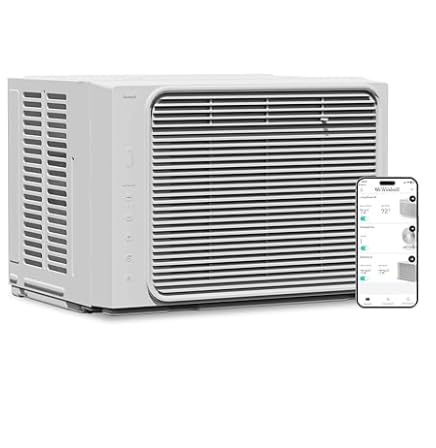
- Wi-Fi and smart control: Some higher-tier models offer app-based control, covered in our AC with Wi-Fi and smart control article.
Quality Tiers in the 5000 BTU Segment
Not all 5000 BTU air conditioners are built to the same standard. The market can be broadly divided into three tiers:
Essential Tier
Basic cooling functionality with mechanical controls. Durable construction suitable for occasional use. Good value for its tier, ideal for budget-conscious buyers who need straightforward cooling.
Balanced Tier
Digital controls, remote operation, and washable filters. Better insulation and quieter operation. Feature-rich for its class, a solid choice for bedrooms and daily use.
Top-Tier
ENERGY STAR certification, smart connectivity, advanced air filtration, and premium materials. Well-specified for the category with enhanced durability and refined operation.
When choosing between tiers, consider how often the unit will be used and whether features like programmable scheduling, smart control, or enhanced filtration matter to you. For most residential users, the mid-range tier offers the best balance of functionality and build quality.
Installation and Placement Tips
Proper installation is critical to getting the best performance from a 5000 BTU air conditioner. Here are the key considerations:
- Window units: Choose a window that receives shade during the hottest part of the day if possible. Ensure the unit is level and sealed properly to prevent air leaks. Most 5000 BTU window units can be installed by one or two people without professional help.
- Portable units: Place the unit near a window or sliding door for venting. Keep the exhaust hose as short and straight as possible for maximum efficiency. Ensure the room is sealed when the unit is running.
- Through-the-wall units: These require cutting into an exterior wall and may need professional installation. Check local building codes and obtain any necessary permits before proceeding.
- General placement: Avoid direct sunlight on the unit itself. Keep the air filter clean and unobstructed. Do not block airflow with furniture or curtains.
For a broader perspective on installation options and costs, see our companies that install window air conditioners guide.
Maintenance for Long-Term Performance
A 5000 BTU air conditioner is a long-term investment when properly maintained. Here is a simple maintenance routine:
- Clean or replace the air filter every 2–4 weeks during heavy use. A clogged filter reduces cooling efficiency and strains the unit.
- Inspect and clean the coils annually. Dust and debris on the evaporator and condenser coils reduce heat transfer efficiency.
- Check the drain pan and drainage path. Ensure condensate water can flow freely and does not accumulate.
- Store window units properly during the off-season. Clean the unit, remove it from the window, and store it in a dry place.
- Listen for unusual noises. Grinding, rattling, or squealing can indicate a mechanical issue that should be addressed promptly.
Regular maintenance not only extends the life of the unit but also keeps it operating at peak efficiency. For more detailed guidance, see our AC coil cleaning services overview.
Common Use Cases for 5000 BTU AC
5000 BTU air conditioners are versatile and well-suited to a variety of scenarios:
- Bedrooms: The most common use case. A 5000 BTU unit can keep a standard bedroom cool and comfortable throughout the night without excessive noise or energy consumption.
- Home offices: With the rise of remote work, cooling a dedicated office space is essential. A 5000 BTU unit provides focused comfort without cooling unused rooms.
- Dorm rooms and small apartments: Ideal for students and renters who need a portable, easy-to-install cooling solution.
- Server closets and small utility rooms: Some commercial and home setups use 5000 BTU units to keep equipment rooms at safe temperatures.
- Campers and RVs: While specialized RV air conditioners exist, some compact 5000 BTU units can be adapted for mobile use with proper venting.
If you are cooling a space larger than 150 square feet, you will likely need a higher-capacity unit. Our guide to 8000 BTU window air conditioners covers the next step up in cooling capacity.