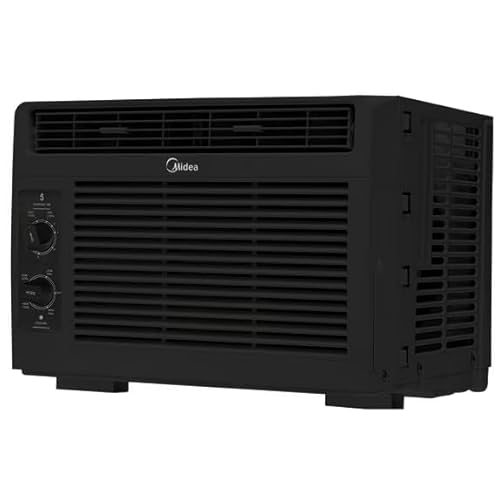
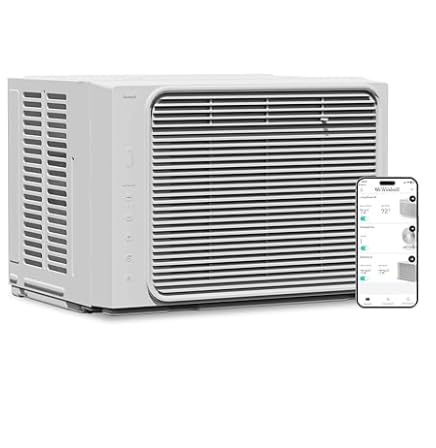
Window Air Conditioner 5000 BTU Energy Star: The Complete Buyer's Guide
Everything you need to know about choosing, installing, and maintaining a 5000 BTU Energy Star window air conditioner for small rooms and tight spaces.
EXPLORE TOP PICKSWhy this guide matters: A 5000 BTU Energy Star window air conditioner is one of the most efficient ways to cool a small room without installing a full HVAC system. This guide walks you through sizing, efficiency ratings, key features, installation, and maintenance so you can make a confident, well-informed decision.
What Is a 5000 BTU Energy Star Window Air Conditioner?
A 5000 BTU window air conditioner is a compact cooling unit designed to fit into a standard double-hung window. The 5000 BTU rating refers to its cooling capacity — British Thermal Units per hour — which is the amount of heat energy it can remove from a room in one hour. For a small bedroom, home office, or studio apartment, this capacity is often the perfect match.
When a unit carries the Energy Star certification, it means the model meets or exceeds energy efficiency guidelines set by the U.S. Environmental Protection Agency. These units are tested to use less electricity than standard models while delivering the same cooling output. For anyone planning to run an AC through hot summer months, choosing an Energy Star certified model is a smart long-term investment.
Window units in this class typically operate on 115 volts and draw around 4 to 5 amps, meaning they can plug into a standard household outlet without requiring a dedicated circuit. They usually weigh between 40 and 50 pounds, making them manageable for most adults to install with the included mounting hardware.
Room Sizing: Is 5000 BTU Right for You?
Matching cooling capacity to room size is the single most important decision when buying a window air conditioner. A unit that is too small will struggle to cool the space, while an oversized unit will cycle on and off too frequently, failing to remove humidity effectively and causing unnecessary wear on the compressor.
The general rule of thumb is that 5000 BTU is appropriate for rooms up to approximately 150 square feet. This covers most bedrooms, home offices, dorm rooms, and small living areas. However, several factors can shift the recommendation:
| Room Condition | Adjustment to Capacity |
|---|---|
| Room is heavily shaded | Reduce capacity by 10% |
| Room receives very little shade | Increase capacity by 10% |
| Room is typically occupied by more than two people | Increase capacity by 600 BTU per additional person |
| Room is a kitchen | Increase capacity by 4,000 BTU |
| Ceiling is higher than 8 feet | Consider a larger capacity or a unit with stronger airflow |
For a standard bedroom around 100 to 150 square feet with average sun exposure, a 5000 BTU unit will perform well. If your room is closer to 200 square feet or has large unshaded windows, you may want to explore the 6000 BTU Energy Star window air conditioner category instead. If you are working with a smaller space, such as a tiny home office, the 150 sq ft window air conditioner 115 volt 5000 BTU guide offers more focused advice.
Understanding Energy Star and Efficiency Ratings
Energy Star certification is more than a label — it represents verified performance. To earn the Energy Star mark, a window air conditioner must meet specific efficiency criteria set by the EPA. These criteria are updated periodically to reflect advances in technology and to push manufacturers toward more efficient designs.
The primary metric for window AC efficiency is the Combined Energy Efficiency Ratio (CEER), which replaced the older EER rating for window units. CEER accounts for both cooling efficiency and standby power consumption, giving a more complete picture of how much energy the unit uses over a typical season. A higher CEER means better efficiency.
For 5000 BTU window units, Energy Star certified models typically achieve a CEER of around 12 or higher, while standard models may fall below that threshold. The difference translates to measurable energy savings over the life of the unit, especially in climates where the AC runs daily during summer. If you want to dive deeper into how these ratings work, the energy efficiency ratings SEER EER HSPF guide explains the full landscape of efficiency metrics.
Beyond the rating itself, Energy Star units often include features like programmable timers, eco modes, and improved insulation that contribute to lower energy use. These features are worth considering alongside the headline efficiency number.
Key Features to Look For
Remote Control
A remote lets you adjust temperature, fan speed, and modes without getting up. Many models include a display on the unit itself, but a remote adds convenience, especially if the unit is mounted high or in a hard-to-reach window.
Programmable Timer
Set the unit to turn on or off at specific times. This is useful for cooling a bedroom before you arrive home or shutting off automatically after you fall asleep, reducing unnecessary runtime.
Energy Saver Mode
In this mode, the fan cycles on and off with the compressor rather than running continuously. It reduces electricity use but may allow slightly more temperature variation in the room.
Multiple Fan Speeds
Low, medium, and high fan settings let you balance cooling power against noise. Low speed is quieter for sleeping, while high speed moves more air on hot afternoons.
Washable Filter
A removable, washable air filter makes routine maintenance simple. Clean filters improve airflow and efficiency, and they reduce dust and allergens circulating in the room.
Quiet Operation
Noise levels vary significantly between models. If the unit is for a bedroom, look for a model with a low decibel rating on its quietest setting. Premium models often include enhanced sound insulation.
Smart Connectivity
Some newer models offer Wi-Fi control through a smartphone app or compatibility with voice assistants. This allows remote operation and scheduling from anywhere. See our AC with Wi-Fi smart control guide for more on this feature.
Installation Kit Included
Most window units come with mounting brackets, window panels, and weather sealing. Check that the kit fits your window type — double-hung windows are the most common compatibility target.
Pros and Cons of 5000 BTU Window Units
Advantages
- Efficient cooling for small rooms without ductwork
- Straightforward installation in standard windows
- Energy Star models reduce electricity consumption
- Lower upfront investment compared to central or mini-split systems
- Easy to remove or relocate between rooms
- No professional installation required in most cases
- Compact size suits apartments, dorms, and older homes
Limitations
- Cooling capacity limited to small rooms
- Requires a window that can accommodate the unit
- Can obstruct window view and block natural light
- Noise levels may be noticeable in quiet spaces
- Not suitable for rooms without accessible windows
- Cooling is localized to one room
- Some models lack advanced features like smart control
For many households, the advantages clearly outweigh the limitations, especially when the goal is to cool a single bedroom or office without modifying the home's HVAC infrastructure. If you are comparing window units to other options, our guide on small room window air conditioner reviews offers additional perspective on what works best in compact spaces.
Installation Guide and Requirements
Installing a 5000 BTU window air conditioner is a manageable DIY project for most homeowners and renters. Here is a step-by-step overview of what to expect:
- Choose the right window: A double-hung window with a clear opening at least 15 to 16 inches wide and 12 to 14 inches high is typically sufficient. Check the unit's specifications for exact requirements.
- Check the electrical circuit: Most 5000 BTU units run on 115 volts and draw 4 to 5 amps. A standard 15-amp household circuit is usually adequate, but avoid sharing the outlet with other high-draw appliances.
- Prepare the window: Clean the window frame and sill. Remove the screen if necessary. Ensure the window opens and closes smoothly.
- Install the mounting bracket: Many units include a support bracket that secures to the exterior wall or window frame. Follow the manufacturer's instructions carefully for safe support.
- Place the unit: With assistance if needed, lift the unit into the window opening. It should sit level or tilt slightly downward toward the outside for proper drainage.
- Seal the gaps: Use the included window panels and foam insulation to close the space around the unit. This prevents outside air from entering and improves efficiency.
- Test operation: Plug in the unit, turn it on, and verify that cool air flows and the unit drains properly.
If you are unsure about any step, consulting a professional is a reasonable precaution. Our guide on companies that install window air conditioner can help you find local support if needed. For detailed reviews of specific models and their installation experiences, the window AC unit 5000 BTU Energy Star article covers real-world considerations.
Maintenance and Care Tips
Regular maintenance keeps your 5000 BTU Energy Star window air conditioner running efficiently and extends its useful life. Here are the key tasks:
| Task | Frequency | What to Do |
|---|---|---|
| Clean or replace the air filter | Every 2–4 weeks during cooling season | Remove the filter, rinse with warm water, and let it dry completely before reinstalling. |
| Inspect the exterior coils | Monthly | Check for debris, leaves, or dirt buildup. Gently clean with a soft brush or coil cleaner. |
| Check drainage | Monthly | Ensure the unit tilts slightly outward and that the drain holes are clear of obstruction. |
| Clean the window seal | Seasonally | Replace worn foam insulation or window panels to maintain a tight seal. |
| Deep clean the unit | Before each cooling season | Remove the front grille if accessible, vacuum interior components, and check for mold or mildew. |
| Store properly during off-season | Annually | If removing the unit, clean it thoroughly, cover it, and store in a dry location. |
Keeping up with these tasks is especially important for Energy Star models, because efficiency gains depend on clean filters and unobstructed airflow. A clogged filter forces the compressor to work harder, eroding the efficiency advantage you paid for. For a deeper dive into filter care, see our window air conditioner energy efficiency rating guide.
How It Compares to Other Cooling Options
A 5000 BTU window air conditioner is not the only way to cool a small room. Here is how it stacks up against common alternatives:
| Option | Best For | Trade-Offs |
|---|---|---|
| 5000 BTU window AC | Small rooms with a suitable window | Requires window space; cooling limited to one room |
| Portable air conditioner | Rooms without a suitable window for a window unit | Typically less efficient; requires venting through a window or wall |
| Ductless mini-split | Whole-room comfort with quieter operation | Higher upfront investment; professional installation recommended |
| Central air conditioning | Whole-home cooling | Significant installation work; best for homes with existing ductwork |
| Evaporative cooler | Dry climates with low humidity | Ineffective in humid conditions; requires water supply and ventilation |
For a single small room, a 5000 BTU window unit is often the most practical and efficient choice. It delivers focused cooling without the complexity or installation demands of larger systems. If you are considering a portable alternative, the 5,000 BTU portable air conditioner guide explains when that option makes more sense. For a broader comparison of cooling approaches, our what is air conditioning overview provides helpful context.
Ready to Compare Models?
Explore our curated selection of recommended window air conditioners below. Each listing includes key specifications to help you evaluate options at a glance.
VIEW RECOMMENDATIONSFrequently Asked Questions
For more options in the same efficiency class, explore the 5000 BTU Energy Star window air conditioner collection. If you are comparing remote-control features, the 5000 BTU window air conditioner with remote control guide may be helpful. And for a broader view of the category, the window air conditioner 5000 BTU Energy Star main page covers additional models and comparisons.