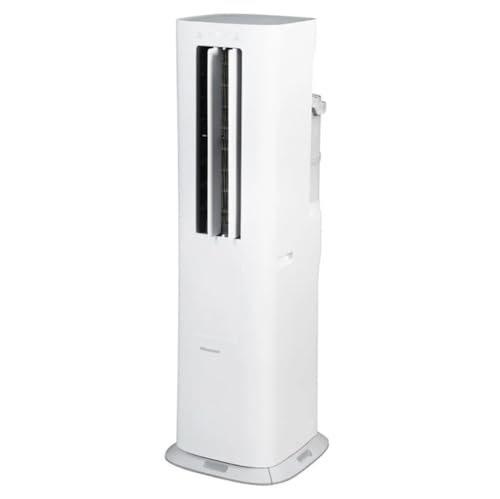
8000 BTU Dual Hose Portable Air Conditioner
Everything you need to know about dual hose portable cooling systems at the 8,000 BTU capacity level — how they work, where they perform best, and what to evaluate before choosing one.
Why this page exists: If you have already decided that a portable air conditioner fits your situation, this guide focuses on one specific configuration — the 8000 BTU dual hose model. You will learn how dual hose operation differs from single hose designs, which room sizes match this capacity, and the practical factors that separate a satisfying purchase from a frustrating one.
What Is an 8000 BTU Dual Hose Portable Air Conditioner?
A portable air conditioner rated at 8000 BTU is a floor-standing cooling unit designed to condition a single room without permanent installation. The dual hose designation refers to the venting system: instead of one hose, the unit uses two — an intake hose that draws outdoor air across the condenser coil, and an exhaust hose that expels heated air back outside.
This arrangement matters more than it may first appear. A single hose unit pulls air from inside the room to cool its condenser, then exhausts that air outdoors. The result is negative pressure: air that was already cooled is pushed out of the room, and warm outdoor air is drawn in through gaps around doors and windows. A dual hose system largely avoids this problem because the condenser circuit is fed by outside air rather than conditioned indoor air.
For a room in the 300 to 400 square foot range, an 8000 BTU dual hose portable air conditioner represents a common mid-range configuration. It sits above the smallest entry-level portable units and below the larger high-capacity models, making it a balanced option for bedrooms, home offices, and small living areas where window units are not practical. If you are still comparing capacities, the broader 8000 BTU portable air conditioner overview and the room size guide for 8,000 BTU portable units provide additional context.
How Dual Hose Portable AC Systems Work
Understanding the airflow path helps explain why dual hose units behave differently from single hose models, especially in terms of cooling consistency and indoor air pressure.
- Intake hose: Outdoor air is drawn in and passed over the condenser coil, absorbing heat from the refrigerant.
- Exhaust hose: The warmed air is expelled outdoors through a second hose, completing the condenser loop.
- Evaporator loop: Separately, indoor air is pulled across the evaporator coil, cooled, and returned to the room.
- Condensate handling: Moisture removed from indoor air is collected or evaporated depending on the unit's design.
Because the condenser loop is isolated from the room, the unit does not continuously push conditioned air outside. This is the core advantage of dual hose operation, and it is why dual hose systems are often described as more efficient in practice than their single hose counterparts of the same rated capacity.
Venting still requires access to the outdoors. Most units ship with a window kit, and the hoses connect to a sliding panel that seals the window opening. For installations where the standard kit does not fit, accessories such as a 6-inch wall vent for portable air conditioners or a 6-inch exhaust hose are commonly used. Hose length and routing also matter — a 6-inch flex duct or 6-inch flexible ductwork setup can help manage awkward window placements, though longer runs reduce efficiency.
Dual Hose vs Single Hose: What Actually Changes
Dual Hose Systems
- Condenser is cooled by outdoor air
- Reduces negative pressure in the room
- More consistent cooling across the space
- Less warm outdoor air infiltration through gaps
- Two hoses require more window space and routing
- Generally positioned at the mid-range and above in the portable category
Single Hose Systems
- Condenser is cooled by room air
- Creates negative pressure indoors
- Cooled air is partially lost to the outdoors
- Warm air seeps in around doors and windows
- Simpler venting with one hose
- Often entry-level in the portable category
The practical takeaway is that dual hose operation tends to deliver more predictable results in rooms that are reasonably sealed. If your space has many openings, poor door seals, or shared walls with warmer rooms, the difference between the two designs becomes more noticeable. If you are comparing models across brands, the dual hose portable air conditioner reference covers the category in more detail.
Room Sizing: Where 8000 BTU Fits
The commonly cited sizing range for an 8000 BTU portable unit is roughly 300 to 400 square feet. This is a starting point, not a rule. Several factors shift the effective capacity requirement up or down:
| Factor | Effect on Sizing | Practical Consideration |
|---|---|---|
| Ceiling height | Higher ceilings increase the volume to cool | Standard 8 ft ceilings are assumed; taller rooms may need more capacity |
| Sun exposure | South- or west-facing rooms gain more heat | Afternoon sun can push a room toward the upper end of the range |
| Window area and glazing | Large or single-pane windows increase heat gain | Consider shading or tinting before upsizing the unit |
| Occupancy | More people add sensible and latent load | Bedrooms and offices usually have low, stable occupancy |
| Kitchen or heat-producing appliances | Adds load beyond typical living space | Portable units in kitchens generally need extra capacity |
| Insulation quality | Poor insulation increases effective load | Older homes may benefit from the upper end of the range |
If your room is at the edge of the range, consider whether the unit will run continuously during peak hours. A slightly oversized unit in a well-sealed room will cycle on and off; an undersized unit will run nonstop and may never reach the set temperature. For a deeper breakdown, the 8000 BTU air conditioner room size guide walks through the calculation in more detail.
Efficiency Factors Specific to Portable Units
Portable air conditioners are rated differently from central systems and window units. The efficiency metric most commonly cited for portable units is CEER, though many listings still reference EER. For an 8000 BTU dual hose model, the practical efficiency picture depends on several interacting factors:
Hose Sealing
Gaps around the window kit panel allow warm air in. Sealing the panel edges and hose connections has a measurable effect on delivered cooling.
Hose Length and Routing
Shorter, straighter hose runs reduce static pressure and improve airflow. Avoid kinks and unnecessary extensions.
Compressor Type
Inverter-driven compressors modulate speed and maintain temperature more steadily than fixed-speed compressors, which cycle on and off.
Condensate Handling
Self-evaporative systems reduce manual draining, but very humid climates may still require periodic drainage.
Filter Maintenance
Clogged filters restrict airflow and force the compressor to work harder. Washable filters should be cleaned every two to four weeks during heavy use.
Thermostat Accuracy
Units with precise thermostats and programmable timers avoid unnecessary runtime. Smart controls add convenience but do not replace proper sizing.
If energy performance is a priority, models carrying the ENERGY STAR designation for 8000 BTU units are worth prioritizing. The rating reflects verified efficiency thresholds rather than marketing claims.
Features Worth Evaluating Before You Choose
Within the 8000 BTU dual hose category, models differentiate themselves on a handful of practical features. The table below groups them by tier so you can match expectations to position in the market.
| Tier | Typical Feature Set | Best For |
|---|---|---|
| Entry-Level | Basic mechanical controls, single fan speed, manual drain, standard window kit | Occasional use in a bedroom or guest room |
| Mid-Range | Digital controls, remote, programmable timer, multiple fan speeds, self-evaporative condensate handling | Daily use in a home office or primary bedroom |
| Premium | Inverter compressor, Wi-Fi or app control, precise thermostat, quieter operation, improved filtration | Long-duration use where comfort and noise matter |
Dehumidification mode is another feature to check. A portable AC in dehumidify mode runs the compressor without the cooling fan at full speed, which is useful in humid shoulder seasons. Models with a dedicated dehumidifier function often perform better in this role — the 8000 BTU portable AC with dehumidifier overview covers this configuration. Noise level is also worth noting: dual hose units have two airflow paths, so fan noise can be slightly higher than single hose designs at the same speed setting. Premium models address this with insulated hoses and vibration-dampened compressors.
Installation and Placement Best Practices
A dual hose portable air conditioner is not difficult to set up, but placement decisions affect performance more than most buyers expect.
- Choose a window with a stable sill. The window kit panel needs to sit securely, and the hoses should not bear weight or kink.
- Keep the unit level. Most portable ACs require a level surface for the condensate system to function correctly.
- Maintain clearance around the unit. Leave at least 12 to 18 inches of space in front of the discharge and behind the intake.
- Avoid direct sunlight on the unit. A unit placed in direct sun works harder and may underperform its rating.
- Seal the window panel. Foam insulation or weatherstripping around the kit reduces warm air infiltration.
- Route hoses with gentle curves. Sharp bends increase static pressure and reduce cooling output.
If your window configuration is unusual, a universal window seal kit can adapt the vent panel to sliding, casement, or awning windows. The setup is reversible, which is one of the practical advantages of portable units for renters and temporary spaces.
Maintenance Routine for Long-Term Performance
Portable air conditioners benefit from a simple, consistent maintenance routine. The tasks below take only a few minutes each and prevent the most common performance complaints.
- Clean or replace the filter every two to four weeks during heavy use. Most units have a washable mesh filter.
- Drain the condensate tank according to the unit's indicator. Self-evaporative models still need periodic draining in humid conditions.
- Inspect the hoses for cracks, kinks, or loose connections at the start of each cooling season.
- Clean the exterior and air intake grille with a soft brush or vacuum to remove dust buildup.
- Store the unit upright during the off-season, and cover it to prevent dust ingress.
These steps are consistent with the general guidance in the portable AC maintenance section of this site and apply across capacity levels and brands.
Common Mistakes to Avoid
- Using a dual hose unit in a room that is too large. An 8000 BTU model in a 600 square foot space will run continuously and may never satisfy the thermostat.
- Ignoring window sealing. A poorly sealed window kit can negate the advantage of dual hose operation.
- Placing the unit where the exhaust recirculates. If the exhaust hose discharges near the intake hose, hot air is drawn back into the condenser loop.
- Skipping filter cleaning. Restricted airflow is the most common cause of reduced cooling output in portable units.
- Expecting multi-room cooling. Portable units are single-space appliances; moving one between rooms or expecting it to cool through open doorways leads to disappointment.
- Overlooking noise expectations. Dual hose units move air through two paths; if quiet operation is a priority, check decibel ratings and consider a premium model.
Who Should Choose an 8000 BTU Dual Hose Portable AC?
This configuration is a strong fit for specific situations and a weaker fit for others. The table below summarizes the match.
| Situation | Fit | Reason |
|---|---|---|
| Renters who cannot install window or central units | Strong fit | Reversible installation, no permanent modification |
| Bedrooms and home offices of 300–400 sq ft | Strong fit | Capacity aligns with typical room volume |
| Homes with sliding or casement windows | Good fit with adapter | Window kits and universal seals accommodate most window types |
| Rooms with many open doorways | Weak fit | Cooled air escapes; dual hose cannot compensate for an open floor plan |
| Whole-home cooling | Not suitable | Portable units are single-space appliances |
| Spaces larger than 400 sq ft | Not suitable at this capacity | Consider a higher BTU model or a different AC type |
Frequently Asked Questions
What room size is an 8000 BTU dual hose portable air conditioner suitable for?
An 8000 BTU dual hose portable air conditioner is generally suitable for rooms between 300 and 400 square feet under average conditions. Room layout, sun exposure, ceiling height, and occupancy all influence the final sizing decision. Rooms with large windows or poor insulation may need the upper end of the range or a slightly larger unit.
Is a dual hose portable AC better than a single hose unit?
A dual hose system draws in outside air to cool the condenser and exhausts hot air separately, which reduces negative pressure in the room. This typically results in more consistent cooling performance compared to single hose units of the same capacity, because conditioned indoor air is not continuously pushed outdoors.
Do dual hose portable air conditioners need to be vented outdoors?
Yes. Both hoses must be routed through a window or wall vent kit. The intake hose pulls outdoor air across the condenser, while the exhaust hose expels hot air. Proper venting is essential for safe and efficient operation; running the unit without venting will not cool the room effectively.
Can an 8000 BTU dual hose portable AC cool multiple rooms?
Portable air conditioners are designed to cool a single open space. Using one unit to cool multiple rooms through doorways is inefficient because cooled air mixes with warm air and the unit works harder without delivering consistent comfort. For multi-room cooling, consider a ductless mini-split system or central air.
How often should the filter be cleaned?
During heavy use, clean or replace the filter every two to four weeks. A clogged filter restricts airflow, reduces cooling output, and forces the compressor to run longer. Most portable units use a washable mesh filter that can be rinsed and dried before reinstalling.
Final Thoughts
An 8000 BTU dual hose portable air conditioner is a practical, renter-friendly solution for rooms in the 300 to 400 square foot range. The dual hose design reduces the pressure imbalance that affects single hose units, which generally translates to more consistent comfort in a reasonably sealed room. The key decision points are room size, window suitability, and the feature tier that matches your usage pattern. If you are comparing this configuration against other capacities, the 8000 BTU portable air conditioner guide provides a broader view, and the room size reference helps confirm whether this capacity is the right match for your space.