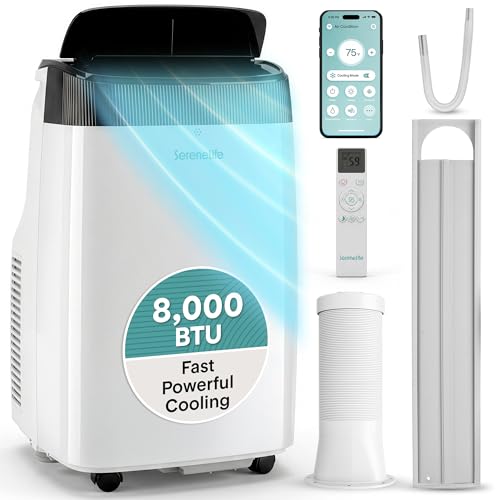
8000 BTU Portable Air Conditioner with Dehumidifier
An 8000 BTU portable air conditioner with dehumidifier is a versatile climate solution for mid-sized rooms. This guide explains how the cooling and moisture-removal functions work together, how to match the unit to your space, and what to check before you bring one home.
What You'll Find in This Guide
- What an 8000 BTU Portable AC with Dehumidifier Is
- How Cooling and Dehumidifying Work Together
- Room Sizing: How Much Space Can 8000 BTU Handle?
- The Dehumidifier Function Explained
- Key Features to Evaluate
- Market Tiers and What to Expect
- Installation and Placement Tips
- Maintenance for Long-Term Performance
- Frequently Asked Questions
What an 8000 BTU Portable AC with Dehumidifier Is
A portable air conditioner with 8000 BTU of cooling capacity and a built-in dehumidifier combines two functions in a single floor-standing unit. It cools the air, removes excess moisture, and distributes conditioned air through adjustable louvers—all without permanent installation or ductwork. The unit rolls from room to room on casters, making it a practical choice for renters, home offices, and spaces where a window AC or ductless mini-split is not feasible.
The 8000 BTU rating places this class of portable AC in the mid-capacity range. It is designed for rooms where a smaller 6000 BTU portable air conditioner would struggle, but a full-size 12,000–14,000 BTU unit would be oversized. The integrated dehumidifier adds value in humid climates, basements, and coastal areas where cooling alone does not solve the comfort problem.
Most units in this category require a window vent kit for exhaust. The hot air collected from the room must be expelled outdoors, and the dehumidifier function produces condensate that collects in a tank or drains through a hose. Understanding these two outputs—exhaust air and water—is the key to using the unit effectively.
How Cooling and Dehumidifying Work Together
A portable AC with dehumidifier uses the same refrigeration cycle as any air conditioner. Refrigerant circulates through an evaporator coil and a condenser coil. Warm, humid room air is drawn across the cold evaporator coil; the air cools down, and moisture in the air condenses on the coil. That condensate drips into a collection tray or drain pan. The cooled, drier air is then blown back into the room.
The heat absorbed from the room—plus the heat generated by the compressor—is transferred to the condenser coil and exhausted outdoors through the vent hose. This is why the exhaust hose must always be connected and vented outside; without it, the unit would heat the room as much as it cools it.
Cooling Mode vs. Dehumidify Mode
Most 8000 BTU portable AC units with dehumidifier offer separate operating modes:
- Cool mode: The compressor and fan run to lower room temperature. Moisture removal happens as a by-product of cooling.
- Dehumidify (Dry) mode: The unit prioritizes moisture removal. The fan may run at a lower speed, and the compressor cycles to condense water without aggressively chilling the room. This mode is useful during mild, humid weather when full cooling is unnecessary.
- Fan-only mode: Air circulates without cooling or dehumidifying—handy for air movement between cooling cycles.
Why the Combination Matters
Humidity amplifies the perception of heat. A room at 78°F with 70% relative humidity feels far less comfortable than the same room at 50% humidity. By removing moisture while cooling, an 8000 BTU portable AC with dehumidifier addresses both temperature and moisture, which is especially valuable in basement spaces and bedrooms where damp air disrupts sleep.
Practical note: A portable AC's dehumidifying capacity is usually rated in pints per day. Many 8000 BTU models remove roughly 40–60 pints per day in dehumidify mode. The exact figure depends on ambient humidity, room temperature, and fan speed.
Room Sizing: How Much Space Can 8000 BTU Handle?
As a general rule, an 8000 BTU portable air conditioner with dehumidifier cools rooms in the 250–350 square foot range. However, square footage alone is an incomplete measure. Several factors shift the effective cooling load:
| Factor | Effect on Cooling Load |
|---|---|
| Ceiling height above 8 ft | Increases the air volume the unit must condition; may reduce effective coverage area. |
| Large windows or direct sun exposure | Solar gain raises the load; a unit may need to run longer to hold the set temperature. |
| Poor insulation or older windows | Heat infiltration increases; the unit may feel underpowered in a room it would otherwise handle. |
| Kitchen or home office with heat-generating equipment | Appliances and electronics add sensible heat; consider the upper end of the range or a larger unit. |
| Multiple occupants | Each person contributes body heat; a crowded room demands more capacity. |
| High ambient humidity | The dehumidifier function works harder; expect longer run times to reach comfortable conditions. |
For a standard 8-foot ceiling with average insulation and moderate sun exposure, 250–300 square feet is a comfortable target for an 8000 BTU portable unit. For rooms closer to 350 square feet with challenging conditions, a dual-hose 8000 BTU portable air conditioner may perform better because it maintains pressure balance and avoids pulling warm outside air through gaps.
If your room is smaller—say 150–250 square feet—a 7000 BTU portable air conditioner or a 6000 BTU portable unit may be sufficient. Oversizing a portable AC is not as harmful as oversizing a central system, but it can lead to short cycling and inefficient moisture removal. Matching capacity to the room is the better approach.
Sizing shortcut: Multiply room length by width to get square footage. For sun-exposed or heavily occupied rooms, add 10–20% to the effective area. Compare the result against the unit's rated coverage.
The Dehumidifier Function Explained
The dehumidifier in a portable AC is not a separate appliance—it is a mode of operation that leverages the same evaporator coil. When humid air passes over the cold coil, water vapor condenses. The more air the unit processes and the colder the coil, the more moisture it extracts. This is why dehumidifying performance is tied to airflow and compressor operation.
Condensate Management
Water collected during cooling and dehumidifying must go somewhere. Portable units handle condensate in one of three ways:
- Manual tank: A removable tank collects water and must be emptied when full. Most units have an auto-shutoff to prevent overflow.
- Continuous drain: A hose connects to a drain port and routes water to a floor drain, condensate pump, or outdoors. This is the preferred setup for long dehumidifying sessions.
- Self-evaporative system: Some units use the condenser fan to evaporate a portion of the condensate and exhaust it with the hot air, reducing how often the tank needs emptying. Even self-evaporative models may need drainage in high-humidity conditions.
When Dehumidify Mode Is Most Useful
Dehumidify mode shines in shoulder seasons—spring and early fall—when temperatures are moderate but humidity is high. Running full cooling in those conditions can make the room uncomfortably cold before moisture levels drop. Using the dry mode removes moisture with less temperature drop, improving comfort without over-chilling the space. It is also useful in basements and laundry areas where dampness is a persistent issue.
For households dealing with significant moisture, pairing a portable AC with a dedicated 8000 BTU portable air conditioner review of drainage options is worthwhile—continuous drain capability makes a meaningful difference in daily usability.
Key Features to Evaluate
Not all 8000 BTU portable AC units with dehumidifier are built the same. The features below separate entry-level units from mid-range and premium models.
Hose Configuration
Single-hose units are simpler and lighter. Dual-hose units (like an 8000 BTU portable air conditioner dual hose) draw condenser air from outside, improving cooling efficiency and reducing negative pressure.
Dehumidify Capacity
Look for the pints-per-day rating. Higher capacity means faster moisture removal, but it also means more frequent tank emptying unless continuous drain is used.
Drainage Options
Continuous drain ports are a major convenience. Self-evaporative designs reduce maintenance but are not a substitute for a drain hose in very humid conditions.
Noise Level
Portable ACs are louder than window units because the compressor and fans sit in the room. Decibel ratings in the low-to-mid 50s are typical; quieter units command a premium.
Smart Controls
Wi-Fi, app scheduling, and voice assistant compatibility are increasingly common. These features help automate run times and improve energy management.
Window Kit Quality
The window adapter and hose connection determine how much hot air leaks back in. A well-sealed kit—or an airlock universal window seal—improves performance noticeably.
Mobility and Footprint
Casters, side handles, and a compact footprint matter in tight rooms. Check the unit's dimensions against the space you plan to place it.
Exhaust Hose Compatibility
If you need a longer run or a replacement, confirm the hose diameter—many units use a 6-inch exhaust hose for portable air conditioner setups. A 6-inch wall vent is an alternative for permanent venting.
Timer and Sleep Mode
Programmable timers let you run the unit during off-peak hours or cool a bedroom before sleep. Sleep mode typically reduces fan speed and adjusts temperature gradually, which also lowers noise. These features are standard on mid-range units and above.
Filter and Air Quality
Most portable ACs include a washable dust filter. Some add carbon or HEPA-style filtration. If air quality is a priority, look for models with multi-stage filtration—and remember that filters need regular cleaning to maintain airflow.
Market Tiers and What to Expect
The 8000 BTU portable AC with dehumidifier category spans several market tiers. The table below uses neutral tier descriptors to set expectations without referencing specific figures.
| Tier | Typical Characteristics | Best For |
|---|---|---|
| Entry-level | Single-hose design, manual controls or basic digital panel, washable filter, manual tank drainage, higher noise levels. | Occasional use, small rooms, short cooling sessions. |
| Mid-range | Single or dual-hose options, digital thermostat, remote control, sleep mode, continuous drain port, moderate noise. | Regular use in bedrooms, home offices, and apartments. |
| High-end tier | Dual-hose design, lower noise operation, smart connectivity, advanced filtration, self-evaporative system, precise humidity control. | Daily use, humid climates, users who want automation and quieter operation. |
| Premium | Flagship-tier build quality, high-grade components, refined controls, best-in-class dehumidifying performance, comprehensive warranty support. | Long-term primary cooling in spaces without ductwork; buyers prioritizing durability and low maintenance. |
Across tiers, the core cooling physics remain the same. Higher tiers improve efficiency, reduce noise, and add convenience features—not raw BTU output. A well-specified mid-range 8000 BTU portable AC with dehumidifier often delivers the best balance of performance and usability for typical households. If the unit will serve as the primary cooling source for a room, moving up a tier is a worthwhile investment in comfort and longevity.
For comparisons across capacities, the 8000 BTU unit overview and the 8000 BTU portable AC room size guide provide additional context on how this class fits into the broader portable AC market.
Installation and Placement Tips
Proper installation directly affects cooling and dehumidifying performance. Follow these guidelines:
Window Venting
The exhaust hose must vent outdoors. Use the included window kit to seal the opening around the hose. Gaps allow hot outside air to re-enter, undermining the unit's work. If the window kit does not fit your window style, an adjustable window seal can close the gap. For permanent setups, a 6-inch wall vent for portable air conditioner installations is an option, though it requires cutting into the wall.
Placement Within the Room
- Keep at least 12–18 inches of clearance around the unit for airflow.
- Avoid placing the unit in direct sunlight; solar gain can skew the thermostat reading.
- Position the exhaust hose as short and straight as possible. Long, kinked hoses reduce efficiency.
- Keep the unit away from heat sources such as ovens, radiators, or direct sun through unshaded glass.
Electrical Considerations
Portable ACs draw significant current during compressor startup. Plug the unit into a dedicated outlet that matches the unit's voltage requirement—typically 115V in the United States. Avoid extension cords, and never share a circuit with other high-draw appliances. If you are unsure about your circuit capacity, consult a qualified electrician.
Drainage Setup
For extended dehumidifying, connect a drain hose to the continuous drain port and route it to a suitable drain. Ensure the hose slopes downward continuously; a flat or uphill run will cause water to back up into the tank or unit. If using the tank, empty it before it reaches the full line to avoid auto-shutoff interruptions.
Sealing matters: A well-sealed window kit can improve cooling performance more than a higher BTU rating. Check the kit's fit and add weatherstripping or a universal seal if needed.
Maintenance for Long-Term Performance
Portable ACs with dehumidifiers require routine maintenance to sustain cooling and moisture removal. Neglected filters and coils reduce airflow, which in turn reduces dehumidifying effectiveness.
Filter Cleaning
Clean the washable filter every two weeks during heavy use, or more often in dusty environments. A clogged filter forces the fan to work harder, lowers cooling output, and can cause the evaporator coil to freeze. Most filters can be rinsed with lukewarm water and allowed to dry completely before reinstalling. For filter replacement timing, see when to replace AC filter.
Coil and Exterior Cleaning
Wipe down the exterior and vacuum the intake grille periodically. The evaporator coil behind the filter can accumulate dust over time; gentle cleaning with a soft brush or coil cleaner helps maintain heat exchange. If you notice reduced cooling or icing, inspect the coil and airflow path.
Tank and Drain Maintenance
Empty and rinse the condensate tank regularly to prevent mold and odors. If using continuous drainage, check the hose for kinks and ensure the drain port is clear. Standing water in a warm environment can become a breeding ground for bacteria—clean the tank with mild soap and water monthly.
Seasonal Storage
Before storing the unit for the off-season, drain all water, clean the filter, and run the fan-only mode for a short period to dry internal components. Store the unit upright in a dry location. Coil the hose loosely to avoid cracks.
If the unit stops cooling or dehumidifying effectively despite maintenance, refer to troubleshooting guidance such as AC not cooling solutions before assuming the unit needs replacement.
Frequently Asked Questions
What size room can an 8000 BTU portable air conditioner with dehumidifier cool?
An 8000 BTU portable air conditioner with dehumidifier typically cools rooms between 250 and 350 square feet, depending on ceiling height, insulation, sun exposure, and the number of occupants or heat-generating appliances.
How many pints of moisture can an 8000 BTU portable AC remove per day?
Most 8000 BTU portable AC units with a dehumidifier mode remove roughly 40 to 60 pints of moisture per day under typical conditions, depending on ambient humidity and operating mode.
Does a portable air conditioner with dehumidifier need a window vent?
Yes. Portable air conditioners exhaust hot air through a hose that must be vented out a window or through a wall opening. The dehumidifier function also relies on the same exhaust setup to remove heat.
Can an 8000 BTU portable AC with dehumidifier run continuously?
Most units are designed for extended operation, but the condensate tank or drain hose must be managed to prevent overflow. Many models offer continuous drainage via a hose connection for uninterrupted dehumidifying.
Is a single-hose or dual-hose 8000 BTU portable AC better for dehumidifying?
Dual-hose models generally maintain better pressure balance and cooling efficiency because they draw in outside air for condenser cooling and exhaust it separately. Single-hose units are simpler but can create slight negative pressure that pulls in warm air from adjacent spaces.
Ready to Choose an 8000 BTU Portable AC with Dehumidifier?
Now that you understand sizing, dehumidifying performance, and key features, you can evaluate options with confidence. Explore recommended models below and compare what each tier offers for your space.
Explore Recommended Models