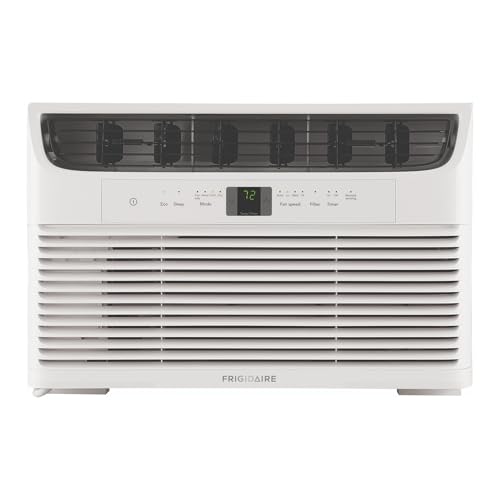
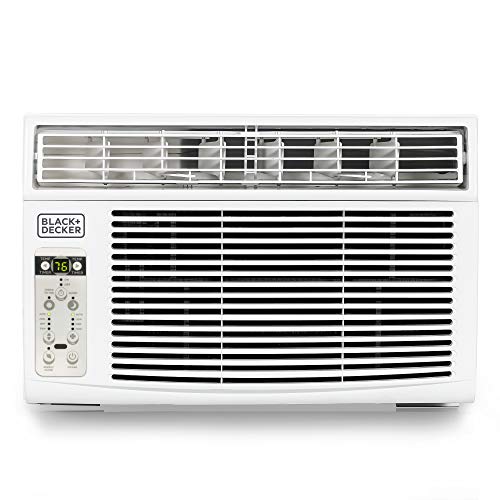
8000 BTU Air Conditioner: The Complete Buyer's Guide
Everything you need to know about 8000 BTU AC units — cooling area, unit types, efficiency ratings, installation considerations, and how to choose the right model for bedrooms, living rooms, and home offices.
View Recommended UnitsQuick answer: An 8000 BTU air conditioner is the sweet spot for medium-sized rooms of roughly 300 to 350 square feet. It is powerful enough for most bedrooms, small living rooms, and home offices, yet still runs on a standard 115V household circuit. This guide explains exactly when an 8000 BTU unit is the right fit, which type suits your home, and what to look for before you buy.
What Does 8000 BTU Mean?
BTU stands for British Thermal Unit, and it measures how much heat an air conditioner can remove from a room in one hour. An 8000 BTU unit removes 8,000 BTUs of heat per hour, which translates to reliable cooling for a medium-sized space. Understanding this number is the foundation of choosing the right AC, because a unit that is too small will run constantly without reaching the set temperature, while an oversized unit will short-cycle and leave the room feeling clammy.
If you are still working out the right capacity for your space, start with our detailed guide on 8000 BTU air conditioner room size to match capacity to square footage, ceiling height, and heat load. For a broader overview of how capacity and room dimensions interact, see our 9000 BTU cooling area reference, which is useful when your room sits at the upper edge of the 8000 BTU range.
Room Size and 8000 BTU: Is It the Right Match?
As a general rule, 8000 BTU is the right capacity for rooms between 300 and 350 square feet under normal conditions. Use the table below as a starting point, then adjust upward for large windows, direct sun exposure, high ceilings, or multiple occupants.
| Room Type | Typical Size | 8000 BTU Suitability | Notes |
|---|---|---|---|
| Small bedroom | 100 – 200 sq ft | Comfortable, may cycle | Consider a 6000 BTU unit if the room is well insulated and shaded |
| Standard bedroom | 200 – 300 sq ft | Excellent match | Ideal fit for most primary bedrooms |
| Large bedroom / small living room | 300 – 350 sq ft | Good match | Choose a higher SEER model if sun exposure is strong |
| Open-plan living area | 350+ sq ft | Underpowered | Step up to a 12,000 BTU unit or a mini-split system |
| Home office | 150 – 250 sq ft | Strong match | Inverter models are quieter for calls and video meetings |
If your room is closer to 250 square feet, you may also want to compare with our 8000 BTU window air conditioner room size breakdown, which factors in window orientation and wall insulation more precisely.
8000 BTU AC Types: Window, Portable, and Mini-Split
Not every 8000 BTU unit is built the same. The three main form factors differ in installation effort, efficiency, noise level, and how well they fit different homes. Use the comparison below to narrow down which type matches your situation.
| Type | Best For | Installation | Efficiency | Noise Level |
|---|---|---|---|---|
| Window AC | Renters and homeowners with a suitable double-hung window | DIY-friendly | Highest in its class | Moderate |
| Portable AC | Rooms with casement windows or no permanent window space | Minimal, needs hose venting | Lower than window units | Moderate to high |
| Mini-Split | Homeowners who want quiet, efficient, permanent cooling | Professional installation | Highest overall | Very low indoors |
8000 BTU Window Air Conditioners
Window units are the most straightforward way to add 8000 BTU of cooling. They sit in a double-hung window opening, vent heat directly outside, and typically plug into a standard 115V outlet. They are the most efficient option at this capacity because there is no duct or hose heat loss. If you prefer a window-mounted solution with a heat pump for shoulder seasons, see our 8000 BTU window air conditioner with heat guide. For narrow window frames, the 8000 BTU air conditioner for small window article covers compact chassis options.
8000 BTU Portable Air Conditioners
Portable units are the right answer when a window unit is not practical — for example, in apartments with casement windows or rooms that need flexible cooling. Keep in mind that portable units exhaust hot air through a hose, and single-hose models create negative pressure that pulls warm air back into the room. Dual-hose models solve this problem and are the better choice. Compare both approaches in our 8000 BTU portable air conditioner overview and the dedicated 8000 BTU dual hose portable air conditioner guide. If humidity is a concern in your space, see the 8000 BTU portable air conditioner with dehumidifier breakdown.
8000 BTU Mini-Split Systems
Mini-splits are the premium option at this capacity. They are quiet indoors, highly efficient, and do not block a window. The trade-off is that they require professional installation and a dedicated wall or ceiling location for the indoor head. If you are considering this route, explore our full 9000 BTU mini-split guide for context, since mini-split capacity is usually sold in 9000 BTU steps. For a smaller, lower-capacity ductless option, the 6000 BTU mini-split guide is a useful reference.
Efficiency Ratings to Look For
At 8000 BTU, efficiency matters because these units often run for many hours a day during summer. Look at the SEER2 rating on the unit's yellow energy label. For window units, a SEER2 of 15 or higher is a solid benchmark. For mini-splits, aim for 16 or higher. Units that carry the ENERGY STAR label meet or exceed these thresholds and often qualify for utility rebates.
If efficiency is a top priority, our guide to the 8000 BTU air conditioner ENERGY STAR models explains how the certification is calculated and which features make the biggest difference in real-world use. For context on how these ratings compare across the market, see our broader 8000 BTU unit reference page.
Efficiency checklist for 8000 BTU units
- Look for SEER2 of 15+ on window units and 16+ on mini-splits
- Prefer inverter-driven compressors for quieter, more stable cooling
- Check whether the unit qualifies for local utility rebates
- Confirm the unit is sized correctly — oversizing wastes energy
- Use a programmable or smart thermostat to reduce runtime when the room is empty
Entry-Level, Mid-Range, and Premium: Which Tier Fits You?
Within the 8000 BTU category, units are often grouped by build quality, feature set, and efficiency. Rather than comparing specific figures, it helps to understand what each tier typically delivers so you can match the unit to how you plan to use it.
Essential Tier
Simple mechanical controls, basic filtration, and a single-speed compressor. A solid choice for guest rooms, seasonal use, or a secondary space where the unit runs only part of the day.
Balanced Tier
Digital controls, a remote, sleep mode, and often a higher SEER2 rating. This is the most common tier for primary bedrooms and home offices where daily comfort matters.
High-End Tier
Inverter compressors, Wi-Fi or smart-home control, quieter operation, and advanced air filtration. Best for homeowners who want long-term efficiency and minimal noise.
In practical terms, a mid-range 8000 BTU unit usually offers a smoother cooling cycle and better humidity control than an entry-level model, while a high-end tier unit adds the quietest operation and the most efficient compressor. Choose the tier that matches how often the room is occupied, not just the room size.
Installation and Electrical Considerations
Most 8000 BTU window and portable units are designed for a standard 115V, 15-amp household circuit and draw roughly 6 to 8 amps. That makes them convenient for older homes, but you should still confirm the amperage on the unit's specification label and make sure the outlet is not shared with other high-draw appliances.
For window units, check that the window frame can support the unit's weight and that the unit has a slight outward tilt for drainage. For portable units, plan where the exhaust hose will vent — a window kit or a dedicated wall vent both work, and accessories like a 6-inch wall vent for portable air conditioner can simplify a permanent setup. For mini-splits, installation should always be handled by a licensed HVAC technician, and you can review our guidance on installation considerations for a clearer picture of the process.
If you are comparing a window unit against a through-the-wall solution, the 8000 BTU through-the-wall air conditioner with heat guide covers the wall-sleeve installation path in detail.
Smart Features Worth Considering
At the 8000 BTU level, smart features are increasingly common and genuinely useful. Wi-Fi control lets you cool a bedroom before you arrive home, while scheduling and geofencing reduce wasted runtime. A quiet mode or eco mode is valuable in bedrooms and home offices where noise is a concern. If you are shopping for a compact, high-efficiency window unit with modern controls, our overview of the 8300 BTU quiet eco smart window air conditioner shows what to expect from this feature set. For a dual-inverter alternative, see the 9500 BTU dual inverter smart window air conditioner guide.
Keeping Your 8000 BTU Unit Running Efficiently
Regular maintenance is the simplest way to protect cooling performance and efficiency. Clean or replace the air filter every two to four weeks during heavy use, and rinse the filter with lukewarm water if it is washable. Keep the outdoor side of a window unit clear of debris, and check that the unit is still level and draining properly. For portable units, empty the condensate tank regularly and inspect the exhaust hose for kinks. For mini-splits, schedule a professional cleaning of the indoor coil and blower at least once a year.
If you notice the unit running constantly without reaching the set temperature, the cause is often a dirty filter, a blocked vent, or an undersized unit for the room. Start with the filter, then reassess the capacity using the room-size guidance above.
Frequently Asked Questions
What size room does an 8000 BTU air conditioner cool?
An 8000 BTU air conditioner is typically designed for rooms between 300 and 350 square feet, depending on ceiling height, insulation quality, window exposure, and the number of occupants or heat-generating appliances in the space.
Is an 8000 BTU AC enough for a bedroom?
Yes, for most standard bedrooms under 350 square feet an 8000 BTU unit is sufficient. Bedrooms with large south-facing windows, poor insulation, or an attached bathroom may need a slightly higher capacity to maintain consistent comfort.
What is the difference between 8000 BTU window, portable, and mini-split ACs?
Window units mount in a window opening and are the most efficient in their class. Portable units roll between rooms but need exhaust hose venting and are less efficient. Mini-split systems are ductless, quieter, and more efficient but require professional installation.
How many amps does an 8000 BTU air conditioner use?
Most 8000 BTU window and portable units draw between 6 and 8 amps on a 115V circuit, which is why they can typically run on a standard 15-amp household outlet. Always confirm the electrical rating on the unit's specification label before installation.
Does an 8000 BTU AC use a lot of electricity?
An 8000 BTU unit typically consumes around 700 to 900 watts per hour. Inverter-driven models and units with higher SEER ratings modulate compressor speed and use noticeably less energy over a cooling season than single-stage models.
Can an 8000 BTU air conditioner be used in a garage or sunroom?
It can, but garages and sunrooms usually have weaker insulation and higher heat gain, so an 8000 BTU unit may struggle in these spaces. A higher capacity or a dedicated ductless system is often a better match for unconditioned rooms.
What SEER rating should I look for in an 8000 BTU AC?
Look for a SEER2 rating of at least 15 for window units and 16 or higher for mini-splits to qualify for ENERGY STAR recognition. Higher-rated models are more efficient in the long run and often qualify for utility rebates.
Ready to Choose Your 8000 BTU Unit?
You now know the right room size, the main unit types, and the efficiency benchmarks that matter. The next step is to compare specific models and features. Browse our recommended 8000 BTU air conditioners below to find the unit that fits your space and your priorities.
View Recommended Units