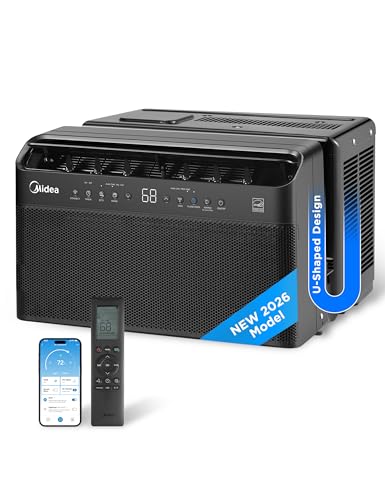
Window AC ENERGY STAR: The Complete Guide to Efficient Window Cooling
Understand what the ENERGY STAR label means for window air conditioners, how efficiency ratings work, and how to choose a model that cools effectively while keeping energy use in check.
Why this matters: A window air conditioner is one of the simplest ways to cool a single room, but efficiency varies widely between models. The ENERGY STAR label is a practical shortcut for buyers who want verified efficiency without decoding every spec sheet. This guide explains the label, the ratings behind it, and how to match an efficient window unit to your room and habits.
What Does the ENERGY STAR Label Mean for Window ACs?
ENERGY STAR is a voluntary efficiency certification backed by the U.S. Environmental Protection Agency. For window air conditioners, certified models must meet a minimum Combined Energy Efficiency Ratio (CEER) that is stricter than the federal minimum. In practice, this means a certified unit delivers more cooling output for each unit of electricity it consumes compared with a standard model of the same capacity.
The certification is not a guarantee of performance in every room, but it is a reliable baseline. Certified window units are independently tested, and the label reflects measured efficiency rather than marketing claims. If you are comparing two units with similar capacity and features, the ENERGY STAR model is typically the more efficient choice within its class.
How Window AC Efficiency Is Measured
Two ratings matter most when evaluating window units:
- EER (Energy Efficiency Ratio): Cooling output in BTU divided by power input in watts at a fixed test condition. Higher is better.
- CEER (Combined Energy Efficiency Ratio): A newer rating that accounts for standby power and part-load operation, giving a more realistic picture of seasonal efficiency. ENERGY STAR window AC thresholds are based on CEER.
Because CEER includes standby and part-load behavior, it is the more useful number for typical household use. A unit with a strong CEER rating will generally use less energy across a cooling season than a unit with a lower rating, even if both have similar BTU capacity.
Matching Capacity to Your Room
Efficiency only helps if the unit is correctly sized. An oversized window AC cools quickly but cycles on and off frequently, which reduces dehumidification and wastes energy. An undersized unit runs continuously and struggles to reach the set temperature. Use the following starting points, then adjust for sun exposure, ceiling height, and occupancy:
- Up to 150 sq ft: 5,000–6,000 BTU
- 150–250 sq ft: 8,000–10,000 BTU
- 250–400 sq ft: 12,000–14,000 BTU
- 400–550 sq ft: 15,000–18,000 BTU
For a deeper walkthrough of sizing math, see our guide on choosing an air conditioner unit for a room. If your unit runs constantly without reaching the set point, review why an air conditioner runs but does not lower temperature before assuming the unit is faulty.
Features That Support Real-World Efficiency
The ENERGY STAR label covers the compressor and overall system efficiency, but several features determine how efficiently a unit performs in daily use:
- Inverter compressor: Varies speed to hold temperature instead of cycling on and off. Often found in premium window units and generally smoother and more efficient in part-load conditions.
- Programmable or smart thermostat control: Scheduling and remote control reduce wasted cooling when rooms are empty. See Wi-Fi air conditioner options for connected models.
- Eco or energy-saver mode: Turns the fan off when the compressor stops, reducing fan energy use.
- Sleep mode: Gradually raises the set temperature overnight, which matches typical sleep comfort and reduces runtime.
- Cleanable filter: A clogged filter reduces airflow and efficiency. Regular cleaning is one of the simplest maintenance habits; see our air conditioner service and maintenance guide.
Window AC Tiers and What to Expect
Window units fall into recognizable tiers. Use these descriptors to set expectations without relying on price figures:
- Essential tier: Basic mechanical controls, fixed-speed compressor, standard efficiency. Suitable for occasional use in small rooms.
- Balanced tier: ENERGY STAR certified, digital controls, programmable timer, and a cleanable filter. A solid choice for regular seasonal use.
- High-end tier: Inverter compressor, Wi-Fi control, eco and sleep modes, quieter operation. Well-specified for bedrooms and home offices where the unit runs for long stretches.
- Top-tier / flagship: Premium build, advanced filtration, and the highest efficiency ratings in the window category. A long-term investment for households that rely on window cooling as a primary solution.
Mid-range models typically offer smoother temperature control than entry-level units, while flagship models add connectivity and filtration. Match the tier to how often the unit will run, not just to the room size.
Installation, Window Fit, and Efficiency
Installation quality directly affects efficiency. Gaps around the unit let hot air in and cool air out, forcing the compressor to work harder. Use the included window kit and insulation panels, and seal any remaining gaps. For non-standard windows, review these related guides:
- Air conditioners that fit in a small window
- Units for windows that open sideways
- Options for sliding windows
- Window brackets without drilling
If a window unit is not feasible, consider air conditioners that do not need a window or cooling options for homes without ductwork.
Keeping an Efficient Window AC Efficient
An ENERGY STAR unit only delivers its rated efficiency when maintained. A short seasonal routine covers most of what matters:
- Clean or replace the filter every two to four weeks during heavy use.
- Check and straighten the outdoor-side fins; bent fins restrict airflow.
- Clear debris from around the exterior of the unit.
- Inspect the window seal each season and re-insulate as needed.
- Schedule a professional tune-up if the unit is several seasons old; see air conditioning unit tune-up.
If the unit stops cooling, stops blowing cold air, or short-cycles, work through the relevant troubleshooting guide before replacing it:
Buying Checklist for an ENERGY STAR Window AC
- Confirm the unit is ENERGY STAR certified and check the CEER rating on the label.
- Match BTU capacity to room size, sun exposure, and ceiling height.
- Measure the window opening and check the included window kit dimensions.
- Decide whether a fixed-speed or inverter compressor suits your usage pattern.
- Check whether you want Wi-Fi control, a programmable timer, or sleep mode.
- Confirm the unit fits your electrical circuit; see air conditioner watts for power guidance.
- Review the warranty terms and filter accessibility before finalizing.
Related Guides
Continue your research with these closely related pages:
- Window AC ENERGY STAR overview
- Window kits for casement windows
- Installing AC in casement windows
- Units for small window openings
- Air conditioner service and repair
- Air conditioner overview
- Air conditioning and cooling basics
- Cooling units for one room
- Units for small apartments
Frequently Asked Questions
Is an ENERGY STAR window AC always more efficient than a non-certified one?
Within the same capacity class, certified units meet a higher minimum CEER than federal standards require, so they are generally more efficient. However, sizing, installation quality, and maintenance still determine real-world performance.
Does a higher CEER rating mean better cooling?
Not directly. CEER measures efficiency, not cooling power. BTU capacity determines cooling output. Look for the right BTU for your room, then compare CEER among units that fit.
Is an inverter window AC worth considering?
Inverter compressors vary speed to hold temperature, which usually means steadier comfort, quieter operation, and better part-load efficiency. They are typically found in high-end tier window units and suit rooms where the AC runs for long periods.
How often should I clean the filter on a window AC?
Every two to four weeks during heavy use, and at least monthly during lighter use. A clogged filter reduces airflow and efficiency and can lead to the unit not cooling to the set temperature.
Can an ENERGY STAR window AC cool a whole house?
No. Window units are designed for single rooms. For whole-home cooling, see air conditioners that cool the whole house or air conditioning units for the home.