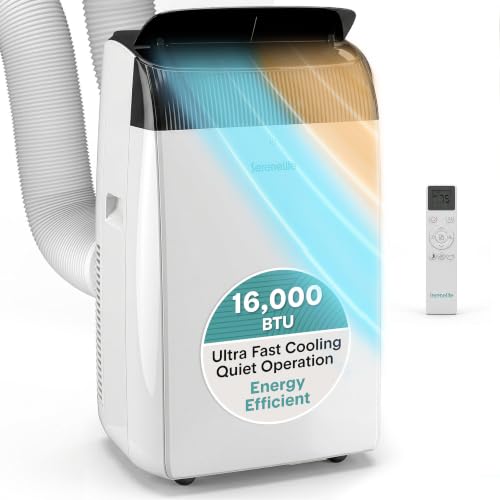
Dual Hose Portable Air Conditioner with Heater: A Complete Buyer's Guide
A dual hose portable air conditioner with heater is a versatile climate control solution that combines cooling, heating, and often dehumidification in a single floor-standing unit. Unlike single hose models, dual hose systems draw in outside air for the condenser and exhaust hot air through a separate hose, creating a balanced pressure that keeps cooling performance steady and prevents hot air from being pulled back into the room.
This guide explains how dual hose heating and cooling units work, which room sizes they suit, how they compare with single hose and mini-split systems, and what to check before you buy. If you are in the research stage and already know you want a portable heating and cooling combo, this page gives you the technical clarity to choose confidently and then explore available options through the product section below.
What This Guide Covers
- How a dual hose portable AC with heater works
- Dual hose vs single hose: performance differences
- Heating mode: what to expect from a portable heat pump
- Sizing guide for cooling and heating capacity
- Efficiency considerations and energy-saving habits
- Installation and window kit requirements
- Features to prioritize by product tier
- Portable dual hose vs mini-split vs window AC
- Maintenance and troubleshooting essentials
- Frequently asked questions
How a Dual Hose Portable Air Conditioner with Heater Works
A dual hose portable unit separates two air paths. The first hose pulls outdoor air across the condenser coil to release heat, and the second hose sends that warmed air back outside. The indoor air is cooled by the evaporator coil and blown back into the room through the front grille. Because intake and exhaust are balanced, the unit does not depressurize the room the way a single hose model does.
In heating mode, the unit reverses the refrigerant cycle using a reversing valve, operating as an air-source heat pump. It extracts heat from outdoor air and releases it indoors. This is most effective in mild to moderate climates. In very cold conditions, heating output drops, and many portable units include a low-ambient lockout to protect the compressor.
Core Components
- Compressor: Moves refrigerant through the sealed system. Rotary compressors are common in portable units for compact size and vibration control.
- Evaporator coil: Absorbs heat from indoor air during cooling and releases heat indoors during heating.
- Condenser coil: Releases heat outdoors in cooling mode and absorbs heat from outdoor air in heating mode.
- Reversing valve: Switches refrigerant flow direction between cooling and heating.
- Dual fans: One for indoor air circulation and one for condenser airflow.
- Condensate management: Many units use self-evaporative technology to reduce manual draining, though humid climates may still require a drain hose.
- Window kit and hoses: Two hoses with a sliding window adapter plate. Proper sealing is critical to performance.
Dual Hose vs Single Hose Portable Air Conditioner
The main difference is air balance. A single hose unit expels indoor air outside to cool the condenser, creating negative pressure. Replacement air leaks in through doors, windows, and gaps, often bringing heat and humidity back into the room. A dual hose unit uses outdoor air for the condenser, so the indoor air stays where it is.
| Factor | Dual Hose Unit | Single Hose Unit |
|---|---|---|
| Room pressure | Balanced, minimal infiltration | Negative pressure, pulls in outside air |
| Cooling consistency | Steady output in sealed rooms | Can fluctuate in leaky or small rooms |
| Setup complexity | Two hoses and larger window plate | One hose, simpler window adapter |
| Placement flexibility | Needs window access for both hoses | Slightly more forgiving placement |
| Ideal use case | Bedrooms, home offices, living areas where comfort matters | Casual or intermittent cooling where simplicity is priority |
For buyers who want reliable cooling and heating in a primary living space, the dual hose configuration is generally the more comfortable choice. For occasional use in a garage or workshop, a single hose model may be adequate. You can also explore different types of portable air conditioners to compare configurations side by side.
Heating Mode: What to Expect from a Portable Heat Pump
The heater function in a dual hose portable air conditioner is usually a heat pump mode rather than resistive electric heating. That means it moves heat rather than generating it from scratch, which is typically more efficient per unit of electricity used. However, performance depends heavily on outdoor temperature.
Realistic Heating Expectations
- Mild climates: Heat pump mode works well for supplemental heating in spring and fall, and during mild winter days.
- Cold climates: Output drops as outdoor temperature falls. Many units have a low-ambient cutoff, often around 41°F (5°C), below which heating mode stops to protect the compressor.
- Supplemental use: Treat the heater as a secondary heat source, not a replacement for a central furnace in freezing conditions.
- Defrost cycles: Some units enter periodic defrost cycles in heating mode, which briefly pauses heat output.
If heating is a priority, check the unit's operating range and whether it uses a heat pump or a resistive element. Heat pump models are generally more efficient in the long run. For a broader comparison of portable formats, see the guide on portable air conditioner types.
Sizing Guide for Cooling and Heating Capacity
Portable units are rated in BTU per hour for cooling, and heating capacity is usually listed separately. Sizing too small leaves the room uncomfortable; sizing too large causes short cycling, poor dehumidification, and uneven temperatures. The room's square footage, ceiling height, sun exposure, insulation, and occupancy all matter.
General Sizing Reference
| Room Size | Cooling Capacity Range | Typical Use |
|---|---|---|
| Up to 150 sq ft | 5,000 – 6,000 BTU | Small bedroom, studio corner |
| 150 – 250 sq ft | 8,000 – 10,000 BTU | Bedroom, home office |
| 250 – 400 sq ft | 12,000 – 14,000 BTU | Living room, large bedroom |
| 400 – 550 sq ft | 14,000 – 18,000 BTU | Open living area, small apartment |
Adjustments That Matter
- Sun exposure: South- or west-facing rooms with large windows need more capacity.
- Ceiling height: Rooms above 8 feet require a capacity bump.
- Occupancy: Each additional person adds heat load.
- Kitchen proximity: Cooking appliances add heat; consider a higher tier within the size range.
- Insulation quality: Poorly insulated rooms lose cooling faster and need more headroom.
For a more detailed method, see how to size an air conditioner and the BTU calculator by room size. If you are comparing installation-based options, the mini-split heat pump installation overview provides context on permanent alternatives.
Efficiency Considerations and Energy-Saving Habits
Portable air conditioners are generally less efficient than central systems or ductless mini-splits because the compressor and fans are in the conditioned space and the exhaust path is less direct. Still, dual hose models tend to perform better than single hose units in sealed rooms because they avoid pulling in outdoor air.
Efficiency Factors
- Dual hose design: Reduces infiltration and improves cooling consistency.
- Inverter compressors: Some portable units use variable-speed compressors for smoother output and lower cycling losses. Compare this with the dual hose portable air conditioner with inverter format.
- Self-evaporative condensate handling: Reduces manual draining and keeps efficiency stable in humid conditions.
- Sealed window kit: Gaps around the window plate let hot air in and cool air out.
- Filter cleanliness: A clogged filter restricts airflow and raises energy use.
Habits That Help
- Close blinds during peak sun hours.
- Seal gaps around the window kit with foam or weather stripping.
- Use the timer and sleep mode to avoid running longer than needed.
- Keep the unit away from heat sources and direct sunlight.
- Pair with ceiling fans for better air mixing. See use ceiling fan with AC.
Installation and Window Kit Requirements
A dual hose unit requires a window or sliding door for venting. The window kit typically includes a sliding panel, hose connectors, and foam seals. Proper installation is simple but must be done carefully to avoid air leaks and hose kinks.
Step-by-Step Setup
- Choose the right window: Double-hung, sliding, and casement windows may need different adapters. Casement configurations often need a dedicated kit; see crank out window portable air conditioner.
- Assemble the window plate: Extend the sliding panel to fit the window opening and lock it in place.
- Connect both hoses: Attach the intake and exhaust hoses to the correct ports. Reversing them will hurt performance.
- Seal gaps: Use the included foam seal and additional weather stripping if needed.
- Position the unit: Keep at least 12–20 inches of clearance around the unit for airflow. Keep hoses as short and straight as possible.
- Drain setup: If the unit does not fully self-evaporate, connect a drain hose and route it to a floor drain or bucket.
Common Installation Mistakes
- Kinking or extending hoses beyond the recommended length.
- Leaving gaps around the window plate.
- Placing the unit in direct sunlight or near heat-producing appliances.
- Forgetting to remove the drain plug when using continuous drain mode.
- Using an extension cord that is not rated for the unit's amperage.
If you are comparing permanent installation pathways, the DIY mini-split installation guide and the mini-split installation overview provide useful context. For window-based alternatives, see energy-efficient window air conditioner.
Features to Prioritize by Product Tier
Dual hose portable units with heater are available across several market tiers. The right choice depends on how often you will use the unit and how much control you want over scheduling, airflow, and noise.
| Tier | Typical Feature Set | Best For |
|---|---|---|
| Entry-Level | Manual controls or basic digital panel, 2–3 fan speeds, simple timer, basic window kit | Occasional use in guest rooms or small offices |
| Mid-Range | Digital thermostat, remote control, sleep mode, self-evaporative system, auto-restart | Daily use in bedrooms and living areas |
| High-End | Inverter compressor, Wi-Fi/app control, dual filtration, quieter operation, precise temperature control | Primary living spaces where comfort and control matter |
| Premium | Advanced heat pump range, multi-speed fans, smart scheduling, enhanced dehumidification, robust build | Year-round supplemental heating and cooling in mild climates |
Features Worth Prioritizing
- Inverter compressor: Smoother temperature control and often quieter operation. See dual hose portable AC with inverter.
- Self-evaporative technology: Reduces manual draining, especially useful in humid rooms.
- Wi-Fi and app control: Convenient scheduling and remote adjustments.
- Noise level: Check decibel ratings; bedrooms benefit from lower-noise models.
- Filtration: Washable pre-filters are standard; some units add carbon or HEPA-style filtration.
- Heating range: Confirm the lowest outdoor temperature at which heating mode operates.
If dehumidification is a priority alongside cooling, the dual hose portable air conditioner dehumidifier guide explains how those models differ. For units designed to minimize manual draining, see dual hose self-evaporating portable air conditioner.
Portable Dual Hose vs Mini-Split vs Window AC
Each cooling format has trade-offs. Portable units are the most flexible for renters and rooms without ductwork, while mini-splits offer the best efficiency and quiet operation, and window units provide a straightforward permanent installation for suitable windows.
| Factor | Dual Hose Portable | Ductless Mini-Split | Window AC |
|---|---|---|---|
| Installation | Plug-and-play with window kit | Professional installation typical | Window or wall sleeve required |
| Portability | High, can move between rooms | Fixed | Low to moderate |
| Efficiency | Moderate | High | Moderate to high |
| Heating capability | Heat pump mode in select models | Heat pump models available | Limited; some heat pump window units |
| Noise | Moderate to high | Low | Moderate |
| Best for | Renters, rooms without ducts, flexible setups | Long-term whole-room comfort | Single rooms with suitable windows |
For a wider view of home cooling formats, see different types of air conditioning for homes and the comparison of ducted vs ductless systems. If you are evaluating a permanent heat pump upgrade, the ductless mini-split air conditioners and heat pumps guide is a useful next step.
Maintenance and Troubleshooting Essentials
Portable dual hose units need regular filter cleaning and occasional drain maintenance. Most issues trace back to airflow restrictions, blocked hoses, or incorrect installation.
Routine Maintenance
- Clean the filter every two weeks: Rinse with water and let it dry fully before reinstalling.
- Check the drain: Empty the tank or verify the continuous drain hose is clear.
- Inspect hoses: Look for kinks, cracks, or disconnected fittings.
- Clean the exterior: Wipe down the grille and control panel with a dry cloth.
- Store properly in off-season: Drain all water, clean the filter, and cover the unit to keep dust out.
Common Issues and Fixes
- Unit not cooling: Check filter, hose connections, and window seal. Confirm the exhaust hose is not blocked.
- Water leaking: Empty the tank or check drain hose routing. In high humidity, condensate can exceed evaporation capacity.
- Heating mode not working: Outdoor temperature may be below the unit's operating range, or the unit may be in defrost.
- Noise or vibration: Place on a level surface and check for loose panels or debris near the fans.
- Error codes: Consult the manual; many codes relate to drainage or temperature limits.
For broader maintenance guidance, see the FAQ and resources on fixing an air conditioner. If a refrigerant issue is suspected, portable units are sealed systems and typically require professional service.
Frequently Asked Questions
Ready to Compare Available Models?
Now that you understand how dual hose portable air conditioners with heater work, how to size them, and what features matter, you can evaluate available options with confidence. Browse the recommended models below to compare capacities, heating ranges, and feature tiers.