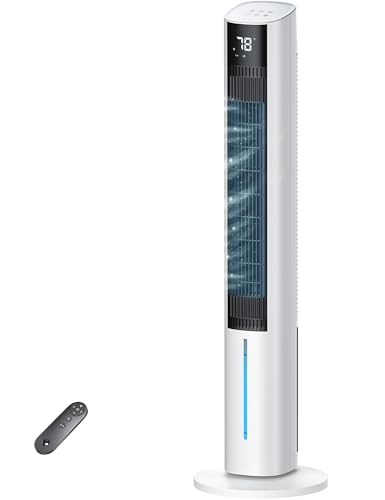
Evaporative Cooling Air Conditioner: The Complete Guide
Everything you need to know about evaporative coolers — how they work, where they perform best, and how to choose the right unit for your home before you buy.
START LEARNINGBuying research made simple: You already know you want an evaporative cooling solution. This guide fills in the gaps — working principles, climate suitability, sizing, pad types, maintenance, and comparisons with refrigerated air conditioning — so you can make a confident, well-informed decision.
What Is an Evaporative Cooling Air Conditioner?
An evaporative cooling air conditioner — often called a swamp cooler — is a cooling system that lowers air temperature through the natural process of water evaporation. Unlike refrigerated air conditioners that use a compressor and refrigerant, an evaporative cooler draws outside air through water-saturated pads. As the water evaporates, it absorbs heat from the air, and a fan pushes the cooled, freshly humidified air into your living space.
This makes the evaporative cooling system fundamentally different from a standard AC: it is a whole-air-exchange system. Warm air inside the home is continuously pushed out through open windows or vents while cooled outside air is pulled in. The result is a steady flow of fresh, cooled air rather than recirculated refrigerated air.
Evaporative coolers come in several formats, including rooftop units for whole-home cooling, window-mounted models, and portable freestanding units. Each shares the same core principle — evaporation-driven cooling — but differs in installation and airflow capacity.
How Evaporative Cooling Works
The mechanics are straightforward and easy to understand:
- Air intake: A fan pulls hot, dry outside air into the unit.
- Water saturation: The air passes through cooling pads kept wet by a water distribution system and pump.
- Evaporation: Water evaporates off the pad surface, absorbing heat energy from the incoming air and lowering its temperature.
- Delivery: The fan pushes the cooled, slightly humid air through ductwork or directly into the room.
- Air exchange: Warm indoor air escapes through open windows or exhaust vents, completing the cycle.
Because the process relies on evaporation, an evaporative cooler works best when the outside air is hot and dry. In humid conditions, the air is already close to saturation and cannot absorb much more moisture, which reduces cooling effectiveness. This is the single most important factor when deciding whether an evaporative cooler air conditioner is right for your home.
Ideal Climates for Evaporative Cooling
Evaporative coolers shine in hot, arid, and semi-arid climates — think desert regions, the American Southwest, and dry inland areas. In these locations, low humidity allows evaporation to occur efficiently, producing noticeable temperature drops and a comfortable indoor environment.
By contrast, in humid coastal or tropical climates, the cooling effect is limited and indoor humidity may become uncomfortable. In such regions, a traditional refrigerated air conditioner or a mini-split heat pump is generally a better fit. Homeowners in mixed climates sometimes use evaporative cooling during the dry season and switch to refrigerated cooling during humid months.
Quick rule of thumb: If summer humidity in your area regularly stays below 50%, evaporative cooling is a strong candidate. If humidity frequently exceeds 60%, refrigerated cooling will deliver more consistent comfort.
Key Benefits of Evaporative Cooling
- Energy efficiency: No compressor means significantly lower electricity consumption compared to refrigerated systems.
- Fresh air circulation: Constant air exchange replaces stale indoor air with fresh outside air.
- Natural humidity: Adds gentle moisture to dry air, which many people find comfortable.
- Simple construction: Fewer mechanical components and no refrigerant circuit.
- Environmentally friendlier: No refrigerants involved in the cooling process.
- Straightforward maintenance: Routine pad replacement and water system cleaning keep the unit running well.
For households in dry climates looking to reduce energy demand, an evaporative cooler alternative to standard AC can be a practical, long-term investment in comfortable living.
Types of Evaporative Cooling Units
Evaporative coolers are available in several configurations to suit different homes and cooling needs:
- Whole-house rooftop units: Installed on the roof and connected to ductwork, these cool an entire home and are the classic swamp cooler format.
- Window-mounted coolers: Compact units that sit in a window opening, ideal for single rooms and apartments.
- Portable evaporative coolers: Freestanding, wheel-mounted units that can be moved between rooms; some models include a fan-only mode.
- Through-wall units: Installed through an exterior wall, offering a fixed-room solution without occupying window space.
- Multi-purpose 3-in-1 units: Combine cooling, fan, and humidifying functions — see our overview of the 3-in-1 windowless portable air conditioner style.
For small spaces, a evaporative air cooler and fan combination offers flexibility; for full homes, a ducted rooftop system delivers the most consistent results.
How to Choose the Right Evaporative Cooler
Selecting the right unit comes down to matching airflow capacity to your space and understanding the environment it will operate in. Consider these factors:
- Airflow capacity: Measured in cubic feet per minute (CFM), this determines how much air the unit can move. Larger rooms and open floor plans require higher airflow.
- Climate humidity: Confirm your area's summer humidity profile before committing to evaporative cooling.
- Pad type and quality: Rigid media pads generally last longer and cool more consistently than traditional aspen pads; see our notes on evaporative cooler pads.
- Air exchange path: Plan how warm indoor air will exit — open windows, ceiling vents, or dedicated exhaust paths.
- Installation location: Rooftop, window, wall, or portable placement affects both convenience and performance.
- Maintenance access: Easy access to pads, water reservoir, and pump simplifies seasonal upkeep.
If you are comparing this category against refrigerated cooling, our guide to the broader evaporative cooling air conditioner category and related alternatives can help frame the decision.
Maintenance Essentials
Evaporative coolers are mechanically simple, but they do require seasonal attention to stay effective and hygienic. Regular evaporative cooler maintenance typically includes:
- Replacing cooling pads at the start of each cooling season, or sooner in dusty or hard-water areas.
- Flushing and cleaning the water reservoir to prevent mineral buildup and stagnation.
- Inspecting the water pump and distribution tubing for clogs or leaks.
- Checking the fan belt (on belt-driven models) for wear and proper tension.
- Cleaning or replacing the water filter and checking for algae growth.
- Inspecting the exterior unit for debris, nests, or damaged louvers before startup.
Proper upkeep preserves cooling performance, keeps indoor air quality healthy, and extends the working life of the unit — a solid long-term investment for dry-climate homes.
Evaporative Cooling vs Refrigerated Air Conditioning
Understanding the trade-offs helps you choose with confidence:
| Factor | Evaporative Cooler | Refrigerated AC |
|---|---|---|
| Best climate | Hot and dry | Any climate, including humid |
| Cooling mechanism | Water evaporation | Compressor and refrigerant cycle |
| Air handling | Continuous fresh-air exchange | Recirculated, filtered indoor air |
| Humidity effect | Adds moisture to indoor air | Removes moisture during cooling |
| Mechanical complexity | Simple: fan, pump, pads | Complex: compressor, coils, refrigerant |
| Energy profile | Generally lower electricity draw | Higher electricity draw |
| Maintenance focus | Pads, water system, seasonal cleaning | Filters, coils, refrigerant checks |
Neither system is universally superior — the right answer depends on climate, home layout, and comfort preferences. In dry regions, evaporative cooling often delivers excellent comfort with modest energy use; in humid regions, refrigerated cooling remains the practical standard.
Common Buying and Usage Mistakes to Avoid
- Ignoring humidity: Purchasing an evaporative cooler for a humid climate leads to disappointing results.
- Undersizing airflow: A unit with insufficient CFM cannot cool the intended space effectively.
- Blocking air exhaust: Evaporative cooling depends on air leaving the home; sealed rooms reduce performance.
- Skipping pad replacement: Worn or clogged pads sharply reduce cooling and airflow.
- Neglecting water quality: Hard water accelerates mineral buildup; regular flushing and filtration matter.
- Expecting refrigerated-style cooling: Evaporative cooling feels different — it is a fresh-air comfort system, not a chilled-air recirculator.
Who Should Consider an Evaporative Cooling Air Conditioner?
An evaporative cooling air conditioner is a strong fit for:
- Homeowners in hot, dry climates seeking energy-efficient comfort.
- Households that value continuous fresh-air ventilation.
- Spaces where ductwork exists or can be added for whole-home cooling.
- Buyers looking for mechanically simple systems with straightforward maintenance.
- People who prefer naturally humidified air over dry refrigerated air.
If your climate is humid or your priority is precise temperature control year-round, a refrigerated system — including ENERGY STAR qualified air conditioners — may be the better match. Either way, matching the technology to your environment is the key decision.
Frequently Asked Questions
What is an evaporative cooling air conditioner?
It is a cooling system that lowers air temperature by passing hot, dry outside air through water-saturated pads. Evaporation absorbs heat, and a fan delivers the cooled air indoors while warm indoor air exits through open windows or vents.
Is an evaporative cooler better than a traditional air conditioner?
It depends on climate. Evaporative coolers perform best in hot, dry conditions. In humid climates, traditional refrigerated air conditioners provide more consistent comfort because evaporation is less effective when the air already holds significant moisture.
How often should evaporative cooler pads be replaced?
Typically once per cooling season. Homes with hard water, high dust, or heavy seasonal use may need more frequent replacement to maintain airflow and cooling efficiency.
Do evaporative coolers use less energy than air conditioners?
Generally yes. Evaporative coolers rely on a fan and water pump rather than a compressor, so their electricity consumption is typically much lower — making them an energy-efficient choice in suitable climates.
Can an evaporative cooler be used in a humid climate?
It can run, but cooling effectiveness drops significantly as humidity rises. In humid regions, refrigerated air conditioning or a heat pump system is usually the more practical choice for consistent comfort.
Continue your research: Explore the swamp cooler overview, learn about evaporative cooler maintenance, compare evaporative cooler pads, review the evaporative cooling system fundamentals, and consider the evaporative air cooler and fan option for smaller spaces. For refrigerated alternatives, see ENERGY STAR qualified air conditioners.