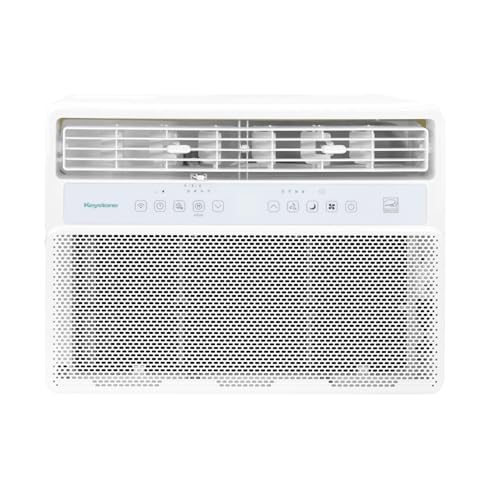
Energy Star Rated Window Air Conditioners
A complete research guide to understanding certified efficient window cooling — covering ratings, sizing, refrigerant standards, smart features, and how to match a unit to your room before you commit.
START THE RESEARCHWhy this page exists: If you've already shortlisted a window air conditioner and are comparing certified efficient models, this guide fills the gaps. It explains what the Energy Star label actually certifies, how to size a unit correctly, which features matter day-to-day, and how to avoid the most common post-purchase regrets. Read through, then move to the recommended models below with confidence.
What the Energy Star Label Actually Certifies
Energy Star is a voluntary certification backed by the U.S. Environmental Protection Agency. For window air conditioners, a model earns the label only after independent testing confirms it meets or exceeds a defined efficiency threshold — measured in Combined Energy Efficiency Ratio (CEER). The CEER combines cooling efficiency and standby power consumption, so a certified unit is verified efficient in active cooling and responsible when idle.
That matters because window units run for long stretches in summer. A certified model typically uses noticeably less electricity than a standard unit of the same cooling capacity, and the gap compounds over a full cooling season. Certification also means the unit meets updated refrigerant rules — current certified models use lower-global-warming refrigerants, aligning with EPA refrigerant handling standards.
What the label does not certify: noise level, build quality, or smart features. Those still require comparing specifications. A certified unit can still be the wrong size for your room, which is the single most common reason buyers end up dissatisfied.
Why Window Units Remain a Practical Choice
Window air conditioners install in a window frame, cool a single room, and require no ductwork. For renters, older homes without ducts, or anyone who needs one room cooled without conditioning the whole house, that simplicity is a real advantage.
Compared to other certified options, window units sit in a distinct position:
- Vs. portable units: window models are permanently mounted and generally cool more efficiently for the same capacity; portable units offer flexibility but vent through a hose and lose some efficiency. See energy star portable air conditioners if mobility is essential.
- Vs. mini-splits: ductless systems cool more quietly and can serve multiple rooms, but require professional installation. Compare energy star mini-splits if you plan to stay long-term.
- Vs. through-the-wall units: wall units are permanent and more secure, but installation is a structural job. Explore energy star through-the-wall air conditioners if a window frame is not available.
Sizing: The Decision That Determines Satisfaction
An oversized unit cools the air quickly, shuts off, and leaves the room humid and uneven. An undersized unit runs constantly and never reaches the set temperature. Both waste energy — even on a certified model. Use the table below as a starting framework, then adjust for sun exposure, ceiling height, and occupants.
| Room Size (sq ft) | Suggested Capacity (BTU) | Typical Space |
|---|---|---|
| Up to 150 | 5,000 – 6,000 | Bedroom, small office |
| 150 – 250 | 8,000 – 10,000 | Living room, studio |
| 250 – 400 | 12,000 – 14,000 | Large living area, open plan |
| 400 – 550 | 15,000 – 18,000 | Master suite, combined space |
| 550 – 700 | 20,000 – 24,000 | Large open room, sunroom |
Sizing Adjustments
- Heavy sun exposure: add roughly 10% capacity for south- or west-facing windows.
- Kitchen use: add capacity for cooking heat.
- Multiple occupants: add roughly 600 BTU per additional regular occupant.
- High ceilings or open stairwells: treat the space as larger than the floor area suggests.
For a deeper method, including load calculation principles, see the replacement estimate guidance and the broader sizing walkthrough in our Energy Star qualified air conditioners guide.
Features That Matter Day-to-Day
Inverter vs. Fixed-Speed Compressor
Inverter compressors vary their speed to hold a steady temperature, running continuously at low output instead of cycling on and off. The result is quieter operation, more stable humidity, and generally better real-world efficiency. Fixed-speed units are simpler and less feature-heavy — an entry-level tier option — while inverter models sit in the mid-range and premium tiers.
Smart Control and Remote Access
Wi-Fi control lets you set schedules, adjust the temperature remotely, and integrate with voice assistants. If that matters to you, compare models in our Wi-Fi control window AC and remote and Wi-Fi control roundup.
Heating Capability
Some window units include a heat pump mode for shoulder seasons. If you want year-round use from one appliance, see energy star window heat pump units and window AC with heat options.
Noise, Filters, and Build
Check the decibel rating — inverter units are generally quieter. Confirm the filter is washable and easy to access; a filter that is hard to remove simply goes uncleaned. For replacement filters and compatibility, see filters for window air conditioners.
A Practical Buying Framework
- Measure the room and confirm capacity. Start from the sizing table above and adjust for sun, occupants, and layout.
- Check the certification and efficiency rating. Confirm the model carries the Energy Star label and compare CEER between finalists.
- Confirm the refrigerant. Current certified models use compliant, lower-impact refrigerants. See most efficient window air conditioners for the efficiency leaders in each tier.
- Match features to use. Inverter for quiet comfort, Wi-Fi for scheduling, heat pump if you need shoulder-season warmth.
- Verify installation fit. Measure the window opening and check the unit's required dimensions and support bracket before ordering.
- Plan maintenance. A certified unit only stays efficient if the filter is cleaned regularly. See energy star window units for maintenance-oriented model notes.
Quality Tiers at a Glance
| Tier | Best For | Typical Traits |
|---|---|---|
| Entry-level | Single room, occasional use | Fixed-speed compressor, basic controls |
| Mid-range | Daily use, bedrooms and living rooms | Inverter compressor, remote, better noise control |
| Premium | Primary living space, long daily runtime | Wi-Fi, heat pump mode, washable filters, quieter operation |
Installation and Placement Basics
Window units are straightforward to install, but a few details affect both performance and safety:
- Support the unit. Use the manufacturer's bracket or a properly rated support. A sagging unit strains the window frame and leaks air.
- Seal the gaps. Foam insulation around the unit keeps outside air out and stops cooled air escaping — a small step with a large effect on efficiency.
- Shade the unit. Direct sun on the exterior housing reduces performance; an awning or shade helps.
- Check the electrical circuit. Larger units may need a dedicated circuit. Confirm the outlet type and amperage before installation.
If you are comparing a window unit against a full central system for a larger home, the HVAC replacement estimate guide explains what a whole-home system involves.
Maintenance for Long-Term Efficiency
Efficiency ratings assume a clean, well-maintained unit. Keep it that way:
- Clean or replace the filter every two to four weeks during heavy use.
- Wash the filter with mild soap and water, and let it dry fully before reinstalling.
- Check the exterior for debris and clear the condenser area.
- At the start of each season, inspect the seal around the window frame and reapply foam if needed.
- Listen for unusual rattling or clicking — early diagnosis prevents larger problems.
If you notice excessive condensation or dripping, see the guide on excessive water dripping from the drain pipe. For units that stop cooling suddenly, the general air conditioner troubleshooting guide covers the first diagnostic steps.
Common Buying Mistakes to Avoid
- Choosing by room area alone. Sun exposure, ceiling height, and layout change the right capacity significantly.
- Ignoring the window dimensions. A unit that does not fit securely is a safety and efficiency problem.
- Overpaying for features you won't use. Wi-Fi and heat pump modes are worthwhile only if you will actually use them.
- Skipping the electrical check. A high-capacity unit on the wrong circuit will trip breakers.
- Neglecting maintenance. A certified unit with a clogged filter performs like an inefficient one.
Frequently Asked Questions
Does the Energy Star label guarantee lower electricity bills?
It confirms the unit is tested and certified efficient for its capacity. Actual consumption still depends on correct sizing, installation quality, and how often the filter is cleaned.
Is a certified window unit worth it compared to a standard unit?
For a room cooled daily through summer, the efficiency gain compounds over the season and makes the certified model the better long-term investment. For occasional use in a small room, a simpler fixed-speed unit may be sufficient.
How do I know which capacity to choose?
Start with the sizing table above, then adjust upward for heavy sun, kitchen use, or multiple occupants. When in doubt between two sizes, choose the smaller unit rather than oversized — oversized units cool too fast and leave the room humid.
Do certified window units include heating?
Some do. Heat pump models provide both cooling and heating for shoulder seasons. See energy star window heat pump units if you want year-round use.
What refrigerant do current certified models use?
Current certified models use refrigerants compliant with current EPA rules, which have lower global-warming potential than older formulations. The EPA refrigerant handling guide explains the regulations.
Window unit or mini-split for a single room?
A window unit is simpler and self-installed; a mini-split is quieter and more efficient but requires professional installation. Compare both in the energy star mini-split guide.
How often should the filter be cleaned?
Every two to four weeks during heavy cooling season, and always at the start of the season. A clogged filter is the most common cause of reduced cooling performance.
Ready to Compare Certified Models?
You now have the framework: correct sizing, verified certification, matched features, and a maintenance plan. Move to the recommended models below and compare specifications side by side.
COMPARE RECOMMENDED MODELS