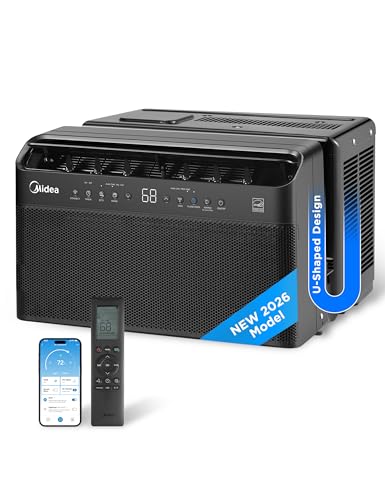
Inverter Window Air Conditioners: Complete Buyer's Guide
Learn how inverter technology transforms the classic window AC into a quieter, more efficient cooling solution — and discover how to choose the right unit for your room, climate, and budget-conscious long-term goals.
Compare Inverter vs StandardWhy this guide matters: Inverter window air conditioners combine the simplicity of a window installation with the efficiency of variable-speed compressor technology. If you are researching this category, you likely already know you want a window unit — this page helps you understand whether inverter technology is the right upgrade for your situation, and how to pick the best model for your needs.
What Is an Inverter Window Air Conditioner?
An inverter window air conditioner is a window-mounted cooling unit that uses a variable-speed compressor driven by inverter technology. Unlike traditional window units that cycle the compressor fully on and off to regulate temperature, an inverter model continuously adjusts compressor speed to match the cooling demand of the room. This results in steadier temperatures, smoother operation, and typically lower energy consumption over extended use.
The form factor remains familiar: the unit sits in a window frame, vents hot air outside, and cools the room directly. What changes is the internal mechanics — and the user experience. If you are still exploring the broader category, our inverter window air conditioners overview complements this deeper guide, while readers curious about the underlying technology can read about inverter technology in air conditioners.
How Inverter Technology Works
Standard air conditioners operate in a binary way: the compressor runs at full power until the room reaches the set temperature, then shuts off, then restarts when the room warms again. That on-off cycling is the source of many common complaints — temperature swings, startup noise, and energy spikes.
Inverter units work differently. The compressor's motor speed is regulated electronically, allowing it to run at partial capacity. When the room is far from the target temperature, the compressor runs faster; as the room approaches the target, it slows down and maintains a gentle, continuous output. The result is a more stable indoor climate and fewer abrupt transitions.
Key Benefits of Inverter Window Units
Steadier Room Temperature
Because the compressor modulates instead of cycling on and off, inverter window units avoid the noticeable temperature swings that many people find uncomfortable with standard window ACs.
Quieter Operation
The compressor runs at lower, steadier speeds for most of the cooling cycle, which generally translates to less noise and fewer disruptive startup sounds — a meaningful improvement in bedrooms and home offices.
Better Energy Efficiency in Long Runs
By avoiding repeated full-power startups, inverter units tend to use energy more efficiently during extended cooling sessions. This is especially relevant in climates where the AC runs for many hours per day.
Gentler Dehumidification
Continuous low-speed operation can provide more consistent moisture removal than short, powerful cooling bursts, which helps maintain a comfortable indoor feel.
Reduced Wear from Cycling
Fewer hard starts can reduce mechanical stress on the compressor over time, which may contribute to a longer service life when the unit is properly maintained.
Works Well with Smart Controls
Inverter units pair naturally with programmable thermostats, timers, and smart-home integrations, since fine-grained compressor control aligns well with precise scheduling and remote management.
Inverter vs Standard Window AC: Comparison
The table below summarizes the practical differences. Use it as a decision aid, not a verdict — the right choice depends on how you use the unit and what you value most.
| Feature | Inverter Window AC | Standard Window AC |
|---|---|---|
| Compressor behavior | Variable speed, continuous modulation | Full on / full off cycling |
| Temperature stability | High — minimal swings | Moderate — noticeable swings |
| Noise profile | Lower and steadier | Loud startup, intermittent |
| Efficiency during long runs | Generally better | Less efficient due to cycling |
| Electrical startup demand | Softer | Higher inrush current |
| Complexity / service | More electronic components | Simpler, more familiar |
| Best for | Bedrooms, offices, long run times | Occasional use, simple setups |
If you are still deciding between form factors, our guide on inverter AC technology explains how the same principles apply to split systems and portable units. Readers considering an upgrade from a wall-mounted model may also find our inverter through-the-wall air conditioner page useful, and those who want heating capability should look at inverter window AC with heat.
Sizing Your Inverter Window AC (BTU Guide)
Correct sizing is the single most important factor in satisfaction. An undersized unit runs constantly and struggles to cool; an oversized unit cools quickly but short-cycles, which undermines the efficiency advantages of inverter technology. The table below provides practical starting points for typical residential rooms with standard ceiling heights and average insulation.
| Room Size (sq ft) | Typical Cooling Capacity | Common Room Types |
|---|---|---|
| Up to 150 | 5,000 – 6,000 BTU | Small bedroom, studio nook, office |
| 150 – 250 | 8,000 – 10,000 BTU | Standard bedroom, small living room |
| 250 – 400 | 12,000 – 14,000 BTU | Large bedroom, open living area |
| 400 – 550 | 15,000 – 18,000 BTU | Large living room, open-plan space |
Adjust upward for sunny rooms, top-floor apartments, kitchens, and rooms with poor insulation. Adjust downward for shaded rooms and basements. For a more precise approach, consult our detailed inverter air conditioning units overview and cross-check with a room-by-room BTU calculation.
Features That Matter
Not all inverter window units are equal. When comparing models, prioritize the following features based on your usage patterns:
- Energy efficiency ratio (EER/CEER): Higher ratings indicate better cooling efficiency. Inverter models generally score well, but compare within the same capacity class.
- Noise level in decibels: Look for published dB ratings, especially for bedrooms. Inverter models often advertise lower minimum noise levels.
- Smart controls: Wi-Fi, app control, and voice assistant compatibility are increasingly common and pair well with inverter modulation.
- Programmable timer and sleep mode: Useful for aligning cooling with your daily schedule and reducing overnight energy use.
- Air filter accessibility: Washable, easy-to-remove filters simplify maintenance and help preserve efficiency.
- Installation kit completeness: Check whether the unit includes window brackets, insulation panels, and sealing accessories.
- Drain options: Some units offer a drain connection for continuous moisture removal; others rely on evaporation.
- Remote control ergonomics: A small detail that matters for daily usability.
Installation Considerations
Inverter window air conditioners install in the same window configurations as standard units, but the added electronics and sometimes greater weight warrant a careful setup. Key points to plan for:
- Window type compatibility: Double-hung windows are the easiest. For alternative window types, review our guides on left-to-right sliding window air conditioners and window-specific installation tips.
- Weight support: Larger inverter units can be heavy; use proper brackets and follow the manufacturer's support requirements.
- Electrical circuit: Verify the unit's voltage and amperage requirements. Most smaller models run on standard 115V circuits, but larger capacities may need a dedicated circuit.
- Sealing and insulation: Proper sealing around the window opening prevents cool air loss and reduces strain on the compressor. See our guidance on insulating a window AC unit.
- Drainage slope: Ensure a slight outward tilt so condensate drains correctly, as specified in the manual.
- Clearance: Keep the exterior side unobstructed for proper heat rejection.
For a broader installation walkthrough, our window air conditioner wall installation guide covers related scenarios, and readers exploring alternative mounting options can review installing a small window air conditioner.
Market Tiers: Entry-Level to Premium
Inverter window air conditioners are available across several market tiers. This classification helps you set expectations for build quality, features, and long-term reliability without relying on specific figures that change over time.
| Tier | Typical Characteristics | Best For |
|---|---|---|
| Entry-level | Core inverter cooling, basic remote, simple controls, standard efficiency | Occasional use in secondary rooms |
| Mid-range | Better noise control, improved efficiency, programmable timer, washable filter | Daily use in bedrooms and living spaces |
| High-end tier | Smart controls, lower minimum noise, refined airflow, enhanced dehumidification | Primary living areas, home offices, long run times |
| Top-tier / premium | Flagship efficiency, advanced sensors, premium build, comprehensive app ecosystem | Users prioritizing maximum comfort and control |
Maintenance Tips for Inverter Window Units
- Clean or replace the air filter every 2–4 weeks during peak cooling season. A clogged filter forces the compressor to work harder and undermines efficiency.
- Inspect and clean the exterior coil at the start of the season. Dust and debris reduce heat rejection.
- Check the drain path for blockages; standing water can lead to odors and inefficiency.
- Seal the window frame each season to maintain the insulation barrier.
- Schedule professional service every few years, especially if you notice unusual noises or reduced cooling. Inverter electronics benefit from a technician's diagnostic check.
- Store the unit properly during the off-season if you remove it, keeping it upright and dry.
For a full seasonal routine, review our broader maintenance resources, and if you are comparing inverter window models against other inverter formats, the inverter compressor portable air conditioner and inverter dual hose portable air conditioner pages provide useful context.
Frequently Asked Questions
What is an inverter window air conditioner?
An inverter window air conditioner uses a variable-speed compressor that continuously adjusts its output to maintain the set temperature, rather than switching the compressor fully on and off like traditional units. This generally results in steadier temperatures, quieter operation, and better efficiency during long cooling sessions.
Are inverter window AC units quieter than standard window units?
Generally yes. Because the compressor runs at lower, steadier speeds instead of cycling on and off at full power, inverter window units tend to produce less noise and fewer abrupt sound changes. Noise levels still vary by model tier, so check published decibel ratings if quiet operation is a priority.
Do inverter window air conditioners save energy?
Inverter models are typically more efficient than single-speed units because they avoid the energy spikes of repeated compressor startup and can run at a lower, more efficient speed once the room reaches the target temperature. The actual benefit depends on how long the unit runs and how well the room is sealed and insulated.
Can an inverter window AC run on a standard household outlet?
Most window inverter units are designed for standard 115V household circuits, but larger capacities may require a dedicated 115V or 230V circuit. Always check the unit's electrical requirements and your home's wiring before installation. When in doubt, consult a licensed electrician.
Is an inverter window AC worth the upgrade over a standard window unit?
For rooms where the AC runs for many hours — bedrooms, home offices, living rooms — the comfort and efficiency benefits of inverter technology are usually noticeable. For occasional use in a guest room or utility space, a standard unit may be sufficient. Consider your usage pattern, noise sensitivity, and long-term efficiency goals.
Do inverter window units require special maintenance?
No special maintenance is required beyond the standard routine: regular filter cleaning, seasonal coil inspection, drain checks, and professional service every few years. The electronic components are sealed and generally maintenance-free, but a technician should diagnose any unusual behavior.
Inverter window air conditioners represent a meaningful step up from conventional window units, particularly for users who value steady temperatures, quieter operation, and efficient long-run performance. Use the sizing table and feature checklist above to narrow your shortlist, then review the recommended models below to compare options within your preferred market tier.