
Mini Splits for Sale: The Complete Buyer's Guide
Ductless mini split systems deliver zoned comfort, high efficiency, and flexible installation for homes without ductwork. Learn how to evaluate, size, and choose the right system before you buy.
EXPLORE RECOMMENDED SYSTEMSWhy mini splits are worth researching: A ductless mini split pairs an outdoor condenser with one or more indoor air handlers, giving you room-by-room control without the energy losses of ductwork. Buyers researching mini splits for sale are usually deciding between single-zone and multi-zone configurations, inverter versus fixed-speed compressors, and cooling-only versus heat pump models. This guide walks through every decision so you can purchase with confidence.
What Exactly Is a Mini Split System?
A mini split is a split-system air conditioner that connects an outdoor compressor unit to one or more indoor heads through a small refrigerant line set, rather than through ductwork. The indoor unit mounts high on a wall, in a ceiling cassette, or as a floor console, and blows conditioned air directly into the room. Because there are no ducts, there is no duct leakage and no long runs of conditioned air through an attic or crawlspace.
Most modern mini splits sold today are heat pumps. That means they can reverse the refrigerant cycle to provide heating in cooler months as well as cooling in warmer months. If you want a single system that handles year-round comfort, a ductless heat pump mini split is the configuration to look for. For a broader overview of how these systems are assembled, see our mini split AC system explainer.
Single-zone systems serve one room with one indoor head. Multi-zone systems connect two to five indoor heads to a single outdoor condenser, which is ideal for cooling several bedrooms or a whole floor. If you are planning a whole-home approach without ducts, a multi-zone mini split HVAC system can cover multiple rooms while keeping each zone independently controlled.
Key Benefits That Make Mini Splits Attractive
No Ductwork Required
Ideal for older homes, additions, and rooms that were never connected to a central duct system. Installation requires only a small wall penetration for the line set.
Zoned Comfort
Each indoor head has its own thermostat, so you can cool an occupied bedroom without conditioning empty rooms. Zoning reduces wasted energy.
High Efficiency
Inverter-driven compressors modulate speed instead of cycling on and off, which smooths temperature swings and improves efficiency in the long run.
Quiet Operation
Because the noisy compressor sits outdoors, indoor sound levels are typically much lower than window or through-the-wall units.
Heating and Cooling
Heat pump mini splits provide both functions, replacing a separate AC and space heater in many rooms. Cold-climate models extend performance in low temperatures.
Flexible Mounting
Wall-mounted, ceiling cassette, and floor-console indoor units fit different room layouts, including rooms with limited wall space.
How to Size a Mini Split Before You Buy
Sizing is the single most important decision in the buying process. An undersized system runs continuously and struggles to reach the setpoint; an oversized system short-cycles, dehumidifies poorly, and wears out faster. The common rule of thumb is roughly 20 BTU per square foot of conditioned space, but that baseline must be adjusted for ceiling height, insulation, window area, sun exposure, and climate.
For a single room, a 9,000 BTU head is often appropriate around 350 to 450 square feet, and a 12,000 BTU head around 450 to 550 square feet. Larger rooms may call for 18,000 or 24,000 BTU. Rather than guessing, use our BTU calculator by room size and read the full how to size an air conditioner guide. If your room is in the 500 square foot range, our mini split for 500 square feet breakdown is a useful starting point. For larger open-plan layouts, review the mini split for 1,200 square feet recommendations.
For a whole-home ductless plan, a professional load calculation is strongly recommended. If you prefer to let an expert handle sizing and placement, connect with a local mini split installer who can perform a room-by-room load calculation.
Mini Split Tiers: A Market Positioning Comparison
Mini splits for sale span a wide range of market positions. Rather than focusing on absolute figures, it helps to understand what each tier typically delivers. The table below groups systems by tier so you can match features to your expectations.
| Tier | Best For | Typical Strengths |
|---|---|---|
| Entry-level | Single rooms, seasonal cooling, starter setups | Straightforward controls, basic filtration, adequate build for light duty |
| Mid-range | Primary bedrooms, living rooms, year-round use | Inverter compressor, better sound insulation, improved filtration, Wi-Fi options on many models |
| Premium | Whole-home zoning, cold-climate heating, quiet operation | Higher efficiency ratings, low-temperature heating, advanced controls, refined airflow design |
| Luxury / flagship | Design-focused installations, multi-zone estates | Premium materials, near-silent indoor operation, integrated smart-home control, advanced air quality features |
| Commercial-grade | Offices, retail, server rooms, light commercial spaces | Heavy-duty components, longer duty cycles, service-friendly design, extended warranty coverage |
As a general rule, mid-range models often deliver the best balance of features and durability for residential use, while premium models are worthwhile when you need cold-climate heating or exceptionally quiet operation. Entry-level systems remain a solid choice for a single guest room or a seasonal cabin.
Features to Evaluate in Mini Splits for Sale
- Inverter compressor: Modulates speed for steadier temperatures and improved efficiency compared with fixed-speed compressors. Compare the two in our inverter vs non-inverter guide.
- SEER2 rating: The current efficiency metric for cooling. Higher ratings indicate greater efficiency. See what a SEER rating means and SEER vs SEER2.
- HSPF2 rating: The heating efficiency metric for heat pump models. Important if you plan to heat with the system.
- Low-temperature heating: Cold-climate models maintain capacity in lower outdoor temperatures. See our hyper heat mini split overview.
- Indoor unit style: Wall-mounted heads are the most common; ceiling cassettes suit drop ceilings, and floor consoles work when wall space is limited.
- Wi-Fi and smart control: Allows scheduling and remote control through a phone app. Useful for vacation homes and zoned setups.
- Filtration and air quality: Washable filters are standard; some models add multi-stage filtration or self-cleaning cycles.
- Line set length and included accessories: Confirm the line set length, mounting bracket, and drain accessories. A proper mini split stand protects the outdoor unit and simplifies service access.
Installation Considerations
Mini split installation involves mounting the indoor head, routing the refrigerant line set, positioning the outdoor condenser, and making electrical connections. Refrigerant lines must be evacuated with a vacuum pump before charging, and electrical work must follow local codes. While some pre-charged DIY kits exist, most manufacturers require professional installation to preserve warranty coverage.
For a detailed walkthrough, read installing a mini split and the broader mini split AC system installation guide. Placement matters as well: keep the outdoor unit clear of obstructions and out of direct snow accumulation, and avoid locating the indoor head where it blows directly onto a seating area. A qualified HVAC service technician can confirm the electrical panel capacity and the best line set route.
If your home lacks ductwork entirely and you are weighing options, compare mini splits with other approaches in our guide for homes with no window for a traditional unit. If a mini split is being installed as part of a larger upgrade, our HVAC replacement resource covers the coordination steps.
Maintenance Basics That Extend System Life
Mini splits require less maintenance than ducted systems, but they still need regular care. Clean or rinse the indoor filters every few weeks during heavy use, keep the outdoor coil free of leaves and debris, and schedule a professional check of refrigerant pressures and electrical connections once a year. If you notice water dripping from the indoor head, review the mini split leaking water inside the house troubleshooting guide.
For a structured routine, follow our HVAC maintenance checklist. A well-maintained system holds its efficiency over a longer service life, which is one reason mini splits are considered a long-term investment rather than a short-term purchase.
Recommended Mini Split Systems for Sale
⚠️ AFFILIATE DISCLOSURE: This website contains affiliate links. As an Amazon Associate, we earn from qualifying purchases. If you make a purchase through these links, we may receive a small commission at no additional cost to you. Read our full affiliate policy.

Rellytech Mini Split AC/Heating System, 12000 BTU, 19 SEER2 115V/110V | Ductless air conditioner, energy efficient, pre-charged system, up to 750sq.ft coverage, inverter heating and cooling
Check price on Amazon
Albott 12,000 BTU Mini Split Air Conditioner and Heater SEER2 18, 115V | Inverter Energy-Efficient AC with Self-Cleaning, Remote and APP Control, HVAC Tech Needed, Cools up to 750 Sq.Ft.
Check price on Amazon
Rellytech Mini Split AC/Heating System, 18000 BTU, 19 SEER2 208-230V | Ductless air conditioner, energy efficient, pre-charged system, up to 1250sq.ft coverage, inverter heating and cooling
Check price on Amazon
COSTWAY 12000BTU Mini Split Air Conditioner& Heater | 20 SEER2 115V Wall-Mounted Ductless AC Cools up to 750 Sq. Ft, Energy Efficient Inverter AC with Heat Pump
Check price on Amazon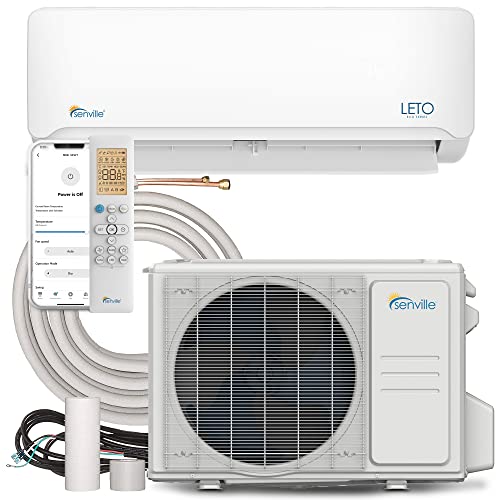
Senville LETO Mini Split Air Conditioner, Heat Pump, White, 12000 BTU | Ductless, Wall Mounted, Works with Alexa, Quiet Operation, 1 Ton, 110/120V, Energy Efficient Inverter
Check price on Amazon
Rellytech 11500 BTU Mini Split AC/Heating System 17 SEER2 Ductless Inverter | Pre-Charged, Ultra Quiet 29dB, Cools Up to 550 Sq.Ft, 110/115V, ETL & AHRI Certified, Works to -5°F
Check price on Amazon
Temprium 12000 BTU Mini Split Air Conditioner, 115V 22 SEER2 AC & Heat Pump | Quiet ductless system for up to 750 Sq.Ft. Features R32 refrigerant, WiFi smart control & complete installation kit.
Check price on Amazon
Temprium 9000 BTU Mini Split Air Conditioner, 115V 22 SEER2 AC & Heat Pump | Quiet ductless system for up to 450 Sq.Ft. Features R32 refrigerant, WiFi smart control & complete installation kit.
Check price on AmazonFrequently Asked Questions
What size mini split do I need for a 500 square foot room?
For a 500 square foot room, a mini split in the 12,000 BTU range is typically appropriate. Ceiling height, insulation quality, window area, and local climate all influence the final sizing decision. Use a load calculation for accuracy.
Can a mini split both heat and cool?
Yes. A mini split heat pump provides both cooling and heating by reversing the refrigerant cycle. Many modern ductless systems are heat pumps, making them a year-round comfort solution.
Do mini splits require a professional installer?
While some DIY kits exist, most systems require refrigerant line connections, vacuuming, and electrical work best handled by a licensed technician to protect warranty coverage and ensure safe operation.
How many indoor heads can one outdoor unit support?
Multi-zone condensers commonly support two to five indoor heads. The total connected capacity must stay within the manufacturer's specified range, so plan the head count and room sizes together.
Are mini splits suitable for cold climates?
Standard heat pump mini splits perform well in moderate climates. For colder regions, choose a cold-climate model rated for low-temperature heating to maintain capacity in winter.
Final Buying Verdict
Mini splits for sale today cover nearly every budget and use case, from an entry-level single-zone head for a guest room to premium multi-zone heat pump systems for a whole home. Focus your research on three decisions: the number of zones you need, the correct BTU capacity per zone, and whether you want a cooling-only unit or a heat pump. Once those are settled, compare inverter compressors, efficiency ratings, and indoor unit styles to narrow the field.
If you plan to hire out the installation, our HVAC quotes resource explains how to gather and compare estimates. For homes that need a broader comfort upgrade, reviewing HVAC service providers in your area can connect you with technicians experienced in ductless systems. Learn the specifications first, then choose the system that matches your rooms and your climate — that is the path to a purchase you will be satisfied with for years.