
Outside AC Unit Replacement: The Complete Decision Guide
Everything you need to know before replacing your outdoor condenser — failure signs, sizing, efficiency standards, process steps, and contractor selection.
Start With The SignsWhy this guide matters: Replacing an outside AC unit is a significant long-term investment for your home comfort. Rushing the decision often leads to overspending, undersized capacity, or a mismatched system. This guide walks you through every checkpoint so you can make a confident, informed choice before contacting a contractor.
What the Outside AC Unit Actually Does
The outdoor unit — technically called the condenser — is the heart of any split air conditioning system. It houses the compressor, condenser coils, and the outdoor fan. While the indoor air handler moves cool air through your ducts, the outdoor unit is responsible for releasing heat absorbed from your home into the outside air.
Understanding this role helps you recognize when a problem is isolated to the outdoor unit versus when the entire system is compromised. If your indoor blower runs but the outside AC unit is not running, the fault is almost certainly on the condenser side — compressor, capacitor, contactor, or fan motor. Similarly, if the outside AC unit fan is running but not cooling, it often points to a refrigerant or compressor issue rather than a fan failure.
For readers who want to go deeper into how the condenser interacts with the rest of the system, our guide on the outdoor condensing unit covers the mechanical details in depth. And if your diagnosis points toward broader equipment issues, the article on the outside air conditioning unit explains common failure modes across the whole assembly.
Signs Your Outside AC Unit Needs Replacement
Not every malfunction demands a new unit. Some issues are repairable. The challenge is distinguishing between a fixable fault and the natural end of an aging condenser's service life. Below are the clearest indicators that replacement — not repair — is the smarter path.
- Age beyond 12–15 years: The expected service life of a well-maintained condenser is roughly 10 to 15 years. Once past that window, efficiency drops, repair frequency climbs, and parts become harder to source.
- Repeated refrigerant leaks: A single leak is fixable. Repeated leaks — especially from the condenser coils or compressor seals — suggest structural deterioration that no repair will fully resolve.
- Compressor failure: The compressor is the most costly component inside the condenser. When it fails on an older unit, replacement of the entire outdoor unit is often the more rational long-term choice.
- Rising energy consumption: If your summer electricity usage keeps climbing without lifestyle changes, a degrading condenser is a likely culprit. Newer units with modern efficiency ratings use noticeably less energy for the same cooling output.
- Rust and physical damage: Heavy corrosion on the cabinet, bent coil fins, or visible oil stains near refrigerant lines all point to a unit nearing end of life.
- Refrigerant type phase-out: Units using R-22 are no longer supported under current regulations. If your condenser still relies on legacy refrigerant, replacement is the only forward-compatible option. Our article on new refrigerant standards explains the transition to R-32 and R-454B.
If your unit is showing symptoms like warm air from the vents, strange noises, or water pooling around the base, start with a diagnostic read of our AC not blowing cold air guide before assuming replacement is needed. And if the unit simply won't start at all, the outside air conditioner not working checklist can help you isolate the cause.
Repair or Replace? A Decision Framework
The industry-standard rule of thumb is straightforward: if the unit is older than 10 years and the repair would consume a large share of the replacement outlay, replacement is the better path. But a more nuanced framework helps you avoid both premature replacement and throwing good resources after bad.
Consider repair when: the unit is under 8 years old, the fault is a single inexpensive component (capacitor, contactor, fan motor), and the system otherwise performs well. Consider replacement when: the compressor has failed, multiple major components are degrading simultaneously, or the refrigerant circuit has chronic leaks.
For a full breakdown of the trade-offs, our companion article on new HVAC systems walks through the long-term view of system replacement versus incremental repair. You can also explore new HVAC system prices to understand the tier structure of the market — entry-level, mid-range, and premium — before committing.
How to Choose the Right Replacement Unit
Choosing an outdoor condenser is not simply a matter of matching the old unit's label. Three factors matter most: capacity, efficiency, and refrigerant compatibility. Getting any one of them wrong compromises comfort or efficiency.
1. Match the Capacity to Your Load
An undersized condenser runs continuously and never fully satisfies the thermostat. An oversized unit short-cycles, leaving humidity unchecked and accelerating wear. The only reliable way to determine correct capacity is a load calculation — a room-by-room assessment of heat gain and loss. Many homeowners use a simplified BTU-per-square-foot estimate, but a professional Manual J calculation is the gold standard. Our guide on how to size an air conditioner explains both approaches.
2. Choose an Efficiency Tier That Fits
Modern outdoor units carry a SEER2 rating, the updated standard that replaced SEER. The higher the rating, the more efficient the unit — but the jump between tiers is not linear. A mid-tier unit often delivers most of the efficiency benefit of a high-end tier at a more moderate position in the market. Our articles on SEER rating and SEER vs SEER2 explain the differences in practical terms.
3. Match the Refrigerant and Indoor Coil
This is where most partial replacements go wrong. If you replace only the outdoor unit, the indoor coil must match the new unit's refrigerant type and capacity. A mismatched pair — for example, a new R-454B condenser with an R-410A indoor coil — will underperform and can void the warranty. Unless the indoor coil is recent and matched, a full-system replacement is usually the safer choice.
What Happens During Outside AC Unit Replacement
Understanding the process helps you ask the right questions and spot shortcuts. A proper replacement follows a defined sequence, and skipping steps often leads to premature failure or efficiency loss.
- Load calculation and equipment selection. The contractor confirms the required capacity and matches indoor and outdoor components.
- Recovery of old refrigerant. Federal regulations require refrigerant to be recovered, not vented. Ask for the recovery documentation.
- Removal of the old condenser. Disconnection of electrical, refrigerant lines, and the pad or mounting bracket.
- New pad or bracket installation. The unit must sit level, with proper clearance for airflow. For wall-mounted mini-splits, the outdoor wall mounting bracket guide covers bracket selection.
- Line set and electrical connection. New line sets are preferred; reusing old lines requires a flush and inspection.
- Evacuation and charge. The system is vacuumed to remove moisture and non-condensables, then charged to the manufacturer's specification.
- Commissioning and verification. The contractor measures temperature differential, static pressure, and refrigerant superheat/subcooling to confirm performance.
If your current unit has been failing intermittently, the guide on outside AC unit comes on but not blowing air helps you document symptoms — useful information to share with the installer before the swap.
Placement and Installation Considerations
Where the condenser sits matters as much as what it is. A unit crammed against a wall, shaded from airflow, or placed in a heat pocket will underperform regardless of its rated efficiency.
Maintain at least 24 inches of clearance on all sides and 48 inches above the fan. Avoid recirculating hot discharge air back into the intake. In humid climates, place the unit where condensate can drain freely and where the cabinet won't sit in standing water. For coastal or high-humidity installations, our guides on outdoor air conditioner for humid climate and outdoor cooling system for humid climates provide specific guidance.
If the replacement unit is a mini-split condenser, the wall-mounted bracket approach may be preferable to a ground pad — it lifts the unit above snow and debris. Review the wall mounting bracket guide before finalizing placement.
Efficiency, Refrigerant, and Long-Term Value
The outdoor condenser is where most of a split system's efficiency is determined. Compressor technology, coil design, and fan motor type all influence how much electricity the unit draws per unit of cooling delivered.
Inverter-driven compressors modulate speed continuously rather than cycling on and off. This delivers steadier temperatures, better humidity control, and lower average energy use. The trade-off is complexity — inverter boards are more costly to repair. Our article on inverter AC explains the technology, and the non-inverter AC guide covers the simpler alternative for readers who prioritize repairability.
On the refrigerant side, the transition away from R-410A toward R-32 and R-454B is well underway. A new condenser purchased today should be compatible with the current standard; buying a unit tied to a phased-out refrigerant creates future servicing problems. The new refrigerant standards article explains what to check on the equipment label.
Working with HVAC Contractors
A replacement is only as good as its installation. Two contractors can install identical equipment and produce vastly different outcomes based on load calculation rigor, evacuation discipline, and commissioning thoroughness.
Ask for a written load calculation, not a guess. Confirm that the contractor will pull the required permit. Request the equipment model numbers in the proposal so you can verify the tier and efficiency rating. And insist on a commissioning report showing measured performance — temperature split, static pressure, and refrigerant charge verification.
For broader context on choosing a qualified professional, our guide on plumbing, heating, and air conditioning contractors covers licensing, insurance, and vetting. If your home lacks ductwork and you're considering a ductless replacement, the older homes with no ducts resource explains the alternatives.
When Replacement Means the Whole System
Sometimes the outdoor unit is the visible failure, but the indoor coil, air handler, or ductwork is equally aged. Replacing only the condenser in that scenario often produces disappointing results. If the indoor coil is over a decade old, a full-system replacement usually delivers better efficiency, a matched warranty, and fewer future service calls.
Explore the new HVAC systems overview for the full-system perspective, and the new HVAC system prices guide for how the market tiers are structured without getting into specific figures.
Replacement Readiness Checklist
- ✅ Confirm the unit is past its expected service life or has a major component failure
- ✅ Obtain a written load calculation before selecting capacity
- ✅ Verify refrigerant compatibility between indoor and outdoor components
- ✅ Compare efficiency tiers using SEER2 ratings, not outdated SEER figures
- ✅ Confirm the contractor will pull the required permit
- ✅ Request model numbers in the proposal and verify against manufacturer specs
- ✅ Insist on a commissioning report with measured performance data
- ✅ Register the warranty within the manufacturer's window
Frequently Asked Questions
How long does an outside AC unit last?
Most outdoor condensers last between 10 and 15 years with regular maintenance. Coastal climates, heavy usage, and skipped servicing shorten that window. Units that receive annual coil cleaning and refrigerant checks typically reach the upper end of the range.
Can I replace only the outside unit?
Sometimes, but only if the indoor coil matches the new condenser in refrigerant type and capacity. Mismatched systems underperform, may void warranties, and often cost more over time than a full replacement. If the indoor coil is over a decade old, full-system replacement is usually the wiser path.
How long does the replacement take?
A like-for-like outdoor unit swap typically takes 4 to 8 hours. Full-system replacements involving the indoor coil, air handler, or line sets may take one to two days depending on access and complexity.
Do I need a permit for outside AC unit replacement?
Requirements vary by municipality. Many jurisdictions require a mechanical permit for HVAC replacement. Confirm with your local building department, or let your licensed contractor handle the permitting as part of the project scope.
Should I replace the outdoor unit before it fails completely?
Proactive replacement lets you schedule the work, compare proposals without urgency, and avoid emergency service premiums during peak summer heat. If your unit is over 12 years old and showing multiple warning signs, planning the replacement on your timeline is usually the better experience.
Recommended Outside AC Unit Replacement Equipment
⚠️ AFFILIATE DISCLOSURE: This website contains affiliate links. As an Amazon Associate, we earn from qualifying purchases. If you make a purchase through these links, we may receive a small commission at no additional cost to you. Read our full affiliate policy.

Window Air Conditioner Foam Side Panel, 2 Pcs Insulated AC Panel Kit, White | 17"×9"×7/8", Easy Installation, Adhesive, Replacement for Older Units, Prevent Air Leakage, Suitable for Winter Summer
Check price on Amazon
MQIDLFE Portable Air Conditioner Window Vent Kit with 5.1” Exhaust Hose 6 Piece Window Seal for Portable Air Conditioner A/C Unit Universal for Sliding Horizontal or Vertical Windows
Check price on Amazon
BJADE'S Window Air Conditioner Side Panels with Frames, Accordion Filler Curtain Kit for Most 10000 BTU Units,Adjustable Insulation Panel for Window AC Seal Replacement Screen
Check price on Amazon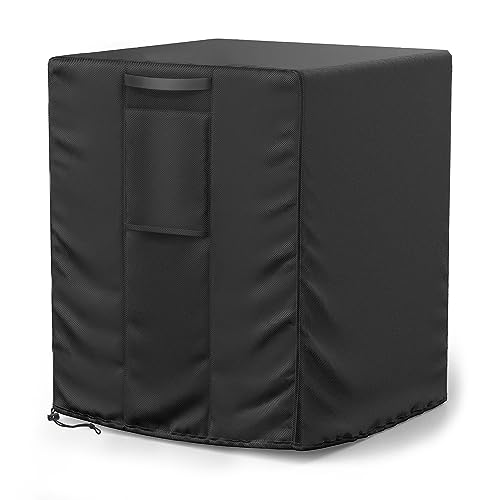
Mrrihand Central Air Conditioner Cover for Outside Units Waterproof Heavy Duty AC Unit for Outdoor Large AC Cover for Winter (32"X32"X36")-Balck
Check price on AmazonDisclaimer
Some of the content on this site uses AI assistance. Information is provided for educational purposes only. We are not responsible for any losses resulting from the use of this information. By using this site, you waive any right to bring legal claims against us arising from your use of the information provided. If you do not agree, please do not use this site. Read the full disclaimer.