
Portable Air Conditioner for Push Out Windows: The Complete Venting Guide
Push out windows (also called awning, casement, or crank-out windows) open outward instead of sliding, which makes them one of the trickiest window types for portable AC venting. This guide explains exactly how to route the exhaust hose, which window kits actually work, how to seal the opening against hot air and rain, and which portable AC features matter most for this setup.
Jump to the Setup GuideQuick Answer
A portable air conditioner can be used with push out windows, but it needs more than the standard sliding-window kit included in the box. You have three reliable options: a dedicated casement or push out window kit, an adjustable fabric seal that wraps around the hose and the open sash, or a custom rigid panel (acrylic, polycarbonate, or sealed plywood) cut to fit the frame with a hose port. The goal is always the same: get the hot exhaust air outside while blocking as much outdoor air, rain, and insects as possible.
Why Push Out Windows Are Different
Most portable AC window kits are designed for double-hung or sliding windows, where the sash moves up, down, or sideways and leaves a rectangular gap that a flat panel can fill. Push out windows break that assumption in three ways:
- The sash swings outward. A crank, lever, or push mechanism moves the glass away from the frame, so there is no flat vertical track to clamp a panel into.
- The opening is not a clean rectangle. Awning windows hinge at the top and open like a small roof; casement windows hinge at the side and swing out like a door. The usable opening changes shape and depth as the window opens.
- Weather sealing is harder. Rain can blow directly onto the open sash, and the hinge side often has no flat surface for adhesive or clamp-style seals.
Because of this, a standard sliding-window kit will usually leave large gaps, sag under the weight of the hose, or simply not fit at all. If your window is a side-hinged style, the same principles in this guide apply; see the related notes on portable AC for casement windows for hinge-specific tips. For top-hinged awning styles, the venting logic is the same but the panel orientation changes.
The good news: the air conditioning itself does not care how the window opens. As long as the exhaust hose reaches outdoors and the opening is reasonably sealed, the unit will work normally. The entire challenge is mechanical and weather-related, not cooling-related.
How to Vent a Portable AC Through a Push Out Window
Follow this sequence for the most reliable result. It works for awning, casement, and crank-out styles with minor adjustments to panel orientation.
Step 1: Measure the Opening Precisely
Open the window to the widest position you are comfortable leaving it in. Measure the width and height of the clear opening (not the glass), and note the depth from the frame to the hinge point. Also check whether the window has a screen, a crank handle, or a locking bar that will interfere with a panel. Write these numbers down; every kit and panel decision depends on them.
Step 2: Choose Your Venting Method
There are three practical approaches, covered in detail in the next section: a dedicated push out / casement window kit, a fabric seal, or a custom rigid panel. Pick one before you buy or install anything.
Step 3: Remove the Screen and Clear Obstructions
Most screens must come out so the hose and panel can sit in the frame. Store the screen safely. If the crank handle blocks the panel, check whether it can be removed temporarily or whether the panel can be notched around it.
Step 4: Install the Panel or Seal
Seat the panel in the frame, or wrap the fabric seal around the open sash and the hose. The panel should be rigid enough that the hose weight does not pull it out of position. If you are using a kit with a hose port, confirm the port diameter matches your unit's exhaust hose connector (most are 5 to 6 inches, but verify).
Step 5: Connect the Exhaust Hose
Attach the hose to the unit's exhaust outlet, then to the window port. Keep the hose as short and straight as possible. Bends are acceptable, but sharp kinks restrict airflow and force the compressor to work harder. If the hose sags, support it with a bracket or strap.
Step 6: Seal Every Remaining Gap
Use foam weatherstripping, closed-cell tape, or a fabric draft seal around the edges of the panel or sash. Pay special attention to the hinge side of casement windows and the bottom edge of awning windows, where rain is most likely to enter. A small gap can undo much of the cooling effort.
Step 7: Test Airflow and Drainage
Run the unit for 20 to 30 minutes on a hot day. Feel around the panel edges for hot air leaking back in. Check that the hose is discharging warm air freely outside. If the unit has a condensate tank, confirm it is seated correctly and plan how you will empty it, since many portable units in humid weather need draining every few hours.
Window Kit Options Compared
Not all kits work equally well with outward-opening windows. Here is a straight comparison of the three main approaches.
| Method | Best For | Sealing Quality | Installation Effort | Reusability |
|---|---|---|---|---|
| Dedicated push out / casement kit | Standard awning and casement sizes | High, if sized correctly | Moderate | High, season to season |
| Adjustable fabric seal | Odd shapes, very small or very large openings | Moderate, depends on tension | Low | Moderate, fabric can wear |
| Custom rigid panel (acrylic, polycarbonate, sealed plywood) | Non-standard windows, permanent seasonal setups | Highest, fully tailored | High, requires cutting | High, lasts many seasons |
Dedicated Push Out and Casement Kits
These kits typically include a rigid frame, a hose adapter plate, and foam or brush seals designed to sit against a hinged sash. They are the easiest path if your window matches a standard size. Look for kits that explicitly list awning or casement compatibility rather than "universal" kits, which are almost always sliding-window designs. For side-hinged windows, the vent kit for crank windows follows the same mounting logic and is worth checking.
Adjustable Fabric Seals
A fabric seal is essentially a zippered or elastic sleeve that wraps around the exhaust hose and the open sash, then cinches tight. It is the most flexible option for unusual opening shapes and small windows, and it stores flat. The trade-off is that fabric seals rely on tension and can loosen over time, especially in windy locations. They work best as a seasonal solution and should be inspected regularly.
Custom Rigid Panels
For a permanent or semi-permanent setup, a custom panel is the highest-quality option. Acrylic or polycarbonate sheet is lightweight, transparent enough to keep some daylight, and easy to cut with the right blade. Sealed plywood works but blocks light. Cut a hose port with a hole saw, add weatherstripping to the edges, and secure the panel with the window's own latch or removable clamps. This approach gives the best seal and the longest service life, at the expense of more upfront effort.
Single-Hose vs Dual-Hose for Outward-Opening Windows
Push out windows are often harder to seal perfectly, which makes the hose configuration more important than it would be with a clean sliding-window installation.
Single-hose units use one hose to expel hot air. Because they pull replacement air from inside the room, they create negative pressure. In a well-sealed room this is fine; in a room with a leaky or partially open push out window, that negative pressure can pull hot outdoor air straight back in through the very gaps you are trying to seal. If you choose single-hose, invest extra effort in sealing and consider a unit with a strong fan and a condensate pump so you are not opening the window further to deal with drainage.
Dual-hose units draw cooling air for the condenser from outside and exhaust it back outside through a second hose. They do not depressurize the room nearly as much, which makes them a better match for awkward window openings. The downside is a wider window footprint, since two hoses need to pass through the panel or seal. If your push out window opening is large enough, dual-hose is generally the more comfortable choice.
For a deeper look at the trade-offs of each design, see the comparison of single-hose portable air conditioners. If you are unsure whether your room will stay cool enough, the guide on what to do when a portable AC is not cooling enough covers the most common causes.
Sizing the Portable AC Correctly
An undersized unit will run continuously and still leave the room warm; an oversized unit will short-cycle and struggle to remove humidity. For a push out window setup, accurate sizing matters even more because the opening itself is a source of heat gain.
As a starting point, use the standard BTU-per-square-foot rule: roughly 20 BTU per square foot for a typical room with an 8-foot ceiling and average insulation. Add capacity for south- or west-facing windows, kitchens, rooms with many electronics, and rooms with poor insulation. For a small bedroom, a unit in the 8,000 to 10,000 BTU range is often appropriate; for a large living area, 12,000 to 14,000 BTU is more typical.
Do not rely on the rule alone. Measure the room, note the window orientation, and count heat sources. The full guide on what to look for in a portable air conditioner explains how these factors interact. If the room is very small, the notes on portable AC for a very small room will help you avoid oversizing.
Sealing, Insulating, and Weatherproofing
Sealing is where most push out window installations succeed or fail. Hot air leaking in around the panel can cancel out a meaningful share of the unit's cooling output, and rain intrusion can damage the window frame over time.
- Use closed-cell foam weatherstripping on the edges of rigid panels. It compresses well and resists moisture better than open-cell foam.
- Seal the hinge side of casement windows with a draft seal or a shaped foam block, since that edge rarely has a flat surface for tape.
- Cover the top of awning window openings with a small drip edge or a strip of weather-resistant material if rain is a concern. Water running down the outward-opening sash can otherwise find its way inside.
- Insulate the exhaust hose if it passes through a hot space or runs a long distance. A hose sleeve reduces heat radiating back into the room and improves efficiency.
- Check the seal after the first hot week. Thermal expansion and hose movement can loosen tape and foam. A five-minute inspection each month prevents most problems.
If your window opening is unusually wide or tall, the notes on portable AC for long windows and small window openings cover the extreme cases.
Features That Matter for This Setup
When shopping for a portable AC to pair with a push out window, prioritize these features over cosmetic extras:
Condensate Handling
Humid climates produce a lot of condensate. A self-evaporating system reduces how often you need to drain the tank, and a built-in condensate pump lets you drain continuously to a nearby sink or out the window without lifting a heavy tank. Units that need frequent manual draining are inconvenient in this setup because every drain cycle is another reason to handle the window. See the notes on portable AC with no drain required and units with a condensate pump.
Hose Length and Diameter
A hose that is too short forces the unit right against the window; one that is too long adds airflow resistance. Match the hose length to your room layout, and keep bends gentle. Larger-diameter hoses move more air with less strain, but they need a larger port in your panel or seal.
Inverter Compressor
Inverter units modulate compressor speed instead of cycling on and off, which gives steadier temperatures and lower energy use over long cooling seasons. For a window setup where some heat gain is unavoidable, the smoother operation is a real comfort benefit. The overview of portable AC with an inverter compressor explains the difference.
Noise Level
Portable units are generally louder than window or mini-split systems. If the unit will sit near a bed or desk, check the decibel rating and look for a night mode or a low-fan setting. The guide on quiet air conditioners covers what decibel ranges to expect.
Heating and Dehumidification Modes
Some units include a heat pump or a dedicated dehumidify mode, which extends usefulness into shoulder seasons. A portable AC with a heat pump can replace a space heater in mild weather, and a unit with a dehumidifier mode helps in damp climates even when cooling is not needed.
Tier Guidance, Not Prices
Instead of focusing on numbers, think in tiers. Entry-level units usually cover the basics: a single hose, manual controls, and a standard window kit. Mid-range units add better seals, digital controls, and improved condensate handling. Premium and high-end tier units typically include inverter compressors, dual hoses, quieter fans, and more complete window kits, which makes them the best fit for tricky push out window installations. The product recommendations below use these tier descriptions to help you compare.
Common Mistakes to Avoid
- Forcing a sliding-window kit into a push out window. It will not seal, and the hose weight can pull it loose. Use a kit designed for hinged windows or build a panel.
- Leaving large gaps around the sash. Even a two-inch gap can let in enough hot air to noticeably reduce cooling. Seal it.
- Kinking the exhaust hose. A sharp bend cuts airflow and can overheat the compressor. Keep the run as straight as possible.
- Ignoring condensate. A full tank shuts the unit off automatically. Plan drainage before the first heat wave, not during it.
- Oversizing or undersizing the unit. Both hurt comfort. Size by room, heat load, and window exposure.
- Venting into another room or a closed space. The exhaust must go outdoors. Venting into a hallway, attic, or garage just moves the heat around and can create moisture problems.
- Skipping the screen decision. If insects are a concern, use a fine mesh over the hose port rather than leaving the opening fully open.
If the unit runs but does not cool, the troubleshooting notes on portable AC not blowing cold air walk through the likely causes in order.
Maintenance and Seasonal Care
A portable AC in a push out window setup needs slightly more attention than one in a clean sliding-window installation, because the opening exposes the hose and panel to weather and debris.
- Clean or replace the intake filter every two to four weeks during heavy use. A clogged filter reduces cooling and strains the compressor.
- Inspect the panel and seals monthly. Re-tape or replace foam that has compressed or peeled.
- Drain and dry the unit before storage. Leftover moisture encourages mold and odors.
- Store the hose and window kit indoors during the off-season. UV exposure degrades plastic and fabric over time.
- Check the hose for cracks at the start of each cooling season. A cracked hose leaks hot air into the room.
If the room stays humid even with the AC running, the issue may be the climate rather than the unit; the notes on portable AC for humid climates explain how to compensate.
Frequently Asked Questions
Can a portable air conditioner be used with push out windows?
Yes. The unit itself does not care how the window opens. What matters is that the exhaust hose reaches outdoors and the opening is sealed well enough to keep hot air out. You will need a compatible kit or a custom panel, because the standard sliding-window kit will not fit an outward-opening sash.
How do you vent a portable AC through an awning or push out window?
Remove the screen, install a rigid or fabric panel in the opening, connect the exhaust hose to the panel's hose port, and seal the remaining gaps with weatherstripping or a draft seal. For awning windows, the panel should block the outward-opening sash and sit flush against the frame.
Do I need a special window kit for a push out window?
In most cases yes. Look for a casement or push out window kit, an adjustable fabric seal, or a custom acrylic or sealed plywood panel sized to your opening. Standard sliding kits are designed for a different sash movement and usually leave gaps.
Can I use a single-hose portable AC with a push out window?
Yes, but single-hose units create negative pressure that can pull hot outdoor air in through gaps. Seal carefully, or choose a dual-hose unit, which is generally a better match for awkward window openings.
Will rain get in through the open push out window?
It can, especially with casement windows that face the weather. Use a panel with a drip edge, seal the hinge side with foam, and angle the setup so water runs away from the interior. In severe weather, close the window and shut the unit off temporarily.
How much space does the hose need outside the window?
The hose end should sit just outside the plane of the window, with a few inches of clearance so warm air can disperse. Avoid pushing the hose into a narrow gap where hot air will pool and flow back in.
Can I leave the portable AC connected to the push out window all season?
A rigid panel setup can usually stay in place for the season, with monthly seal checks. Fabric seals and taped foam should be inspected more often. Before cold weather, remove the hose, dry the unit, and close and lock the window.
Best Portable Air Conditioners for Push Out Windows
⚠️ AFFILIATE DISCLOSURE: This website contains affiliate links. As an Amazon Associate, we earn from qualifying purchases. If you make a purchase through these links, we may receive a small commission at no additional cost to you. Read our full affiliate policy.

Windowless Portable Air Conditioners Fan, Swamp Cooler 3 Modes & 3 Speeds, 16FT Remote,12H Timer for Smart Auto-off, No Hose Needed,2-Gal Tank for 20H Cooling 36db Evaporative Air Cooler
Check price on Amazon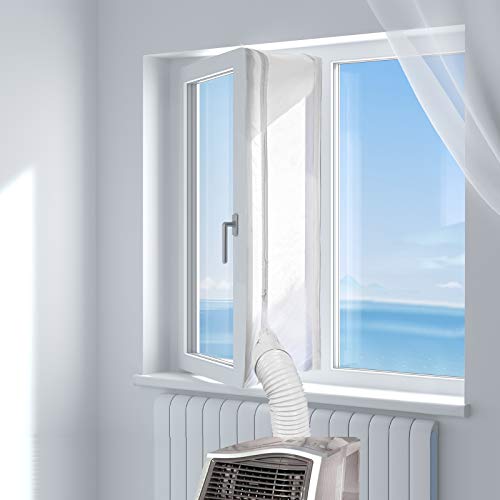
HOOMEE 157”(400CM) Universal Window Seal for Mobile Air Conditioner and Tumble Dryer – Window Kit Works with Portable AC, Easy to Install - Air Exchange Guards with Zip and Adhesive Fastener
Check price on Amazon
BLACK+DECKER Portable Air Conditioner, 10,000 BTU, BPACT10WT, White | 5,500 BTU SACC for Rooms up to 450 Sq. Ft., 3-in-1 Portable AC, Fan and Dehum with Follow Me Remote Control
Check price on Amazon
BLACK+DECKER Portable Air Conditioner, 9,000 BTU, BPACT08WT, White | 5,300 BTU SACC for Rooms up to 400 Sq. Ft., 3-in-1 Portable AC, Fan and Dehum with Follow Me Remote Control
Check price on Amazon
VOSE-FLO AC Window Seal Kit 157" for Casement Crank Out Windows, No-Drill | Portable AC Window Vent Kit, Adjustable, for Crank Casement, Push-Out Casement & Crank Skylight Windows, Waterproof
Check price on Amazon
HOOMEE 118”(300CM) Universal Window Seal for Mobile Air Conditioner and Tumble Dryer – Window Kit Works with Portable AC, Easy to Install - Air Exchange Guards with Zip and Adhesive Fastener
Check price on AmazonFinal Checklist Before You Buy
- Measure your push out window opening, including width, height, and depth to the hinge.
- Decide between a dedicated push out kit, a fabric seal, or a custom rigid panel.
- Match the exhaust hose diameter to your kit or panel port.
- Choose single-hose for simple, well-sealed rooms; dual-hose for larger or leakier spaces.
- Size the unit by room area, heat sources, and window exposure.
- Prioritize condensate handling, hose length, and noise level over cosmetic features.
- Plan your sealing strategy, including the hinge side and bottom edge.
With the right kit or panel and a careful seal, a portable air conditioner can cool a room effectively even with an outward-opening window. The setup takes an extra step compared with a sliding window, but the result is a comfortable room and a window that still works the way it was designed to.