
Portable Air Conditioner for Long Windows
A practical, research-backed guide to cooling rooms with tall or long windows. Learn how vent kits, BTU sizing, sealing, and installation details determine whether a portable AC actually keeps your space comfortable — before you commit to a purchase.
Start the GuideWhy long windows deserve special attention: A portable air conditioner does not need a standard window — it needs a way to exhaust hot air outside. Long vertical windows change the shape of that opening, which affects which window kit you need, how well the system seals, and how efficiently the unit performs. This guide focuses specifically on that scenario so you can choose with confidence.
Why Long Windows Need a Different Approach
Most portable air conditioners ship with a horizontal or sliding window kit designed for openings roughly 20 to 50 inches wide. A long vertical window — common in older homes, apartments, loft conversions, and modern floor-to-ceiling designs — presents a tall, narrow opening instead. The exhaust hose still needs to reach outside, but the panel that seals the opening must span height rather than width.
This is not a dealbreaker. It simply means you need to match three things: the window kit format, the exhaust hose reach, and the sealing method. When those align, a portable unit can cool a long-window room effectively. When they don't, hot air recirculates, the compressor works harder, and the room never quite reaches the set temperature. If you are still comparing broad window shapes, our guide on portable air conditioners for vertical windows covers the general category, while this page drills into the long-window specifics.
Window Kit Options for Long Windows
Three approaches are commonly used to vent a portable AC through a long window. Each has trade-offs in installation effort, sealing quality, and reusability.
| Kit Type | Best For | Sealing Quality | Setup Effort |
|---|---|---|---|
| Adjustable vertical panel kit | Tall single-hung or double-hung windows with a clear vertical opening | High — panels lock into the frame and cover the full height | Low to moderate |
| Universal sliding kit (extended) | Long windows where the opening can be partially closed against the panel | Moderate — depends on how well the sash presses against the panel | Low |
| Custom foam board or acrylic panel | Irregular long openings, casement-adjacent frames, or rentals where permanent changes are not allowed | High when cut and insulated carefully | Moderate to high |
If your long window is a sliding type rather than a single-hung design, the adapter requirements differ again — see the dedicated guide on portable air conditioners for sliding glass windows for that setup. For crank-out or casement styles near a long opening, the crank-out window venting guide explains how to route the hose without blocking the sash mechanism.
Sizing the Unit: BTU by Room, Not by Window
The most common buying mistake is choosing BTU based on window size. Cooling capacity should follow room volume and heat load. Long windows increase solar gain, so a modest bump above the baseline is reasonable — but oversizing creates short cycling, poor dehumidification, and uneven comfort.
| Room Size | Baseline BTU | With Large Sun-Facing Long Windows | Typical Tier |
|---|---|---|---|
| Up to 150 sq ft | 5,000 – 6,000 BTU | 6,000 – 8,000 BTU | Entry-level |
| 150 – 250 sq ft | 8,000 – 10,000 BTU | 10,000 – 12,000 BTU | Mid-range |
| 250 – 400 sq ft | 12,000 – 14,000 BTU | 14,000 – 15,000 BTU | Premium |
| 400 – 550 sq ft | 14,000 – 16,000 BTU | 16,000 – 18,000 BTU | High-end tier |
Two adjustments matter for long-window rooms. First, if the glass faces west or south and receives direct afternoon sun, add roughly 10 to 20 percent capacity or plan to use thermal curtains. Second, if the room is open to a hallway or stairwell, the unit is effectively cooling more than its stated square footage — consider single-room portable AC guidance to keep expectations realistic.
Installation and Sealing: Where Performance Is Won or Lost
A portable AC removes heat by pushing it through the exhaust hose. Every gap around the window panel lets hot outdoor air back in, which erodes cooling and can create negative pressure that pulls warm air from adjacent rooms. For long windows, the vertical span makes sealing more involved than a compact horizontal opening.
- Measure the full opening height and width before ordering a kit. Long windows often exceed the maximum extension of standard panels.
- Use a vertical kit or custom panel that covers the entire opening. Partial coverage with exposed glass defeats the purpose.
- Seal edges with foam weatherstripping or closed-cell foam tape. Pay attention to the top and bottom of the panel where sashes meet the frame.
- Insulate the exhaust hose if the run is longer than a few feet. An insulated hose reduces heat radiating back into the room — more on this in our insulated exhaust hose guide.
- Keep the hose short and straight. Bends and extensions reduce airflow and can cause the unit to overheat or trip its internal protection.
- Slope the hose slightly downward toward the window so condensate drains outside rather than pooling in the unit.
If the window opening cannot be fully sealed — for example, a listed building with restricted alterations — a portable unit that does not require a traditional window vent may be a better match. The overview of portable air conditioners that do not require a window explains the limitations and alternatives honestly.
Features That Matter for Long-Window Rooms
Adjustable vertical vent kit included
Some manufacturers include both horizontal and vertical panels. A unit that ships with a vertical adapter saves you from sourcing a third-party kit and reduces compatibility risk.
Self-evaporating condensate system
Long cooling cycles in sun-exposed rooms produce more condensate. A self-evaporating design reduces manual draining, though humid climates may still need periodic drainage — see no-drain portable AC options.
Inverter compressor
An inverter-driven unit modulates output instead of cycling on and off, which suits rooms with variable solar gain. Our inverter compressor portable AC guide explains the trade-offs.
Dual-hose intake and exhaust
Dual-hose designs draw intake air from outside rather than from the cooled room, improving efficiency in tight, well-sealed spaces. Compare designs in the intake and exhaust explainer.
Dehumidification mode
Large glass areas and humid climates pair poorly. A dedicated dehumidify mode helps maintain comfort without overcooling. See portable ACs with dehumidifier function.
Programmable timer and remote
Useful for pre-cooling before peak sun hits the glass and for shutting down during off-peak hours. A heat-and-remote combination is covered in the heat and remote control guide.
Common Mistakes to Avoid
Most dissatisfaction with portable ACs in long-window rooms traces back to a small set of avoidable errors. Avoiding them is more impactful than upgrading to a higher tier of unit.
| Mistake | Consequence | Better Approach |
|---|---|---|
| Using a horizontal kit on a tall opening | Large unsealed gaps; hot air re-enters continuously | Use a vertical kit or custom full-height panel |
| Oversizing BTU "to be safe" | Short cycling, weak dehumidification, temperature swings | Size to room volume, then adjust modestly for solar gain |
| Extending the exhaust hose | Reduced airflow, compressor strain, lower cooling output | Position the unit close to the window; keep the hose short |
| Ignoring drainage in humid weather | Water overflow, shutdowns, potential water damage | Choose self-evaporating or use a condensate pump — see condensate pump guide |
| Skipping thermal curtains | Solar gain overwhelms cooling capacity | Use reflective or blackout curtains during peak sun |
If the unit runs but the room stays warm, the problem is often venting rather than the machine itself. The troubleshooting guide on portable AC not cooling enough walks through diagnostics in order of likelihood.
Room-Specific Considerations
The same long-window challenge appears in very different rooms, and the right unit profile changes accordingly.
In a compact bedroom, a lower-capacity mid-range unit with a quiet fan setting is usually sufficient, and a vertical kit is easy to fit. The small bedroom portable AC guide covers noise and placement. In a studio or small apartment, long windows often dominate one wall, so solar gain is proportionally larger — see the studio apartment guide for capacity adjustments.
Home offices with long windows benefit from consistent temperatures during work hours, which favors inverter models; the single-room cooling guide explains how to match output to occupancy patterns. Basements and lower-level rooms with long, narrow windows face different humidity loads — the high-humidity portable AC guide is the relevant reference there.
For rooms where the long window is the only opening and privacy or security is a concern, a setup that keeps the panel in place while allowing the sash to close against it is preferable. The windowless room alternatives guide is useful if venting options are genuinely limited.
What to Look For: A Practical Checklist
- Vertical window kit compatibility — confirmed in the manual or product specification, not assumed.
- Correct BTU for room size — adjusted modestly for sun exposure, not dramatically oversized.
- Hose length and diameter — short enough to reach the window without extension.
- Sealing accessories included — foam tape, weatherstripping, or insulation panels.
- Condensate management — self-evaporating, bucket, or pump-ready.
- Noise rating — relevant for bedrooms and offices; check decibel figures in the specification.
- Filtration — a washable filter is standard; some units add air-purifier stages, covered in the air purifier portable AC guide.
- Mobility — casters and weight matter if the unit moves between rooms; see portable ACs on wheels.
For a broader feature comparison that applies across window types, the portable air conditioner buying checklist is a useful companion to this page. If you are weighing a portable unit against a window-mounted design, the portable vs window unit comparison clarifies where each format wins.
Frequently Asked Questions
Can a portable air conditioner work with long windows?
Yes. The requirement is a sealed path for the exhaust hose, not a specific window shape. Long vertical windows need an adjustable vertical kit or a custom panel that covers the full height of the opening. When the panel seals properly, the unit performs as intended.
What size portable AC do I need for a room with long windows?
Size by room square footage first: roughly 5,000–6,000 BTU up to 150 sq ft, 8,000–10,000 BTU for 150–250 sq ft, and 12,000–14,000 BTU for 250–400 sq ft. Add a modest margin if the glass faces direct sun, but avoid large oversizing, which causes short cycling.
Do long windows let more heat in and affect AC performance?
Large glass areas increase solar heat gain, especially on west- and south-facing walls. Compensate with thermal curtains, a slightly higher BTU rating, and tight sealing around the window kit. The window itself is not the problem; unmanaged solar gain is.
How do I seal a portable AC window kit on a long window?
Extend the vertical panel to cover the full opening, press the sash against it where possible, and fill remaining gaps with foam weatherstripping or a fitted foam board. Keep the exhaust hose short, straight, and sloping slightly downward.
Can I use a sliding window kit on a long vertical window?
A horizontal sliding kit is usually the wrong format for a tall vertical opening. Look for a vertical kit or a universal kit with panels that extend to the full height. Some manufacturers sell model-specific vertical adapters, which are the most reliable option.
Will a portable AC with a long window cool as well as a window unit?
With correct sizing and a well-sealed vertical kit, a portable unit can cool a single room effectively. Window units have a slight efficiency edge because the heat exchanger sits outside the room, but portable units offer placement flexibility and do not require permanent installation. For a direct comparison, see the portable vs window unit guide.
Ready to Compare Portable AC Options?
Review the recommended units below, filtered for long-window compatibility, and match the specifications to the checklist above before deciding.
View Recommended UnitsRecommended Portable Air Conditioners for Long Windows
⚠️ AFFILIATE DISCLOSURE: This website contains affiliate links. As an Amazon Associate, we earn from qualifying purchases. If you make a purchase through these links, we may receive a small commission at no additional cost to you. Read our full affiliate policy.

Frigidaire 5,000 BTU Window-Mounted Air Conditioner, Cools Up to 150 Sq. Ft., Quiet Operation, Effortless Temperature Control, 2 Fan Speeds, Auto Restart, White
Check price on Amazon
10000 BTU Portable Air Conditioners, Air Conditioner for Room Cools Up to 450 Sq.Ft with 24H Timer, Remote Control, Dehumidifier, 3-IN-1 AC Unit with Window Kit for Bedroom, Indoor Rooms, Home Office
Check price on Amazon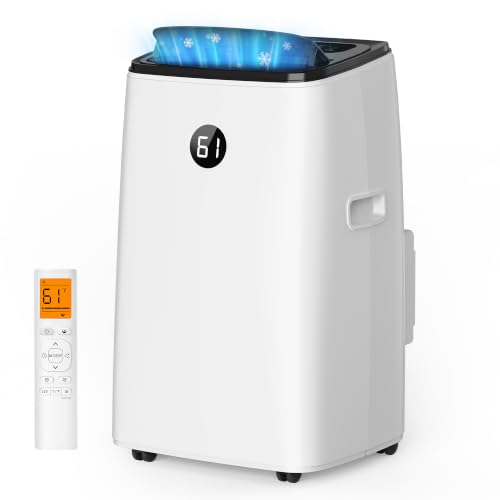
AGTANA 14000 BTU Portable Air Conditioner for Large Room up to 700 Sq. Ft, 3-in-1 Self-Evaporating AC with Fan & Dehumidifier, Floor Standing Portable AC Unit with Remote Control, Auto Swing, White
Check price on Amazon
GE Window Air Conditioner 5,000 BTU AC Unit for Small Spaces up to 150 sq ft with Manual Controls & 2 Cooling Modes, Easy Install Kit, White
Check price on Amazon
BLACK+DECKER Portable Air Conditioner, 10,000 BTU, BPACT10WT, White | 5,500 BTU SACC for Rooms up to 450 Sq. Ft., 3-in-1 Portable AC, Fan and Dehum with Follow Me Remote Control
Check price on Amazon
BLACK+DECKER Portable Air Conditioner, 9,000 BTU, BPACT08WT, White | 5,300 BTU SACC for Rooms up to 400 Sq. Ft., 3-in-1 Portable AC, Fan and Dehum with Follow Me Remote Control
Check price on Amazon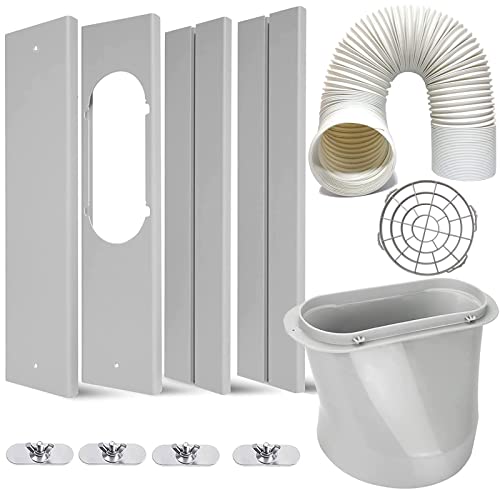
LEZIFU Portable Air Conditioner Kit with Hose, Adjustable Window Seal with 5.9 Inch Diameter 59" Length Hose for Vertical/Horizontal Window
Check price on Amazon