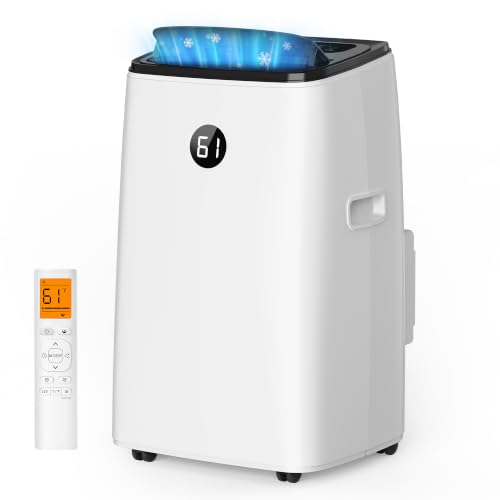
Portable Air Conditioner for Screened Porch: Complete Cooling Guide
Turn your screened porch into a comfortable retreat with the right portable AC, smart venting, and humidity control strategies.
Explore Recommended UnitsKey Takeaways
- Screened porches are semi-outdoor spaces, so a portable AC needs extra capacity to overcome constant air exchange.
- Plan 20 to 30 BTU per square foot, then add capacity for sun exposure, screen type, and local climate.
- Venting is the biggest challenge: use a temporary panel, zip-in screen adapter, or custom plywood insert for the exhaust hose.
- Humidity control matters as much as cooling; look for strong dehumidification or a self-evaporating design.
- Models with a condensate pump or continuous drain simplify operation in humid porch conditions.
Why Cooling a Screened Porch Is Different
A screened porch is one of the most rewarding spaces in a home, but it is also one of the hardest spaces to cool. Unlike a bedroom or living room, a screened porch exchanges air with the outdoors through mesh panels, gaps, and an uninsulated structure. That constant air exchange means a portable air conditioner cannot simply "seal and cool" the way it would in an enclosed room.
Still, a properly sized and well-vented portable air conditioner for screened porch use can make a meaningful difference. The goal is not to turn a porch into a refrigerated room; the goal is to take the edge off heat and humidity so the space becomes usable during warmer months. Understanding this distinction is the first step toward a realistic setup.
This guide walks through sizing, venting, humidity management, placement, and product selection. If you are also considering other tricky spaces, our guide on portable air conditioners for rooms without windows covers related venting challenges that apply to porches as well.
How a Portable AC Behaves on a Screened Porch
Portable air conditioners draw in room air, cool it, and exhaust hot air through a hose. On a screened porch, the unit faces two opposing forces: it is trying to cool air that is continuously being replaced by outdoor air, and it is exhausting hot air into an environment that already has high heat gain.
Two practical consequences follow. First, capacity matters more than in an enclosed room of the same size. Second, the exhaust hose must lead cleanly outside the screened area so hot air does not loop back into the porch. Units with a single hose pull some cooled indoor air out through the exhaust, which is inefficient in open spaces; dual-hose designs separate intake and exhaust, but they are less common in portable form factors.
Practical rule: Treat a screened porch as roughly 1.5x to 2x harder to cool than an enclosed room of the same square footage. A 200 sq ft porch often behaves like a 300 to 400 sq ft enclosed room in terms of cooling demand.
How to Size a Portable AC for a Screened Porch
Sizing starts with square footage, then adjusts for exposure. Standard enclosed-room sizing uses about 20 BTU per square foot. For a screened porch, plan on 20 to 30 BTU per square foot as a starting baseline, then adjust upward for full sun, dark screen mesh, or a hot climate.
| Porch Size | Baseline Capacity | Sun-Exposed or Humid Climate | Best For |
|---|---|---|---|
| Up to 120 sq ft | 5,000 – 6,000 BTU | 6,000 – 8,000 BTU | Small reading porch, starter tier |
| 120 – 200 sq ft | 6,000 – 8,000 BTU | 8,000 – 10,000 BTU | Mid-size porch, essential tier |
| 200 – 300 sq ft | 8,000 – 10,000 BTU | 10,000 – 12,000 BTU | Family porch, mid-range tier |
| 300 – 400 sq ft | 10,000 – 12,000 BTU | 12,000 – 14,000 BTU | Large porch, premium tier |
| 400+ sq ft | 12,000 – 14,000 BTU+ | 14,000 BTU+ or multiple units | Wraparound or deep porch, high-end tier |
These figures are planning estimates. Shade, ceiling fans, screen density, and whether the porch has solid walls on one or more sides all shift the result. If your porch is closer to an enclosed sunroom, use enclosed-room sizing; if it is fully open with mesh on three sides, lean toward the higher end of the range.
For a deeper walkthrough of capacity math, see our guide on how to size an air conditioner. If your porch is smaller than average, the principles in our portable AC guide for very small rooms also apply.
Venting Options for a Screened Porch
Venting is where most screened porch setups succeed or fail. The exhaust hose must discharge hot air outside the screened envelope. There are three common approaches:
1. Temporary Screen Panel Insert
A fabric or vinyl panel with a hose port can be zipped or velcroed into a screen opening. This is the least invasive option and works well for renters or homeowners who do not want permanent modifications. The panel should seal tightly around the hose to prevent hot air from re-entering.
2. Custom Plywood or Acrylic Insert
A rigid insert fitted into a screen frame with a circular cutout for the hose offers a better seal and more durability. This is a good choice for a porch you plan to cool season after season. Weatherstripping around the insert improves efficiency further.
3. Dedicated Exhaust Port Through a Solid Wall
If one side of the porch is a solid wall, a permanent exhaust port with a weatherproof flap is the cleanest solution. This requires more work but delivers the best sealing and the least visual clutter. It also pairs well with a portable AC insulated exhaust hose to reduce heat loss along the hose run.
Avoid venting into the porch itself. Exhausting hot air into the screened area, even partially, will cancel most of the cooling effect and can raise humidity. The hose must always lead outside the screened envelope.
If your porch uses unusual window or screen configurations, our guides on portable AC venting for crank-out windows and portable AC for sliding glass windows cover adapter options that translate well to porch screen frames.
Managing Humidity on a Screened Porch
Cooling and dehumidification are linked, but a screened porch stresses both. As the unit cools, moisture condenses on the evaporator coil and collects in a tank or drains out. In an open porch, outdoor humidity constantly replenishes what the unit removes, so the dehumidification effect is partial rather than absolute.
Look for a unit with a dedicated dehumidification mode, and consider a model with a condensate pump if you plan to run it for long sessions. Self-evaporating designs recycle condensate to cool the condenser coil, which reduces manual draining, but they still need a drain path in very humid conditions.
If your porch sits in a humid climate, our detailed guides on portable AC for high humidity and portable AC for humid climates explain how to balance cooling and moisture removal. A unit with humidity control or a built-in condensate pump is a practical upgrade for porch use.
Placement and Airflow Strategy
Placement affects performance more on a porch than in an enclosed room. Position the unit near the venting point to keep the exhaust hose short and straight. Avoid sharp bends, which trap heat and reduce airflow. Aim the cool air discharge toward the seating area, not toward the screens, so cooled air is used before it escapes.
- Keep the unit on a level, stable surface; porch floors and decking can shift.
- Leave clearance around intake and exhaust grilles as specified by the manufacturer.
- Use a ceiling fan on low speed to mix cool air without creating a strong draft toward the screens.
- Shade the porch with blinds, roll-down screens, or an awning during peak sun hours to reduce load.
If the porch has multiple zones or you want to extend cooling into an adjacent room, our guide on portable AC for multiple rooms explains the trade-offs.
Features That Matter for Screened Porch Use
Not every portable AC feature is equally useful on a porch. The following list prioritizes what actually helps in a semi-outdoor space.
- Strong dehumidification: Porches in humid regions need moisture removal as much as temperature reduction.
- Condensate pump or continuous drain: Reduces interruptions during long sessions.
- Insulated exhaust hose: Limits heat radiating back into the porch along the hose run.
- Adjustable fan speeds and louvers: Lets you direct airflow toward seating and away from screens.
- Remote control or app control: Convenient when the unit is placed across the porch.
- Durable casters: Porch flooring and thresholds can be uneven.
- Washable filter: Porches collect more dust and pollen than enclosed rooms.
For a broader checklist, see our guide on what to look for in a portable air conditioner. If you want a unit that also handles heating in shoulder seasons, a portable AC with heat pump or a portable AC and heater combination can extend porch usability.
Common Mistakes to Avoid
- Undersizing the unit. A porch that is only "almost" cool is a porch nobody uses. Size up rather than down.
- Venting into the porch. Hot exhaust air must leave the screened area entirely.
- Ignoring humidity. A unit that cools but leaves the porch clammy will not feel comfortable.
- Blocking airflow. Furniture placed in front of the discharge or intake reduces performance.
- Skipping the drain plan. In humid conditions, tanks fill quickly; have a drain or pump strategy ready.
- Expecting enclosed-room performance. A screened porch will always exchange air with the outdoors; set realistic expectations.
Maintenance for Porch-Mounted Portable AC Units
Porch environments are harder on equipment than indoor rooms. Dust, pollen, and humidity accelerate filter loading and coil fouling. Clean or replace the filter every two to four weeks during heavy use, and inspect the exhaust hose for cracks or kinks. Drain and clean the condensate tank regularly to prevent mold and odor.
At the start of each cooling season, check the venting panel or insert for gaps, confirm the hose seals tightly, and test the unit in fan-only mode before running the compressor. Our broader AC maintenance guide covers seasonal checklists that apply to portable units as well.
Alternatives Worth Considering
A portable AC is not the only option for a screened porch. A ductless mini-split can be a long-term solution if the porch has a solid wall for mounting and you are willing to invest in professional installation. A window AC can work if the porch has a suitable window frame, though many screened porches do not. Evaporative coolers are effective in dry climates but add humidity in humid climates, which is usually the opposite of what a porch needs.
If your porch is adjacent to a room that already has cooling, a portable AC to supplement central air can help bridge the gap on hot days. For porches with unusual openings, our guides on portable AC for casement windows and portable AC for windows that open out cover adapter strategies that translate to screen frames.
Frequently Asked Questions
Can a portable air conditioner cool a screened porch effectively?
How do I vent a portable AC on a screened porch?
What BTU size do I need for a screened porch?
Will a portable AC handle humidity on a screened porch?
Does a portable AC need a drain on a screened porch?
Can I leave a portable AC on a screened porch year-round?
Ready to Choose a Portable AC for Your Porch?
Browse our curated selection of portable air conditioners suited to screened porch conditions, including units with strong dehumidification and flexible venting options.
View Recommended Units