Portable Air Conditioner Pickup Today
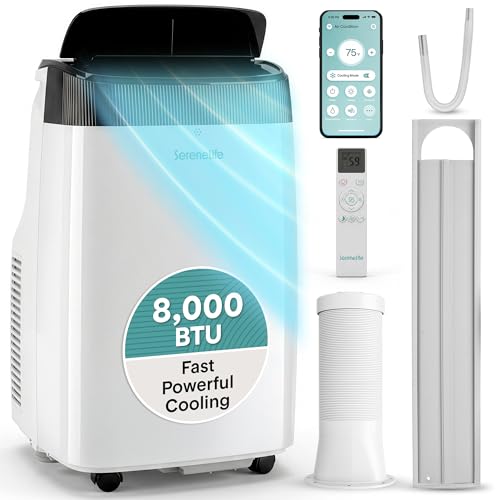
When the heat arrives and waiting days for delivery is not an option, a portable air conditioner available for same-day pickup gets your room cool within hours. This guide explains how to choose, size, vent, and set up a portable AC so you can walk into a store with confidence and walk out ready to cool.
VIEW RECOMMENDED UNITSQuick answer: A portable air conditioner with same-day pickup is the fastest path to cooling a room that has no ductwork or window unit. Confirm live store inventory before you leave, match BTU to square footage, and make sure your window style works with the included vent kit. Single-hose units are the most common option on store shelves; dual-hose and inverter models sit in the mid-range and premium tiers and offer stronger, more stable cooling.
Why Same-Day Pickup Changes the Buying Decision
Most shoppers researching a portable air conditioner are not browsing for a future renovation. They are dealing with a heat wave, a broken central system, a finished basement that stays warm, or a home office that becomes unbearable by mid-afternoon. In those situations, delivery timelines matter as much as the product itself. Choosing a unit that is already sitting on a shelf near you removes the biggest source of delay.
Same-day pickup also lets you inspect the box before you commit. You can confirm the vent kit includes the window panel you need, check that the hose length suits your room layout, and verify the unit's physical footprint fits the space where it will sit. Online listings are useful, but a quick in-store look at the hose diameter and window slider can prevent a frustrating return trip.
Retailer inventory pages usually show the count of units at each nearby location. That count updates throughout the day, so check it right before you leave and consider calling the store to hold a unit if the number is low. During peak summer weeks, popular capacities can sell out within hours, and the model you researched online may no longer be the one on the shelf.
How a Portable AC Works in a Nutshell
A portable air conditioner pulls warm air from the room, passes it over an evaporator coil, and blows cooled air back into the space. The heat it removes has to go somewhere, so a compressor and condenser coil inside the unit reject that heat into an exhaust stream that leaves through a hose and a window kit. This is why a portable AC is not truly "ventless," even though some listings use that phrasing loosely.
Single-hose units draw room air across the condenser and push it outside. That creates a slight negative pressure in the room, which pulls in warm outside air through gaps around doors and windows. Dual-hose units separate the intake and exhaust streams, which reduces that pressure imbalance and generally delivers more consistent cooling in larger rooms. Inverter compressor models sit at the higher end of the market and modulate compressor speed instead of cycling on and off, which tends to improve comfort and energy use over long cooling sessions.
Understanding this airflow model explains most of the practical advice that follows. Sealing the window kit properly, keeping the exhaust hose short and straight, and choosing a unit sized correctly for the room all matter more than any single feature on the spec sheet.
Sizing: Match BTU to the Room Before You Buy
Portable AC capacity is measured in BTU per hour, and the right number depends on room volume, sun exposure, ceiling height, and how many people or heat-producing devices share the space. The table below gives a practical starting point that lines up with the capacity ranges used across this site.
| Room Size | Suggested Capacity | Typical Portable AC Tier | Best For |
|---|---|---|---|
| Up to 150 sq ft | 5,000 - 6,000 BTU | Entry-level / starter tier | Small bedrooms, dorms, tiny offices |
| 150 - 250 sq ft | 8,000 - 10,000 BTU | Essential tier / mid-tier | Standard bedrooms, home offices, studio apartments |
| 250 - 400 sq ft | 12,000 - 14,000 BTU | Mid-range / premium | Living rooms, open-plan studios, small basements |
| 400+ sq ft | 14,000 BTU and above | High-end tier / dual-hose | Large living areas, commercial rooms, server closets |
Two adjustments matter in practice. First, add roughly 10 percent capacity for a room that gets strong afternoon sun or sits directly under a roof. Second, do not oversize dramatically. An oversized portable AC cools the air quickly, shuts off, and leaves the room feeling clammy because it has not run long enough to remove humidity. If you are unsure which side of a range you fall on, size up one step rather than several. For a closer look at single-room scenarios, see the guide on portable air conditioners for a single room.
Single-Hose, Dual-Hose, and Inverter: Which Tier Fits You
The three main portable AC configurations map cleanly onto market tiers, and knowing which one you need saves time when you are standing in the aisle.
Single-Hose Units (Entry-Level to Mid-Tier)
These are the most common portable ACs available for same-day pickup. They use one hose for exhaust and are simple to set up, with the tradeoff of mild negative pressure in the room. Single-hose models are a solid choice for a bedroom or home office where the unit runs for a few hours at a time. If noise is a concern, look at the published decibel rating rather than the marketing language, and check the guide on what to do when a portable AC is not cooling enough if performance feels weak after setup.
Dual-Hose Units (Mid-Range to Premium)
Dual-hose designs separate intake and exhaust, which keeps room pressure closer to neutral and improves cooling consistency in larger spaces. They cost more than single-hose units within their class but are usually the better fit for rooms above 250 square feet or for spaces where doors and windows are not well sealed. A dual-hose unit also tends to hold temperature more steadily when the outdoor air is very hot.
Inverter Compressor Units (Premium to High-End Tier)
Inverter models vary compressor speed instead of cycling fully on and off. The result is smoother temperature control, less start-up noise, and typically better efficiency across long cooling sessions. These units sit at the top of the portable category and make sense when the portable AC will be the primary cooling source for a room through an entire season. The guide on portable air conditioners with an inverter compressor covers the tradeoffs in more depth.
Window Compatibility: The Most Overlooked Step
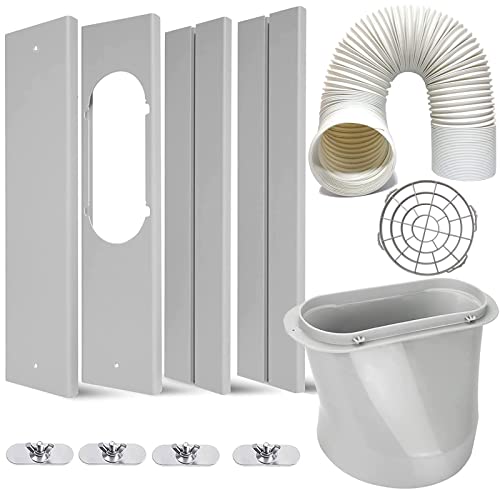
Every standard portable AC ships with a window kit, but not every window style works with the default kit. The kit usually consists of a sliding panel that fills the gap between the window sash and the frame, plus a hose connector. Before you buy, identify your window type.
- Vertical sliding windows are the easiest fit and are what most kits are designed for.
- Horizontal sliding windows need a kit with a taller panel or an adapter plate.
- Casement and crank-out windows require a dedicated adapter because the sash opens sideways rather than up and down.
- Awning windows that open outward need a special bracket to hold the hose panel in place.
If your window is unusual, the adapter is the part to confirm before checkout. The guides on portable AC for casement windows and portable AC for sliding glass windows walk through the specific kits and sealing methods. If the room has no usable window at all, the page on portable AC for rooms without windows covers the limited options honestly, because a true ventless unit will not match the cooling of a vented one.
Setup Checklist for Same-Day Cooling
Once you have the unit home, the goal is cool air within the hour. Work through this checklist in order.
Before powering on
- Place the unit on a level, hard surface and leave at least 12 to 18 inches of clearance around the intake and exhaust grilles.
- Attach the exhaust hose and keep it as short and straight as possible; loops and kinks reduce airflow.
- Install the window kit and seal any gaps with the included foam or weatherstripping.
- Check that the hose connector is fully seated in the window panel so hot air does not leak back into the room.
- Confirm the circuit can handle the unit's rated amps; avoid sharing the outlet with other high-draw appliances.
First hour of operation
- Close windows and doors in the room to keep conditioned air inside.
- Set the mode to cool and the fan to high until the room reaches the target temperature, then drop to a lower fan speed.
- Expect the first 20 to 30 minutes to feel gradual; portable units cool the air in the room rather than blasting it from a duct.
- Check the drain option. Many units self-evaporate condensate in normal humidity, but very humid days may require manual draining or a condensate pump.
- Listen for unusual vibration or rattling and reseat the hose if you hear it.
For rooms with persistent humidity, the guide on portable AC for high humidity explains how dehumidification mode interacts with cooling and when a unit with a condensate pump is the better fit. If your unit runs but does not blow cold air, the troubleshooting page on portable AC not blowing cold air covers the common causes in order of likelihood.
Where Portable ACs Make the Most Sense
A portable AC is not a replacement for central air or a mini-split in a whole-home sense. It is a targeted solution, and it excels in specific scenarios.
In rentals and older homes without ductwork, a portable unit delivers cooling without permanent installation. In a small apartment, a single mid-tier unit can cover the main living area while the bedroom stays comfortable. In a home office without good ventilation, a portable AC for an office without windows paired with a vent solution keeps afternoon work tolerable. For server closets and small equipment rooms, a portable AC for a server closet provides supplemental cooling when the building system does not reach that space.
Portable units are also useful as backup cooling when a central system fails, and the page on using a portable AC to supplement central air explains how to position the unit so it does not fight the main system. For outdoor-adjacent spaces, a portable AC for a screened porch can take the edge off a hot afternoon, though venting and sealing require more care than an indoor room.
Features Worth Prioritizing in Store
When you are comparing units on the shelf, these features separate a frustrating purchase from a good one.
- Adjustable louvers and fan speeds let you direct airflow where it matters and run quieter at night.
- Programmable timer and remote control make it practical to cool a bedroom before you go to sleep and shut off after you are comfortable.
- Self-evaporating condensate system reduces how often you need to drain the unit, which matters in humid climates.
- Washable filter keeps maintenance simple and protects cooling performance over the season.
- Dual-hose or inverter compressor for rooms above 250 square feet or for all-day runtime.
If you want a unit that also handles heating in shoulder seasons, the guides on portable AC with a heat pump and portable AC and heater combination explain what the heat mode can realistically deliver. For buyers who want more detail on what separates the tiers, the page on what to look for in a portable air conditioner is a useful companion to this guide.
Ready to Cool Down Today?
Check live availability at a store near you and pick up a portable air conditioner that fits your room, your window, and your setup needs.
VIEW PORTABLE AC OPTIONSFrequently Asked Questions
Can I really get a portable air conditioner for pickup today?
Yes. Many large retailers and local hardware stores list live inventory online, so you can confirm a unit is in stock at a nearby location before you leave. Choosing a model that is available at a store close to you is the fastest path to same-day cooling, especially during heat waves when delivery windows stretch out.
What size portable AC do I need for same-day pickup?
Match capacity to room size: roughly 5,000-6,000 BTU for rooms up to 150 sq ft, 8,000-10,000 BTU for 150-250 sq ft, and 12,000-14,000 BTU for 250-400 sq ft. Single-hose units are the most common in-store option, while dual-hose and inverter models are usually found in the mid-range and premium tiers.
Do portable air conditioners need a window for venting?
Yes, a standard portable AC needs to exhaust hot air outside, typically through a window using a window kit. If your window style is unusual, window kit adapters for casement, crank-out, and sliding windows are available. True ventless designs exist but they do not deliver the same cooling performance as a vented unit.
How long does it take to set up a portable air conditioner?
Most single-hose units can be assembled and vented in 15 to 30 minutes. You will need to attach the exhaust hose, insert the window kit, seal gaps, and let the unit run for a few minutes before judging performance. Dual-hose models take slightly longer because there are two hoses to route.
Can a portable AC cool more than one room?
A portable AC is designed to cool a single room or a single open zone. Moving it between rooms works, but cooling multiple rooms at once is inefficient because the unit must exhaust hot air and cannot distribute conditioned air through ductwork. For multi-room needs, a mini-split or central system is the better long-term solution.