Portable Air Conditioner for Side Opening Windows
Everything you need to know about venting a portable AC through casement, crank-out, and side-hinged windows — kits, sealing, and smart buying decisions.
Explore the GuideWhy this matters: Most portable air conditioners ship with a window kit designed for double-hung (vertical sliding) windows. If your home has side opening windows — also called casement, crank-out, or awning windows — the standard kit simply won't fit. This guide explains your options, how to seal the gap correctly, and which features to look for so your portable AC performs at its best.
Understanding the Side Opening Window Challenge
Side opening windows swing outward on a hinge rather than sliding up and down. Common examples include casement windows, crank-out windows, and awning windows. Their opening shape is tall and narrow, and the sash moves away from the frame — which creates two problems for portable AC venting:
- No fixed track for a standard panel: Most portable AC window kits rely on a sliding panel that wedges into a vertical or horizontal track. A side-hinged window has no such track.
- The opening must stay partially open: The exhaust hose needs to pass through the window, so the window cannot be fully closed. You must seal the remaining gap to prevent hot outdoor air from rushing in.
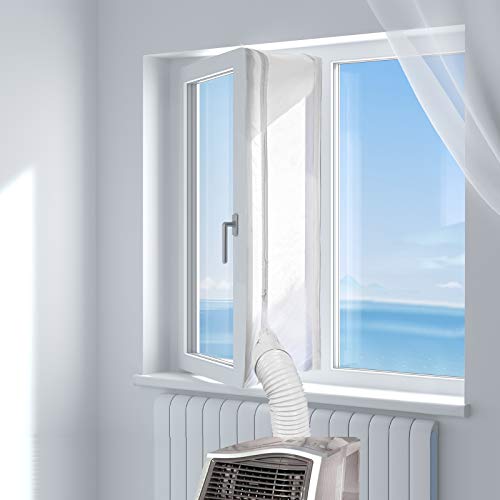
The good news: dedicated portable AC window kits for casement windows and crank-out window kits solve both problems. These kits use a fabric or rigid panel that wraps around the open sash and seals the perimeter, with a hose port built in.
How Venting Works Through a Casement Window
A portable air conditioner pulls heat from your room and expels it through an exhaust hose. In a single-hose model, the same hose handles exhaust while room air is drawn in to cool the condenser — which slightly depressurizes the room. In a dual-hose model, one hose brings in outdoor air for the condenser and the second expels hot air, which is generally more efficient and avoids negative pressure.
For a side opening window, the hose exits through a sealed panel that fills the open portion of the window. The key is creating an airtight seal around the panel and the sash. Any gap lets hot, humid outdoor air back in and undermines cooling performance. If you are still deciding between hose configurations, our guide on single-hose portable AC units explains the trade-offs in detail.
Note that not every portable AC needs outdoor venting. If venting through a side window is impossible, you may want to explore portable air conditioners without a window vent, though these typically rely on evaporative cooling and work best in dry climates.
Window Kit Options for Side Opening Windows
There are three main approaches to venting a portable AC through a side opening window. The right choice depends on your window type, how permanent you want the installation to be, and how much sealing you are willing to DIY.
| Kit Type | Best For | Sealing Quality | Installation Effort |
|---|---|---|---|
| Fabric casement window seal | Renters, temporary setups, odd window sizes | Good when zipped and taped correctly | Low — wraps around the sash |
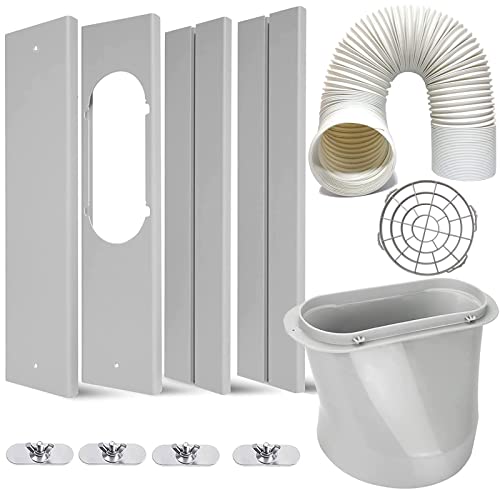
| Rigid panel casement kit | Long-term installations, high-wind areas | Excellent — solid panel with foam gaskets | Medium — measure and cut to size |
| DIY acrylic or plywood insert | Custom window shapes, permanent homes | Excellent when weather-sealed | High — cutting, drilling, and sealing |
Fabric seals are the most common entry-level solution and work well for portable air conditioners for casement windows in apartments. Rigid kits sit in the mid-range tier and offer better insulation and durability. Custom inserts are the top-tier approach for homeowners who want a permanent, professional-grade seal. If your window opening is especially narrow, review our notes on portable AC for small windows before ordering a kit.
Step-by-Step Installation for a Side Opening Window
- Measure the window opening. Record the height and width of the open gap, plus the depth of the frame. Kits are sized to these dimensions, so accuracy matters.
- Choose and prepare the kit. Fabric seals slip over the open sash; rigid panels may need trimming. Follow the manufacturer's template rather than eyeballing the cut.
- Attach the hose adapter. Connect the exhaust hose to the kit's hose port, then to the AC unit. Keep the hose as short and straight as possible — long, kinked runs reduce airflow.
- Seal the perimeter. Use the included adhesive tape or foam gaskets along every edge. Pay special attention to the hinge side and the top of the sash, where gaps are most common.
- Close and lock the window against the panel. The sash should press firmly against the seal without crushing the hose. Test that the window cannot be opened from outside.
- Insulate the hose if needed. In hot climates, an exhaust hose insulation sleeve prevents heat radiating back into the room.
Sealing Tips That Make a Real Difference
Even a well-fitted kit can leak. These practices are what separate a cool room from a struggling AC:
- Seal the hinge gap. On crank-out windows, the hinge side leaves a triangular gap. Fold the fabric seal into this corner or add foam weatherstripping.
- Use removable caulk for rigid panels. It seals like caulk but peels away cleanly at the end of the season.
- Check the hose connections. Loose hose couplings are a hidden source of hot air intrusion. Twist and lock every joint.
- Keep the hose run short. A hose that loops or bends sharply traps heat and stresses the compressor.
- Shade the exterior hose. Direct sun on the hose can raise exhaust temperatures and reduce cooling efficiency.
If your unit runs constantly but the room stays warm, the seal is the first thing to inspect. Our troubleshooting guide on portable AC not cooling enough walks through the full diagnostic sequence.
Features to Prioritize When Buying
Not all portable ACs are equally suited to casement window setups. Focus on these specifications:
Dual-Hose Design
Dual-hose models draw condenser air from outside and exhaust hot air out, avoiding negative pressure and improving efficiency. Look for this on mid-range and premium units.
Casement-Compatible Kit
Confirm the included kit supports vertical openings. Some manufacturers sell casement adapters separately — check before ordering.
Self-Evaporating System
Units with a self-evaporating system recycle condensate to cool the condenser, reducing how often you drain the tank.
Inverter Compressor
An inverter compressor modulates speed instead of cycling on and off, which is quieter and more energy-efficient in the long run.
Wi-Fi Control
Smart control lets you schedule cooling and monitor the unit remotely — useful for rooms that heat up fast in the afternoon.
Drain-Free Operation
In moderately humid climates, a portable AC with no drain required saves maintenance effort. In very humid regions, plan for manual draining.
Sizing the Unit for Your Room
Portable AC capacity is measured in BTU. Undersizing means the unit runs nonstop without reaching the set temperature; oversizing causes short cycling and poor dehumidification. As a rule of thumb, add 10–20% capacity for rooms with large windows, west-facing sun exposure, or a kitchen nearby.
Small bedrooms and home offices typically fall in the entry-level capacity range, while open-plan living areas need mid-range or high-end capacity. For a precise starting point, see our guide on portable AC for very small rooms, and scale up from there. If you are cooling a basement with a small side window, the basement window venting guide covers the specific challenges of below-grade installations.
Common Mistakes to Avoid
- Leaving the sash wide open. The larger the open gap, the harder it is to seal. Position the kit so the sash opens only as far as the hose requires.
- Using a double-hung kit on a casement window. The panel will not fit, and improvised tape-and-cardboard seals leak badly.
- Ignoring the hose length limit. Most manufacturers cap hose extensions at a specific length; exceeding it overheats the compressor.
- Blocking the air intake. Keep at least 12–18 inches of clearance around the unit's intake and exhaust grilles.
- Skipping the window lock. Security matters — choose a kit that lets you lock the sash against the panel.
Alternatives When Casement Venting Is Not Practical
In some homes, the side opening window faces a walkway, is very small, or cannot be left partially open for security reasons. In those cases, consider these alternatives:
- Vent through a door or wall: Some homeowners use a dedicated vent panel in a sliding door or an exterior wall. This is a more permanent solution.
- Non-vented cooling: Portable AC for a room with no window options exist but are limited to evaporative coolers, which suit dry climates only.
- Mini-split systems: A portable ductless mini-split needs only a small wall penetration and is far more efficient for permanent installations.
- Window AC units: If the window frame can support it, a through-the-wall or window unit may be a better long-term fit.
For homes with multiple rooms and mixed window types, a multi-zone mini-split is often the most efficient long-term investment compared with running several portable units.
Maintenance for Side-Window Setups
A sealed casement installation traps dust and pollen more than a sliders setup because airflow paths are narrower. Clean the washable filter every two weeks during peak season, and inspect the window seal monthly for tears or gaps. At the start of each season, vacuum the hose interior and check that the kit's adhesive strips still grip. If you notice water pooling inside the kit, the drain pan or self-evaporation system may need attention — see our guide on portable AC without a drain hose for models that minimize this issue.
Frequently Asked Questions
Can I use a standard portable AC window kit on a side opening window?
No. Standard kits are designed for double-hung or sliding windows with a track. For side opening windows you need a casement-specific fabric seal or a rigid panel kit sized to your window.
Do I need a dual-hose unit for a casement window?
Not strictly, but dual-hose units are generally more efficient and avoid negative pressure. They are recommended for rooms that are hard to cool or for long cooling sessions.
How do I seal the hinge gap on a crank-out window?
Fold the fabric seal into the triangular corner at the hinge side, or add foam weatherstripping along the hinge edge before closing the sash against the panel. Removable caulk works for rigid panels.
Will a portable AC work in a room with only a small casement window?
Yes, provided the kit seals the opening properly. Small windows require precise sizing — see our guide on small window venting for kit recommendations.
Is it safe to leave the window partially open with a portable AC running?
Yes, as long as the kit seals the open portion and the window is locked against the panel. Never leave the window unsealed and open while the AC runs — it wastes energy and compromises security.
Quick Buying Checklist
- Measure your window opening height, width, and frame depth.
- Confirm the unit includes or supports a casement window kit.
- Choose dual-hose for efficiency, single-hose for simplicity.
- Match BTU capacity to room size and sun exposure.
- Check for self-evaporation to reduce draining.
- Look for inverter technology if quiet operation matters.
- Verify hose length limits and available extension kits.