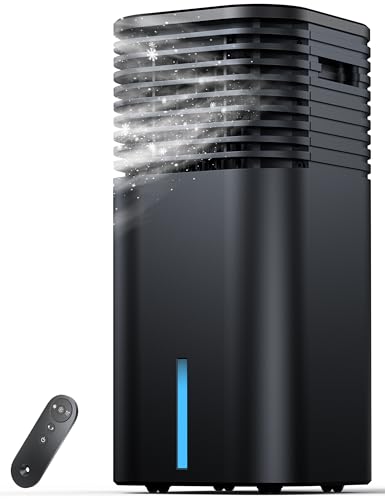
Portable Air Conditioner with Evaporative Technology
Understand how evaporative cooling works, when it outperforms a compressor-based portable AC, and how to pick the right unit for your climate and room.
Explore the GuideWhy this matters: "Portable air conditioner with evaporative technology" is a phrase used loosely by retailers, and that ambiguity causes plenty of mismatched purchases. Some units are true compressor-based air conditioners with an added evaporative boost; others are pure evaporative coolers (swamp coolers) that contain no refrigerant at all. This guide untangles the terminology, explains what each design does well, and helps you decide which one fits your home.
What Evaporative Technology Actually Does
Evaporative cooling relies on a simple physical principle: when water evaporates, it absorbs heat from the surrounding air. A unit pulls warm, dry outdoor air through a water-saturated cooling pad, and the air that exits is cooler and more humid. No compressor, no refrigerant, and no exhaust hose are involved.
A compressor-based portable air conditioner, by contrast, moves heat from indoors to outdoors using a refrigerant cycle, which is why it requires venting. When a product is marketed as a "portable air conditioner with evaporative technology," it usually falls into one of two categories:
- True evaporative cooler: A standalone portable evaporative air cooler with a fan and cooling pads. No compressor, no hose, no refrigerant.
- Hybrid or enhanced unit: A compressor-based portable AC that uses evaporative condensate management (often called a self-evaporating system) to improve efficiency and reduce draining, rather than to cool the room air directly.
Understanding which category a product belongs to is the single most important step before buying. The two designs serve very different climates and rooms.
How the Cooling Process Works
In a pure evaporative cooler, a pump circulates water over a honeycomb-style cooling pad. A fan draws warm air through the wet pad, where evaporation absorbs heat. The cooled air is then blown into the room. Because the process adds moisture, it works best in hot, dry air — think desert or semi-arid climates with low relative humidity.
In humid climates, the air is already close to saturation, so evaporation slows dramatically. The fan still moves air, but the temperature drop shrinks. This is why evaporative coolers underperform in coastal or tropical regions, and why many buyers in humid areas should look at compressor-based options instead — our guide on portable AC for humid climates explains the alternatives.
Some portable units combine a small compressor with a misting or evaporative assist. These are not true evaporative coolers; they still require venting and still use refrigerant. If you want to understand the compressor side in depth, see our explanation of inverter technology in portable ACs.
Evaporative Cooler vs Compressor Portable AC
The table below summarizes the practical differences. Use it to decide which design matches your room and climate before you browse products.
| Feature | Evaporative Cooler | Compressor Portable AC |
|---|---|---|
| Cooling method | Water evaporation | Refrigerant cycle |
| Venting required | No | Yes, exhaust hose to outdoors |
| Best climate | Hot and dry | Any climate, including humid |
| Humidity effect | Increases indoor humidity | Dehumidifies |
| Installation effort | Very low — fill and plug in | Moderate — window kit and seal |
| Typical tier | Entry-level to mid-range | Mid-range to premium |
Neither design is universally better. A pure evaporative unit is the right tool in a dry climate where venting is impossible; a compressor unit is the right tool almost everywhere else. Hybrid units with self-evaporating condensate systems sit in between by making compressor cooling more convenient to maintain.
When Evaporative Technology Makes Sense
Evaporative cooling is a strong fit in several specific scenarios:
- Dry climates: Relative humidity below roughly 40% is where evaporative cooling shines. Deserts, high plains, and inland areas with dry summers are ideal.
- Rooms without a usable window: No exhaust hose means no window kit, which makes an evaporative option for rooms without a window genuinely practical.
- Garages, workshops, and patios: Spaces that cannot be sealed for a compressor unit benefit from the open-air friendly design of evaporative coolers.
- Renters and temporary setups: No installation, no window modification, and nothing to uninstall at move-out.
- Off-grid or low-power situations: Evaporative units draw far less power than compressor units, making them a candidate for off-grid cooling setups.
If you are comparing options for a bedroom specifically, our guide on a portable air conditioning unit for bedroom covers noise, night operation, and humidity control.
Limitations You Should Know Before Buying
Evaporative coolers have real trade-offs. Being clear-eyed about them prevents disappointment:
- Humidity is the deciding factor. In a humid room, an evaporative cooler can feel worse than a plain fan because it adds moisture without a meaningful temperature drop.
- It is not a sealed-room air conditioner. Evaporative coolers need airflow. They work by continuously introducing cooled air, and most designs expect cross-ventilation — an open door or window somewhere in the room.
- Regular water refills. Unlike compressor units with no-drain-required operation, evaporative coolers consume water continuously and need refilling.
- Cooling is incremental. A compressor AC can hold a room at a set temperature; an evaporative cooler typically provides a temperature drop of several degrees above the outdoor ambient.
- Pad maintenance. Cooling pads need periodic cleaning or replacement to prevent mineral buildup and odors.
If your primary complaint is a unit that runs but does not cool the room, our troubleshooting guide on portable AC not cooling enough covers both evaporative and compressor designs.
Hybrid Units and Self-Evaporating Systems
The phrase "evaporative technology" also appears on compressor-based portable ACs, where it refers to condensate management rather than room cooling. In these units, water collected from the evaporator coil is sprayed onto the hot condenser coil and evaporated, which improves efficiency and reduces how often you empty a drain tank.
These systems are a genuine convenience improvement. They are mid-range to premium features, and they are especially valuable in moderately humid rooms where a compressor AC produces a steady stream of condensate. If you want the benefits of compressor cooling with less maintenance, look for a self-evaporating portable AC rather than a pure evaporative cooler.
Confusingly, some listings describe a compressor unit as having "evaporative cooling" when they mean only the condensate system. Check whether the unit includes an exhaust hose. If it does, it is a compressor unit, and the evaporative language refers to maintenance, not cooling method.
Sizing an Evaporative Unit for Your Room
Evaporative coolers are rated by airflow (cubic feet per minute, or CFM) rather than BTU. A rough starting point is to multiply the room's floor area by the ceiling height to get cubic feet, then divide by two for a baseline CFM figure. Add capacity for sunny rooms, open floor plans, or kitchens.
For a bedroom-sized room, an entry-level to mid-range CFM rating is usually enough. For open living areas, a high-end or commercial-grade evaporative cooler is more appropriate. If you are cooling a larger space, our guide on a portable AC for a 500 sq ft room gives context on matching capacity to area for both evaporative and compressor designs.
Small rooms are where evaporative coolers often make the most sense in dry climates — a portable air conditioner for small rooms does not need much airflow, and the lower power draw is a real advantage.
Water Management and Maintenance
Evaporative coolers consume water continuously, and the quality of that water affects performance. Hard water leaves mineral deposits on the cooling pad, which reduces evaporation and can produce a chalky smell. Filtered water or periodic pad cleaning keeps the unit performing at its rated level.
A typical maintenance routine includes draining and cleaning the tank weekly during heavy use, rinsing the cooling pad monthly, and replacing the pad at the start of each season. In dusty areas, clean more often. If you are comparing maintenance effort across designs, our guide on a portable AC without a drain hose explains how self-evaporating compressor units reduce draining work.
Placement and Ventilation Tips
Evaporative cooling depends on airflow through the room. Place the unit near an open window or door so it can draw in dry outside air and push cooled air through the space. Avoid sealing the room completely — a small opening on the opposite side is ideal for cross-ventilation.
Keep the unit away from walls and furniture so the intake and outlet are unobstructed. Direct the airflow toward the people in the room rather than at the ceiling. In rooms with a single window, position the cooler to draw from that window and exhaust through a doorway into a hallway.
If the room has no window at all, evaporative cooling becomes more difficult because there is no dry air source. Our guide on a portable AC unit for a room without windows covers the limited options available.
Common Buying Mistakes
- Buying an evaporative cooler for a humid room. The most frequent mistake. Check your local humidity averages first.
- Assuming "evaporative technology" means compressor cooling. Read the product description for an exhaust hose. No hose means no compressor.
- Expecting a sealed-room set temperature. Evaporative coolers work with airflow, not against it.
- Ignoring the water source. Hard water shortens pad life and can leave odors.
- Oversizing for a small room. A large cooler in a small room can raise humidity too quickly. Match capacity to the space.
Frequently Asked Questions
Is a portable air conditioner with evaporative technology the same as an evaporative cooler?
Not always. A true evaporative cooler has no compressor and no exhaust hose. Many compressor-based portable ACs use "evaporative technology" to describe a self-evaporating condensate system, which is a maintenance feature, not a cooling method. Check for an exhaust hose to tell them apart.
Does evaporative cooling work in humid climates?
Poorly. Evaporative cooling relies on dry air to absorb moisture. In humid climates, the air is already saturated, so the temperature drop is minimal and the added humidity can feel uncomfortable. Compressor-based portable ACs are the better choice in humid regions.
Do evaporative coolers need a window?
They do not need a window kit or exhaust hose, but they do need airflow. An open window or door for cross-ventilation significantly improves performance. A fully sealed room limits their effectiveness.
How often do I need to refill the water tank?
It depends on the tank size and the fan speed. In dry climates with high fan settings, refilling may be needed daily or more often. Larger tanks and lower fan speeds extend the interval.
Is a self-evaporating compressor unit the same as an evaporative cooler?
No. A self-evaporating compressor unit still uses refrigerant and still needs an exhaust hose. Its evaporative feature only handles condensate water to reduce draining, which is a different concept from evaporative room cooling.
Quick Buying Checklist
- Check your local humidity — evaporative cooling suits dry climates.
- Confirm whether the product has a compressor (look for an exhaust hose).
- Decide between pure evaporative cooling and a self-evaporating compressor unit.
- Match CFM capacity to room size and airflow needs.
- Plan for a water source and a regular pad-cleaning routine.
- Position the unit near an opening for cross-ventilation.
- Look for quiet operation if the unit will run in a bedroom.